Intermittent vs Flexible Fasting™
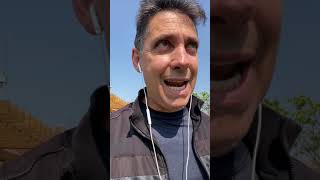
Dr. Tom Refai compares intermittent fasting with flexible fasting, arguing that rigid time-restricted eating doesn't work in modern life. Flexible fasting means eating when mildly hungry and stopping when full, with planned snacks and tactics like a one-minute halftime to build sustainable habits.
Chapters
All right, my friends, this is Dr. Tom Refai and we're going to talk about flexible fasting on this Friday. Now the term intermittent fasting, it's such a popular term, I don't think people truly grasp almost anyone really what's behind it in terms of applying it in the modern day. But let's about intermittent fasting and why. I think if you're going to consider a form of fasting, I've become comfortable with flexible fasting, something that is really rooted in a concept called strategic hunger that I teach to more advanced lifestyle changing clients and patients. So intermittent fasting, the concept that a couple days per week, you have days which you fast at a very low calorie level, let's say even under a thousand calories, possibly less. But people will typically take in more calories than they think. So they think they're eating 500 calories. Let's say it's under a thousand, you make it Tuesday and Friday and then the other five days you eat what you wish. So called 5:2 fasting, that's a form of intermittent fasting. There's other forms of time restricted feeding, such as windows feeding as I would call it, but you're eating for just six hours of the day or just eight hours, or just a certain 12 hours. Concepts behind this are then most of human history and it's essentially for all intents and purposes, I think we could say evidence based that there wasn't obviously nearly as much calorie availability and there would be streaks of time where very low calorie intake would be applied to significant numbers of humans that existed at that time on earth, let's say 10,000 years ago, in which there was an exceedingly smaller number of people on Earth than now. And of course that number of people on Earth now is largely driven by such a massive amount of food availability. And we'll get back to that and why this whole concept of intermittent fasting is way, way over hyped. And there are studies to really show this. And of course if you separate studies from public perceptions, you really see where there's a large gap. So to its credit, yes, it's true. Reduced amount of calorie intake in past amounts in past human history certainly was the case. And by the way, I am walking and talking right now. So I am actually trying to apply a different principle of most of natural human history and even modern history where we see longevity, which is a lot of non exercise activity time, a lot of natural movement throughout the day. Now that being said, trying to apply forms of eating in past human history without considering the massively different food environment that we live in now and the fact that we are impulsive overall in terms of wanting to eat more than we may need, because that type of tendency actually motivated us enough to go forage and gather and hunt when opportune in an atmosphere 10,000 years ago or more where such motivation needed to be high or you would die, right? I mean, we need food, water, shelter, right? That's what you really had. And obviously reproduction. But now we live in a completely different society in which it's eternal spring, food is constantly everywhere, and yet to think that we will simply willpower our way to not eating despite we may be hungry or frankly to force ourselves to eat when we're not hungry, which is what happens to many people. I can tell you with over 20,000 hours of clinical experience and intensive lifestyle intervention and lifestyle coaching programs that it happens all the time. You know, oh, it's six o', clock, my window's about to close. Better eat everything I can. I'm gonna have to go 18 hours without eating or eating when not hungry, or not eating when you are hungry, which sets up maladaptive binging cycles. And as a recovering binge eater, I can guarantee you that's the case. So you start to look of intermittent fasting versus just practical ways to cut back on calories. You don't find any, any evidence that there's a significant difference. And in fact, you often find more fatigue, more nausea, more side effects when it had headaches, for instance. When it comes to artificially imposing a time restricted feeding window, whether it's intermittent fasting, certain days that you eat less, or a time restricted window, you know, just eating for six or eight hours, it really pushes ourselves out of the realm of our biology. Within the context that our atmosphere and our food environment is totally unnatural. But if you've got a way to change that without authoritarian dictatorship of ripping up every calorie rich and processed food and beverage producer around and changing our atmosphere to what it was 10,000 years ago, or what Tom Hanks would have found on the island in his the movie Castaway, well then, you know, let me know. But since that isn't the case, I can give you some practical solutions. Okay, I'm going to talk about flexible fasting. And then it has to be combined with attention to your environments. That's your home, food environments, home, work, if you're still going to work. Most of us are working out of home these days or whatever anyway, your food environments Your home, your work, your car. You have to have food ready for flexible fasting. Because if you're going to push and use this kind of strategic hunger, flexible fasting approach, you have to make sure you don't go into a high hunger hormone zone where no matter what you intellectually think about what Dr. Whoever, Dr. Intermittent fasting, fill in the blank, says you're not going to be able to do that because you're a human just like most of us. Now, if intermittent fasting works perfectly for you and it can be a lifestyle, that's fine. But I'll bet most of you are flexible about it. You're actually flexitarians. Flexible fasting, Flexitarians, just vegetarian and flexible. The two words merged into one. Everyone. Oh, yes, I do intermittent fasting. Yeah. But I do a little tweak of this or that or I'm, I'm vegan, but I, you know, I eat fish on Fridays or whatever. I mean, all of that is just basically flexitarian. So let's talk about a more practical approach. Flexitarian. Well, excuse me, flexible fasting, part of being a flexitarian, which I think is quite reasonable. You know, when you're trying to pay the piper or you're trying to shed a little bit of weight or you want to just find a practical way to cut back on calories, which is one of the most, arguably the most evidence based intervention shown to prolong markers of longevity or longevity itself in primate studies and markers of longevity in humans, the calorie trial and so forth. It doesn't matter how you do it. To me, the most important thing is that it's practical. So flexible fasting is more practical. How does it work? It's based on the intuitive eating process concept in which you basically eat when hungry and stop when comfortably full. Now that's a bit too basic, but we're going to go from there. Eat when hungry, mild to moderately hungry, not starving. We're just going to push it to moderately here. All right. For many of us who are binge eaters, eating when mildly hungry is better. But as you're getting more advanced, pushing it a bit to moderately hungry. As long as you've got that healthy food right near you and you're planning it out, it's not just something that is haphazardly going on where you're now moderately hungry, your stomach's starting to growl and you're like, oh crap, I don't know where to get food. And you got to wait another 20, 30 minutes. Next thing you know, your ghrelin hunger hormone levels and other hormones that are appetite suppressing are dropping. Your hunger hormones are high and you're just totally disconnected. Your body is totally disconnected from your gray matter. You're running on Neanderthal midbrain and just shoving everything you can into your face. You have to be ready for this. So you need to understand when you're talking about flexible fasting, where mild, moderate, and I would call hunger dragon or level three, high levels of hunger are mild, moderate and high hunger. And you are pushing it from mild to moderate. And I would say that has pushed it from the type of symptoms you see when you're mildly hungry, which are a little fatigue, a little attention span loss, and now it's starting to drop into your stomach. You're getting some stomach rumbling and it's okay. There's no fear of hunger. You're not going to die from a little bit of hunger. That's not the issue. The issue is that living in this modern environment, we often are triggered by hunger. To then overcompensate and make choices or impulsive behaviors start to be engaged is probably the more appropriate way in food choices that are riskier and commonly available, that are crap, as my good friend Jeff Novick would say, who coined the term calorie rich and processed. That's the acronym crap. And it's all too easy to do so when your hunger hormones are high, your satiety hormones are low when, which is where you pushed hunger too far. And you may be able to handle that for a while, intermittent fasting. And maybe some of you get used to it to some degree, but it's really not been proven to be sustainable. And frankly, you know, coming from a Middle Eastern background with making a mixture of Muslim and Christian heritage and so forth, and you know, most of my best friends are Jewish, you know, bend to the Wailing Wall, walk the Via Dolorosa benda Mecca. Look, the bottom line is that in the Islamic world where they do 5, 2 fasting, often as part of religion, diabetes rates ain't low, they're quite high. And if you see often, with all due respect to my, some of the people in my ancestral background, you see what typically is frankly binged on after fasting. It's certainly not longevity food. So that being said, anyway, the way that it works is you allow yourself to get a little hungry, but not too hungry. You go to level two, and if you're really careful, what you'll notice is that to find this point in which you're just hungry enough that you really Know that you're getting some of the benefits of fasting, but you're not pushing it so far. You're going to get into this binge cycle over, compensate later, or have such physical side effects as nausea or headache or fatigue, things that aren't really practical with living. Okay, all right. You know where your early hunger, your head hunger is with that attention drop. It's mild, a little bit of fatigue. Normally, I would say that's a good time to eat something healthy before you get too hungry. And then you stop when you're comfortably full. But we'll get back to that. But in this case, with flexible fasting or strategic hunger, you let it put. You push it a little bit, but you know, you've got that in case of emergency, break glass in case of emergency food with you. That, okay, you know, got that beautiful peach with you or whatever it is that you've got that's, you know, a healthy piece of food that, you know, that you can, boom, hit the button and eat before you get too hungry. And then, of course, have a meal and, you know, more complete meal if that's the appropriate time or the snack may hold you over for a little bit. But the bottom line is that you still want to stop when comfortably full. This is not something many of us are good at. I'm still working on that. As a recovering binge eater, I think it'll be a lifelong thing, but I certainly, certainly way better. So stopping when comfortably full is basically stopping when the hunger has gone, but you're not stuffed. So again, don't starve, don't stuff. Let's go back to that saying in the beginning. What's one way that you can start really learning relearning how to stop when comfortably full rather than when the plate is finished? Now, that is a sad testimony that we have so many people that eat for so many reasons besides hunger and keep eating despite they're actually no longer hungry. Because it's a Super bowl, because it's someone's birthday, because it's a wedding, because it's Friday, because whatever. Because I got to finish my plate because grandma said people are starving in China. Whatever. We really need to stop when comfortably full. This is a longevity approach to eating well known in the Okinawan. That's the island of Japan, Blue Zone, where they have amazing amounts of longevity and they naturally eat only until comfortably full. In fact, they will say what translates into English as eat till only 80% full. Hara Hachi bu, which is actually, I think, more throughout Japan, not just Okinawa. But anyway, and just learn how to be intuitive eaters. Stopping uncomfortably full. But if you're not used to it, what I would suggest is this. Especially if you're challenged with an amount of food you think might be too much, try a one minute halftime, okay? What that means is halfway through a meal, instead of trying to make it all complicated with putting your fork down and chewing 48.2 times and whatever, some short term study that is meaningless for long term real world application, say just one, one time, about halfway through the meal, you make invest in one mindful moment to put down the fork and knife and take a minute. Doesn't have to be exactly a minute, a moment, whatever you want to call it, the one minute halftime, the one moment halftime. Around halfway through, put down that fork and knife, take a sip of water, whatever you're, you know, got your iced tea and just talk with whoever you're with or think and connect with your body and feel like, am I really still hungry? And even if I am, I know that it'll take 10 to 20 minutes for me to feel maximally full from what I've eaten. So what would it hurt? What would it hurt if I stopped right now and just put the rest in a box or a bag so I could take it with me, right, for a snack later. Let me just tell you one of the other advantages if you think that eating. Let's make this simple. We're going to eat a plate of food, okay? And let's just say it's got a potential to keep us full for three hours, all right? You're not going to get full for an hour and a half on the first half and another hour and a half on the second. You are going to get diminishing returns. Okay? Conceptually you would get two hours of fullness from the first half, only one hour from the next. And so you therein see why in the National Weight Control Registry, for instance, people maintaining phenomenal long term commitment to lower calorie intake and happier eating five times a day. Now of course it's what you eat that matters and that is certainly part of the issue. A lot more fiber, a lot more low calorie concentration, water rich foods, whole fruits, vegetables, cooked beans, lentils and peas, cooked whole grains, etc. Forget full on fewer calories, right? But they stop when comfortably full, which kind of then will more likely turn you into a smaller frequent food eater. Okay, but at the end of the day you're still following that simple approach. Eat when hungry, stop when comfortably full. Now Again, for strategic hunger or flexible fasting, if you will, you can allow yourself your hunger. Sorry about the noise. To go a little bit further than mild and maybe into moderate. But you want to avoid hunger. Dragon Zone Level 3. You just want to generally avoid that. It's not that it will kill you, you'll survive, but the odds of getting into a binge cycle with the kind of atmosphere that we have, you know, again, if you're on the island that Tom Hanks was for the movie Castaway, sure, you're gonna by force get into level three. That's a different scenario because you don't have a choice. And no matter how hungry you get, all it will do is motivate you enough to find more forage, find some berries, hunt your fish, spark that flame, cook it up. That's a different environment. We live in this environment, this modern environment, and it is what it is. Got a lot of, a lot of wonderful things. I don't lament it. I love that I can and well, maybe not so much these days, but certainly in the past. And I don't think it'll be too far off in the future, hopefully that I can jump on a plane and visit my, my buddies in Colorado. Now, I don't like the crap they're going to feed me on the plane, but I really can't separate them. So that being said, flexible fasting, strategic hunger, and then on the other end, stopping when comfortably full and using the one minute halftime. That approach of flexible fasting is far more sustainable, far more sustainable. If you want to call it strategic hunger, that's fine. Flexible fasting, they both work. For me. It's all the same concept. It's practical applications. So you can get the most from science of calorie reduction and fasting without it being so rigid that it doesn't fit into your natural life. You've got to know and I hope that I've helped you find where reality meets science. Okay, that's Dr. Tom Refai signing off. You make it a great day, we'll talk to you again. Another educational video. We'll have one out soon for you. Take care. Share this like hit subscribe. You know, all the things to do, take care of.
More from Dr.

100M prediabetics in US. Most clueless. Don't die from ignorance. This video could save your life!

Truth about antioxidants & Flexio training focus on flexibility, a personal story


Dr. Tom's Keynote on Inflammation & Cardiovascular Disease for the 2023 A4M Spring Congress.
Metabolic Health Expert Slams 60 Minutes Segment on Obesity Drug Semaglutide - aka Wegovy / Ozempic

How NOT to DIE with HIGH BLOOD PRESSURE: Lifestyle vs Meds-which wins? 11 min might save your life!
Critical lifestyle tips for controlling blood pressure | Silent killer high blood pressure | Heart


Making the most of movement – beyond exercise! | Walk n talk with Dr. Tom Rifai