Truth about antioxidants & Flexio training focus on flexibility, a personal story

Dr. Five explains why your body's natural antioxidants work better than superfoods, and why flexibility training matters more than you think. The pandemic tanked people's activity levels, and a plant-heavy flexitarian diet paired with Flexio training can help rebuild what was lost.
Chapters
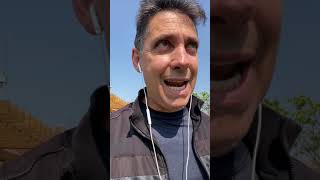
All right, it's time to walk and talk with Dr. Tom. We are going to discuss the importance of our own body's antioxidants and getting rid of this overwhelming, mythical superfood, excuse the language here, bullshit that's going on regarding antioxidants, particularly as it relates to pills, but even in foods. A real distraction from the fact that healthy lifestyle helps enhance our body's own natural antioxidants. Far smarter, far more intelligent, far more able to target where we need antioxidation. And that of course includes glutathione, superoxide dismutase, catalase, all these non sexy things you're not going to hear in the news because it's so much cooler to talk about polyphenols and other antioxidants that are in carotenoids, etc. In foods that are great for them. The foods, but aren't really the reasons or much of a contributor towards our health as we've seen from all kinds of supplement studies. And it's not just because you can't get the right mix of antioxidants in foods. I'll explain that in a bit. Let me just tell you the next part before we dive back into number one. The second part we're going to talk about is on physical activity and flexibility and why I'm going to be focusing on that aspect of my flexio training. Flexio is a word that we have derived to comprise three aspects of physical activity that enhance longevity odds and the odds of significantly reducing your risk of chronic disease. And they are flex. The flex part of flexio is a double entendre as it relates to flexing. Right. So resistance training and then of course flexibility. Right, so flex can mean either of those. And I would include with flexibility, balance, by the way. So flex, really taking on resistance training, flexing. Right. And then flexibility, you know, and would, I would definitely include balance. That's going to be my focus today. The IO of flexio of course relates to cardio. So flexio hitting all three of them. Resistance training, flexibility, balance and of course cardio. So now back to these really just ridiculous, over and over, these nutrition gurus out there talking about magic blueberries and superfoods. And look, here's the bottom line. Physical activity enhances your body's ability to, to produce antioxidants like glutathione, like superoxide dismutase, catalase. These are far more powerful roles, I should say sources of antioxidants that work for the human body because we make them I'm going to tell you the other way, of course, to enhance natural endogenous antioxidants, of course, is through foods. And now the food reason, though, is not because of the antioxidants in them. If you just dry them, desiccate them, and put them in capsules, they fail over and over. It doesn't matter if you get the mix right by putting in the exact balance of desiccated blueberries in a pill form and then you give people placebo. And it's not going to work because we've seen it over and over, whether it's beta carotene, vitamin C, vitamin E, in fact, vitamin E, increased mortality risk. Forget about that crap. The way to enhance antioxidant benefits are through enhancing your body's ability to produce antioxidants. And how do we do that? Regular physical activity, not in no intense physical activity. And I have a podcast on this, on the Tru Health Reveal podcast is not associated with enhanced life. As a matter of fact, it can be untoward when it comes to enhanced life. In fact, all extreme athletes you see put themselves at risk. Now, of course, sitting all the time is the much bigger problem we have in the United States. But nevertheless, there is definitely a U curve, if you will. You're going to get the best benefits from moderate, consistent levels of regular physical activity, which can be done in or out of the gym. That actually enhances your body's net antioxidant capacity. Of course, intense exercise produces free radicals because obviously you're driving oxygen through the system, through your motor, and that's spewing out all kinds of exhaust, and that overwhelms the body's ability to. To squelch those free radicals with the antioxidant system. But moderate, regular physical activity produces a net result of enhanced antioxidant production in the body. Glutathione, catalase, superoxide dismutase. That really ends up with a net balance towards protecting genes and tissue cells from free radicals. What you eat is not going to really do that to the. The antioxidants of plants are there to protect themselves. They're a system that really protects the plants, why plants help us, and actually healthy eating overall, which can include some animal foods. But I would argue that I think that the predominance of data in terms of practicality is a plant predominant flexitarian, or I would call it meta flexitarian, as it kind of takes it up to a higher level than the original flexitarian eating pattern for overall improved cardiovascular benefits, but nevertheless a Plant predominant kind of flexitarian. There's no absolute zero tolerance for anything. Eating pattern is ideal. Now the truth is one of the reasons that's the case is it's calorie manageable. Now you can get to calorie manageable in many ways. And we've seen people who lose weight in any dip. Could be meal replacement, could be, you know that guy who was running through McDonald's and doing the opposite of super size Me, where you had to, you know, what was that, the movie? He had to order the super size every time they asked him to. Well, of course, another gentleman who went to McDonald's every day, lost 60 pounds and said, I'm going to eat half of everything they give me. And he had remarkable improvements in his lipids and his blood pressure and weight and insulin sensitivity. So, you know, the truth is though, the best way I think in the long run, even though using things like meal replacements or catchy quick kick starts, which are all fine, I, I have no issues with the all part of all or nothing. It's just that the all is so frequently attached to nothing. But if it's a plan, you know, that you move forward with like a series like Star Wars, Empire Strikes Back, Return of the Jedi, we know there's transformation and there's transition to maintenance and then of course then there's maintenance, that's all fine. But in the end, the long run, the maintenance, at least if not from the beginning, a plant predominant flexitarian approach tends to be the best because the calorie control reduces overall not only free radical production, because of course calories are fuel. And just like in a car that produces free radicals and, and, and exhaust and you know, here I am in Detroit telling you this. Same with a, same with a body. So you really think of a car too, by the way, you don't want to let the car sit. That's horrible for a car. You don't want to hammer the car all the time either. You know, it's really, that sweet spot is right in the middle when it comes to physical activity and when it comes to food. If you can find ways to get full and stay full or stay satisfied, satiated on less calories, that in and of itself is going to be major antioxidant net benefit, period, end of story. And I think plant predominant flexitarian is the best overall way to do so, at least for maintenance. I have no issue with meal replacements. I've had plenty of clinical experience, tens of thousands of hours using mixed meal replacement with plant predominant flexitarian. Approaches with the meal replacements, kickstarting a journey, paying the piper if you will, and then bringing in a transitional education and intensive coaching program to transition people such that. Well actually if, you know, if a neutron bomb came and blew every shake off the face of the earth, they would still know what to do. But it just kick started things and got things moving faster again. Coming in stages, transformation, you know, six, nine months and then transition for a couple years and then that typically will lead to much better odds of long term success. My analogy of course is Star Empire Strikes Back and Return of the Jedi. But truthfully, that analogy is really ultimately reflecting a lifestyle transformation stage process that we know as transformation. Six to nine months, getting rid of 10, 20% body weight, sometimes dramatic. I mean we have plenty of people in the Flex 5 lifestyle who have lost and maintained deep double digits and often triple digits for years with very little of that yo yoing because of the methodology, the skills and knowledge that come in the Flex 5, the five keys to optimal health and well being of which we're really talking today about nutrition and physical activity. But as I guess in an implied sense, you can sense there's a mindset here too. So I guess you could say implied three keys, right? Mind matters, psychology, nutrition and physical activity. The other three being environments. Those environments we're talking about are food, social and physical environments. Then of course accountability with all of that you have yourself the Flex 5. And today I'm going to be hitting some flexio training and I want to talk a little bit about that importance of flexibility. You know, during the pandemic I let flexibility go. I, you know, I said that flex part of flexio. I'm going to do resistance training. The gyms are closed, which I completely disagree with. I think that the net benefit of gyms and cardiac rehabilitation centers certainly, you know, after we figured out a few months into it, led to this prolonged closing of gyms where we have a disease that really, I should say preys on people with cardiometabolic risk for which physical activity is a huge risk mitigating factor. And yes, the concentration of people is one factor, but everything's multifactorial. There's no signal silver bullet to silver buckshot. And physical activity reduction in the United States was documented well and that really harmed us. It did not help us against a virus that preyed itself on people with cardiometabolic disease like we needed to get worse. And of course we've now resulted in a life expectancy in the United States. It's now dropped. But I let flexibility go and I'm going to hatch it. Perfect. Perfect opportunity where reality meets science. Here's a nice ledge. Whoo. The leg goes up. I just feel like stopping and stretching for you because I've been walking for a while now. I have warm muscles. And of course flexibility and stretching is better with warm muscles than cold. It's not that you can't do some dynamic stretching, like some moving around to warm up, but as far as static stretching, that's really best done with a warmed up muscle. And clearly I have done so walking and talking with you this entire time. But I'm going to go actually right over there to a, my beautiful powerhouse gym in Birmingham and get into my zone. Right. That's where I think the gym really helps me. Physical activity does not have to be done in the gym. Physical activity is a more important term than exercise because exercise is really dedicated physical activity for the specific purpose of cardiovascular or other forms of fitness, obviously strength fitness or even flexibility and balance fitness, if you will. But we have all kinds of movement snacks, some people call them exercise snacks, whatever you can do during the day. But the flexibility part is so important. I can't tell you how much losing and the focus on flexibility over the pandemic and just saying, ah, heck with it, I'll, I'll let that go. I'll just do pull ups from the beams in my basement for my resistance training and walk, okay, hey, way better than nothing. I can't even imagine what it would be like if I didn't, you know. In fact, maintenance of strength, we have found, can be maintained after building it by about 1/3 of the intensity of what it took to build it, maybe even 1/9 the intensity. So again, consistency over intensity when it comes to maintenance. Don't let things stop. And that's what I did. Not with the resistance training and not with the aerobic because I was walking and I was, I think, probably maybe barely doing one ninth of resistance training during the pandemic and the lockdowns, but the flexibility, I just let it go. You know, whether it was just because my environment was ripped apart from me by all the lockdown policies or whatever the case may be, which is what I really think it was. And maybe I should have built in a redundancy plan of a gym in my basement. But, you know, I think the social contract was really ripped apart as far as looking at the big picture of totality, of health and just hyper focusing on that virus to the point that we ripped apart social fabric and so many Other aspects of health that were really casualties of that myopic thinking that, nevertheless, is not something I can control. So back to the third key we've been talking about. After nutrition and physical activity are a mindset of three levels of control. There are things I can control, things I can influence, and things I cannot control. I, of course, did my best to try to influence during the pandemic, wrote an article called Making the case for COVID 19, prophylaxis with lifestyle as Medicine, published in the American Journal of Health Promotion with my supporter and co author, Dr. Beth Freates of Harvard and now the president of the American College of Lifestyle Medicine. But nevertheless, it is what it is. So, flexibility. I really encourage you to find a plan that works for you, that you can consistently do. It doesn't have to be hours a day. As a matter of fact, I can get in probably an entire week, maybe even frankly a half hour of stretching. And if you split that up into six workouts, that would be five minutes. But that's how little I'm asking you to do. I mean, anything at all. But remember, on a warm muscle is better if you can't actually physically warm it up. Maybe a warm shower, if you want to do it on a cold muscle. Okay, I guess it's, it may be better than nothing, but there are studies showing that stretching cold muscle prior to training actually reduces the ultimate strength potential of that training session. So if you're going to do cold muscle because you just wake up in the morning, you like to stretch, that's fine. But take it slow, right? Don't, don't go for your most intense stretch. The first stretch on a cold muscle, that's not a good idea. Maybe at least get some dynamic stretching in. If not a full 5, 10 minute warmup. The muscles that you want to stretch out or at least walking or something aerobically so the whole body is kind of warmed up. Okay, so there you go. That is your video for the Dr. Tom YouTube page here. And I hope that that was not only helpful, but gives you an idea of the holistic type of thought process that comes with the Flex 5 lifestyle. So please, by all means share this video. Click like click hate, click whatever. Make some comments, I'd be happy to read them. I'm really interested in your thoughts on all of this and whatever things you have done that are within the realm of Reality meets Science. Right? That's the name of my company, Reality Meets Science. You know, please don't post about supplements or some magic potion if you're going to post something, have it be based in at least an experience that's personal and that has worked. That's fine, of course. And then, of course, if you're going to claim anything that's scientifically based, please put a reference. And I'll be happy to look at it, because we're all learning. Even though I've had over 20,000 hours of clinical experience, read reams and reams of research, been involved in research, published, et cetera, I'm still learning, too, because that's what it's all about. So take care. And as I do on my Facebook lives, and I'm going to do it right here on YouTube. Give me a hug. Take care. Make it a great day. Check out some other videos on this page.
More from Dr.

100M prediabetics in US. Most clueless. Don't die from ignorance. This video could save your life!

Dr. Tom's Keynote on Inflammation & Cardiovascular Disease for the 2023 A4M Spring Congress.
Metabolic Health Expert Slams 60 Minutes Segment on Obesity Drug Semaglutide - aka Wegovy / Ozempic
How NOT to DIE with HIGH BLOOD PRESSURE: Lifestyle vs Meds-which wins? 11 min might save your life!
Critical lifestyle tips for controlling blood pressure | Silent killer high blood pressure | Heart


Making the most of movement – beyond exercise! | Walk n talk with Dr. Tom Rifai