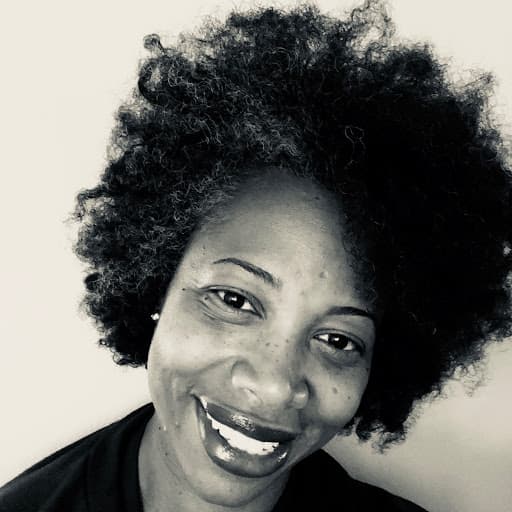
Love and dating gurus with Dr Dan podcast- S8 Ep 2: Special Guest and relationship counselor, Dr Monique Thompson
24 Jul 2026 · 34 min
In this episode of The Love and Dating Guru hosted by Dr. Dan Emzalag, licensed counselor Dr. Monique Thompson joins to dissect the complex phenomenon of infidelity. The conversation opens with the classic question “once a cheater, always a cheater?” and quickly expands to a nuanced view: some people repeatedly betray, some recognize a mistake and self‑correct, and some act from a misunderstanding of consent. Dr. Thompson uses a justice‑system metaphor to illustrate recidivism risk and the importance of self‑connection, arguing that true fidelity begins with being honest to oneself. The dialogue then shifts to generational shifts driven by dating‑app culture, chronic comfort, and instant gratification, warning that constant ease can create chronic stress and unrealistic expectations in relationships. She emphasizes the need for vulnerability, safe‑person dynamics, and compassionate self‑talk as antidotes to toxic patterns. Red‑flag signals are reframed as internal traffic‑lights that guide personal pacing rather than external blame. A substantial segment addresses perimenopausal women, linking hormonal changes to shifts in intimacy, and offers concrete medical and behavioral advice (sleep hygiene, regular movement, open communication). Dr. Thompson also highlights self‑soothing skills, neuroplasticity, and small daily nudges (planks, brief walks) as ways to lower cheating risk. The episode concludes with practical resources: her website (drmoniquethompson.com) and Instagram handle. Throughout, the tone remains conversational yet clinical, blending empathy with evidence‑based recommendations.
Chapters
Hello everyone, and welcome to our podcast, The Love and Dating Guru with Dr. Dan, an industry expert. I'm very excited about this show as it will bring new insight to our many listeners about the dating challenges in the 21st century and the dos and don'ts when seeking our soulmate. Everything you need or want to learn about the how-tos of dating and relationship will be discussed here. How to avoid being put in friend zones after the first date, being catfished, conned, or getting scammed, and so much more will be covered in this podcast. Toxic relationships can cause strife, breakup, or divorces. Infidelity, trust issues, troubled finances can contribute to these challenges. Guests appearing in our show are experts in this industry, sharing their insight about what you can encounter in any stage of dating, getting into relationship, and whatever else comes next. My name is Dr. Dan, and I'm your host for today's episode. I'm a bilingual cognitive behavior psychotherapist specializing in relationship, marriage coaching using the EFT method, and post-divorce strategies when transitioning back into a single life. I provide individual one-on-one sessions in both French or English, and also do group settings. If you need any assistance, reach out to DNV Therapy and Coaching Services at 301-325-1550, and our website can be found at lifecoachdanabzalag.com. For today's second episode of season 8, I'm delighted to welcome our special guest, Dr. Monique Thompson, A licensed counselor based in Dallas, Texas. Together in today's conversation, we will explore the complex issue of infidelity in relationship, examining the emotional, psychological, and relational factors that can lead a spouse to be unfaithful. Now, we're also gonna discuss the underlying motivation that drives some individuals to seek emotional or physical intimacy outside of their marriage and examine one of the most debated questions in relationship psychology. And the saying goes, once a cheater, always a cheater. Is it fact or fiction? Join us as we separate myth from reality and offer valuable insight into trust, betrayal, healing, and the possibility of rebuilding relationship after infidelity. So without further ado, and just like with every of my past episodes, I'll leave it to the guest to properly introduce herself, as no one else can do a better job. Dr. Monique, the floor is yours.
Thank you so much for that lovely introduction, and I'm loving our topics. And this question about myth versus reality, and how do I build my interest in dating, and what do I do to keep out of the friend zone, and all these amazing questions that I don't know how many we're going to get answered. But I can see from the— I've been listening to your podcast, you've been playing with this really thick, rich content for some time and bringing in guest scholars and practitioners to kind of have this deep and important conversation with you. So I'm very honored to be here.
Well, we're very honored for you to be here, Dr. Monique. And so let's get started. As—
Yes.
We see this in many, many different forums. Is it true that someone can change their habits, especially when it comes to the question that I asked earlier, once a cheater, always a cheater? Or is it just a moment of weakness that someone can fall into that, you know, into straying or being unfaithful? And once they learned their lesson, they could go back to being faithful again. Is that true? Or is it just someone that just tried to convince themselves that they— it was a mistake versus something?
I would say all of the above. I know this is such a therapist answer, but to say all of the above is the most correct response in that for some it is true that they will never stop. They will not stop. And there are some who did not possibly even recognize that what they were doing was stepping outside of the consent of their relationship. They realize it, they feel remorseful, they immediately self-correct. There are those who think about it, who think about it, plan it out, consider it, really give it deep consideration, perhaps think about inviting their partner in to see if they can get consent. and change their minds. There are people who thought that we were consenting to this, open relationships, things like that, and then say, oh, I didn't realize I was breaking the rules. I thought these were— I thought this is what we were agreeing to. And innocently, albeit still the person that experiences the betrayal still experiences it as betrayal, they thought that they were not. betraying their partner. So sometimes is, I guess, the best answer I can get is sometimes it is going to happen. The easiest example I give, and all metaphors fall apart, is when you think about our justice system. There are 4 goals of corrections. Only one of them means that you have death, you know. So otherwise, even our justice system says, well, how can we rehabilitate this person? How can we reduce their risk of recidivism down to its least likelihood, you know, what can we do? And then that field of study, you'll see massive amounts of data on, well, this looks like the family has something to do with it with this group. Oh, you know, there's some in this group where we see that they have psychopathy, and there was nothing that was ever going to be able to be done about this. There was just an opportunity was going to occur at some point. And so within that kind of example of a metaphor. I want you to think about that. Some people, you know, it was— they were hungry, there was some candy within reach, and the door was only a couple of steps away. You know, they just—
Absolutely.
They grabbed it and they just wanted to taste that candy. That's all it was. It wasn't complicated. Um, but the store owner still wants you to pay for the candy that you stole or wants you to face some kind of penalty. But if you go before a judge, a thoughtful judge is going to say, well, okay, this kid is 7, 8, 9, 10, 11, 12, 13 years old, they're still learning and they don't know. And so we need to focus on education. But then as you grow, you say, oh, this is different. And here's the relationship model that may be aligned. It's early in the relationship. We haven't really defined who we even are to each other or what our commitment is. Or maybe I'm not sure I was— I didn't know I wasn't in the friend zone anymore. I thought I was still a friend. I didn't know we were something more serious. And so I saw the candy. I thought we were friends. I had that candy. Now your betrayal tells me, oh, we were something more. I missed knowing that we'd moved from friends to something more. And now I'm back in the friends— I'm not even in the friend zone.
Enemy zone.
I'm in the end zone, like, you know. And so I don't— but I didn't want to be there. I thought that was so Sometimes it is gentle and a misunderstanding. Um, you're still dating, the person wants it to be a committed relationship. They finally come to you and say, hey, um, I just wanted to be the two of us.
Mm-hmm.
And you say, oh, ah, whoa. And now you're looking at the people that you were dating, you're like, oh, I didn't realize I felt that way about this other person. And so some of it Some of it, some part of the cheating is due to lack of self-connection, pausing and focusing, connecting with the self to see what you really want. And some of your, um, what I would call fidelity is first to yourself.
Mm-hmm. I see.
Your fidelity is first to yourself. And it may be that what the problem is, is that to be authentic and aligned with yourself, you may have to hurt somebody else's feelings and tell them, oh, my, my good friend, this relationship cannot work. Because for me to have fidelity to myself, I enjoy sex with different partners.
Mm-hmm.
I enjoy traveling with this person. And sometimes when we travel, we have sex. I'm not in love with any of them. And as it turns out, I, I'm sure that I'm not in love with you. That takes so much courage to say, to, to maintain your fidelity with yourself, in my opinion, requires so much courage. And sometimes the walk of health is to find your courage to have fidelity with yourself. And so is it that I was cheating? Yeah. But who was I cheating on? Oh my goodness, I was cheating on myself and the other person. And even if I self-correct, the other person's still going to experience this as cheating because this is not that they— they're not consenting to it. So another way for us to look at it is, well, how will somebody continue to engage in non-consensual acts? And I don't— I'm a trans— listen, In real life, I'm a very— I talk plain to people. Okay, so I'm gonna, for a moment, I'm gonna talk real plain to your audience. Okay.
But, but at the same time, when you—
yeah.
Um, when people are afraid to hurt the other person's feeling, they will either ghost or refrain from expressing themselves the way that you— Right.
So that's, that's where I'm going with it. How long you gonna let somebody do that to you?
Mm-hmm.
You don't like it, you know. And so now the fidelity is on you. You don't like it. You don't owe anybody an explanation. Someone doesn't, you know, communicate with you, they're ghosting you, you don't like it. So treating yourself with loving kindness means that you pay attention. Oh, I don't like that. And then you say, well, do I need to discipline myself to do something that I don't like? Well, maybe if it's exercise or eating healthy, Or drinking water. But not if it's this kind of emotional pain. You want to listen to that painful experience and see what is it teaching me? Oh, I'm learning that I tend to wait for rescue. So I wait for rescue. I want this person to stop doing this behavior so that I can feel better. That's the life lesson. It is on me to rescue myself.
Mm-hmm.
And to rescue myself means that when they do that, I say, you know, I'm just— I like a lot of communication. So for me to be in a loving, kind dynamic with the world, I accept the world as it is and my place in it. And if I don't like cold weather, I don't move to the northern states.
Exactly.
So that I can have a loving, kind relationship with the world. I go where I'm more akin to the climate, and I enjoy the water and the sun. And someone who likes the ice and snow should go live where there is ice and snow.
Yes.
And that— yes, yes. So if I don't like being ghosted, oh, this just tells me that you have ice and snow. I like beaches and sun. So I don't have to belittle the person or, you know, make myself accommodate their behavior. I can just say, oh, I— they message me later and I say, well, let me see how I feel today. Well, today, I don't know. I don't mind putting on a jacket, you know. And you may say, well, hi, how are you? And they say, hi, how are you? And you don't have to then go into, well, we haven't talked in 7 months. Well, if I feel like that's what I'm about to do, Then I can't engage with them with loving kindness, which means that it is best if I allow them to exist in their place in the world and I exist in my place in the world so as to not do harm and bring unkindness to people's lives or to my own.
But now when we look at the older generation, Dr. Monique, we look at Generation X or Generation Baby Boomers and all that. Of course, in the new generation with all the mobile apps, etc. In the past, our parents used to be able to fix when there was a problem. But now we have the tendency because of the abundance of dating apps and meeting people quickly and, and having this instant gratification of having sex after the first date, etc. Do you think that people now have numbed their ability to be able to fix when there's a problem in relationship? And they tend to replace, they tend to just change that. If something doesn't fit, if someone snores too loud with higher decibels, okay, well, we're going to change. If someone eats a certain way, we're going to change. One reacts negatively to one trigger, change it instead of saying, hey, okay, let's talk, let's discuss about what is the problem. So what is the future of the future generations when it comes to How are they going to approach dating and relationships?
Well, so I feel like we have, um, we have some things that are to our favor, I would say, and some things, some worthy foes. So let's start with the worthy foe, the chronic stress of constant comfort. If you require constant comfort, you are going to experience chronic stress. Because there is no such thing as constant comfort. So like you said, if, if we live in the world where, you know, the world has not gone to bed in decades, at one point we went to bed. The world shut down and we all went to bed. And this instant gratification that we now have at your fingertips, you can get an answer, you can get things delivered right to your door, this constant, you know, meeting of your comfort needs creates a sense that they should be met, that they should be met without fail and constantly, which is simply not possible and is also untrue. However, you are actually experiencing a reality of I can, from my phone, request these things and have them instantly. So it's not a completely irrational thought to say I'd like comfort and I'd like it now. It's just that this system Which works best with non-humans.
Okay. Okay.
It will never work with humans unless only one of you is receiving comfort. In this sense, one is enslaved, the other is receiving comfort. And by this I mean that the other is being denied comfort. because they must only exist for your comfort. So this person is in a marriage, for example, where the demand must be met for this person's needs or there's hell to pay. All right. So they're meeting that person's needs and they cannot get their own needs met. And they finally— which we see this rise in silver divorces— they finally find opportunity in to have some freedom from it. Well, what are we teaching our next generation? That you just leave or that you find a way to cope? Because as it turns out, I know it's all over social media about attachment. You can— once you pass age 18, you can recreate secure attachments. You need to outnumber the people in your life who are unhealthy with healthy people. That's the basic math of it all. Well, to do that, you need healthy people, don't you? So now we have this rising demand for healthy people after age 18. And as you mentioned, well, how are they going to come to health? That is a huge choice to heal, choice to grow. Things like this podcast, I feel like, are vehicles because people do like to hear instantly some of the questions answered. And they can listen to podcasts and get some questions answered. They can go on YouTube and watch videos and see an interaction. But at some point, You will have to come off of the World Wide Web, off your phone, and actually interact intimately with a human being. And there is nothing like that on the earth. If you are interacting with a human, there's this beautiful chemistry that happens. Your body picks up on the human's cues. You sometimes notice that you're feeling safe. I mean, all of us have probably had that experience where you're standing next to someone and you just get the heebie-jeebies. You're like, oh, this person is They're not even doing it. That just don't— it's something weird about this person. Ah, you know. And then you— there's times when you're at some store and the person's just so kind and so friendly that you just want to stand there and talk to them all day. And you just— and at the end you're like, oh my goodness, I forgot what I came in the store for. And, and they say, oh, it's okay. What's your name, by the way? Oh, I'm Bob. Hi, I'm Sally. And you just— and you remember Bob for a few minutes, but you leave, if we were to check your body's symptoms right then for stress, we would see that your stress level went where? Down.
Yes.
So as it turns out, it's those safe relationships that help us to deal best with stress. But when you want to only— someone has to be perfect for you to not have stress, then you have now pigeonholed yourself into misery because that person cannot exist, does not exist, and you will never have that kind of an experience. Therefore, the rest of the people that you're dating or that you're in a relationship with, there's hell to pay because they can never meet this impossible, um, standard. Meanwhile, I feel like some of your pain is there to teach you. So hopefully you get sick of it.
Indeed.
Hopefully, hopefully you get sick of it and you say, I'm just— I'm done with this loneliness. I'm done with holding people to these impossible standards. Let me go ahead and try vulnerability. And then I pray for you. If you're listening to this, I send wishes of beautiful things your way, that when you choose vulnerability, that someone safe is nearby. Because that is the best meal ever, is when you're so hungry and you're so starved for rich human connection and you meet someone safe and they're just the best cool drink of water. the most nutritious meal, and you grow from that. And I believe that that is what's happening, is that we're hungry and starved for relationships. But when we interact with people who are unsafe, we end up less healed and more scarred. And so then it's just, you know, so at some point, my, my, my blessing for the world is that you will somehow have more people, that they outnumber— They outnumber the people who are harsh and unkind, and that you allow yourself to be an agent of kindness and safety for others. There are studies that say, you know, we somehow almost magnetically find each other. We find a sense of safety with each other, and we love that. And being that person, being the safe person that you want to have a relationship with is something I recommend. Be that safe person. Be loving and kind. Treat your environment with loving kindness. And practice this as a daily practice. Maintain your fidelity with yourself, a compassionate voice in your own—
Right.
When you can talk to yourself with compassion, listen to yourself with compassion, you can share that gift with others. But if in your own mind you are nothing, So true. And the reason that the person's not texting you is because no one loves you. And if the reason that your marriage didn't work out is because you're trash and you're worthless, if that is your core belief, then that is where we must begin, is your core belief about yourself. Not how can I pretty myself up so that someone else can, you know, get me there. I have to begin with a process of of self, um, fidelity inside of myself. That's what I believe. You know, I don't have a market cornered on the truth, but that's what I believe.
But then we're all going to come across emotional vampires in our lives.
Ah, yes.
Uh, people who will take advantage, narcissists, and so on and so forth. So there's so much that we can protect ourselves and pay attention to red flags that are happening in the relationship and just not always find excuses for the other person as to why they behave a certain way. And we have to be true to ourselves, Dr. Monique.
Mm-hmm.
But this is, this is not something that I will tolerate. And then again, if we all have to be selfish about our happiness, Monique, and we all have to focus on that and, and supersede our happiness over being alone. So we need to focus, you know what, I would rather be alone and happy than with someone who's toxic and who's eating me inside and in my mind, in my spirit, in my, in my love for life. So we need to be able to kind of like let people pay attention a lot more.
Yeah.
How and what kind of benefit do I get from this relationship?
Well, and to, to your point about red flags, I believe the red flag is there for you. Like, the red flag is, is yourself telling you that you need to do something, not that the other person needs to do something. The red flag is telling you to slow your car down. That's what the stoplight— the stoplight is you telling yourself to slow down. The yellow caution light is for you to show caution. And your feeling of, oh, I want to pursue, is for you to pursue. The other person has their own red, yellow, and green lights. And you could easily, even if you're a quote-unquote good person not be good for somebody, right? You could not be good for somebody, and their reluctance of con— you know, contacting you and going out with you could be healthy for them. Even if you're seemingly a nice person, you're a good person, you don't lie, you don't steal, you don't kill, you don't do this, but they might not love you, and they may want love. And so they're not wanting to spend time with you. Could be them maintaining fidelity, and your pressure for them to do it could be inviting them to live a life that is a lie for them. You live in your life, daily, moment by moment, minute to minute, in your own integrity. That's enough homework for you. You just do that project. That's enough.
But do you think that now— and I've seen the new statistic that 81% of women now initiate divorce happening after 42, 43 years old, which is when menopause stage kicks in in a woman's life because there's less estrogen being produced. So because now women do not have that nurturing ability anymore to be able to present that to their significant other. So because they detach themselves from their husband, emotionally, physically, spiritually, whatever it is, then they feel that, you know what, he doesn't fit my need anymore, which he used to 20 years ago. So because of the physiological aspect of perimenopause, or the menopause stage in a woman's life, is there a way to avoid that? Is there a way for women to say, you know what, this is just a phase in my life, I don't need to break a marriage or a family because I no longer have that nurturing ability to present to my significant other.
Well, I would— so, okay, first of all, now, Dr. Dan, I'm 55. So let's, let's, yeah, let's put some reality to this.
Okay.
All right. I'm 55. I'm happily married. And I share this all over the, all over the world. I'm on the radio once a month, and people in my, my listening area already know what I'm about to say. My husband's name that everybody knows is Big Daddy Wonderful, the Unconquerable, Nick Thompson. And that is with affection, love, and sexual desire. I love that man from the top of his head to the bottom of his feet. But at least once or twice in the week, multiple times in my head, I divorce him. I run away, and I'm, I'm living happily on some island all by myself, drinking a a drink with a little umbrella in it, but I'm never going to fall through it. Everybody has complexity, including women who are perimenopausal. It's not just the hot flashes. It changes the way that we experience intimacy and attraction. Biologically, it changes the way we experience those things. Any person going through any biological change, being self-aware on the medical side, and for any woman listening to this, yes, go to the doctor. Go to a good one. Go to one that's competent, one that's well-respected and well-referred, and just let them check things out and see that everything is okay. So some part of that is go get— go literally take care of the medical side of this. Back at home, I would say having transparent conversations, saying out loud to your partner, well, you know, I'm silly right now. I'm perimenopausal, and I sometimes I just need a taco and a margarita, and I'll be fine in 30 minutes. But right now we're at minute 15. And I have 15 more minutes before I come back to being a rational human being. So just give me 15 more minutes, a couple more bites of these tacos, and a couple more sips of this margarita, and then we can have fun. But if you come back before 15 minutes, then, you know, play at your own risk. Come in here, put your seatbelt on, you know. Um, and then being, you know, fun about it and transparent the whole time, just being transparent. Women that were on those same, same, um, In the same way, we like sex a little bit more sometimes too. It can go either way. And so without boxing it into a pedestrian approach of, well, this, then that, I would say for any woman listening, allow yourself complexity. But the complexity comes with responsibility and ownership and transparency. When you're talking to your partner with compassion and saying, I was so snappy yesterday, and I see now it was over nothing. And what I'm going to do today is I'm going to see how long I can hold my planks, and I'm going to see how many push-ups I can do. And then I'm going to practice my 4-7-8 breathing a little bit more today and see if I can't get my body, um, attuned to what I emotionally need. because I don't want my family to walk around on eggshells.
Eggshells.
I don't want my partner to just hope that they can last through this. I need to take some ownership. And sometimes that ownership is through talking and through trauma work, but sometimes it's biological. For women who are perimenopausal, there are studies that suggest that the more upper body strength, in other words, more upper body, the core strength that they have, the less This emotional variability occurs. And for anyone, but in particular women who are of this particular age, sitting for long periods of time can be fairly detrimental. So getting up about once every hour for about 2 to 5 minutes, even for just a slow stroll or just a light walk, can help. Sleep, huge.
Yes.
Huge issue. So when women Anybody. So again, anybody not getting sleep, this is going to be an issue. But when your body is going through these other drastic changes and you're not sleeping well, now you're not bringing loving kindness to yourself and other people. You're bringing hell.
That's right.
So a night of sleep— and what I mean by a night of sleep is that it's under 10 minutes or so, you're falling asleep. You're staying asleep through the night and you're waking up feeling refreshed without sleep aids. So you're not drinking yourself to sleep. You're not watching TV to try to fall asleep. You're not scrolling through your phone to try to fall asleep. So some ways that I— and again, I'm 55— some ways that I even help myself, I keep a sleep routine. So ways that I try to get a better sleep is I pay attention during the day. Am I hungry, angry, lonely, tired?
Halt.
Yes. And it comes from the traditions of the 12 steps. But seriously, are you hungry, angry, lonely, tired? Yesterday, I was very exhausted. I stepped away, talked to my husband for a while, and then I was immediately relaxed. I was ready to go to sleep. And I was like, oh, I was lonely for him today. I didn't really see him. So you pausing through your day and taking that halt— am I hungry? Am I angry? Am I lonely? Am I tired? Listening to your body, paying attention to what it needs, and maintaining fidelity so that you interact with the world in a loving, kind place. But I'm gonna relate this, if you don't mind. I'm gonna relate this to cheating.
Mm-hmm.
Because sometimes when people are not self-soothing, and that's not actually sometimes, the, the rising risk, like he's like, is it true that once a cheater, always a cheater? If a person is not learning to self-soothe, yes, their risk of cheating again Pretty, you know, unchanged.
Okay.
Unchanged. It is as you learn to self-soothe. And so to your question earlier about, do I think this is an issue with people just wanting to avoid their triggers and wanting all of us to not trigger them? Yes, that's a problem because of the inability to learn. And self-soothing is a learned skill. You can learn it. You can learn it at any time. The brain has neuroplasticity, meaning it can learn at any given point. It can learn. You're creating neural pathways throughout your lifespan. So don't think, well, oh, I've been this way my whole life.
Right.
You can, you can choose to learn. You can choose to change. And if you were prioritizing what to do first, I would say find a safe place to trash, you know, throw this out. Talk to someone like yourself, someone who you can play with your ideas in the complexity of your life. And I mentioned those examples of, for women, of planks and push-ups, wall sits, walking even indoors for 2 to 5 minutes. Because if a woman is busy, she's maintaining her family and a lifestyle and a business. Going someplace like to the gym or something like that adds a level of stress. So now you're stressed because you're stressed. And The stress begets more stress. You just— now they got the chronic—
The stress. Exactly. Yeah.
Yes. Or you cut it in half and you say, you know, I know I can get up and move my body for 2 to 5 minutes every hour. I can hold a plank for how long? And I know that about 15 minutes after I do that plank, I will have a burst of energy. I— maybe you can't do a lot, outside, but could you sit facing a window even if you can't? So just making small things, nudges, just moving the needle in your natural environment to help you have less exposure to biological stress can help you then be loving and kind to yourself and to other people. Your self-soothing reduces your risk of cheating. So people who have been cheated on, if the person's complaint was, well, you were ignoring me, Yes. I felt lonely. You weren't doing this. You weren't doing that. As you're hearing those you statements, then be concerned because instead it might— you might hear it said like this. You know, when, when this was going on, I noticed that when I felt ignored, I would start thinking about other people and then I felt ashamed. And so instead of coming to you, I would think more about other people because I thought, well, they won't ignore me. So I convinced myself that there were magical people somewhere in the world who would give me constant attention, and that I could find one if I would just go on this app. And, and it was silly. And now I'm ashamed that I even did anything like that, because I've hurt you, and I love you so much. But I'm gonna tell you this, that I realize I may not be able to repair what happened. I did something pretty bad here. And if it means that I must live apart from you to make amends, I just need you to know I'm also willing to do that. I would not be happy without you in my life. I will not be happy without you in my life. But I've done something so terrible that I have to face the consequence.
Yeah.
And I'm willing. That's so different.
Yes.
Fully, fully. And including that this relationship may be dead because I killed it.
Yes. But, you know, before we end this, we only have 1 minute left. Can you let people know how they can find you, uh, for them to be able to reach out?
Yeah, sure. drmoniquethompson.com. You can follow me on Instagram @drmoniquethompson. So either one of those ways is a way to find me.
Beautiful. Well, Monique, that is all the time that we have for today's podcast. And would like to express a heartfelt thank you for sharing your expertise and thoughtful insight on the complex topic of infidelity and relationship dynamics. And also, your compassionate perspective and clinical experience provided our listeners with a deeper understanding of the emotional factors that contributed to the betrayal and the path towards healing and growth. Now, we truly appreciate your time, wisdom, and meaningful contribution to this important conversation. Now, to our millions of listeners out there, we hope that you've all enjoyed today's episode as much as we did, and I'm very excited about the many upcoming industry expert that we have scheduled for season 8 of the Love and Dating Guru with Dr. Dan podcast, filled with very valuable tips and advice just like the one that you listen today. My name is Dr. Dan Emzalag, and you may all stay safe, sane, and smart when searching for that special someone. Stay tuned for our next episode.
More from Monique
Infidelity Recovery Workbook to Rebuild the Coupleship with Dr. Monique Thompson

The Physiology of Betrayal: Moving from Survival to Grounded Discernment with Dr. Monique Thompson


Season 2 | Ep.4: Understanding Infidelity: Challenges and Breakthroughs with Dr. Monique Thompson