Bio-identical hormone Therapy - In Conversation with Dr Ashok
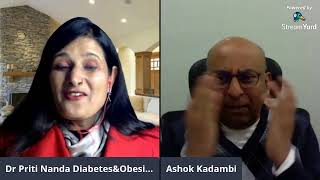
In this YouTube interview hosted by Dr. Priti Nanda Sibal, endocrinologist Dr. Ashok discusses bio‑identical hormone replacement therapy (BHRT) for both women and men. He argues that BHRT is safe and essential for longevity, bone health, cardiovascular protection, brain function, and cancer risk reduction, especially as women now outlive men. The conversation tackles widespread misconceptions—particularly the belief that hormones cause cancer—attributing fear to pharmaceutical industry influence, ghost‑written studies, and entrenched medical curricula. Dr. Ashok differentiates natural progesterone from synthetic progestins, highlighting anti‑inflammatory and metabolic benefits of the former versus the adverse metabolic profile of the latter. He recommends early initiation of BHRT for menopausal women, continuation as long as benefits persist, and individualized dosing (topical creams preferred for minimal first‑pass metabolism). For men, he stresses the importance of testosterone for cardiovascular health, metabolic syndrome, COVID outcomes, and even suggests routine testing in symptomatic or cardiac patients. Practical guidance includes using blood tests (not saliva), focusing on symptoms rather than arbitrary cut‑offs, and employing therapeutic trials. Delivery methods (topical, oral, injections) are compared, with a preference for transdermal routes. The interview also covers BHRT’s role in PCOS, diabetes reversal, adrenal dysfunction, and hair loss, and offers timelines for symptom improvement (days to weeks for sleep/energy, months for skin/hair, a year for disease prevention). The tone is conversational, persuasive, and often critical of mainstream medical practice, urging clinicians and patients to overcome fear and adopt hormone optimization as a cornerstone of health.
Chapters
Perfect. Hi, welcome to our channel of Food Medicine and Lies. So this channel was started, Dr. Ashok, in July, June-July of 2020, because a lot of questions were coming up. People had a lot of queries, and I thought, why not bring experts like yourself to actually know you know, the real stuff, what is right for our health and what is not right. So thank you, Dr. Ashok, for coming online with us today. Okay, so Dr. Ashok is an endocrinologist and a board-certified doctor who uses bioidentical hormone therapy for many, many years. He's done his endocrinology from Cleveland Clinic Ohio, and he presently practices at Fort Wayne, Indiana. Welcome, Dr. Ashok.
Thank you, Dr. Preeti.
Thank you. So, Dr. Ashok, you know, hormones to me are elixir of life. They are the cure of all else and maintains youthfulness irrespective of what age you are in. But currently what we are seeing in India at least is that despite the fact that we have such a beautiful tool, which is bioidentical hormone therapy, which is natural and gives amazing benefits to mankind, we are still scared, we are still thinking, and the benefit is not reaching our patients. So what are your thoughts on BHRT, Dr. Ashok? Do you think it's safe, and should it be used, or at least considered for use, or not?
Right, I think BHRT, both for men and women, particularly for women, I'll talk to you about that because back in the day people weren't expected to live that long. Longevity was very little, okay. People, women by the age of 60, most of them didn't make it beyond 60. So it was really not necessary because, you know, their life would basically end soon. But now women are living actually longer than men. They're living into the 80s and 90s. And when they're living into the 80s and 90s, most of them, I mean, half their life they've lived without hormones, which is a very dangerous thing because hormones actually benefit you in so many different ways. It protects your bones, it protects against heart attacks, strokes. Also, the big thing is dementia. It protects the brain against, you know, dysfunction and cognitive dysfunction. The cognitive decline in the elderly women is mostly because of hormonal decline. And the reason why women stay away from hormones, or even men, mostly women stay away from hormones is simply because they've been scared into believing, or falsely, they falsely believe that hormones cause cancer. And this has been reinforced by a lot of the doctors, including especially the oncologists, who basically use hormone blockers like estrogen blockers to treat breast cancer, which in my opinion is kind of a Not very logical because just because you block something, okay, it doesn't mean that something is bad. Okay, blocking, yeah. And then again, association does not mean causation. So there are many reasons why patients are afraid, and when they're hearing conflicting results, one doctor saying it's great, it's good, have no use— in fact, it may actually, truth be told, hormones reduce the proper hormones will reduce the risk of breast cancer. But they don't know this, and then they are— they get confused because they tell the doc— one doctor says it can't cause cancer, the other one says no, it can actually prevent it. They take the path of least resistance, which is, okay, I won't take it.
Okay, that's what you say, Dr. Ashok. When you say they take the path of least resistance, I know that even in 14th century, hormones were being used. Yes, right, right. And ancient Chinese, they used to give, you know, dried urine of young women so that they could get the longevity.
Right.
So how come from those years to now we've not been able to get the real information out?
Well, the real information actually is out, but people don't read it. The real information, real studies are there that show that actually giving a bioidentical estradiol, bioidentical progesterone, bioidentical testosterone, even in women, can actually prevent disease and improve your longevity, or actually They say, we call it all-cause mortality. It can increase your all-cause mortality. Okay. It's been proven beyond a shadow of doubt in large clinical studies. The reason they don't get much publicity is because most of the pharma industry that makes all these hormone blockers for treating cancer, they don't want readers to hear about it because then nobody will buy their stuff. And they advertise very heavily in the medical journals. In fact, The pharma industry supports the medical journals, they support medical research, and they basically control the voices of what they call thought or opinion leaders. In fact, they pay them big money to put their name on their papers, which they never wrote. They will just put their name like a ghostwriter. And these ghost studies are being conducted and they are being endorsed by very famous doctors who stand behind it, and these people have been paid off.
Uh, Dr. Ashok, I was in publishing for 10 years.
Pardon?
I was in publishing for 10 years.
Okay, so you know the drill. You don't want to ask— yeah, you don't want to ask the customer that's paying you to advertise, so you write things that favor them, right?
So, Dr. Ashok, I know that in 1930, James Pollard actually found out this and started with, you know, bioidentical hormones. And then a lot of studies have been done on this, research has been done on this, and people have been using for a donkey number of years now. But still we see oral contraceptives are being used by gynecologists right, left, and center, impacting the lives of teenager girls in a way that they suffer from the brunt throughout their lifetime.
Right. If, uh, I always tell my patients that if you need contraception, if you're concerned, the best contraception you should do is to do an IUD, either possibly a copper or even the other one, Mirena, is okay. The reason is because you're going to expose a woman to, a young woman, to long periods of what we call synthetic progestins and estrogens, which could be harmful. And actually, that itself can raise the risk of breast cancer. But if contraception is then desired, then you definitely want to use something different than oral contraceptives. In fact, I don't favor that at all. There's a condition called PCOS, or polycystic ovarian syndrome, where the first line treatment, gynecologists immediately say, okay, yeah, you've got irregular periods, you have PCOS, I'm going to give you a birth control contraceptive. They'll, of course, they'll say it's not for birth control, it's for regulating your menses. But unfortunately, what happens is you're not addressing the basic cause of PCOS, which is estrogen dominance. You're giving more estrogen, so actually adding fuel to the fire. But nobody objects to that because, you know, that's the way it's been done all these years. Nobody's questioned it. But the best way to treat PCOS is to not give estradiol. In fact, we need to give the other thing, give only progesterone. And things like aldactone to counter off the adrenal excess and those kinds of things. And obviously thyroid is deficient and also reduce their weight by any means possible by giving metformin because they also have insulin resistance. So instead of treating insulin resistance, they're just giving some symptomatic treatment to regulate your periods. But that's not the whole point. The point is the disease doesn't reverse unless you do other things. So all the good effective treatments available, they're not being made aware to the public because the people that are giving them, the doctors, are not educated on this. In fact, I would put the blame squarely on the doctors that have not educated themselves on, you know, other forms of therapy. They've been stuck in their own ways. They've been taught a certain way and they are not going to— they are very inflexible. They refuse to look any other way simply because they've been brainwashed by the big pharma.
Dr. Ashok, just to share my experience, I met a functional medicine doc very recently in one of our meetings, and she said, I don't practice BHRT because I can't, you know, take over that resistance which comes back.
Yes.
And she said, hats off to you, Dr. Preeti, that you still do it.
Yes.
So I understand what you're saying. So Dr. Ashok, I also, you know, we also see that there is progestin all the time used in different medicines which are used by allopathic doctors. Is there a difference between progesterone and progestin?
Yeah, there's a very big difference between progesterone and progestin. In fact, it's like— in fact, uh, progesterone has all the opposite effects of progestin because progesterone is anti-inflammatory. It actually promotes diuresis. It actually improves brain function, improves serum cholesterol, lipids, and all that. Whereas the progestins do just the opposite. Weight gain, they cause brain dysfunction, increase the risk of breast cancer. Okay. So they're just the opposite effect of progestins, but yet they're used the same way. They're used interchangeably because progestins are made from progesterone. They take progesterone and alter the molecule. Perfectly good progesterone, then alter and give us progestins. The reason they do that is because progesterone cannot be patented, whereas progestins can. And that's the reason why they do it. It's always about money, it's not about science or quality of care. In fact, more than 70% of all the medical literature, all the clinical studies published in major medical journals like New England Journal, Lancet, Up to 70% they have estimated is either wrong or downright fraudulent. So who you would believe? You are most likely going to read something that is fraudulent and based on poor data and based on severe industry bias. So you do not get that. In fact, the editors of Lancet and New England Journal recently resigned in disgust saying that there is too much influence from Big Pharma and the studies that are being published are substandard. And we are not going to, you know, endorse that. So we're going to step down. And this is when the investigation started and found out that many of the studies are called ghost studies. That is, the pharma industry do their own study and they get a big name to put there as the first author, and they pay them, of course, to be as first authors. They may pay them either cash or in kind. Recently there was a big scandal about hydroxychloroquine. Did you hear about that? The Lancet study?
Yes.
He said that hydroxychloroquine is not good and in fact may cause some harm. That turned out to be a ridiculously fraudulent study. It was actually a deliberate fraud on part of the pharma industry, and the authors were actually being paid off by this big pharma, and they were sanctioned. And Lancet, later on, later on, the Lancet publication retracted the study, but that was too late because based on the study, the US FDA banned the use of hydroxychloroquine for for COVID, and now it's showing that it's really beneficial if given early, it can actually save lives. So basically, these people have committed murder, in my opinion, by actually publishing these wrong studies. And they should be put on trial for murder and not just fraud.
Right. Definitely the word—
They're not attracted to their position. They're based on a fraudulent study, and now they're still not saying anything about it, just being quiet about it.
So in line with this, you know, in 2002, Women Health Initiative study came out. Which showed that, you know, Premarin was causing a lot of side effects. And before that, I was reading that the sales of Premarin had really overshooted between 1960s and, you know, 1990s. And when they thought that their product was very good, they only initiated the study, and then in between, the study was stopped.
Yeah, that's because, see, the Premarin was the third most prescribed drug in the US. Yeah, after Lipitor and hypertensive Premarin was number 3. That was retracted. They stopped the study prematurely and they tried to cover it up saying that, okay, it wasn't so bad, blah, blah, blah. If you look at the Premarin-only arm, in fact, the Premarin arm only had reduced, showed breast cancer reduction of 40% if it was only estrogen, even the bad estrogen. But it was only when they added the progestins that they had problems. So instead of saying that, they said just use it for a short period of time in the smallest possible dose. That was the compromise they made. With the doctors. And they brainwash the doctors. You know, the phrase, short period of time for the shortest, for the smallest possible dose for a short period of time, is the mantra that's been going around the OB-GYN and the family medicine circles. It's what they're going to do. But the problem with doing that is that you lose out the long-term benefits, number one. Number two, if you're not giving enough as to die, you're not getting the benefit at all. So there are two big problems with that statement. And the third thing is that why give Prempro when you have a perfectly good candidate like progesterone and estradiol, you can use those instead of doing the Prempro. In fact, all the studies done on estradiol and progesterone all over the world, large, large studies, have actually shown a reduction in breast cancer and a reduction in all-cause mortality, which nobody else has shown.
Right, and it really feels sad when, you know, despite all the evidence, we can't take it to the masses. And we see women, you know, living with hot flashes, with mood swings, with vaginal atrophy, with lower or almost no sexual activity, right? And you really feel bad about it. So, Dr. Ashok, what's your opinion on using BHRT for menopausal women? What's the right time to start, and should they actually be using it, or should they not be considering it as a choice?
Yeah, well, the best— the, the BHRT should be given to all women, and this should— it should be started as early as possible. Okay, and they should be— and in my opinion, it should be continued indefinitely as long as the woman wants it. As long as you're seeing benefits from it, you should continue it. There's no magic age like 65 or 70. Where you stop it. In my practice, I have somebody who's 90 taking hormones, okay, 90 plus, and they have been taking for many, many years. Granted that some of my patients over the years have gotten breast cancer, you know, while on the hormones, but not because of that. So what we tell our patients is go ahead, treat the breast cancer by surgery, radiation, chemo, whatever means possible. And then once they're done with the treatment, we'll put you back on the hormone. And many of them have gotten back on hormones and they're just fine. They don't have a recurrence, they don't have any side effects from it.
Dr. Ashok, I was reading something in one of the articles where the patient had said that I was to be operated for cancer and my hormones were stopped. And when I entered the, you know, reached the hospital, my doctor said there was no need to stop the hormones, they are safe and you could you know, have continued taking them. And she said, that time I felt as if why I was told to die every day because I had so many symptoms and it was becoming very difficult to live without hormones.
Yes.
So do you also see such patients in your practice?
Right. So I don't discourage stopping it, but patients on their own, they take it. The only reason why I stop the hormones while they're getting the treatment or surgery is because The other doctors, they have, uh, they have a connection about it there. They have a fit about it. So just to please them, I said, okay, stop it. But when you come back to my clinic, we'll start it again. But actually, they could continue right through it also, right?
Dr. Ashok, do you have any tips for men? Do you think they also need hormonal therapy? And is bioidentical hormone therapy a solution to some of their problems also?
Yeah, so men, in the men, what happens is, of course, they don't need estradiol. They get from enough testosterone, they get enough estradiol. All they need is a large, big amounts of testosterone because some of the testosterone converts to estradiol, and that way they get the benefits of the estradiol without getting estradiol. The thing is that you must give testosterone in men, even with men with prostate cancer, same story, you know. They get prostate cancer, they get it without it. In fact, most of the aggressive prostate cancers are seen in men who have very low testosterone levels. Actually, low testosterone is a big risk for prostate cancer. Not only does it increase your risk of prostate cancer, low testosterone can increase the risk of Alzheimer's and dementia, as well as cardiovascular problems, heart attacks particularly. So if you look at ICU patients, heart attacks, almost everybody, every male has low testosterone. And COVID, by the way, COVID is complicated in people with low testosterone.
They tend to die more frequently with COVID Yes, so I have been seeing in patients, in patients who have had COVID, one, they had low testosterone in the beginning, and then post-COVID it even dipped further.
Yeah, and then that's where they get the post-COVID complications also, you know. Same with vitamin D. Most of the people that die have low vitamin D, low testosterone. So if you keep your vitamin D testosterone really high, your COVID recovery will be faster, you won't die, and you won't have post-COVID complications.
Dr. Ashok, in my practice what I'm seeing is even young— when I say young, you know, men in between age of 30-40 also are coming with very low testosterone levels.
Yeah.
Uh, is that the case you also see in your practice? And in young men, what is it that you think should be a solution for such people.
Most of these young men that come like the 30s with low testosterone, they also have what is called metabolic syndrome, you know, especially.
Yeah, yeah.
The thing with the metabolic syndrome is that low testosterone is also a hallmark, is a, is, is a marker for metabolic syndrome. It's a part, it's part and parcel of the disease. So a low T, low vitamin D okay, low HDL, high insulin levels, okay, and this is what we call metabolic syndrome. These are like literally sitting ducks for a heart attack. These are the same people who also get heart attacks very young, young heart attacks, and because of metabolic syndrome and low test— low T is a component of metabolic syndrome. So we treat low T, but we also address other deficiencies.
Right. So, Dr. Ashok, generally, at least among Indian patients, I know that a lot of men don't even know what their testosterone levels are because there is no awareness. It's thought that that's just a sexual hormone with no other benefit at all, right?
In fact, most, most of the benefits of testosterone are non-sexual in nature, like, right, muscle mass, feeling good, moods, brain functioning, all of that. Cardiovascular functioning. So, you know, most of the effects are bone— keeping your bones strong. So most effects of testosterone are non-sexual. The sexual side effects— in fact, the man in his 30s won't have any problems with sex at all because they have other, you know, the vasculature is good and there's no impotence or nothing of that nature. All they do is they present either with a heart attack, okay, they only just get a heart attack, or they present with diabetes and then low T is discovered incidentally, or they just present with chronic fatigue. They say, I'm always tired, right? So they don't have any libido issues, no ED issues at all because they're young. But the problem is it just— low, the low testosterone is also affecting them negatively, you know, in other ways. Then they must be treated.
So as per you also, they must be treated?
Correct.
Yeah, great. Uh, Dr. Ashok, do you see adrenal fatigue in your practice and what are your thoughts about that?
Yeah, sometimes we do see adrenal fatigue, but not in the classic sense. For example, we see two types of adrenal problems. Either they have like cortisol excess and they cannot lose weight, in which case, right, cortisol blocker to like cortisol or something like that to help them lose weight. Or we see, uh, asthenia, just generalized weakness, where your cortisol levels are not necessarily low, but if you try to stimulate the adrenals with giving cotrosin, that they don't do, they don't do very well on the test. Levels don't go up very much. So in that case, we can either give them DHEA, which is a precursor to cortisol, or sometimes just cortisol directly in small, small doses, micro doses.
Small doses. Any symptoms which— when person should think about getting their cortisol and DHEA checked?
One is they have a problem with weight, weight loss, the weight reduction, or they have just fibromyalgia and chronic fatigue syndrome. Okay, or they're prone to a lot of infections. And a lot of these things can actually— if you give enough vitamin D, adrenals can actually make their own cortisol. Vitamin D and C, right?
And I think COVID has helped all of us to become aware about these things, and we've started taking them at least to some extent.
Yeah, low vitamin D and also testosterone, so common among the males who get COVID. In fact, I think If they have enough testosterone, vitamin D, they probably would not get COVID.
That's, that's a very, very useful tip, I think. So, uh, Prashanthi is asking—
vaccine even, it's probably possibly more effective than the vaccine. In fact, I would like to see someone do a head-on-head study, hormone-optimized individual versus vaccinated individual. Wow. Let's see who gets COVID, who doesn't get COVID.
I'm sure a hormone-optimized person is not going to get COVID. But yes, if somebody can do this, how can they get COVID? Exactly. So Dr. Ashok, Prashanti has a question for you. What's the right age to test testosterone levels in men, and are there any clinical symptoms associated with low testosterone?
What's the question again?
What's the right age?
Right age?
Yeah, to test for testosterone levels.
I say the right age would be whenever there's symptoms of low testosterone. Okay, for example, evidence of some cardiovascular disease or chronic fatigue is one good reason. Difficulty staying awake, especially while driving. Okay, trouble with mental focusing, concentration, executive functioning. Those are the things that we use. Obviously ED, that may be a little late, but that is also there. Uh, sexual dysfunction, uh, those would be the reasons to look for— and also male osteoporosis. You— a male getting osteoporosis, right? The number one cause is low testosterone.
Perfect. And Dr. Chopra, what's the mode which you prefer? Like, I use creams, uh, in majority of my patients. What is the mode you prefer to use testosterone, estrogen? Because I know that, you know, these hormones are better not taken orally.
Yeah, actually, the— my preferred method is also your— just like yours. I use topical creams simply because the side effects are very minimal. Number one, you avoid the first-pass effect, so you— liver dysfunction, liver failure, fatty liver It's easy to do the transdermal testosterone. Also for women, also there's some indication that if you orally, a lot of it is converted, inactivated by the gut to estrone. So maybe giving the topical, you're giving up estradiol. So there are reasons to give topical estradiol and progesterone and testosterone.
Right, Dr. Ashok, Who has been your most difficult patient, you know, whom you really thought should be on hormone therapy? It would be beneficial, but somehow the patient's mindset— it took you some time to convince him, or maybe give him knowledge, share knowledge with him to make him get on the right track.
Yeah, let him watch this video.
Thank you, Dr.
Joke.
Thank you, Dr. Joke. Any message from your side to the Audience, so we have a lot of doctors as well as patients who are listening to us.
Yeah, I just got one message. I say that do not fear, do not fear hormones, fear the lack of hormones.
Wow, I think this is really beautiful. And when I started studying hormones and, you know, practicing DHRT, I thought I want to make my life a fairy tale. So I started with myself first and then with others. Because if you haven't practiced on yourself, then I think you can't tell others to do it.
How do you feel?
Oh, I feel great. And Dr. Ashok, just to share my example, you know, I started using progesterone. Why? Because I was going through phases of anxiety, and it seemed as if I have that running tap on my eyes, and it could just open up on its own anytime. And everything I did, I did meditation, yoga, good eating, and nothing was working. And then I had this BHRT and I said, let me try it on myself. One month and I was back in control again. No anxieties, no bloating, no water retention. Actually, life became a fairy tale for me. So I definitely support this big time and Thank you for sharing your knowledge with all of us. We have one more question, Dr. Ashok, if I may take. Should testosterone be checked as a routine in all cardiac patients?
Well, that's an interesting thing because they— all cardiac patients receive something called Lipitor to lower the cholesterol to like super low, super low levels. So I think if all cardiac patients are optimized on the testosterone, you know, to upper, upper limit of upper range of normalcy they will actually benefit tremendously in terms of quality of life and also reducing of cardiovascular risk and inflammation. And not only that, Lipitor naturally lowers the testosterone levels, so it will counteract the effect of Lipitor. So I don't care if patients use testosterone routinely in all cardiac patients because I think that can be life-saving for them.
Very, very, very informative, Dr. Ashok. Dr. Ashok, Mr. Vijay Mohan again wants to know that is there any ideal time of the day for testing testosterone, or any instructions which should be given to the patient so that, you know, we get the right levels?
Right, so if you, if you define low testosterone by some arbitrary cutoff number like 300, 350 as, as the, as the rate, as a limit for cutoff Then maybe they would say, yeah, I can test the testosterone levels. We want— usually testosterone levels are highest in the mornings, okay? But we, in our clinical practice, we don't care what time we test it because whatever time we test it, if it is, you know, if they have symptoms and they're in the low range, low end range, is to give it to them. So for our practice, it doesn't matter. Dr. Morgan Taylor came out with a position paper has been published by Mayo Clinic in 2016. It's called the Mayo Clinic Proceedings. Now, Morgan Taylor is the world's authority on andrologists. He's a urologist, but he's well respected among the androgen circles. He's an andrologist, and he is advocating testosterone not be— the diurnal variation not be taken into consideration when testing. The only consideration you should take into is where in the normalcy does he rank, whatever time it's drawn, and what are the patient's symptoms, and what are the risk factors. So if they're cardiac patients and then lower end of the range, but it happens to be normal, but it is, you know, it is in the morning draw or afternoon draw, it doesn't matter. Okay, I just check it when they come to the office. That's fine to do it that way. The, the, the, this fallacy is that you check in the morning because if the morning is low, then it must be low go throughout the day. But then that doesn't hold water in people that have sleep disturbances, sleep apnea, people that have, for example, night shift workers, or just people who are anxious because they don't sleep well. Then how can you say that that's the truth? So the truth is that you will give testosterone to people that are symptomatic and that are in the low end of the range, or that are not in the high end of the range. So you're going to push them to to the high end of the range, okay, even slightly over, and see what happens to the symptoms. Actually, you're doing your own therapeutic— it's called a therapeutic trial, which is very— it's totally legal to do in the field of medicine. You can do a therapeutic trial to make a diagnosis.
I think, Dr. Ashok, one very, very important point which, which you have, you know, shared multiple times during our talk is patient symptoms.
Yeah.
If you don't match patient symptoms with the report, then report is just a piece of paper.
Yeah, just a piece of paper. This number means nothing. So what is this? You know, what kind of people are these? Are the people with risk factors? You know, are the people with lots of symptoms? You know, those are things important. You treat the patient, don't treat the numbers. Wow.
Uh, Dr. Shok, Dr. Sanki is asking, doctor, can diabetes be reversed with supplementation of bioidentical hormones? And patients become medication-free?
Yes, my short answer is yes. The long answer is how long have you had diabetes? If it's very early stage diabetes/pre-diabetes, it can be totally reversed. But if the diabetes has gone to a point where the pancreas is completely gone, then it cannot be reversed. So you have to start them. That's why I said you start it early and you continue it indefinitely.
Wow, start it early and continue it indefinitely is the message. Dr. Ashok Nagesh is asking, for cardiac patients, is testosterone injection recommended or testosterone topical cream?
Both. And what our patient prefers, what's convenient. So if patient says that they want to do once a week injection, that's fine too. But what we have found is that you can give them a baseline, you know, topical, and maybe give them a booster once a week with the injection, because in between injections the levels could tend to dip down, you know, just because testosterone gets, you know, gets used up, and then you get a dip or a trough levels just before the next injection. So they may experience some fluctuations in their T levels because of injection. It means it gets very high when the day you inject goes high.
Yes. Uh, Dr. Ashok, another question for you is, after the supplementation of bioidentical hormones What samples do you use to follow the progress? Are they blood samples, saliva samples, urine samples?
I only use blood samples simply because the blood has been standardized over so many years, so we know what the ranges are, number one. Number two, there is no active secretion like in the saliva sample. You know, the levels can be astronomically high even people taking small doses because saliva concentrates this hormone. So I don't use saliva. Sometimes some people use saliva. It may be okay for like a screening test to see, okay, which ones need more attention. The saliva levels, like cortisol, saliva cortisol levels are normal or not low, then we probably say he doesn't have adrenal fatigue. Or if they're very high, then we say he's got adrenal excess. So I don't use saliva. I use only blood samples, serum samples.
So, Dr. Ashok, in a lot of my patients, I see that progesterone levels, despite the fact that you give them decent amounts of progesterone in blood, the levels never come up.
Yeah, that's because we're giving topical. If you do topical progesterone, it's not well absorbed. You must give progesterone either orally at bedtime, micronized oral capsules, or you should give it sublingual.
Right. So, Dr. Ashok, in some of my patients, I've seen that when you give oral progesterone at night, if these are patients of migraine or some liver problems, their migraine comes back.
Yeah, that's why for that, estradiol is well absorbed through the skin, so you can give that as a cream. But do not give progesterone as a cream, it doesn't really work.
Okay, uh, so what I follow is that patients who are not able to sleep well, I give them oral progesterone, but for PCOS girls, I prefer cream. Is that the right way, or—
no, I just use oral progesterone. PCOS, the time I'll use the, uh, topical progesterone, I use it successfully is premenopausal women who have PMS symptoms. For that, it seems to work. But other, every other indication like PCOS or even most postmenopausal, uh, they definitely use— I definitely use oral progesterone. If they have a hysterectomy, for example, I can get by with topical because you don't need that high levels of this because you're not protecting the uterus. For brain function and other breast protection and opposing estrogen action on the breast, you can do topical progesterone and try to combine the two. But it will not work, it won't work for postmenopausal uterus or it won't work for people with PCOS.
Right. So Haritha is asking, is low hormones related to hair loss also?
Yeah, very much so. In fact, a lot of women will take the hormones even if they've been brainwashed, even if they feel that it may increase the risk of cancer. They say, we don't care, we just want better hair for now. We'll worry about the cancer when we get it. So that's one way to tell a woman that, you know, you need to take it. Don't listen to the other doctor because he's going to make you bald.
Right. And this way you will have good hair.
For a woman, the chance of becoming bald getting breast cancer, you know, it's an easy, easy pick, you know. I don't want to be bald. I'll take it on my own.
Oh God. So, you know, Dr. Pamela, who is the founder of A4M, American Academy of Anti-Aging, from where I have done my fellowship, she, she says this very often in her class. She says, I am yet to find a woman who is happy with her hair. Yeah, you always need something more than—
happy with her hair, skin, or her weight. These are 3 non-negotiating factors. And you know what, lack of estrogen will cause you to get fat, bald, and ugly.
Oh, for all women who think they are not as beautiful, okay, you want to get fat, bald, and ugly, don't take the hormones. I agree with you. The moment you start taking hormones, your body starts trimming itself without doing any additional effort.
I don't need it that much.
Yeah, so I think we will take one last question, Dr. Ashok, is from your practical experience, how many days, months it takes to see the treatment results after initiating BHRT?
Yeah, the first thing that happens is I get the results within literally within days, okay, one or two days, two or three days, within a week for sure, because people start to sleep better. When you sleep better, you have more energy in the morning, so that happens very soon. The longer-term effects— the hair, the skin— it takes about 6 months, okay? And the real long-term benefits like prevention of cancer, reduction of weight, takes about a year. But you must, you must give enough estradiol, and you must protect the uterus by giving enough progesterone.
And that was my last question. You know, I see a lot of doctors using only progesterone. Is that a safe way to practice BHRT?
No, I think not. I hear— I disagree with Dr. Pamela Thomas. Dr. Thomas is a big advocate of only doing progesterone and no estradiol because I don't know why. There's some stigma against estrogen, I think. But the thing is that estradiol, truth be told, you're losing out on all the antioxidant benefits of estradiol, the cardiovascular effects, the brain effects, and then the synergy between estrogen and progesterone, and you're losing that. So you can't just give one, you need both.
Exactly.
Yeah.
So, but I see a lot of doctors only using progesterone. So I think, Dr. Ashok, with, uh, you being here on this platform, I think I would make a request to those doctors also that, you know, you, you have to see the patient requirement.
Yeah. And yeah, look at the patient. Also remember, if they're perimenopausal, they may have estrogen excess. In that case, it's okay to just use progesterone.
Yes.
Fully menopausal, we need estrogen.
Perfect. Thank you, Dr. Ashok, for such a lovely conversation, and I'm sure all the viewers really got more confidence to prescribe BHRT and to use BHRT. Anybody who is not doing it or still have any questions, you can write it on this video, and I will request Dr. Ashok to answer the questions as and when they come.
Um, and then thank you. You should publish this video on your website. I think it's a good idea.
Perfect, Dr. Ashok, and I will share it with as many. And I request everybody to share this because I think this— when you say this, testosterone, progesterone, estrogen are as important as vitamin D. Yeah, you, you know that you, you can't emphasize enough that this is important in balancing hormones is the way to live a nice, lovely, healthy life.
Especially in COVID season, COVID time, it's very important.
Hormones—
don't go, don't go home, leave home without it, you know, lest you get COVID. You know, why? To protect yourself against COVID, you wear the mask, but that doesn't work that well unless you have good hormones.
Perfect, Dr. Ashok. With this, I think I will leave it for people to just Take this in. A lot of people would never have considered hormone therapy also because it's a very, very tabooed word. And I think we have started today at least that thought process that they must keep it at the level which is said to be normal levels.
Yeah, I would, I would challenge you, send it to Prime Minister Modi, let him listen to this because I think this is very important information. He must know this. It's a cheap way of reducing COVID. Is hormone optimization.
Wow, thank you, Dr. Ashok. I'll see who helps me. How long one should keep taking hormones, Rudima? Till the time you— your patient has symptoms. And as Dr. Ashok said, start early and take them lifelong. Am I right, Dr. Ashok?
Yeah, take them as long as you're seeing benefits. Take them if you want to increase the risk of osteoporosis, dementia, and cardiovascular problems, then don't take it. As long as you want the protection. The day you don't want your protection, stop it.
So Dr. Ashok has very sweetly given you the answer and a choice too. So I think you all can make your choices. Have a great evening and thank you very, very much, Dr. Ashok, for coming here and actually starting this, you know, I would say a new buzz in healthcare where People can without fear prescribe and take hormones and feel healthy.
The best Christmas gift you can give yourself is a gift of hormones.
Wow, thank you, thank you. And bye-bye everybody, thanks for joining us, and we'll see you with the next episode very soon. Thank you, Dr. Ashok. Thank you.
More from Dr


Understanding Chronic Acidity: A Holistic Approach to Better Digestive Health 🌿


BHRT - transformational health journey if a 42 year old women #BHRT #HormoneBalance




Transform Your Health Naturally with Functional Medicine | Dr. Priti Nanda’s Success Story


hypothyroidism and ozone therapy - talk at Ozone Conference by Dr Priti Nanda Sibal
