Childhood Obesity - Story Unravelled with Dr Deepti Verma Pathak
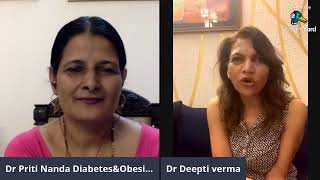
In this Nutrition Week interview, Dr. Priti Nanda Sibal talks with pediatric nutrition expert Dr. Deepti Verma Pathak about the alarming rise of childhood obesity in India, projected to reach 27 million by 2030. The discussion identifies multiple drivers: widespread consumption of processed and ultra‑processed foods high in trans‑fat, added sugars, artificial colourants, nitrates and heavy‑metal contaminants; reduced physical activity due to sedentary screen time, especially during COVID‑19 lockdowns; and environmental factors such as advertising, EMF exposure, and poor gut health. Dr. Pathak emphasizes the protective role of breastfeeding, diverse weaning foods, and a gut microbiome nurtured by maternal diet. She critiques sugary milk‑based drinks (e.g., Horlicks) and packaged snacks, warning of empty‑calorie overload, insulin resistance, and heavy‑metal toxicity. Practical prevention tips include exclusive breastfeeding for the first six months, repeated exposure to home‑cooked vegetables, limiting packaged snacks, encouraging regular physical activity (sports, dance, yoga), and providing nutrient‑dense snacks like roasted makhana or chana. For children already obese, she advises removing high‑calorie, low‑nutrient foods from the home, reducing daily calories to 1,600‑1,700 kcal, increasing quality protein and vegetables, involving children in food selection, and ensuring consistent movement. The conversation also touches on broader psychosocial impacts of obesity and calls for public awareness and policy support such as India’s National Nutrition Month.
Chapters
Hi, good evening. Welcome to the next series of our Food, Medicine, and Life channel. And on this Nutrition Week, where child nutrition is our theme, I welcome Dr. Deepti Varma to talk on childhood obesity. Welcome, Deepti.
Thank you so much. Totally my pleasure to be on your channel, Dr. Preeti Nanda. I've been a huge fan of yours all this while.
Thank Thank you, thank you. Same here, same here. And you know what, Dipti, uh, there are a lot of papers which are now showing that after China, India stands number 2 when it comes to obese children. By 2030, we will be having 27 million obese children, which is a huge number. We already have more than 15 million in India right now. So what according to you is the main reason behind such increasing numbers? Yeah, when we think of children as obese.
Yes, so you know, like India is still being called a developing country, or you know, it's still called a third world country, so to speak. And in spite of that, you know, it is very sad that, you know, we have children who are obese and overweight. So yeah, that's primarily because of the faulty eating practices that we have here in India, because we see so much of processed food in industry taking over our normal eating habits. So that's like key. And secondly, you know, like especially the urban population, I think the children are actually binging on a lot of, uh, you know, calorie-dense food, so to speak, like chips and cookies and biscuits and carbonated beverages, and not doing as much as they used to move earlier, you know. Like, uh, what I think is that for children, most of the sports that we say, the games, so to speak, are all screen games. They are not moving themselves as much should have. And especially in the last 2, 2 and a half years, you know, we've seen that because of the advent of COVID it has actually become even worsened. Children have been like home, and even the classes are happening, you know, like sitting at home on the chair and long classes and then long hours of, you know, tuitions that happens online. And they are not moving, children are not allowed to go outside these days. In fact, getting from bad to worse every time, every day, every year. So that is what I think. It is so much to do with wrong food habits, uh, processed foods, and, uh, very, very low level of physical activity that they have, and long online classes, and the pressure— I think the study pressure which is there. So that's— I think it's right.
So well said. And I think to add to that, the coloring which is being used in our foods which we use today The toxins which we are eating, breathing, smelling, living with— all of that also I think is, you know, just so nepesu haga, I would say, and adding to the obese children, right?
And absolutely.
Also I feel that, you know, the food practices or the hygiene practices which we used to follow earlier They used to help us detoxify. Yes, right. And I strongly believe fat is our friend any which ways. If we are obese, the question to ask is what is fat saving us from?
Yeah, I mean, like, you know, like fat is again something that children love, and especially trans fat I think is, uh, children's best friend these days because all these food products that they consume from outside, you know, especially the cookies and biscuits and chips, they are all loaded with trans fat, which is actually a very, very dangerous kind of fat, you know. So hence we see this little children, you know, they start getting this problem of fatty liver and things like that. So that's again something which is very, very dangerous. And as you said it right, it is, uh, of course the coloring for sure, which is, uh, very dangerous, but also the amount of nitrate preservatives which are there in the food, which is one of the biggest carcinogens, so to speak, in today's time. So that's again something that the children have a lot these days. So yeah, it's together, you know, like I think the trans fat, high fat food that kids have. I mean, these little packets of biscuits are like 600 calories per packet, whereas it is not the main course meal for them. It just comes as a side dish, you know, something that they just open the wrapper, finish off the cookies, and then they get going and they have their entire pizza. The amount of refined flour that children have, which is again so much. So I think everything is just piling down because of the way they're living their life, the kind of food choices that children have. And I'd still say that, you know, parents are to a certain extent to be blamed because the money comes from the parents, you know, even if these are small kids and they are, you know, 6, 7, 8, 9, 10 years. So they are not the ones who go out to purchase these, you know, it is always the parents buying them, the parents stocking their refrigerator with all these processed foods. Foods. You know, their kitchens are loaded with different kind of cookies. And of course, the media is advertising all the fancy, you know, ads saying that the choco-filled cookies and stuff like that. So yeah, I mean, for them, it's like the kind of environmental support that we should be giving to the kids is not there as well. So it's a combination of kids' choices for sure, but we cannot blame the kids entirely for it. I think it is also the adults who are largely responsible for making them obese.
And also the environment, the ad world, which is spending so much to just trigger that neurotransmitter in the brain which says, I need it now.
Yes, that sugar, right? Yeah, once, once, once starts having simple carbohydrate, you know, so brain cells will always crave for more and more and more. So that, that gets triggered from the brain for sure. Because as it is, they are not surely releasing the neurotransmitters that stop them from eating, you know, like dopamine and all will stop them from eating. But they are releasing other neurotransmitters that's asking for more carbohydrates because all dopamine and serotonin are the ones that release when your body moves well, you know, when you're in the happier zone, when you're doing the things that you love, that, you know, the body moves a lot. That's when those neurotransmitters release. And with a healthy gut, of course, like, children don't have a healthy gut at all. I mean, they all have that problem of, you know, they got being loaded with simple carbohydrates, that's glucose and trans fat and preservatives and colorants and etc., etc., you know. So because of which all the healthy gut bacterias are also killed, you know, they do not even have them synthesized in the gut. So obviously, you know, 90% of this serotonin actually releases from the gut itself, from tryptophan. And of course tyrosine releases the other one, dopamine. So they don't have these wonderful, you know, neurotransmitters that can actually help them control their obesity and control their appetite and satiety levels. So that's going wayward, you know, it's just flying off.
So for them, very, very beautifully said, Deepti, that gut health is so important. Also, you know what I see in my practices This Wi-Fi exposure is making our gut health even worse because this EMF radiation, it makes our gut further more leaky and just messes up with the whole scene, right? What is your take on drinks like Horlicks and other, you know, food drinks which parents spend their hard-earned money on thinking they are very, very healthy for the kids?
Oh, so, uh, all these drinks that are to be mixed in the milk and had, firstly, they are very, very rich in mono and disaccharides because they are all very sweet, because children have a sweet tooth. So anything which is made for the kids, you know, by default has to be sweet. And sucrose is the sugar which is used in that, which is, uh, you know, zero nutrient and empty calories. So yes, I mean, that's not something— and then it elevates the heartbeat of the children also, you know, when they have too much of simple sugar like that. So that elevates the heartbeats. And of course, we see a lot of dental decay happening in children because of that as well. So something which is not advised— we would never advise anything like that. A normal health chocolate or vanilla sticks which are natural, you know, so those can be used as drink mixes. But yeah, I mean, something like elaichi, like cardamom or something, the natural flavorants, or dates can be soaked overnight in the milk and children can have that milk. So that is what is something that we would advise. So it's never something artificial sweetener, you know, the mixes that are there, the premixes. That's not something advisable at all. And this is the reason children do not have concentration. They cannot sit at one place because this is what happens when you are loaded with high sugar, you know. So as it is, milk of course is the primary food of the children, you know. That's where these drinks are mixed as you know, whatever chocolate drink or any drink for that matter. So milk already is loaded with lactose, which is the milk sugar, and then on top of it, you know, so when you mix these as well— so I see that these, you know, whatever flavors, whatever brands are there, they get mixed in the milk. And along— apart from that, there's also sugar which is added to it. So all 3 carbohydrate-loaded drinks, obviously the body cannot handle, and then the body starts becoming insulin insensitive. From the very beginning, you know, when they get into that 8 and 9 and 10, 11 years old, and when menarche starts for females. So that's when they are already on that, you know, they've already triggered the insulin insensitivity. So that is a very sad part of our eating patterns that we have. So I, in fact, I'm very excited this year, you know, that, uh, it's of course National Nutrition Week this week, where it is Eat Smart from the Start. But then, you know, um, uh, the Government of India, the Ministry of Women and Child Health, you know, they have actually declared this for the entire month. So it is called National Nutrition Month this time. I mean, since last year onwards. So I really, you know, wish that, uh, you know, you're doing a superb job by bringing child nutrition around to people. And I really want people to watch these kind of videos more, you know, so that they can actually get enlightened as to how they should be handling their children, you know, what they think is right is actually grossly wrong for the child. And not just for now, for entire future, you know, life of theirs.
So well said, Deepti, because, you know, when we impact child's nutrition, we impact the maximum number of years. And that's what I love about working with children. Right, so Dipti, what are your tips? Uh, any tips, you know, you would want to suggest to the audience? What can they do, one, to stay away from childhood obesity? And if by any chance the child is already obese, what would you advise them to do so that they can, you know, work on it and make sure that the child loses weight? And lives healthy ever after.
Yeah, so it is, uh, Dr. Preeti, a very deep science. You know, like children, when they are the first one year of infancy, is when their food habits are formed permanently. So children basically, you know, initially of course are, uh, univores. You know, they, they bank only on the breast milk for the mothers, you know, from the mothers. Or maybe they are on the top feed, but primarily they are just on milk. So that's why we call them univores. And when they go from univores to omnivores is the time— is the weaning time. So children who've been there, you know, like only on the breast milk are very well exposed to different diverse kind of taste and flavors and smell because the breast milk absorbs and picks up everything from the mother's diet. If the mother has eaten a lot of garlic or she's had a lot of onion or she's had radish, you know, all these things have got a very typical flavor and taste. So all that seeps into the breast milk and comes in the child's body. So the child who's breastfed already knows a lot about different flavors and foods. So for him to be getting acclimatized to diverse kind of vegetables and fruits and, you know, flavors is not very difficult because he's already had that, you know, all that while when he was a— problem comes with the breast milk as much. So firstly, you know, in infancy, I would advise all the mothers for the first 0 to 6 months to actually feed the breast milk to children. Of course, like, if you're not producing as much, you know, one can couple it with the top feed, but at least continue feeding. Even if it is 2 or 3 feeds in a day is all right. You know, these days we have breast pump, and breast pump can extract the milk and you can store it in the normal refrigerator for as much— you know, like, you're putting in the normal fridge, it can be stored even up to 48 hours without any spoilage because that milk has immunoglobulins, that milk has so many antibodies. That milk has different flavors, you know, it has different tastes, and it is just right for the children. Right temperature, right everything, you know. Nutritionally, it is so balanced, it's so optimal, you know, especially when it comes to a high amount of vitamin C and iron, which normally is not there in any milk that we see. Milk does not have vitamin C and iron, but breast milk has, and it has a lot. So yes, I mean, this is one advice I want to give to mothers who are lactating or who want to wean their children off, that at least for 2 feeds in a day, you know, even if you're working, so morning and evening are the times when you can still continue feeding your child so that the child gets diverse kind of taste. Now when the time of weaning comes and when one is good, the child is going from being univore to omnivore, now he is actually experimenting with different kind of foods. So normally it is seen that children are neophobic. Neophobic means they are scared. I mean, they are not very open to trying a different taste, you know. So if they are used to a sweet taste, because sweet taste bud is the only one that they have when they are born, they do not have salty and sour and bitter as yet. So when they are actually graduating from there or weaning off from there being, you know, like neophobic, and they would all all, you know, like always spell that food out, like expel it out. You need to put something, say some spinach gruel or some kind of a patla khichdi or something which is like gruelish, or dal ka pani. So that would not be acceptable to the child because he has only sweet taste buds and the salty ones are developing after the age of 6 months. So the child is going to spit things out. So the parents should not think that, you know, my child is not like that. They actually jump to conclusions, you know. Thinking that the child does not accept this taste. My child doesn't like, you know, eating suji. My child does not like having orange juice. No, I mean, we have to keep trying. It is the concept of repeating exposure. Repeated exposure is what we say, which is important in the children, that when we take it for the first time, second time, third time, fourth time, now the child will start, you know, liking it, and he will accept the food very readily. So it is very important for them to have these kind of taste, you know, which are from the food that we cook in the house. So once they start having it, then of course the child becomes happy eating whatever's cooked in the house. So I have seen parents feeding, you know, like certain brand of carbonated beverages and sodas to the children, and they say that, you know, my child, but still he has that. So that's again not something which is good because obviously all those things are meant to have to kind of stimulate the taste buds, you know. So they have something that stimulates the taste buds. So even if it's a small child, he will have that. So keep the child away from all these noodles and tastemaker noodles and carbonated beverages and cookies and packaged biscuits and all those things. I have seen people putting in milk and biscuit, you know, like making whatever gruel out of it and feeding the children. That's again not something which is good because those biscuits which are commercially made, they have to be having lead in them, which is a preservative. So that lead toxicity starts from the very beginning in the child because he's had those biscuits, you know, ever since he's been like 4 months old, as early as 4 months old. So obviously that's something which is not good for the child. So that child who's been fed that kind of a food, you know, starts developing the liking for them, you know. And then when the teeth come, then he starts eating chips And then of course, you know, all these— these days we have a huge market for all these artificial juices that come in Tetra Paks and things like that, which are loaded with sugar. So the child does not know hunger, you know, he's never known hunger. And then this is like, of course, like first. And second is the mother's deciding the appetite of the child, you know, like leave the child with that mango, let the kid mess it up, okay? But eat whatever they have to have, you know, like when there should be a family meal time, which is very important. So when all the entire family sits and they have their dinner or lunch or whatever, so there is always a separate chair that comes for the kid. So he can be made to sit there along with the family. And children learn, you know, they have a different kind of a spoon because they don't want to have gross motor movement. So yeah, so they are, you know, like it's a crooked spoon which they can easily feed with. So we can actually give them their food. We can give them stewed apple. We can maybe give them bananas. We can give them their suji kheer. We can give them that khichdi gruel, which is made with vegetables. So all that can be had with the, you know, let the child understand the hunger. They've never understood their hunger, you know, because it's always the mothers deciding in India that, you know, how much and what size of paratha the child wants to have, and you know, how much and how much butter that, you know, which is added to those parathas, which is generally desi ghee. So, you know, having so much of that, and then the kids are not moving at all. Where are they going to burn their calories with? You know, they don't have any venues to burn their calories. They are houselogged all the time, you know, and they are not really moving. So this is actually causing the childhood obesity. And these sugar cravings that children have, they actually, you know, like, they are the reason that causes actually carbohydrate-induced insulin levels get higher, and then they want more carbohydrates. And more carbohydrates, and the brain starts playing havoc. The brain doesn't know when to stop eating, when to trigger appetite. So everything goes haywire when you do not have optimized glucose level and we do not have optimized insulin levels that releases from the pancreas. So the whole system goes haywire. And by the time they enter the teenage years, they are already messed up and the body is not really able to decide what they want. And they continue eating that food, which goes from bad to worse. And in teenage years, it's even worse. We all know this can be concept in schools, and children don't want to carry, you know, food from the home anymore. I mean, it's more stylish for them to actually eat a burger from certain joints, you know, so, and pizzas, and they're hanging out with their friends and they are binging on sugar. Everything which is high fat, high calorie, and no nutrients and no antioxidants. So they don't have those cleansing agents coming in from antioxidants because antioxidants would come from fruits and vegetables. Which they do not want to consume. So yeah, that is the answer to your first question, that how can we prevent and how can we— and now how can we address. So of course, address—
just a minute, just a minute. I will want to highlight 3-4 points which you've just said because you've beautifully said it. So first thing, you've so rightly said that, you know, the weaning is so important. First the breast milk, and that's the reason in our culture Mother's diet has already always been of lot of focus, but now somehow mothers also feel very restrictive when they have to eat a particular healthy nutritious diet, right? But what happens is the gut microbiome multiplies by 7 times in the first year of the child, and the more variety you feed the child, the more variety the mother eats. And when I say variety Like you've said, it's very important that it is live nourishing food. It is not the junk food which has nothing in it. So diversity of the food. Exactly, yes. So that's very important, and thanks for bringing that up. The second point which you said, the choice should be the child's, how much the child wants to eat. All pediatric doctors who are my friends, you know, when you go to them, they say Dr. Preeti, one question we failed to answer to the parent correctly, and you know what that question is? My child is not eating, what should I do? Right? And 100 times also, if they tell the parent that your child is fine, the growth parameters are okay, the child is sleeping well, active, why are you saying they are not eating? Let them decide how much they have to eat. So I really found that point very valuable. Third point which you mentioned about cookies and lead, it is so important, Deepti, that people are still not talking about it. But you know, type 1 diabetes is increasing, autism is increasing, ADHD is increasing, in addition to of course obesity, insulin resistance, hypothyroidism, and all of that. And heavy metal toxicity is playing a huge, huge, huge role. So we do a test, Oligoscan, in my clinic, and you will be surprised. Young children— so we do with spectrometry, so it's non-invasive. We can also do it for kids. Young children are having such high heavy metals, I cannot tell you. So please viewers, share this. It's so important that the cookies you start in the weaning period has heavy metals, please stay away from them. Stay away from them. Stay away from them. So very, very valuable, Deepti. And I thought I would want to reiterate these important points before, you know, I request you for the answer to the next question.
Yes. Yeah, yeah. So next question was how to— I think you had asked me once how to prevent obesity.
Yes, in the children.
So of course it comes from, uh, how obesity increases, you know. So that's how we prevent obesity also. But then, you know, to kind of just enroll our children into some physical classes like Wando, running, football, badminton. They can just, you know, like go to the parks and play, or any kind of a physical activity form— dancing. Now everything is available online as well. I've seen so many kids, you know, joining these online dance classes, which will also stimulate, you know, their happy hormones and good hormones, because all the time they're sitting on that one chair. Then, you know, games for them are just the screen, and that is exposure.
Yeah, yeah.
So that actually— this actually becomes a problem. So very, very important for all of us, you know, to make sure that our children are moving. They can skip in the house, we can do yoga with them, you know, like they are always open to movements, you know. Children love going and playing and all that. And now that we have COVID pretty much dissipating all over, so I think it's important for us to actually get their life back to normal.
Very, very important. I think the most hard group during the COVID time has been children. Yeah, it's been very, very harsh on them. Yes. And yes, I'm sure they are excited to be going back to their old routines, and we must also promote that. So, Deepthi, my last question— I know we have exceeded the time, but if the child is already obese, yeah, what is it that you would want the parents to do so that their child can lose weight? Keeping in mind that, of course, every parent tries what they know, but I'm sure they don't know the right thing, and that's the reason the number of obese children is just increasing.
So it is like, you know, most important thing about children reversing obesity, the parents have to first stop getting all these things into the house, like carbonated beverages in the plastic bottles, you know, getting the Tetra Pak juices, which are nothing but the colors and flavors and sugar syrups and water. There's nothing more to those Tetra Pak. They are not really made with fruits. And thirdly, to kind of not get all these cookies and biscuits and things like that because they are extremely high calorie and zero nutrients in them. There's nothing except calories in them. So yeah, I mean, these are the 3 little tips that, you know, we can— and, and of course the chips, not to forget that. So they're loaded with calories, you know, like on an average a child should be eating somewhere around 2,000 kilocalories in a day. And if the child is obese, because your question is coming from the obesity point of view, Then the child should not be having more than 1,600-1,700 kilocalories. The child is obese. So out of those 1,600-1,700 kilocalories that we need to give to the child, they mostly have to be good nutrition, you know. They have to be correct nutrition. They don't have to be empty calories. They have to be right, optimum amount of nutrients, which is protein, because children are in the growing age. They are not having as much protein that they should be having. They are mostly— their food does not contain good quality protein because they are meta-based, refined flour things. Refined flour does not have protein in them. So yeah, that's like one big problem that we face. And of course they do not have too much of fruit and vegetables. Green vegetables are the biggest enemies for the children. So in whichever way we can make, jo ham parathe and puris that we make, you know, that the dough can be made in the green vegetables. They can have those red puris or something like that, parathas, which are, you know, like the dough which is made in beetroot, you know, grated beetroots So children, small children find that very interesting. And when they're very little, we can make birds out of those green parathas. We can make, you know, moon, the crescent moon. So that's how I remember my kids used to have food also, as they would find— they would actually say that we finished 4 moons today, we've eaten up 4 moons. And then, you know, like the salad which is there. So like involve the children more in buying of the fruits and vegetables. Whenever the parents go out, it's always better ask them that what fruits do you want to have? So if they say I want to have a plum and I want to have peaches and I want to have apple because ma'am has said that an apple a day keeps the doctor away, then get that. Actually, it so happens that when children are hungry and if they keep a bowl of fruits in front of their face, you know, they really love having it. So it's never that they don't. But yes, if you give them a choice that they're going to have that bowl of fruits or that they're having that, you know, package of cookies, obviously they're going to pick up cookies, which is zero nutrient, and not the bowl of fruits. But when you stop getting those things, they would definitely have the fruits, you know, when they're hungry. Then second thing, on the dining table, always give some nice healthy snack. Like, you know, we can keep some roasted makhana. I think it's all-time favorite of all the kids. They all love having roasted makhana. Then, uh, the second thing is, of course, like, we can have the jeera chana, bhuna chana, singdana. So these are the kind of, you know, like, snacks that we can always have handy on the table. Because whenever the children are hungry, they always look into the fridge, and when they find that there are bananas in the fridge wrapped apples in the fridge, there are pears, they always love to have that as well. They love bhel puri, which is a good food, you know, with added peanuts and stuff. And bhel puri is a very quick fix, you know, like a 2-minute thing. So yeah, it becomes very important for them to eat these kind of things, you know, and healthy snacks coming in from the house itself instead of, um, you know, like eating all these junk from outside which are very high on calories and very, very low on the nutrients. So this is what— and of course physical activity involvement, which of course like parents have to figure out what their children love. To each their own, you know. Some children like taekwondo, some kids love to just jump and dance, some kids love playing basketball, some kids love playing badminton. So yeah, that is how they do it.
Yeah, very, very nice, Dipti. Though a lot of more questions are coming in my mind, but I I think if parents and kids understand this much, I'm sure we would start a movement where at least we would halt the increasing numbers of obese children.
Yes, which is so important.
Yeah, and then they start, you know, obesity doesn't only lead to illness, it leads to a lot of complexes from the very childhood. You know, they don't want to dress up, they don't want to go out, they become antisocial. And our environment is also such that we increase all these feelings in them rather than, you know, helping them accept themselves as they are. Exactly. So thank you very much for being here, and if I get any more questions, I will write to you and seek your answer.
Anytime, totally my pleasure. Thank you so much.
Thank you, and have a great evening.
Thank you so much. Bye-bye. All the best.
More from Dr


Understanding Chronic Acidity: A Holistic Approach to Better Digestive Health 🌿


BHRT - transformational health journey if a 42 year old women #BHRT #HormoneBalance




Transform Your Health Naturally with Functional Medicine | Dr. Priti Nanda’s Success Story


hypothyroidism and ozone therapy - talk at Ozone Conference by Dr Priti Nanda Sibal
