Lectins - Story Unraveled
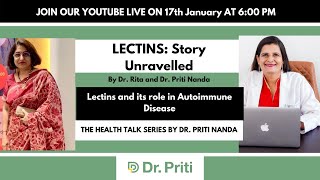
In this interview on the Food Medicine and Life YouTube channel, Dr. Priti Nanda Sibal welcomes Dr. Rita Patel, an associate professor with 37 years of nutrition experience, to discuss lectins. Dr. Patel defines lectins as carbohydrate‑binding glycoproteins found in many legumes, cereals, nuts, and some vegetables, explaining their natural role in plants (defense, nitrogen‑fixing bacteria binding) and their ability to agglutinate red blood cells in humans. She lists high‑lectin foods (peanuts, beans, soy, wheat, barley, rye, corn, rice, quinoa, nightshades, etc.) and low‑lectin foods (onions, olives, lettuce, cucumber, broccoli). The conversation moves to lectins’ dual impact on health: potential benefits such as antioxidant activity, slower glucose absorption, and epidemiological links to lower cardiovascular disease; and risks including gastrointestinal toxicity, hemolytic anemia, mineral absorption interference, and aggravation of autoimmune and leaky‑gut conditions. Dr. Patel describes leaky gut (increased intestinal permeability) and its association with autoimmune diseases like celiac, rheumatoid arthritis, MS, and type‑1 diabetes, noting that diagnosis is difficult and often relies on symptoms like bloating, brain fog, and fatigue. Practical guidance is offered on how to neutralize lectins—soaking beans for several hours, discarding soaking water, then pressure‑cooking or boiling at high heat; washing and roasting nuts to remove surface lectins; and ensuring thorough cooking of grains and legumes. She emphasizes that complete elimination is unnecessary; instead, individuals should assess gut tolerance, start with small portions, and re‑introduce foods gradually. Additional lifestyle recommendations include increasing omega‑3s, fruits, vegetables, lean proteins, probiotics, vitamin D, stress management, sleep, and exercise. The interview concludes with a discussion on individualized dietary strategies for autoimmune patients, stressing removal of specific irritants (gluten, dairy, certain lectins) while retaining well‑cooked lectin‑rich foods for their nutritional value.
Chapters
Hi, welcome to our next series of Food Medicine and Life channel. And as you all know, we started this channel during Corona times. There was so much information flowing and patients were asking, is this right, Dr. Preeti? Should we believe this, Dr. Preeti? And I said, why not get some experts on the platform and help people get the right information. So today we have with us Dr. Rita. She brings with herself 37 years of experience in nutrition. Wow, commendable, Dr. Rita, and welcome to our show.
Thank you.
Thank you. So Dr. Rita, the topic chosen for today is very, very important in today's times. Lectins, what is the story behind it? So Dr. Rita, if you can first introduce yourself and share your viewpoints on what are lectins, should we be eating them, how should we be eat them, and does it have a role for autoimmune patients or cancer patients or not, and anything you want to tell the viewers. So that they can lead a healthy life.
Thank you, Preeti. Let me start. I'll share my screen. Yeah, so I'm Dr. Rita Patel. I am Associate Professor at Maniben Nanavati Women's College, and I have been teaching for very many years. I'm also into research with nutrition. I've presented papers, I've published papers I've written few chapters in books. So wow, wow, very varied experience in nutrition. And it's really a pleasure to be here with Dr. Preeti. And if I— yes, I will talk about lectins, uh, something which is, uh, really a very different topic because it's, uh, either these are the foods which we eat every day. However, there are some issues, and so we need to know what are we really talking about when we say lectins. Uh, Preeti, I think I will share my screen, and if you don't mind, I shall start the presentation.
Yes, please.
Okay, one minute. I'm having difficulty in sharing screen with this. Let me see.
No worries.
Yeah, got it, got it. I hadn't even opened my Rajesh's presentation. Okay. Yeah, right. Yeah, so as you can see, I'm going to talk to you about lectins now. Uh, so, uh, what exactly are we talking of? So most legumes and cereals contain a glycoprotein. Okay, now this is a glycoprotein which has the ability to agglutinate glutinate red blood cells. That means they make these red blood cells clump together. So these proteins are called lectins or phytohemagglutinins. They are basically carbohydrate-binding proteins. Lectins were first found in plants and were later isolated from animals and microorganisms as well. The interaction of lectins with carbohydrates was very specific, and it is comparable to antigen-antibody interaction. What is antigen-antibody antibody interaction. We, if we face any, uh, infection, then we create antibodies in the body, and that is the antigen-antibody interaction. So the specificity of particular sugars is defined by the type of sugar, okay? The lectin specificity. So oligosaccharides inhibit agglutination by lectins. Now, foods which are high in lectins, uh, I wouldn't say— I'm not going to talk about all these foods, but some things I will point out is Your slides are not moving. Sorry, they're not moving. It moved over here. Okay, let me, let me do one thing. Uh, is, is this seen now? It—
you please go to slide 2. I can see your cursor. Yes, now it is moving.
Okay, I think it's a problem when I'm, uh, going widescreen. No worries.
This way, yes, we can see foods high in lectin.
Great. So what I'm going to point out to you, you have peanuts, you have cereals, you have beans and legumes, potatoes. So other foods, the ones which are made with even rice, because it's a cereal basically, are foods high in lectins. Now each of this food, when we say high in lectins, doesn't mean that they are going to agglutinate the blood immediately. Then we also have some foods which are low in lectin. So you have onions, you have olives, you have lettuce, you have cucumbers, you have broccoli. All these are low in lectins. Now, common dietary staples for us— all the cereal grains, legumes, some fruits— have high concentrations of a variety of lectins. Especially black beans, soybeans, kidney beans, whole grains. They are known for significant quantities of different lectins. Now, for plants, lectins protect the plants against external patho— pathogens. But for us, they bind to red blood cells and agglutinate them. Hence, they are commonly called as hemagglutinins. This is the reason earlier they were avoided by people who said that this is, these are anti-nutritional factors. But today we know that lectins are used to observe essential biological processes like cell metastasis and microbial infections too. Now in plants, they have different functions. They include storage of proteins, defense mechanisms, and transport of carbohydrates. The most important function is to bind nitrogen-fixing bacteria to the roots. So when we look at lectins, they are really very, very good for the plants. For us, the biological activity is attributed to some metal ions which are components of most leguminous lectins, and therefore for us, the plant lectins may be toxic in nature. Now, when I'm talking of why lectins earlier were avoided and now why we use it, this is what it was, okay? This is what we know. Because they affect the gastrointestinal tract, the cell membranes, and the organelles. Some autoimmune disorders, they are characterized by immune reactions in which the body attacks its own tissues and cells, okay? Rheumatoid arthritis, multiple sclerosis, ulcerative colitis, celiac disease, Crohn's disorder, scleroderma, even diabetes type 1 are some of the autoimmune disorders. Now these are chronic and there is no cure, but there is plenty of treatment. What do lectins do for autoimmunity? Okay, in our immune system, the endogenous lectins are important for the host's defense against invading pathogens. That means if we get infections, our lectins will help us to create a defense because they are able to directly kill microorganisms and they also aid in phagocytosis of the pathogens. This activates specific immune responses and therefore lectins are involved in the adaptive immune system. Now, when we talked about autoimmune disorders, uh, we know what are the causes. No, not many, largely unknown. We don't know exactly what is causing it. 70% of the risk for developing these conditions is environmental factors, and only 30% is a genetic disposition. And let me tell you that the environmental triggers are primarily from the diet. And that is why when we talk of lectin, we are also going to talk— not really, I'm not going to specify on autoimmune disorders, but we need to know that there is something in the diet which may be causing it and how can we prevent it. Now, a leaky gut— I'm just talking using some terms which you really need not remember as a layman, but this is a condition where I will want to interview her.
Yes, thank you for bringing up this term. I think this is the biggest health hazard today.
Yes, yes, right.
And not many doctors also use this term. Okay, you call it intestinal permeability and we don't do much about it. So thank you very much because it's very important for us to understand that.
Very much, very much.
Right. At the same time, I really liked your introduction, especially the fact that how lectins have been important for plants, but how for human beings it will vary if they are healthy for you or not, depending on, I think, what's the state of your gut. Yes. Right. Thank you. Yes, please.
Yeah, so, uh, leaky gut is a condition where the digestive lining becomes damaged and allows many to pass into the bloodstream other than normal nutrients. For example, the celiac disease has shown that increased intestinal permeability has the important role of initiating the autoimmune disorder. Okay, now while we are talking of autoimmune disorders, we are talking of leaky gut, and we are talking of these things, we have to know that they are not easy to diagnose. Why? Because they include common symptoms bloating, poor digestion, inflammation, food allergies, sensitivities, chronic pain. There may be brain fog, poor memory. There could be depression and fatigue. All of these happen when there are these disorders, which may be because of autoimmune disruption in the body. And so they are never really detected immediately. I mean, doctors do have the various ways of doing every type of of, uh, examination, but these are the ones which will be common with others and hence sometimes initially may go unnoticed.
Very right, Dr. Rucha. Yeah, I just want to add— sorry, I just want to add here that, you know, we now do tests like zonulin and lipopolysaccharide levels to find out leaky gut. But very interesting is I run a group program for elimination diet, and people who do elimination diet, their anxiety and their depression goes out of the window. Yeah, yesterday I was live with the winners of my elimination diet program in the last month's batch, and one of the ladies there said You can't imagine how satisfied and happy I felt that time. And, you know, diet is so, so, so very critical. You're very right in saying that. Yes. And I'm very interested in knowing what you have to share with us on gut health and lectins, because I do a lot of autoimmunity.
Yeah.
And in autoimmune cases, I, I have seen that lectins really cause a lot of problem for these patients, right? So all yours to you. Yes, please.
Okay, so just to continue now, gut health and lectins. We know that lectins can promote growth of harmful bacteria in the gut. They may disrupt protein and carbohydrate malabsorption. They may cause inflammation. However, when there is carbohydrate malabsorption, it reduces glucose uptake by 50%, which is beneficial to diabetics. Then wheat germ agglutinin and other lectins can also bind to insulin receptors and disrupt glucose metabolism. That is why it may be high. So this is where we understand how lactin, lectin may help or not help a diabetic. Then there are grains which have high content of lectins which cause inflammatory bowel disease and celiac diseases in humans. Now in our diet, the biggest culprit is wheat, that is gluten, and we also know that barley and rye also contain gluten. However, just going on a gluten-free diet is not enough because there are plenty of other dietary triggers. So people who followed gluten-free diets without really knowing what is— they may start a gluten-free diet and help. They, they may yet find that it is not helping their problem. The reason is because you have other things like capsaicin which is there in peppers, and there are saponins. So foods containing high concentration of lectins and saponins, they include virtually all grains— wheat, rye, barley, oats, corn, legumes, rice, beans, soya, quinoa— for people who go into quinoa because that's the latest fad in the market, you also have to know that they also have lectins and saponins— amaranth, alfalfa, buckwheat, potatoes, and green tomatoes. There is something called as nightshade vegetables. They simply call it because of the high solanine content, and those include potatoes, tomatoes, bell peppers, eggplant, and sometimes Also, oral contraceptives, alcohol, and antacids with aluminum may also add some lectins in your diet.
Wow, wow, wow, Dr. Rita, this is awesome!
What do, what do I tell you? Yeah, so we have to remove the foods that are irritating to the gut and cause inflammation. Now, I don't have the previous slide, I removed it actually, but What you have to do is increase your omega-3 fatty acids, fruits, vegetables, and lean meats. Do take probiotics and vitamin D. Manage your stress, get good sleep quality, exercise, and cat— and do take time for stress, uh, relief. Okay, now I come to one question of should we avoid lectins or no? Lectins may be involved in sugar transport or carbohydrate storage. And because of the role of agglutination, they have been considered as important in symbiotic and pathogenic interactions. They have been used as a carrier for, uh, delivery of chemotherapeutic agents. Okay, so what are the advantages? They have health benefits where they act like antioxidants to a certain extent. They slow digestion and can help sharp rises in blood sugar. Population studies have also indicated that lectin-containing foods like whole grains, beans are associated with lower rates of cardiovascular disease, diabetes, and help better health. What are the disadvantages? Now, they have been reported to cause mass food poisoning, particularly uncooked kidney beans. They may cause hemolytic anemia and jaundice, the Mexican fava beans. They do cause acute gastrointestinal symptoms— nausea and vomiting. They bind to the absorptive, uh, the absorptive surfaces of the small intestine. The villi may be damaged, and thus the digestion and absorption may be a problem. Also, active lectins can interfere with the absorption of minerals like calcium, iron, phosphorus, and zinc. So how do we cook lectins? How do we eat lectins? We need to know that because in, in the Indian food we have lectins everywhere, and yet we can't stop eating all those foods. So cook with wet, high-heat methods of cooking, which can deactivate most lectins. Lectins in the nuts and seeds are present in the— are water-soluble and are present on the outer surface. So wash with water and remove them, or maybe peel them off. For example, peanuts— you can roast the peanuts and remove the skin. You can soak the peanuts and then eat the peanuts. Then lectins can be virtually eliminated through cooking. In fact, boiling the legumes in water eliminates all lectin activities. So this is the same, but what I want to tell you is that dry beans must be soaked for several hours before it is boiled to soften and cook it completely. That is when the lectins are effectively disabled and deactivated. If undercooked or raw beans are simmered at a low heat or cooked in a slow cooker, you may not remove all the lectins, okay, because we need high heat high temperatures to help break down the enzymes. And soaking has to be carefully done. Make sure that the seeds are hydrated completely so that they reach their maximum weight. So what do we do when we soak? We have to soak them in plenty of water, and then you're going to pressure cook them, and then you will see that there will be still some water remaining which you will need to throw out. But this is the process to reduce the lectins in the diet, because as I said, Indian diet will not be— we will not be able to eliminate legumes and cereals and millets and small seeds from our diets. If you tell that, patient will say, 'Phir ma'am, I'm kain kya?' So what I suggest is consume all grains, legumes, vegetables and that is very important for maintaining good health. Keep the gut strong and healthy because that can have a profound positive impact on your health. Thank you.
Thank you, Dr. Rita. Thank you very much. This was very interesting. So, Dr. Rita, I have some questions for you.
Yes, yes.
And I will start backwards. Keep the gut healthy, right?
Yes.
Very small statement, a very powerful statement. So any 3 tips you want to give? Yes, I will give you—
I will tell you something. For keeping the gut healthy, there are no 3 tips which will work for everyone. What we have to understand is that each person reacts to even lectins, the proportion of lectins, differently. Okay, so where— how do you identify that your gut is good? You're going to observe that when we eat the food, are we having a normal bowel? Are we without pain? And most important, I tell you, is if you are not irritable, you know your gut is stable. When there is any gut problem, people are going to be irritable. And so I don't have 3 tips to give you, but I can tell you how you can identify whether your gut is stable or not. Second part, probiotics definitely help to have a healthy gut. And so have probiotics. You have curd, you have probiotic curd. You get, uh, you in curd you get probiotics, you get it in buttermilk. So people can have some foods which are going to help gut health. Okay, there are foods which are very strong, uh, sulfur-containing vegetables which may not agree with everybody. Each person, you know, Preeti, you very well know that you say eat this and the patient may say, mujhe se gas hota hai. Why? Ek ko gas hota hai, dusre ko nahi hota hai. So identify that your gut is normal or not, and if it is not, take care so that you are consuming the right food. Make sure raw foods, raw salads have to be consumed for low calories, but make sure that you're washing it correctly. You're not getting an infection, and some of them which may have lectins will have to be cooked, will not be eaten raw.
You're so right, Dr. Rucha, because, you know, in my practice, I'm majorly practicing gut health these days. I'm seeing SIBO has become so common, fungal dysbiosis has become so common, and when these are the conditions the patient is suffering with In fact, now I've started getting a lot of H. pylori. We were getting before also, but EBV and parvovirus 19 and stuff like that in your gut. And people come with the complaint saying, um, yeah, right. Finding the cause is so important because you are so right. You are irritable all the time and that is ruining your relationships, your life. Everything. So finding what suits you and what is the problem is extremely important.
One more thing I will tell you is people tend to generalize. This one told me this will work for me. That doesn't happen like that. If I'm eating a food, that doesn't mean my sister can eat the same food and be comfortable. She may not be able to accept it. So we cannot generalize and we cannot start following what every advice which Everybody in the society gives us.
So we have to look at what I've learned after coming in functional medicine, Rita, is I've started hating the word healthy. Sorry, sorry, but really, because you know what happens? I got this. Right, a lot of people have shifted from white iodized salt to, you know, normal, this pink salt and all of that. Thyroid problems are increasing, so some amount of iodine is important, and you generally get it only through salt.
Yes.
Today I'll tell you, I had a teenager with me, so I had her consultation, and she said I looked at her reports and I got her cortisol checked. Her fasting cortisol was so low, she was in adrenal fatigue. So, hamare sabke healthy— yeah, exactly. You must check your adrenals. So it is so important to know the real stuff, right? So thank you for bringing that up. So Rita, my last question for you is We get, as I told you, a lot of autoimmune patients right now. These patients generally have big, big, big gut health issues. That is the reason they landed up in autoimmunity. Unless we work on their gut, we cannot help them manage their autoimmunity better. Up for those patients, we tell them to avoid gluten, dairy, a lot of cases lectins also. Right, what is your take on this? Should they avoid lectins completely, or can they use it the way you have taught us to use it?
Yeah, I— yes, what I will tell you over here, Preeti, is that first of all, the irritant has to be removed from the diet. So if you have celiac, then you know what to remove. If it is something else, you'll remove that. If it is lactose intolerance, remove dairy, right? So remove the irritant. And these guts are something which are delicate. They have digestive issues. They have to take simple food. So avoid the food which is irritating and take the rest of the food in small quantities and well cooked. I cannot say please avoid lectins, but tackle the lectins, cook them properly and consume them. They will help you. So yeah, a lot of people come saying raw vegetables, right?
If your gut is not right, raw vegetables will also not do all for you.
Yes, right. You will go about it, you know. So lectins should be there in a diet. Honestly, today we don't talk of eliminating lectins completely. We want our legumes, we want our cereals, but we should cook them very well. Make sure that you're soaking them, you're cooking them fully. So I— and this is my observation, uh, when we talk of healthy diet, you know, we want to make salads and we want to put legumes in it. But sometimes there are legumes— moong is easy to digest, agree— but there are legumes which cannot be digested. So those have to be very well cooked and then added in your diet. So when you add rajma, when you add kidney beans, cook it very nicely and then put it in the salads. They will suit you. So do not eliminate them because they have a lot of good to offer, right?
And even if you eliminate them for some time, do introduce them back.
Yes, if needed.
Yes, if it is irritating you or gut is so weak that every time it's creating problem, better to avoid them for some time.
But you know, where lectins are concerned, there is something very interesting also said. They say that you have to get your gut used to the lectins, then they will be able to perform better. So people who are not having it will start using it in little small quantities, will be able to digest it and take the benefits of lectins.
You won't believe, when you were showing those pictures that we have to soak it and cook it, I was remembering my American friends. Right? When you go to an American house, just the way to soak and cook it in a pressure cooker is such a big thing. They are in awe. Dhani jamana is such a big thing. When someone there learns that, they say, oh wow, I am doing something so special. And for us, it comes so naturally from childhood. We know how to do it. So I think let's not forget our traditions and let's follow them so that we can stay healthy. Right. Thank you, Rita, for being here and taking us through this lectin journey. I was getting lots and lots of questions, and I thought better to have an expert to be talking about it.
Thank you so much. It's been a pleasure.
Thank you. Thank you, Rita. And if we get any questions, I will share them with you for your answers on it.
Sure.
Thank you. Bye-bye.
More from Dr


Understanding Chronic Acidity: A Holistic Approach to Better Digestive Health 🌿


BHRT - transformational health journey if a 42 year old women #BHRT #HormoneBalance




Transform Your Health Naturally with Functional Medicine | Dr. Priti Nanda’s Success Story


hypothyroidism and ozone therapy - talk at Ozone Conference by Dr Priti Nanda Sibal
