Panel Discussion - How to Prepare for a COVID "Non-Wave"
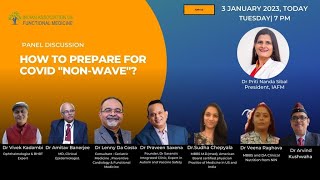
Functional medicine clinicians discuss preparing for COVID through hormone optimization. Low testosterone, T3, DHEA, and melatonin correlate with worse outcomes, they argue, and can be restored through replacement therapy and lifestyle changes like fasting, reducing Wi-Fi exposure, and specific supplements including high-dose melatonin and vitamin D.
Chapters
Hi, good evening everybody. And today's show on Food Medicine and Life channel is not about the general topics which I generally talk with all of you. Today it's a debate which you will love and you will share it with your loved beings. Also after you have heard this completely. Before I introduce my esteemed panelists here who have done lots of work in the last 2 years on COVID, and when I say lots of work, lots of exceptional work, lots of work which got a lot of recognition and which was published and a lot of interest has been created around that. I will just share the Ministry of Health and Family Welfare statistics about COVID as of 2nd of January. 220.1 crore total vaccine doses administered in India. 66,000— 6,675 doses administered in last 24 hours. So it started again and it's continuing. Active caseload is 2670 patients, 173 new cases in the last 24 hours, and daily positivity rate of 0.19% and weekly positivity rate of 0.14%. Now, is this data relevant? Should we be following up on COVID data or COVID news? You will be able to decide it today after this panel discussion. The topic is COVID non-wave, and I think the topic itself gives you a huge hint to what we are wanting to tell you. But let's hear from the panelists and know from the horse's mouth why we are saying this as COVID non-wave. And why we really— Amitabh Banerjee, Professor and Head of Community Medicine at Medical College Pune, 20 years of experience in Indian Armed Forces, worked on diseases like typhoid, rubella, and many other diseases, and has a public health and a postdoctoral in epidemiology. Dr. Amitav is going to speak about mass vaccination and its impact at population level. I think you all will agree that this is where the whole essence lies, and this is the tip of the iceberg. Unless we unpack that, we will not be able to decide what this wave will mean if it happens, or whether it will happen. Over to you, Dr. Amitav.
Thank you, Dr. Preeti. It's a pleasure and a privilege to be on this platform and share my views with the Association of Functional Medicine. And in fact, the whole COVID infection has been functional rather than any thing more. And I will just share some hard data because as an epidemiologist, I can just count, that's all. I am not a basic scientist, I— but I can keep a scoreboard. And from this, we see the pattern at different country levels. So since the topic today is the impact of vaccination, so I will be just giving some graphs which a 7th class student can be able to understand, I suppose. Which I will be giving. We are having the vaccine for more than a year at a mass level, and I will be giving data of trends in different countries before vaccination and after vaccination. So, and just to show that there are many countries now, they are in the news, like China, Japan, South Korea, Taiwan, Singapore, and other Southeast Asia countries where there is a surge. And I am not taking the Western countries much, but I will also include Australia because there also the vaccination has been rolled out. And we will see, because these countries had very strong restrictive measures, lockdowns. And what trend I see is that those parts, whether at the global level where there were very strict measures like lockdown they perhaps did not get the natural immunity, which is, as per the studies from Israel, is 13 to 27 times more strong than vaccine-induced immunity, whatever be the vaccine. So this, uh, they depended so solely on the vaccine at mass level to end the pandemic. So I will be presenting data of these countries Like China also had very strong lockdowns, and everybody followed China's example. Australia also had, Taiwan also had, and everybody praised. And in our country, it was Kerala which did very well in the beginning, but it lagged behind in the later. So this is the first slide. This is a very important slide. I always say this is the actual few months into the pandemic. The infection fatality rate was worked out by serosurveys by John Ioannidis and Jay Bhattacharya of Stanford University. So you will see that up to the age of 19 years—
uh, Dr. Amitabh, can you go into slideshow mode?
Uh, yeah, I think Dr. Preeti is controlling it. Yeah, yeah, yeah, thank you. So this is the— if you see, up to 19 years, the survival was 99.9973. This was the earlier strain which was supposed to be the most lethal, the new ball one can say. And even if you say up to the 69 years, the survival was 99.41. So if you see, there is no other infection which has got such low mortality. I mean, this is the first wave when it created havoc and which the all the governments went into knee-jerk reaction all over the world. So first we should ask the question whether with such low mortality Was it worth it? By locking down businesses, closing schools, the amount of educational damage and commercial damage. And did it stop the spread? It did not stop the press spread. And subsequently, in the second wave also, there was so much hype that everybody crowded the hospitals. Asymptomatic— 80% of the hospitals were full of asymptomatic people. People rushed, people booked beds. People booked 2 cylinders at home. Perhaps that might have created artificial— so anyway, these, uh, these are the— and as on today, the latest meta-analysis of serosurveys, because over the, the— after the Omicron, the strain became much milder. Now, as on today, the infection fatality rate at 69 years is 0.03 to 0.07%. The published paper. And in children, it is 1 or 2 child dies in a million, and that 2 child may be having some other comorbidity. And even up to 69 years of age, the mortality is just 0.03 to 0.07%. So my question is, with such more or less lethality, one cannot evaluate the efficacy of any vaccine or any treatment for that matter. So ultimately, if you are your success rate is going to be more than 99% even in old age. That is good enough for any infection. Now I would just present some graphs which are simple graphs. This is Australia. And Australia, this is the red semicircle, shows the vaccine rollout. One year, left side is the one year before the vaccine rollout, and right side is after the vaccine rollout. So if you see, the top graph shows the Cases, if you see, the cases in Australia rose after the vaccine rollout, after 3-4 months of the vaccine rollout. At the most, the before vaccine rollout, there were no cases, if you see, because they had strict lockdown. And even the bottom graph shows the deaths after the vaccine rollout, because the claim now is, okay, it does not stop transmission, but it can stop deaths, it can prevent deaths and hospitalization. The lower graph does not support that contention also. So this is just for people, and this data anybody can see on the Worldometer today. So this data is in the public domain. Now next is after Australia, next country, please have— this is Taiwan. Again, if you see Taiwan before vaccine rollout, no cases, no deaths. In fact, Taiwan, lower slide also, there were no deaths. After vaccination, there are peaks in cases as well as then deaths. So these countries should ask the manufacturer, what is happening at the population level? This is a data which can be verified by anyone. I don't know why nobody is seeing this data. Taiwan also did very well. This is Japan. Japan is now having the— after China, Japan is said to be having, and it really is having a surge. Japan made, as on today, there are more than 1 lakh cases every day and more than about 150 to 200 deaths. Japan has a population of just 12 crores. We have 140 crores. Japan also, if you see, after the vaccination, cases are more, and after the vaccination, deaths are more. There was a little spike before the vaccination was rolled out, but after the vaccination— so something strange is happening here. I mean, okay, vaccine does not protect, so it should remain same on the left side and the right side. Why should cases increase after vaccination? This is the biggest paradox. I have published this data. I have been asking for almost 6 months. I have asking people to explain Nobody has come forward and explained to me this paradox. Next. This is Singapore. Singapore is on its second booster. Singapore, if you see, no cases, no deaths before vaccine rollout. After vaccine rollout, higher number of cases, higher number of deaths. So I don't know when they will stop parroting that the benefit outweighs the risk, when they will stop parroting that it prevents death and hospitalization. The graph does not support their claim at the population level. This is just the data speaking. I have got no insight, no knowledge what's happening. This is Israel. Israel was the first country and it was praised by the world to roll out 100% vaccination. Now it is in a second booster. There is no impact. In fact, after the second booster also, they are having higher cases and higher deaths also. Israel, same with Malaysia. Next slide. Malaysia, again, I have got friends there. I was also there just, just before the pandemic. So they also tell me that something strange is going on. If you see, before the vaccination, no cases, no deaths at all, below, slide below, down under. And all the— Sri Lanka is a neighboring country, I was following, it was having very less cases and deaths. After the vaccine rollout, it is having higher cases, higher deaths. These are again from all the data from the Worldometer. And My World in Data, the vaccine, vaccine coverage in these countries around 80% with boosters. We don't have boosters in our country. What happened in our country, because second wave was spread after second wave, 60 to 80% people already had antibodies. With that means almost 100% have exposed because the antibody levels comes down. So we had a natural immunity which when the vaccination was started, almost 90% of our population were already immune. So this was just, uh, I mean, uh, forget about side effect, but this was expenditure which could have been prevented. Wait and watch. Next slide. Because if you see other countries there, these are the countries which had very strict, uh, so mass— then there is mass vaccination, there other concern that it may— whether it is it causing mutations. And, uh, as on today, I think We all— cases are minimal, hardly 2,000, 3,000 are total in a country of 140 crore. You see Bangladesh, Pakistan, the same figures they have got. And if you say we have to have a vaccination to prevent the wave, why don't you talk of Africa? Africa, most of the countries are having less than 10% coverage. The maximum coverage is South Africa, which is 30%, and that in Africa, South Africa has the largest number of cases comparatively. Still much less than the Western countries and Australia and other Japan and China. But South Africa has, among the African continent's country, South Africa has got 30% vaccination coverage. Omicron started there, it did not create a ripple. Also with 30% vaccination, the other countries which I had showed are having almost 80% vaccination coverage with booster, they are still having surges as shown in the data. And there have been a study published in the European Journal of Epidemiology. They have done this type of comparison that 68 countries and 2947 American counties, there was no correlation between this vaccination cover and the number of cases. And I have just projected few countries. And lastly, I say what is happening now that we are not going by science. Data is in front of us which is showing that after mass good vaccination coverage with boosters, cases have come up. So we are not going by science, we are going by rituals. Rituals is faith. Every expert is coming and saying risk outweighs benefit and all that type of thing. But that ritual and religion is harmless. It can give solace. But here ritual can cause harm because you are injecting a foreign body. It can cause harm. Forget about the harm, what about the cost? So ritualism, science should take a— and as far as the risk-benefit The latest study has come even during the Pfizer trial, published in the journal Vaccine by Peter Doshi, is one of the authors from BMJ. And they have published, they have found that earlier there the serious side effects from this COVID vaccine, mRNA vaccines, which is supposed to be safer than our AstraZeneca, because AstraZeneca was banned in many European countries, uh, because of more severe side effects than mRNA vaccine. The serious, serious side effects in mRNA vaccine from the trial data which has been published in the journal Vaccine, 1 in 800 serious side effects. They had stopped in 1976, 1 in 1 lakh serious side effect with the swine flu vaccine, Guillain-Barré syndrome. They stopped the vaccination. They stopped 2 or 3 cases of intercession in 10,000 cases of, uh, rubella, this rotavirus vaccine. They stopped the vaccination. Now here the data is there that out of 800 vaccinations, one serious side effects. So I don't see in what way they are saying the benefit outweighs the risk.
I—
the public population level is not happening. I, I have this to stimulate your thinking. Thank you.
Thank you, Dr. Amitav. I think I think a lot of points which you have shared, a lot of us ignore. Despite the fact that we know them, we ignore them. Uh, and before I come to Q&A for this, I would want Dr. Lenny— I would want to invite Dr. Lenny, who has more than 30 years of experience into functional medicine, to speak about this preprint of the study done by Cleveland and share with us on individual vaccination, what is the impact and what is his thoughts on that.
Just give me a minute.
While we're waiting for Lenny to start presentation, can I take up one point raised by Amitabh.
Yes, Dr. Vivek, please.
All right, so Dr. Amitabh, you said that the vaccination paradox is not really a vaccination paradox because, as you know very clearly, that in viruses such as SARS virus or a flu virus, the more you vaccinate, the more the virus will mutate in trying to escape and come back. If you really force them, uh, very strongly push them to a corner, they'll come back with a vengeance and they'll strains would become more and more potent. If you leave them alone, Darwin's law of evolution follows. So truly speaking, it's not a paradox in the— if you understand the science. But if you just look at it, yes.
So virologist, he has got a very long name, German name, the virologist who said that he wrote a letter to WHO at the beginning of the pandemic. He was deplatformed from social media.
So that is—
to many of us, mutation due to vaccine pressure, anything against the vaccine has become taboo word.
Yeah, that was— yeah, we all suffered because of that. I know that. And of course, it's not that nobody is not seeing. They are just seeing the data, but they are turning their— you know, as I said, Bob Dylan's song, how, you know, how many times can a man turn his head and pretend that he just cannot see? That's one. And of course, how many deaths will it take? Tell us— no, that too many people have died. Uh, Dr. Lanny, uh, you need any assistance with the presentation?
One minute.
Uh, yes, Dr. Amitabh, you've, you've shown that. And okay, it's uploaded again. We have shown. Yeah, good.
Yes, Dr. Lenny.
Hey, somebody else has put out that. I think Kushava, you have to stop share.
No, I can see it.
Okay, so that's not mine.
Oh, that's not yours. Okay, yeah, that's okay.
Okay, right.
Can I get started?
Yeah, yeah, yeah, Dr. Lenny, please.
Sorry, sorry about that. Okay, so let's, let's, let's move on this. Uh, a very, very beautiful presentation by Dr. Amitabh. It was excellent. Uh, and this is something that I found, uh, if you look at this particular data over here, uh, look at United States Look at the number of boosters they have taken and look at the number of, uh, cases in the last 7 days. Uh, this is as of 23rd of December. After that, the WHO has not updated it. It's going to get updated on the 10th of Jan, I think. Uh, look at China itself, and they are also quite boosted. But if you look at the previous slide, look at India. The total population that is boosted is only 16, and see the number of cases there. Then, as of what Dr. Preeti told us yesterday, his number is only 2,500 and odd. Now, when you look at this data, this particular study makes sense. This was a study which is still in its preprint on medRiv. Uh, this is what they had to say. The quote from the study says that the association of increased risk of COVID-19 with higher number of prior vaccine doses in our study was unexpected. Now I'm going to make it a little more easier for you to understand this, and you'll understand what they exactly showed. So let's look at the background. What did they do? They took employees of Cleveland Clinic and they went and gave them a bivalent COVID, uh, vaccine. The idea was to test the bivalent vaccine whether it protects against COVID-19. That was the study that they did at the Cleveland Clinic. Now, when they did this, uh, there was a lot of other technical data that they also checked on. But what did they find? Among 5,000— 51,000 employees 20,000 had previous documented episode of COVID-19, and 42,000 had received at least 2 doses of COVID-19 vaccine. Uh, COVID-19 occurred in 2,452 people, that is 5% of the study sample, during the study. Now this is what they found, and this is what I've highlighted. The risk of COVID-19 increased with time since the most recent prior COVID-19 episode and with the number of vaccine doses previously received. So what Dr. Amitava just shown clearly shows that every episode, every vaccine that you take, your chance of getting COVID is much higher. In multivariable analysis, the bivalent COVID vaccinated state leads to a vaccine, vaccine effectiveness of only 30%. So what they concluded from this, because they were studying only the bivalent, but they gave us this, this outcome as well in the result, and they said that this was— it gives you only a modest protection. It affords only— it's only 30% effective in preventing infection. So, and that too, infection against strains that are dominant in the community where you're using the vaccine, not new strains that may come out. Now, this is the most recent study yet to be published. It tells you this It tells you that with every vaccine-boosted dose, you are more— or your risk of getting COVID-19 increases. So this is food for thought for everyone who's looking, even the people who create and do policy. Are you really seriously thinking about forcing boosters down an Indian population which doesn't have any problems with COVID at the moment. Why am I saying this? Why am I saying this? Because this is what we see. People come with symptoms of severe flu to us, severe cough that persists for days at times, and at times for weeks. Most of people don't opt for any kind of COVID test, and most of the times this flu resolves in 5 to 7 days. What we give them— I give this to anybody who calls me up— plain doxycycline, montelucas, fexofenadin, which are both anti-histamines, and an OTC cough syrup if it's possible. And this does the job. If the cough persists, we just add a Budocot to that. Within 15 days, the patient is absolutely clean. This is my experience for the last 3 months. I have not sent any patient for testing. No patient has come to me with a COVID positive test because people don't go for testing. They are fed up of testing, all right? Nobody goes. Even if they are seriously sick, they don't go for testing. They don't go to the hospital. That is what even, uh, the head of the task force for Indian COVID vaccination said on 25th of December on national TV. He said the reason why Omicron third wave never showed was people— because people who got it never went for testing. And that's a fact. People in the countries that you're showing COVID today, they're testing heavily, they're boosting them up heavily. We don't need that in our country. We are quite great at this point in time. Look at what we did. This is the protocol that I've used for serious patients. I've used glutathione. I'm just going to talk to talk about it for only 2 minutes or so. Glutathione is a go-to.
You have time, Dr. Lenny, please take your time.
Yeah, okay. Uh, I have— I'm using glutathione 600 milligrams IV twice. So if somebody lands up in the hospital, this is what you should be doing. I give 25 grams of vitamin C, sometimes OD if they are okay, if they're at home. I did it for myself twice a day for 3 days and then OD I had a lung score of 20 by 24 on this HRCT, uh, and I survived doing just this at home. 9 to 12 milligrams of melatonin. And I know that Dr. Vivek is going to give you why melatonin, uh, but this is a go-to for me because it actually blocks the NLRP3 inflammasome, which is the one that stimulates the IL-6 to cause the cytokine storm. It is a go-to for me. I use 12, I've even used 20 milligrams and 30 milligrams a day in patients. 60,000 IU, thanks to Dr. Sooda, I've understood this perfectly. Right from day one, I've been putting 60,000 IU every day for the first week and then alternate day for the next 3, 3 weeks till they're completely out of it. And then these are some of the other supplements. Steroids, if they need it, I add, otherwise I don't. At the, at the, at the prophylaxis level, this is what we give. I've not used ivermectin for 6 months even for prophylaxis, but if I need to use it, this is the protocol that I would do for, for prophylaxis. I do use a lot of quercetin as a supplement. Again, melatonin is something I use even for prophylaxis. And finally, at the outpatient, if somebody comes to me with a COVID positive certificate or says that he has tested and is COVID positive, this is the treatment that I give you. Look at what I use for fever. I don't use Dolo or paracetamol. This is for the Indian audience. I use mefenamic acid because mefenamic acid also has a role to block the NLRP3 inflammasome that stops the IL-6 from being stimulated. So everything that we do is to ensure that the inflammation comes down, the inflammatory status of the patient comes down. And if you do have COVID cases coming to you, if people who predict the doomsday— these are the protocols that I've used very successfully over the last 2 years. I've not used them for the last 6-7 months because nobody comes with a COVID positive test. I treat it as a normal flu like I showed you, and that's all I do. All right, I think with that I will rest my case here, Dr. Preeti. That's all I had to say. I wanted to show you that if you are going to get yourself boosted, you are going to only ensure that you will expose yourself to more COVID infection. You can actually be guaranteed of getting a COVID infection if you want one. So please go boost yourself if you want it. That's my take. Today I say it to my patients, and I take responsibility for that statement because there is evidence in science done by good reputed universities. Thank you for giving me this opportunity, Dr. Preeti. I hope people have understood what I'm trying to say.
Thank you, Dr. Lenny. And before I move forward to Dr. Arvind, I would actually want us to, you know, share our views on what Dr. Amitabh and Dr. Lenny has shared. Here, because I think this makes a powerful, powerful, powerful story. And I won't actually— I shouldn't say it's a story— data-backed, science-backed, evidence-backed data which clearly suggests what we've been speaking for last many months and years. Yes, Dr. Praveen.
Yeah, Preeti, this is a good start basically the new year, and I'm really very positive about this one. And the kind of work what we have seen with Amitabh sir has done it, what Lenny has done, and there are a lot of other people who have done for the last 2 years. I, as a doctor, I always used to— when we used to prepare for our MBBS exams also, we used to be prepared for the worst. We used to tell, okay, in our exams there, there was no choices, you have to go for all 20 questions and 50% is the cutoff mark. So when we look into how prepared we are for the next onslaught, whatever is it, it's a wave or not wave. As a doctor, I would like other doctors to understand this is a good functional medicine kind of thing because what are the things what Lenny has just figured out, I think this has to be taken. This is a big— people have done, FLCC people have done work. And as doctor, I would like to see that Even if somebody comes after a vaccine jab, he has some issues and all that, we are in a position, we can always sort it out in a very simplistic way. And I think that should be our key kind of thing. And as Lenny rightly said, we need to move to the policymakers. We need to tell them, these are the things. And I'd definitely like to hear more from Arvind Kushwar, who has done a paper on this particular thing. We, uh, yes, Preeti, I, any— I think Lenny, um, the kind of work what he has done, and he has done for himself, it requires, uh, this story to be told. Because having a 20 out of 24 is not an easy thing for, uh, particularly doctors. And he has come out in a quite great way.
And, uh, we much fitter than before, Dr. Praveen.
Absolutely, absolutely.
Yeah, right. But very importantly, Dr. Lenny, I'm extremely happy also that you shared this preprint of Cleveland Clinic, because what generally happens is when we share such information, people don't want to believe it because that fear, that scare is there in their mind. But this powerful study with such robust data, I think In addition to what Dr. Amitav shared, country by country, in every graph he's shown this. And today, before this panel discussion, I was going through some news on COVID. And you know, one of these, um, news channels in Japan very clearly said— in China, actually— that this has become a political agenda now. It is much, much, much more than a medical thing or a pandemic or an infection. And, um, I don't know and I won't want to comment on this, but yes, this is the talk which is going on. And the way they are facing, uh, cases today, it's hard to believe that we arrived here maybe because of lack of data. Lack of knowledge or something which we don't know.
But thank you for— there's a lot of data people choose to ignore. People choose to take what they want.
Exactly, exactly, Dr. Lenny. Thank you very much. And now I actually would like to invite Dr. Arvind, uh, to speak about adverse effects of vaccination, data-backed science. Dr. Arvind has done a lot of research on this and has published a paper that has got huge attention worldwide. So Dr. Arvind, I will give you the access to this, and here is your presentation. And we are very, very excited to see with data that what people are talking in each other's ears, you know, we have data and we can come out with it. Openly and speak about it.
Thank you very much, Preeti, and good evening everyone. Uh, it's, it's, it's real privilege to be speaking with you all, and I'll just share how I went on to do this study, number one, and what came out of it. So, uh, when the pandemic was going on and they were number of candidate vaccines which were on the horizon, out of which, you know, many of them came within less than 6 months all over the world. And India too proudly shared that they have made one vaccine of their own, and it was really a proud moment at that point of time. And we, uh, the whole world in fact thought possibly the vaccines will pave the way for the end of the pandemic. But alas, it wasn't, uh, to be like that, and that's where we are now. So, uh, from that point, uh, you know, initially, obviously, uh, being a public health person, I was also a very strong believer in all the, uh, you know, use of vaccines to prevent infectious diseases. And today also still I'm a believer in that, but at the same time, I, I'm not a blind believer now. Now I see that if it is really useful or not, then only I make up my, uh, you know, mind about that. So how I went about, uh, conceptualizing this paper was my own head of the department, uh, he once disclosed to me that his wife who had taken a vaccine had anaphylaxis and almost near-death experience, and she barely survived somehow. So then I asked him, did you report that incident? He says no. No, imagine, uh, almost, uh, you know, almost a near-fatal, uh, incident of AFI went unreported. And, uh, you know, that is from a healthcare worker. Imagine what a common man would be facing. So therefore, then I went on to the site of the MOHFW and CovinSite also, trying to find out if they have put out anything related to AFI. There was nothing. It took really a lot of, I would say, investigative abilities to finally land up with some documents on AFI, and that too somewhere hidden on MHRW site, and quietly hidden rather than not prominently displayed that this was the AFI following COVID vaccination. It was part of the old AFI they have been doing since ages on all vaccines. So it was part of that, and nowhere it was mentioned that it is COVID vaccination. That's where I, I got into this, that there is something that they're wanting to hide. So let us see what is there in those. So then I went on to, you know, dissect that information which was available on the MHFW site, and that's what made my paper. And it was very pleasant for me to present this study even in the forum of Epidemiological Foundation of India in Patna recently in October. Last year, and it was really good to share this information with most of the doctors who were not even aware that such a thing was happening. So here what I've done is I've tried to estimate the possibilities of the AFI that may have occurred in India. Of course, this is based on the data that was available at that point of time. It may be much bigger than that now. So next slide, please. Can I, can I change my slide? Okay, fine. Yeah, so, uh, India has been obviously, uh, contributing almost 1/6 of the vaccination across the world. So of course everything has to be in that proportion. And therefore, uh, coming to the, uh, study, we took up this study to examine, uh, the data on CSAFI due to COVID vaccination in India. And wanted to find out what is the, you know, burden of hospitalized and death, and especially using the VRS model, and because we don't have any particular method to report AFI otherwise. So that's how we went about doing this, and we did the study in March to May, and the data was obtained from the link that is given on the slide. And the reports which are available from 5th March 2021 Of course, the vaccination started on 16th of January 2021, especially starting with the healthcare workers, then going on to the senior people, and then finally including all the adults. So, uh, the data which was available till 21st March 2022 were included. And, uh, you know, we have assumed that as happens in most of the countries, the underreporting may be anything between 0.1 to 5%, and generally VARS reports 1% only. So therefore, we have tried to find the projected deaths and projected hospitalizations in this particular, uh, you know, paper. Another estimate was made based on the VRS model where 23 deaths per million doses, uh, have been documented. So these are the results, you know, just out of the total 1087 cases of vaccine injuries which were available on the MHAW site. You can see that almost 35% of them have resulted in death, while rest of them resulted in hospitalization. 700 hospitalizations, 387 deaths. And of course, Covishield continues to be the main contributor since that was the main vaccine used in India. Not the Covishield. Covaxin just contributes just about 10% of the total vaccinations. And when coming to classification of AE/FI, if you see that the AFI is classified into A to C, A to D, which includes A1 is basically A1 and A2 and A3 and A4. These are all related to vaccine in the immunization process, while B1 is a temporal relationship but insufficient definitive evidence, while C is considered to be coincidental, and these unclassifiable. So the, the interesting part will be once you see what is the data shows as to how many of them have been classified as A, B, or C, or D. Now coming to deaths, you know, as which were 387 in number out of 1087, you can see that the all the cardiac events, you know, comprising of either diagnosis of sudden cardiac death or acute myocardial infarction or acute coronary syndrome, and, uh, they constituted almost near 50% of the deaths, you know. So that means, uh, what we have been already, uh, aware that the disease, you know, the vaccine leading to, uh, hypercoagulable state and, uh, spike protein injury may cause damage, and therefore such deaths are precipitated due to the vaccine, you know. While, uh, even if you see COVID-19 disease itself, uh, is contributing to 1/6, that means 59 deaths have occurred after vaccination due to the COVID-19 disease. So again, it debunks the whole theory of that it prevents hospitalizations, prevents death. So, and, uh, the other unexplained deaths and all were given as 30, and others were classified 81. Large number of deaths have been, you know, given unexplained or others kind of diagnosis. Now coming to characteristics of the, uh, coincidental AFI. You know, almost you can say that, uh, 50%, uh, of the, uh, you know, total, uh, this thing, uh, uh, AFI have been classified as coincidental. 50%. But the funny part is, out of this 50%, uh, AFI which is coincidental the deaths constitute almost 77%. So that means if you get, uh, you know, death in a case of AFI, it is likely to be labeled as coincidental more than the hospitalization. If you survive, then it is not labeled as, uh, coincidental. Then, uh, you know, it is only one-third of the cases were labeled as coincidental. And now the cause of coincidental deaths— I would go into dissecting what coincidental deaths were happening is primarily Nearly more than half were due to the sudden cardiac events or acute myocardial infarction, acute coronary syndrome. As the other COVID-19 disease, again, like as I presented earlier, roughly 1/6 of them due to the COVID-19. Now coming to estimates, this is about the total that was available on the MHFW site, and as per the Times of India report which has just appeared which they say that, uh, 92,000 AFI have been reported as per the RTI, I think. And out of that, they have said 2390 total serious AFI is there, while I dissected only 1087. So out of 1087, you can see that almost 387 are, you know, fatal cases. While if you really just put that 2390, 952 deaths have occurred. As per the RTI which has been received. So, uh, if you really extrapolate, uh, that, uh, in case, uh, 1% of the, uh, you know, AFI or CSFI are being reported, you can imagine what would be the magnitude of problem in our country. So just, I just, uh, you know, put up some scenarios, or maybe some optimistic and some pessimistic scenarios. The most optimistic scenario was scenario 6, that is 5%, assuming that 1 in 20 of the AFI are being reported. And one of the most pessimistic scenarios, taking that this represents just, uh, 1 in 1,000 AFI, the number of deaths and hospitalization that could have, that could have been there, or that may have been there, or that are there, one doesn't know really, could be ranging between 3,87,000 deaths to minimum of 7,740 deaths, the best case scenario. But generally, what is the, uh, you know, the most acceptable figure is 1%. Uh, as per the VAERS data also, it is about 1% of the total reports. So 38,700 deaths could have definitely happened due to AEFI. That is the estimated. And then the next estimate was based on the deaths per million dose, which, uh, are, uh, 23 per million dose. That comes out to roughly 41,400. So you can see the proximity between these two figures is quite similar. And so therefore, the best fit scenario could have been this scenario number 2, that is, uh, 1%. And this was when there were only 1,800 million doses that have been administered. Today, probably the number is around 2,300 million doses or around that. So you can stretch your imagination beyond this as to how many would have occurred further after that. So, uh, basically, uh, in India there has been a paucity of reporting on adverse events, and we are all aware that most of the data, even on myocarditis and sudden death syndrome, or what they say is even MIS-A, that is multi-system inflammatory syndrome in adults, is also emerging from rest of the world, but hardly we see such papers on, uh, uh, you know, adverse events in India. And whatever papers are there, they are just more likely to infect, uh, uh, you can say rationalize that actually there is nothing which is going wrong with the these vaccination and there is nothing happening and possibly everybody is safe. Uh, we all know that, uh, you know, they have been reporting some, some early studies in India which have just said some mild AFI, nothing else. But no serious AFI has been studied properly. So this was possibly one of the first attempts actually at just trying to understand through the data available on the government site. And therefore, we all know that the underreporting is a major, major global issue, uh, as far as AFI is concerned, and especially due to universal coverage with the vaccines and lack of any control group. Studies are difficult to pinpoint causality and risk estimates. That is the major problem when it comes to talking about AFI due to the vaccine, especially COVID vaccines. Uh, just to conclude, I think a large proportion of AFI, that is about half of them, were classified as coincidental by the National AFI Committee. Uh, an efficient platform for self-reporting such as VRS was not existing when I wrote that paper. And even before the vaccination was started, I had written that the vaccination should be only limited to the high-risk groups rather than the entire adult population, and especially vaccinating people who were already recovered. Absolutely, there was, uh, I mean, it was definitely against science, very well-established science, that if you recovered from an infection, you don't need a vaccine. So therefore There were a lot of flaws in that, and they really had some very silly arguments to, uh, talk about that. And there's a need for transparency and independence. This is the most important part, is transparency. So they are not transparent. If they had been transparent, they would have put all the figures on the COBIN platform, and they would have been prominently displayed. When they were displaying the number of doses given, they would have also displayed how many serious— if I— how many deaths are occurring. So there was lack of transparency, there's a lack of independence also, because you can see the almost 3/4 of the deaths being labeled as coincidental, uh, you know, definitely, uh, is, uh, raises some questions. And there's a need for defining limits, setting limits when vaccination may need to be halted. I think Dr. Medava, uh, sir has already highlighted various incidences in the past, especially flu vaccine leading to GBS, and even intercession interception following the rotavirus vaccine, where the vaccination was halted. But here in COVID vaccination, it's not happening, and it's not happening across the world. That's, that's very really surprising, and not only surprising but shocking as well. Mechanism for surveillance of long-term AFI is also non-existent. People may have taken, they may die a little later, maybe of a different, uh, cause of death. but they will never be linked to the vaccine because they have been otherwise healthy, but they die after 5 months, 4 months, 6 months, and they will never be picked up by the, uh, system. So that is, uh, all I had to say. And, uh, I would, uh, thank you, Dr.
Vince, for sharing, uh, this data because of course, um, you are right in saying that in India we don't have, uh, too much of data to back what we know scientifically. There is a dearth of, you know, studies, and then publishing that study is also very tedious to us. Thank you for doing that for us, because I'm sure with this data it will become much more easier for people to make a decision, you know, what they should do at least now. What they have done till now is different, but what they should do now, at least they will be able to take a decision.
And reluctance for taking boosters itself is a sign that people have realized that vaccines are not doing good enough for them.
Exactly. So this time, a lot of people are not interested in getting boosters. Um, it is not the way it was in the last few waves because this time people are really questioning and they are doubting and they are applying their minds. And I think you guys have done a lot of work also to create this awareness. And thank you very much, Dr. Arvind, for sharing this. And I will now—
for giving me this opportunity.
Thank you.
I have a question. I mean, this is slightly a tough thing, what I had understood, in the sense before COVID also there was no AEFI reporting in India. We had seen scores of children getting into problems after vaccine. I am really surprised how come a professor, the kind of data what you have given us, 1 is to 100, and really this is slightly— because as a doctor I was not aware about what are statistics and all that. But for a layman, if you can just tell us what is that figures meant and what this policymakers can take up from this, because definitely there is an absolutely underreporting. And whatever, I understand what is imageology and all that. When you have got a subclinical myocarditis, it is easily missed out. When you have got, when you look at the myocardial infarction, You look at TROP-T, you look at BNP. If you don't look at one of the subtle signs what we look from MRI, we cannot label them as vaccine injuries. But I think vaccine injuries are here to stay. And if you can slightly elaborate on the kind of massive— we are talking about impending disasters now. If you can still kind of think, because we have seen of the reports, most of them, they are from the metros and all that. Rural India doesn't report any kind of this one. You have any data, Arvind, about this particular stuff? Rural India and—
yeah, I would, I would say that probably most of the AFI which are recorded and placed on the MHFW site I, I feel, uh, I'm not sure, but I, I feel that most of it belongs to the urban India, number one. And, uh, the rural, you know, data would definitely missing out of this. So therefore you can easily assume that, uh, you know, if we take the same kind of AFI, but probably it would be, uh, maybe another 2 times than what we estimate. So, uh, that is one. And secondly, uh, in rural India, you know, anybody dying after 1 month following vaccination or 2 months following vaccination, especially if he is 40-50 year old, will never be doubted that it is likely due to the vaccine. And, uh, good thing is that many of the elderly in the rural area which I have interacted in Maharashtra as well as Uttar Pradesh, they have been reluctant to take the vaccine. And, uh, and actually many of them are unvaccinated. And, uh, what about boosters? I think to whatever my knowledge about 80 to 90% of the, uh, seniors, uh, you know, aged, uh, senior age means senior citizens, they, they have refused boosters. And, uh, whatever people have approached me which are closer to me, I have told them that, uh, it doesn't protect against any of the things, whatever data we have. And I would never recommend that even to my acquaintances or my known ones or my family. I've never recommended any boosters after that.
Thank you, Dr. Arvind. Coming from you, actually, you know, I'm sure is helping a lot of people to decide, uh, what they should be doing for their good health. Dr. Vivek, do you have a question for Dr. Arvind or Dr. Amitav?
Well, um, I think we've, uh, we've had enough questions among ourselves, but I will agree with, uh, both of them, and I'll just highlight what I agree with. You're absolutely right. Even outside Bangalore, you go to rural areas, they say that we never took vaccines. The most of them are not taking vaccines, and they said that there was no COVID ever, so they won't even do testing. So, and anybody tried to tell them otherwise, they would literally throw the person out. So that's why we had some amount of protection. Most of the people who took the vaccine, even today, if they were to told that you need, it's compulsory, they would take it without, you know, questioning. Yellow fever, yellow fever also, nobody questioned. You have to go, you travel, you take yellow fever. So this is kind of thing that has come back. If it is mandatory, you take it. If it's not mandatory, in India at least, we will not take it. The people coming, NRIs now who are coming now this winter from US, very proudly say that we have taken the booster, we have taken the booster. So they're very proud to say that they've taken the booster. So you see the contrast here. We say that person says, look, if it's not necessary, don't touch my body, I'm not going to take it. If you want to, if you make it compulsory, then okay, I'll take it. I mean, there's no other two ways. So that's how it is. And many people will— in the rural areas, you can't touch them. So this is the thing. I definitely believe there's a— whatever you may say, adverse effects or even effectivity— there's a huge difference between mRNA vaccination, the entire technology. And we were lucky that we went by the traditional approach. I think we, we were a little bit— we lucked out only because we did not go through the mRNA route. And that these stories— I completely agree with you, Dr. Vivek.
No doubt. I think India did well to prevent the mRNA.
Yeah.
Yeah, we did well. One of the reasons was that whether it was effective or not, but at least mRNA made it worse. That is one thing. Yeah, and on the other— yeah, this is a substandard vaccine. And you know, if you want a substandard, you price it higher and you do all other things to market it and sell it. And the— what, what, again, uh, against all science. We know everything has gone against science, but this one also has gone against the principles of FDA approval itself, that you've never tested in humans. And directly you say, okay, pregnant women and children also you can take it. That I can't believe it, that you've never tested in a human the mRNA technology. So if you had to have emergency, at least allow emergency for those which were time-tested. But of course, this way, so everything has gone out of the window. And it's, since, uh, it's political and it's economical, I now looking at from a different point of view, I guess when my talk comes, is that now I don't care what's happening on the outside, I'll protect my patients. I'll protect those who are interested, whether it's COVID or anything else. And luckily in functional medicine, the approach is the same whether it's COVID, no COVID, whether it's influenza, whether it's any vaccine. When my turn comes, I guess I'll, I'll just talk about that part. Vaccination, I think we are all very clear.
Thank you, Dr. Vivek. And we had Dr. Sudha here, but I think some network issues, she's had to log out. She will join us again. Meanwhile, I will want to request Dr. Veena to share her experience with us. Uh, yeah, so Dr. Veena, I've spoken to you before and I understand that you have had— you've seen a lot of vaccine injuries and you want to share how to modulate vaccine injuries. And I think that's very, very important, especially keeping in light what Dr. Amitav, Dr. Lenny, Dr. Arvind has just shared with us. So thank you, Dr. Veena, for being here, and I invite you to share your experience, please.
Yeah, good evening everybody. Thank you, Dr. Preeti, for having me on board for this very important debate and conversation. And I am not a data person, basically, so I respect Dr. Arvind and Dr. Amitav for giving us all the graphs and the data. I'm a practicing clinician. I'm actively practicing in my clinic, so I can only tell you about what I see day to day, you know. And, uh, like Dr. Amita was asking us, you know, where is the science? Uh, on a lighter note, I would say, you know, the guy who said, follow the science, I am the science— now that science has retired. So whom do we follow now, you know? And I only believe that the gates are open and all the sheep are walking through the gates now. So that's on a lighter note.
Are you talking about gates as in gate or Bill Gates?
You can take it whichever way. The gates are open and the sheep are walking through, you know. Yeah, so let me actually share my screen and start this.
Please, Dr. Veena.
Thank you.
And thank you for changing the tone because I think so much was actually making us think a lot.
Yeah, yeah, everybody was so serious, so I thought, okay, okay. So I think you can see my screen now.
No, we can't. No, I can't.
Wait. Yes, we can. Wait a minute.
Yes, now we can.
Okay, uh, so the first slide I've just written, uh, post-vaccination injuries, uh, seen in my clinical practice. Now, uh, just to talk about the cardiovascular events that are coming in, you know, people come to us complaining of palpitations, invariably because either the rhythm goes slow or the rhythm goes high, or, you know, there is some paroxysmal tachycardias going, and, uh, you know, uh, or, uh, SVTs. And this is what we see when we do the ECGs. Myocardial insults are really, uh, number one today. Everybody's, uh, really scared of their heart. People are, um, you know, in fact going and sitting and, uh, getting their ECHOs done in, uh, big hospitals in Bangalore like Narayana Ridhalya and all. And you have doctors like, you know, Dr. Devi Shetty actually promoting this, uh, upfront, you know, in the public, saying that you, you guys have to take care of all your heart-related issues and things like that. So thromboembolic phenomenon of small peripheral vessels we have seen, wherein, you know, the kidney is affected, the pancreas is getting affected, the peripheral Vision fields are getting affected. There's going to be macular degeneration. And invariably, when you test people, they have a raised D-dimer value, which goes beyond 3,000 to 4,000, you know, in value. There's altered PT-INR and CRP. I've hardly seen CRP beyond 100 for, you know, patients who actually, you know, come in walking to you and you just casually do a CRP. It shows 75, it shows 87, it shows 100. That's like a huge value when it has to be less than 5. And HSCRP also gets affected. And in youngsters, you can see low ejection fractions on the echo, around 40, around 33, around 37. That's a real, you know, it's a real surprise for us when you actually come across. But when you tell patients, you know, that this is all because of the vaccine, are you reporting? They don't want to report. They just want to get out of what is happening. So they say, you tell me what to do now. You know, that's the attitude. And it's even the people in the urban areas who have the, you know, they have the CoWin app where they can actually upload. We try to give them the AEFI forms from Awaken India Movement, but then nobody actually wants to report. They want to keep it quiet and they just want to get out of things. And people who are diabetic have, have seen uncontrolled levels of sugar, low serum insulin levels, a lot of menorrhagia. All the youngsters, they're having very irregular cycles, and in fact they're actually bleeding 15 to 20 days a month, and they hardly get a week off and again they start. So with that rate, you know, they're really going anemic and they're really not able to do their work and These are the major problems that you see. And abortions, you have a, you know, urinary pregnancy test coming in positive, but when you do a scan, there's an empty sac, or, you know, there's a missed abortion. And this is really happening big time. And early menopause is another major thing. And when you talk about neurological problems, the day-to-day, people around 60 invariably They come with their, you know, intentional tremors, Parkinson's, non-stop tinnitus, non-stop, you know, sound in the ears, and loss of balance. They're not able to stand on a vrikshasana with on one leg, you know. They almost, they need the support of the wall. Youngsters, you know, you just can't believe this happening. And trigeminal neuralgias, tingling of hands and feet. And a lot of insomnia and psychological challenges that I'm sure the psychiatrists around would be able to give us much better info about that. Now, since I treat my patients with Helix for cancer, this— the new cancer incidences have really, really— I can tell you that almost in a week I get 4 new cases. And that too all around, totally malignant with multiple metastasis. Nobody comes in a benign stage where it's just, you know, a lipoma or a simple thing which can wait. Everything is a liposarcoma or, you know, retinoblastoma or retroperitoneal, or, you know, it's going on like that. So everybody is coming, uh, that's why I think they have named this new thing called Turbo. Where, you know, people are presenting with heavy metastasis right through. And the guys who have been treated and, you know, they have their— finished their chemos, finished everything, they're seeing recurrences with a vengeance. You know, the recurrences are much more than the primary lesion that they had. And now you label them oligometastasis, so you label them whatever, but how— why is all this happening. And they're not responding to the typical textbook protocol of treatments, the immunotargeted immunotherapy, nothing. And the tumor suppressor genes, you know, which we speak about, we know that all this is being affected because of the vaccine. And reduced immunity is another major issue. People have, you know, COVID, no COVID, they're always having upper respiratory infection or lower respiratory infection. I have a friend who's a diabetic who's only 40 years old, and he had a proper COVID, and he was treated for that, and he was admitted and everything. He was given, uh, ivermectin and the whole stuff. But today he has a continuous choriza, whether his nose is blocked or he's sneezing or his nose is running or something and something going on non-stop. So how much do you treat them? You give them montelukast, you give them all the supportive zinc, vitamin C, everything, but he's not— his immunity is not actually getting back to normal. There's a lot of exacerbation of asthma, and Dr. Lalith Anand, who works with TB, will tell you the TB cases have actually gone through the roof post-vaccination and reduced immunity. Then autoimmune responses is another major thing. There's rheumatoid arthritis, exacerbation of psoriatic problems, And this one thing I would want to mention, you know, we read long back that juvenile diabetes, one of the major causes for that is the hyper hygiene syndrome. That, you know, the, uh, especially in, uh, you know, these well-advanced countries where, you know, people wash their hands with sanitizer and, you know, they keep the babies so, uh, you know, clean that you, uh, like, not like the children in India where they play in the mud, they put on floor and, you know, their noses are running. And that way India is, I think, much better. But then when we introduced this concept of, you know, sanitization and wearing the masks and all, the Indian children also started developing this hyper hygiene syndrome. And we're seeing a lot of this juvenile diabetes today going on, you know. So this is the end of my, uh, slide. Presentation. So I think I'll close this and I'll stop the screen. And I would like to tell you guys that, you know, the vaccines have done a lot of damage. You agree or don't agree to it, uh, the damage is actually visible in the clinics, the inflow that you see. And, you know, I just get referrals I don't sit in a place where people can walk in, but in spite of that, the patients are going through the roof. And one little thing that I want to add here is I was working in the, uh, in, you know, emergency medicine till the second wave of COVID came in. And, and I would say that the second wave actually came to people who had taken one single dose. And who had comorbidities. So when people were admitted in the ICU, when you ask them, they would say, yeah, in January when the rollout began and when it was after the frontline people, when it was started to give, be given, you know, elderly people above 60 in March and all, then they started getting this severe, you know, the whole lungs being consolidated and their CT scans exposed like that. And then once you get admitted, you're, you know, invariably you are labeled as a COVID death. And the ivermectin, the remdesivir did further damage, you know, managed to knock off their kidneys. And, you know, and you should see the ICU. You just put in a patient, get him out, declare a death, put the other patient in. No fumigation, No cleaning of the air, and the whole place inside is like, you know, full of pathogenic bacteria, reinfections. And, you know, all the— that's why the mucormycosis and, you know, the fungal infections and the tubes and the ventilators were hardly ever stopped to be cleaned. So we saw all this, we saw all this, and, you know, the whole thing is a very sad story. And I hope people awaken after all this talk that we are trying to do to get the people, uh, you know, to understand what's happening, especially with all the data that Dr. Amitav has put forth. You can clearly understand that everything is happening only post-vaccination.
So with that, I would like to thank you enough for sharing this in such a beautiful summary. And Dr. Praveen has to say something. Something.
Yes, Dr. Veena, your thoughts on the people who were like in the ICUs and all that. We had done some cases and we picked up when they were terminally ill and all that, their vitamin D levels were hardly— it was like fraction. Some people had not even crossed double figures also, 5, less than 5. So anything like that kind of associations you have got while you You were a frontline worker, you managed the ICU and all that. So we'd like to know about something, something which can really change the perspective.
Yeah, I'll tell you something, you know, who was doing the vitamin D levels at that time? We were only doing the RT-PCR, we were doing the CT scans on the chest and giving them a score. And in fact, you know, we were only treating the COVID If they had diabetes, that part of it was also neglected. You know, you try to treat with ivermectin and you try to treat with remdesivir. Forget about the sugar that is at 400, you know. The consultants who come into the ICU, they say, you know, you leave all that. First, let this be treated. And how many of us actually went and touched the patient, asked them what is happening? Everybody was on PPE kits and remote control, you know, kind of. So it— that's exactly when I walked out of that place.
Thank you, Dr. Vino, for this. And now I think Dr. Sudha is back with us. So welcome, Dr. Sudha. Dr. Sudha is an American board-certified physician, practices in US and India both. And, uh, you will know when you hear her that she's very, very, very passionate about what she does. And over to you, Dr. Sudha. I won't take more time. I would want people to hear directly from you. The topic Dr. Sudha is going to share today is severe flu or COVID.
Thank you so much, Dr. Preeti, for giving me this opportunity. Let's—
I will share your slide. Okay, you can try first. If you can share, that's the best.
Just give me—
yeah, give me Should I share?
Let me share.
Okay, can you share from your side, please? I don't know, something is Not working my system today.
Can you see my screen?
Yes. Thank you. Thank you so much. Yes, the first one, please. So basically, I'm sharing here my clinical experience. I practice in US, in Houston, as well as in Hyderabad. In 2020, when the first wave hit, I was in Hyderabad. In the second wave, I was in US. So literally, so I could see the difference in both, kind of understanding the scenario from this side of the story to that side of the story. And I'm here to share my personal clinical experience as a physician, as well as, you know, as a, you know, human being, as how things were going on in the both sides of the world. So when in 2020, if we all know what happened, we were all locked down, we were locked down, but we did not, as physicians in, in Hyderabad, we did not sit quiet. But we were seeing the flu-like symptoms, and this bombarding symptoms were happening— fever, fatigue, cough, sore throat. Now everybody know by the, by, by, you know, at the tip of the fingers what are the symptoms of COVID But we're like, okay, it looks like a flu, it's look like a strong flu, so what do we do? We didn't have any information. We didn't have any data at that time, so we were literally treating as simple flu. And that time, everybody knows it was azithromycin and azithromycin and azithromycin. And thanks to Dr. Saxena and the whole team of here today, and then we came up with a protocol of simple treating a simple respiratory tract infection with proper antibiotics. And in terms of chronic, after doing the blood test We treated with small dose of steroids, maybe that also in a very severe cases. And then we started looking into the whole section of flu. Then the next one, this is what we had. We had these symptoms of flu and we had the symptoms of COVID-19 which were so similar to allergies and to simple respiratory tract infections. And this is what we are going on and on. And then the bottom line, the next one where we what we saw is, as technically we were like looking at data, there was so much data pumping in initially through functional medicine in U.S. and the whole group. And then that's what we formed as a team, and we did a telephone consultation here. We opened up a line, we opened up a line with, with only phone calls, and I treated myself with very few numbers, but as with a simple protocol. Next slide, please. So in a simple protocol, saying what and where and how— what were you having, how many days is your symptoms, is it a flu, is it a seasonal listing— and during that time, with our protocol, we start on vitamin D. Let me tell you the 2020 story first. So we start the review of the vitamin D section, and we had a huge, huge data of vitamin D by then of July and August of 2020. Literally in Hyderabad with the whole team, we went to so-called the government hospital here called Gandhi Hospital. We had some resources of getting into the thing. We had other physicians who were listening to us at that time, and then I said, this works, please try to introduce this into the, into the, into the vitamin D as panel. As Dr. Saxena was asking Dr. Veena, during that time, we as, as, as the, as the integrative physicians or other kind of integrative physicians or functional medical physicians, we were there in the front line encouraging the other pulmonologists, and we were interacting with the pulmonologists, and we were right there saying that we are getting this international data, please let's do an integrative protocol. This is what we said, that integrative protocol. Only if we go by a simple protocol, we will not be getting anywhere. So let's do an integrative protocol. And thanks to some of the physicians here in the whole big hospital They agreed. They literally agreed. And we did vitamin C, we did vitamin D, and we did melatonin, and we did whatnot. We did methylene blue also. I have data published in one of the corporate hospitals doing methylene blue in ICU cases, and the pulmonologist literally called me and said, oh my God, this is working. So we were collecting this data and we were doing it, and the vitamin D paper also was published by the end of 2020, you know, in the mid of 2021. So we were treating like as a strong flu. It is the fear. We were making confident of the people, we were doing confidence of the people, we were bringing up the confidence people into the telephone consultation of two. We took up three companies and their employees. I literally took up three companies and their employees as my— on my shoulder, and I said, I will take care of your employees. And just this is a phone call and let me treat that patients. Do by online and through messages, sharing the data of, of, of these simple antibiotics and increasing their immunity by overall immunity. Now coming to the 2021, the second wave, we did this, we were so proud of ourselves, and then he said, oh my God, the functional medicine works. This is what happening. So this, this, this, this, this, this, all this time we were doing all this for more than 10 years But this really works for acute diseases. We were doing functional medicine all this time for chronic diseases. I'm doing functional medicine or integrative medicine for more than 10 years now for chronic diseases. We were looking at chronic diseases. This was the only time we were looking at acute diseases with functional medicine. This opened up another whole scenario for integrative medical physicians saying that this works in acute and ICU cases as well. And literally we told people to give 1.2 IU of vitamin D and every day, every day, 3 times a day, and then please do whatever your ICU protocols are. And similarly, if still that is not working, do vitamin C and whatnot. And that's what we, we survived with during, you know, wave 1. And then we, I went into wave during the COVID wave 2 I was in US. Suddenly again the whole shutdown thing happened, and I was in the same situation with a different entity of a medical setup, which I'm not in charge. Obviously I'm working for another entity, and they were only pushing for vaccines, and they were only pushing for the 4-1, and they were only— and the irony which didn't make sense to me, I could not prescribe ivermectin a simple ivermectin, this thing, or a doxycycline to the same. I mean, you don't need a, a mind or, you know, extreme intelligence to kind of connect the dots. Why are you restricting some drugs? Aren't we on, you know, in a pandemic where we use all resources, uh, to the T, to everything, whatever we have not under the thing to save people. Why are you restricting the physicians to— if the physicians are thinking, and if the organization as a hospital is thinking that something works, don't you give the physician an authority to use some drug or medicine as simple as, as $1 or, you know, less than $5, to give us authority to— and supply chain to be available to the hospitals? This simple question I asked my colleagues and saying that, why am I restricted? Don't you want— oh, it is not under, uh, under approval. But it's pandemic, right? Don't we have to use off-label, off-label medicines? Don't we want to use— didn't we use off-label medicines for, for all the other scenarios? Okay, this is an off-label medicine. Give me an authority to give an off-label medicine and try and save people and use it for 10, 20, 30 people and just give it under this thing? How many days does it take for a pandemic kind of a— in the whole of other countries, every hospital is admitted for a, for a, for a, for a COVID-19, and you can't do of a 10, 20, 30 of an off-label medicine? But at the same time, you restrict my license, you restrict my license, and you restrict this. That did not make sense to me. And I asked my own colleagues is like, it's not making sense to me. My license is restricted and I can't use ivermectin, I can't use doxycycline. I was only used— technically was using azithromycin and still protecting immunity. This is a slide I put initially in intentionally because we were treating only by protecting immunity by over-the-counter medications with azithromycin as a prescription medication. The last slide, please. One last slide. So that is main— this thing, uh, no, no, the previous one, please. Previous one. Yeah, so previous one. So exactly, this is the whole scenario: asymptomatic, mild, moderate, severe, and this thing. In severe cases also, everybody recovered by protecting immunity. By protecting immunity, period line. We have so many 4 sections. It is only severe, severe conditions. By protecting immunity, you're restricting something. And we literally— I literally, during COVID this thing, we literally treated as over-the-counter OTC medications. This vitamin D, this melatonin, or anything whatever you want to, like simple zinc or vitamin C, are OTC protocol. These are all OTC medications in US. I literally used to make a made-up protocol there and said OTC medications and prescription medications, which only azithromycin. So I've asked myself, it's a strong flu or it is a genetically modified virus? So if it is a genetically modified virus, we have to make sure you protect your body in terms of your immunity. You protect your body in terms of immunity. It is a modified, or it is a genetically modified, or, or it is mutated virus. You can call anything. It is a mutated or a genetically modified. What do you do? You can't do anything, any, any, anything with that. You have to protect your body in terms of protecting your own immunity. And for that, protecting your immunity, in countries like US, you don't need prescription medications. You just need OTC medications, and you just need the authority to do the OTC medications. And as simple as azithromycin. And this is how I did more than 1,000 cases on telephone call. So I was in charge as a telephone consultation. But extremely sorry to say this, but the hospital got huge for us for COVID. We got huge money. The money that we made in a year was, was from the government. It's not from the patient. It is not from the patient. We got money from the government to take care of the COVID patients for this. So what are we going to do, right? I mean, that's, that's, that's like, okay, Everybody is like, okay, oh, we have enough. Let's get the physician online and then let's just, let's just do it and give everybody vaccinated. We were only vaccination drives and a telephone consultation, and we were not even testing these. Why did I put this? This is what we had access to in India. These blood tests, as it was only done in India, internationally no. These are super expensive. I can't check a D-dimer in a clinical setup. I can't check a CK-MB with a clinical setup. I can't even check, you know, like LDH. No, I can't. It's a clinical setup and it's too expensive, and insurance will not COVID Patient can't pay out of the pocket because it's too expensive. So what do you have access to? The high CRP, the high ferritin, the high ESR looked wonderful in 2020, but in 2021 I didn't have any of these biochemical markers to monitor COVID-19. I only had symptoms. We literally had only symptoms. And this is the cocktail supplement that I gave. I literally made this and I said, these are all over-the-counter, please take them. And that over-the-counter, you will not be available with 60,000 IU in US. You will not have. This is the Ayush protocol which we already had. What are they doing with the Ayush protocol? Immunity-based. That was the, that was an allopathic protocol with immunity. And this is, this is like in 2020, I put what they did. What did they do? It is boosting your immunity. And then I come up with an end of 2021 2021, I see COVID is done with another section of people. Another, at the end of 2021, I have been seeing, as Dr. Veena presented, very vague symptoms. The thyroid is sky-hypering up, okay. Headaches are going high, blurry visions are going high. Vertigos are going high. Chest pain and abnormal ECGs are coming high. SIBOs and intestinal, like any kind of abnormal symptoms. Creatinine— all my previous patients of all the years that we treated coming with diabetes well controlled, now the A1C is 8, where the A1C is only in the '19, at the end of the '19 or early '20 was 6. By the end of 2021, you— COVID is, is, is, is one section. The other physicians are facing, facing this thing. Then we get a diagnosis called Long COVID. So technically they told us, oh, this is Long COVID, now you need to bill it as Long COVID. I was like, okay, so I'm going to bill because it's a billing thing and it is an EMR, electronic medical records, everything is monitored. Now we got saying, oh, these are all long COVID symptoms. And I'm like, okay, so you're telling me to diagnose this as long COVID symptoms? So patient had COVID for a long COVID and we gave vaccine. So if I give vaccine also, it is long COVID, and if they get COVID infection also, it's long COVID, right? This common sense did not make, make me understand. And they labeled as saying that long COVID of the underlying all COVID comorbidities, of miscellaneous factors, any symptom, anything, anything. Dr. Veena was saying that they are doing on the 2020, but 2021, after that, all diagnosis was long COVID. Any— every upper respiratory infection was long COVID. I said, this is not COVID, this is just another, you know, or fibromyalgia or something. No, this is long COVID that you can exaggerate fibromyalgia. This is long COVID you can exaggerate the cancer. This is long COVID poorly controlled diabetic mellitus. So the long COVID was always there. This is the bottom line. This is what I have been seeing whole of 2022, early 2022 also. One slide, one slide back. This is exactly what I'm seeing. I literally had to write it down on from all the physicians and the colleagues. It's like, what are we seeing? We were doing scans left and right and we are seeing liver masses which we don't know what they are. Okay, liver, abnormal liver masses, abnormal kidney mass. I know that patient very well, it's not a new patient, and we have an EMR to track. There was nothing before. We can track an EMR for the past 10 years. There's nothing in the track record for them to have any kind of an abnormal liver mass. There was no liver mass, you know, before. There was no— there was nothing. And I have currently, I 5 young people with pericarditis, with pleural effusion and pericardial effusion, in fact, with shortness of breath, transmystemic attack. I have 6 patients who are already treated in remission for cancer. Now they are coming with— coming back of cancer, of breast cancer. They were already treated and they were fine for past 5, more than 5 years. So all that I'm sharing We are doing this only to thinking out loud with data, science, and it is now more than medicine. It's a public thing. I am only here making it all together. It's time we think loud and clear. And if I need a booster, why do I need a booster? And in, in history of vaccines, in history, in history of history of vaccines, we always had animal studies, we always had human studies. Is this pandemic equal to human studies of vaccine? Are we doing human studies live? Are we enrolling people live, humans, human, you know, is this a trial of the world? Is it a trial protocol. So all that I want to say is I'm keeping it straight to thinking out to the, to the people, to the physicians, to the medical fraternity, and to make sure that we have to put all the dots together to our patients and to ourselves. Thank you so much.
Thank you, Dr. Sudha, for such a passionate talk. But most importantly, you have demystified COVID in such a beautiful way, and I agree with you, and I'm sure everyone here agrees with you. That it is just about working on your immunity. And all the protocols which work there were working on improving our immunity.
Yeah, that's the reason what we did was, uh, we along with Sudha and others, we tried— we thought some traditional medicines are also working, let's not keep them aside. Like Ayurvedic kadas, there are some good homeopathic remedies and all that. So we tried associating with all of these people, and I think that was the kind of— we have some excellent data what we have done along with homeopathy, what we have done with— there was something like Sudarshan Khada. So I— we thought, let us not stick to only allopathy-wise, try to look into the broader spectrum and use whatever possible things. So I thought, use best the best of both worlds. It is not just alternate or some allopathy. It try to make use of both the things, which is what we are now— we created a big group of more than 350 doctors in India and across which have— which are with us, uh, integrative medicine doctors. They have a group of allopaths, you have got surgeons, you have got all, all sorts of people. And, uh, thanks, Dr. Suda, for such elaborate this one.
Thank you, Dr. Sudha. Thank you for doing that. And now I would want to invite Dr. Vivek. So Dr. Vivek, when we were about to start the panel discussion, he was like, Preeti, will, will we be able to speak for so long? But Dr. Vivek, I think the discussion is going on so beautifully and it's connecting all the dots that we are now excitedly looking forward to hearing from you on How hormones affect immunity and inflammation.
All right, firstly, I was not concerned about whether we'll have— whether we'll go on for so long. I was concerned that we will go on for so long because, uh, 8:30 was my deadline. I somehow have to finish it tomorrow, leaving early morning, packing. People are waiting for me for dinner. But anyway, never mind. So I'm going to come— I'm going to come to, uh, a few things that we said. That after some time what happens is that, uh, we also have to realize that you can wake up somebody who's sleeping, but you can't wake up somebody who's pretending to be asleep. That's one part. So you just let go and people— the second is when somebody has taken it, when somebody is taking the vaccine, when somebody is taking the— excuse me— when somebody's taking the vaccine, even among doctors, and then you try to tell them otherwise, it hurts their ego, and therefore they can't say that they've done something which is not correct, whatever reason. So they'll always justify. I know I talked to gynecologists, and since I deal with hormones, infertility, I tell them, uh, have you— what have you noticed some post-vaccine? And all of them, every gynecologist says that, oh, you know, menstrual irregularities. You know, they get menstrual, but after a few months it will be okay. I said, okay, why do they get menstrual irregularities? Oh, it affects the hormones. It must be— it affects the hormones, progesterone. I said, okay, so let's say that you have noticed a menstrual endometriosis affect the hormones, then why do you insist in giving pregnant women, uh, the vaccine? At least you accept them. Why do you want to give, uh, you know, cases of, of infertility or cases of who have miscarriages? Uh, they say, but we don't have a choice. Without that, we can't take them to the hospital. So here's where the paradox comes in the, in the minds of the, of even— I'm just taking gynecologists— where they accept that yes, it causes menorrhagia. It causes all disturbances. And the reason— of course I can give you more elaborate, but they say that the hormones go wild because of that. And then they still say that we want to give it to pregnant women. So it doesn't make any sense. And if you tell them it doesn't make sense, they'll say, no, no, you don't make any sense. How come it be? You think the whole world is, uh, stupid and you're the only clever person? I said, yeah, unfortunately very few of us. But yeah, that's a fact. Anyway, that's one part. So this Long COVID, I'm glad Sudha mentioned, because now when you try to say anything to do with the vaccine I said, no, no, that's not vaccine, that's long COVID. And let me also tell you, my, my brother, and in the US system, as Indian system, we are very lucky. We can use off-label without even calling it off-label. And that's the beauty of our Indian system. You don't have to say I'm using it off-label. You just prescribe it or you tell I need it and they give it. Whereas in the US, that ICD-coded diagnosis has to be there. And if you put a long COVID, it will get cleared. If you put anything else, post-vaccine reaction, then you have to prove it. And by the time the patient doesn't get— they will not get it clear. So simplest way is call it long COVID. COVID, you diagnose COVID, you get funds into that. Your people are— hospitals are being funded. So US went into the other way around where it was incentives were given for diagnosing COVID and incentives were given not to diagnose COVID vaccination. So what can you expect? That's how it's going to happen. I hope that US now, the vultures which is known, the lawyers will come strongly and fight that. So now we will not discuss anything about the vaccine. What I would basically focus on is what we were doing in functional medicine before COVID and even before vaccination, after vaccination, and we will be doing along after that. So when I look at functional medicine, there are many aspects of this and everybody has to adapt a combination. But my forte is hormones, so I will always stress on hormones. But that doesn't mean I don't do— I will not do detox, doesn't mean that I will not talk about the nutrition. So the thing is, it's only a question of each one's practice, uh, as a team or as an individual, what you focus on. And the reason I focus on hormones is that this is the least ventured into, and, and people are very scared of hormones, you know, when they talk about hormones. But truly speaking, that's not it. Anyway, not for the people, faculty over here. I'm going to share my screen. Yeah, I thought you raised your hand. Okay, I'm going to share my screen, uh, share screen. And let me select this and share it. And let me open up the presentation. I hope you can see my screen. If you can, let me know. Can you see the screen?
I will have to just—
yeah, I, I— it says it's sharing, but you have to tell me whether sharing.
Good.
All right, so COVID in the non-wave, uh, so immunity and inflammation. So We all know fundamentally is handling immunity and inflammation. And though I'm using COVID just as an example, it applies to any kind of condition or any kind of infection, whether COVID or otherwise. But just for sake of understanding, I'm using COVID as a reference. The other thing that's important to understand before I go into this is that in between, up to 2021, there wasn't enough time for published data. And after '21, '22, there was so much of data published on COVID. I remember that I was talking about testosterone. I was seeing how testosterone went low and how important it was to replace testosterone for COVID. And remember, if I, if I were to talk to somebody who has COVID in the middle age, or say myself itself and my family, or, or even my patients, that, you know, don't forget your testosterone, don't— please raise testosterone. They thought I was mad. They said, but here we are talking about a virus, we're talking about infection, what is this doctor telling us about testosterone? Because the only thing they associate Most people with testosterone is libido, and, and, you know, they don't— and that's where they stop. So they do not see the connection. However, there was a study at that time, 2021, from Greece, that talked about COVID impacting testosterone. That means COVID actually reducing or reducing the testosterone levels in an individual, and also those with hypogonadism or what's, uh, low, low testosterone levels actually had serious COVID or even succumbed to COVID. That was a very nice study that came from, uh, from Greece, a university-based study. But it was only one. Now you will have hundreds of studies, and I'm so glad the studies are just coming one after the other, and all of them are saying the same thing, that all the hormones, not just that, not just one, not, not just vitamin D, not just the prohormone vitamin D, all the hormones are responsible for immune function. And the presentations of number of cases and, and what is to be done, whether COVID or otherwise, actually come down to, uh, well, it is hormone-centric, at least for me. So let me, uh, talk about a very, a very simple fact. Don't go by, uh, the details in the slide because these are more for academic, uh, presentations when I take it, but I'm just sort of summarizing it for, for simplicity, that we all know that immune neuroendocrine system is essential for homeostasis. During any stress situation. So if you look at COVID, you know, now that people are publishing COVID and they also know that if I use COVID, it's more likely to get published than any other virus. It's a celebrity virus. So an immune response, you see glucocorticoids, the thyroid, T3, estrogens, androgens, prolactin. So it is definitely very well known, well, you know, even before COVID that the immune neurocrine system plays a very important role. Okay, uh, in management, uh, in, uh, I mean, the immune, immune response is very much affected by the neuroendocrine system. That means starting from hypothalamus, pituitary, and all the hormones. So that is very well known. Only question is, if you get into the details, yes, they will talk about why, how the inflammatory markers, the IL-6 and the CD4 and CD8, this all comes down to the same thing. And it also comes to the effect, if you can see here, even apoptosis how they— how these are affected. So in other words, it will not be surprising if somebody says that, uh, if you were to optimize the hormones, you're actually— whether COVID or otherwise, whether due to COVID or otherwise— you are actually preventing, uh, and you are optimizing the immune system. So preventing, uh, infections, preventing chronic diseases, preventing expression diseases, and even preventing cancers. So if you work on that, you find that everything finally can be explained. So there's a complex interaction, as I say, between COVID-19 and the immune neuroendocrine system. It explains the susceptibility of older people and those with autoimmune diseases and comorbidities. Now, in my case, where I treat a large number of autoimmune thyroiditis, especially with T3, I can tell you the data is overwhelming. Practically everybody's inflammatory markers went up, and we were able to do D-dimer, HSC, Every case, homocysteine levels— I think homocysteine levels was more and more important when it came to thrombosis, so I'll take that later. So, uh, we could see that all we had to— and post-vaccination, not just postpartum, post-vaccination— and therefore it became important to handle that. It's not that let's wait and watch, things will optimize. No, you might have to increase the dose of T3, you might have to of course increase the vitamin D to 50,000 a day, 60,000 a day. All that was. And you could— we could see in my cases, most of the patients love doing the, uh, their test. And I have enough data that talked about how these control the immune response also, autoimmune, especially autoimmune antibodies. And then especially with respect to thyroids, a lot of data on thyroids. Now I can apply to other autoimmune conditions also. So coming to— hang on, let me go to this. Uh, so if you take thyroid itself, T3, Again, this is more of our academic discussion. I have not gone into details. You can see that all the immune, well, protectors— neutrophils, natural killer cells, macrophages, dendritic cells— these are all positively— they are all modulated by T3, not just stimulated. And if you look at the mechanisms, there's oxidative radicals are also reduced. You see the response of the inflammatory markers. So these studies have been there for, for years. These are not new studies. It's just that with COVID a lot of importance has been given to them on the academic front. This part of the studies never come into the clinical— well, doesn't impact clinical usage, unfortunately. Though all the academics, all the support in terms of hormonal support for how it plays a role in immunity, because most people, even doctors do not see a very significant link, although it's so, it's so direct, between hormone optimization and immune system. They do agree with, as far as vitamin D, and in a very general way, yes, it's good for immunity, but they don't see how, how directly it plays a role. Now, since these are more for my academic lectures, I won't go into that aspect, but enough to say that let's take a hormone like T3 and it plays a role. Let's take testosterone. I've deliberately taken those hormones which are not common because Again, I don't know how many of you realize how important testosterone is. And imagine there's somebody in ICU having COVID and having, you know, actually on support, maybe even ventilator, or even breathing issues. And if I were to say, apart from everything, just continue for those who have been on testosterone, or give testosterone if you check the levels. Now, which person— imagine even in India, I mean, leave alone the system in the US, they would not accept. How will you justify doing testosterone levels in some somebody who's got COVID. But here we could do in my patients, a lot of them, and they understood. But imagine telling somebody in the ICU that, you know, apart from all this, why don't you give testosterone, that too natural testosterone in the form of a cream? Nobody is interested. However, luckily there have been, uh, there have been data, there have been studies that are coming. So I'm reading out some of the conclusions of some of this study. This is Washington University School of Medicine in St. Louis. Among men diagnosed with COVID-19, those with low T are more likely to become seriously ill and end up in hospital than men with normal level of hormones. Low T is an independent risk factor for COVID-19 hospitalization. Now read COVID-19 as any other viral infection or any severe infection, viral infection. Men with low T who developed COVID-19 were 2.4 times more likely to require hospitalization than men with hormone levels in the normal range. And further, men who were once diagnosed with low T but successfully treated Now this is very important that this was a head-to-head study with among those who were both low T and those that were treated with HRT or TRT and those are not. And there you have study more likely to be hospitalized. Now I would say the one of the positives that is coming against COVID is that at least now these studies have been published. In the past they were, they were, it was known but they really did not publish them. But because it was applied to COVID-19, we have a lot more publication. But This is easy to understand. So my question is, everybody will talk about it. So frustrating about vitamin D. So frustrated. By the way, let me tell you that moment COVID, that over the last 6 months, all those who are taking vitamin D and my vitamin D prescription to my compounding pharmacy went skyrocketing. I mean, people wanted a package, vitamin D, curcumin, omega-3s, vitamin C, you name it. And they were, you know, we had, we were shipping in large quantities. And moment, you know, I would say last 6 months, the COVID fear is over. No, people have just stopped taking the vitamin D. So I think this is the one of the things that you have to realize, that the, you know, it's only the fear that creates the market. So it created a market for vaccine, it even created a market even for vitamin D. But now if you, if I talk to the same patients, many of them don't take it as seriously as I would want them to. Anyway, we come back to, uh, I'm just quoting studies nowadays. What I do is I just quote the studies and say that these are your own studies. I call it terai tota kathai. If your study says that men with hypogonadism were more likely to be hospitalized after COVID-19, and this is in JAMA Network Open, associated of male hypogonadism with risk of hospitalization again for COVID-19— actually it should be for any viral, severe viral infection or any infection, uh, uh, independent, uh, no, that increased risk was not observed among men receiving adequate testosterone therapy. Screening and appropriate therapy for hypogonadism needs to be evaluated as a strategy to prevent severe COVID outcomes among men. So this is what I do for my patients that come to me for hypogonadism. But I can tell you, if I were to talk about hypogonadism replacement of testosterone in terms of prevention of COVID-19, they will understand improvement in libido, they will understand, okay, osteoporosis prevention to some extent people will accept. But if I talk about prevention in, in, or, or prevention of seriousness COVID-19 Even the doctors are not so much interested. They think that I'm, you know, pushing it, I'm, I'm overdoing it. However, all I have to do is show them the studies and say those who are interested should focus on that rather than— and I'm deliberately taking these. I'm not saying this is the only thing we need to do, but look at the kind of studies. If you Google today, severely low testosterone levels in males, testosterone in males, low testosterone level may up the risk of COVID-19, low testo makes people more susceptible, androgens Exploring the role of testosterone deficiency is a risk factor for severe COVID. So if, you know, the studies are there, uh, all these have happened in the last 2 years. So only because the word COVID-19, the last 3 years, let's say. Uh, so COVID-19 may deplete testosterone. This is important, that COVID is this very smart virus. Why does a COVID virus, or any virus, flu virus, when it attacks an individual and nobody checks the levels— I do because my patients come to me for hormone replacement. So I know, and I can see that those who are even doing very well, they need to up their dose of testosterone because it really attacks it. Why? Because COVID-19 knows that if I attack the testosterone in this, in the male, then it's going to be more susceptible. And virus always finds the best way to attack is to, is to attack something which is, which is powerful, which is protecting an individual. So this is a study again, hospitalized COVID-19 suggests that disease might again deteriorate the testosterone level. So So two things have come out in this, and I'm for clarity. One, COVID will attack your testo level. So if you are already low or borderline low, it's going to make it even lower. Second, if you were to take testosterone, or if you were to have good testo levels because of your age or because of replacement, as long as they're natural testosterone, all other factors being the same, you will either— you will be able to have a better or smoother course of COVID infection, less hospitalization, and fast recovery. And I myself experienced that. Coming to, uh, this part of the conclusion, I, I can see that a large number of those people who are, who have actually understood about BHRT or are taking the treatment, and even in the US, because most of these are outside insurance, many times insurance don't pay for compounded hormones, not always. And therefore, those, uh, they don't need to be convinced because they are taking it anyway, and they see the levels going down, they will take it and then make sure they maintain very well. So including my father at age of 93, he wouldn't give up his testosterone for any, uh, any reason. The same thing applies to vaccination, that if a person says, how do I protect my heart from vaccination? Among other things, you can, you can do omegas, you can do antioxidants, You also make sure what are the other things that protect— estrogens in women, testosterone in men, even estrogens in men. So these are the things that actually protect. So don't, don't change your strategy because of COVID or because of any other viral infection. It remains the same. That's the beauty of functional medicine. It is not specific to a disease. Uh, effect of total testosterone— again, uh, I, uh, I just wanted to show you that ICU and mortality patients is higher when the, when the testosterone levels are low. By the way, even traumatic brain damage— there have been enough studies that talk about, uh, in the ICU where testosterone plays an important role. So it's not necessary that it's infective, it can also be traumatic. Basically, it— your— you increase your chances of recovery, and it's not necessary that everything to do with immunity is only to do with the B lymphocytes, T lymphocytes, innate immunity. It also is to do with inflammation. How do you manage inflammation? All right, so again, let's take estrogen and progesterone. Again, there are more than enough studies. I've summarized this in only one chart. If you take, it decreases— if you look at the IL-1, IL-6, IL-8, decreases all that, increases some of those, and ultimately prevention of cytokine storm. So how do you prevent cytokine storm? Apart from what else we do, I'm only talking about the hormones. I'm not saying that we should not be doing what Lenny said, what Sudha said, and what all the others have said. I'm I'm saying yes, that is definitely to be done, but don't ignore the importance of the hormone. That is simple thing like estrogen, progesterone, testosterone, DHEA. All right, so, uh, and there are studies. People tend to assume that there are no studies. Again, DHEA, cortisol, and DHEA cortisol ratio in patients with COVID-19. So the beauty of— I mean, the one positive thing that has come out of COVID is that all these studies now are available as a model that, uh, and people have been publishing only because by using the word COVID-19 they were able to publish it. So they're all published, and now I think it's easy for me, at least, at least in the academic forum, when I, when I, when I teach, that people do take the role of these hormones in the immune part, immune and control of modulation of inflammation, more seriously than before. DHEA, which is an inhibitory effect on IL-6 and activation of the T regulatory cells may play a crucial role in immune defense mechanism against COVID-19. All right, so in fact, right now there's my series are going on on DHEA. As you know, Preeti, we are on the third, we're going to continue for another 6 sessions. There's so much coming about, about DHEA, which is known as the forgotten hormone, along with melatonin. Now, melatonin, I think everybody accepts it, so I'm not going to get too much about it. But important to say that again, if you see the mechanism of melatonin, inflammatory markers, oxidative stress is improves immune response, both at neutrophils and lymphocyte levels. Then of course, if you look at the entire thing, it will improve the lung function, it will also improve recovery, and it will control the cytokine storm. I think this has been accepted also luckily by most people, but accepting is one thing and actually giving melatonin in good doses is another thing. And also not the OTC melatonin, you have to make sure that melatonin that you make, especially the compounded ones, are effective, or OTC in higher doses. So let's take the therapeutic algorithm. This is very interesting, and I'm not going to— again, it's not a lecture on melatonin, but here's what I want to point out. Look at the doses that we talk about in melatonin: 50 milligrams orally, BD, for 7 days. This is for treatment admitted to hospital with symptoms suggested of COVID-19, and this is a published therapeutic algorithm for what they would do. And hydro— of course, HCQ, and I'm not going to focus on that, among other things. Now look at what happens when it is admitted to ICU. 200 milligrams twice a day for 7 days. So this is what I want people to understand about melatonin, that there is no toxic dose of melatonin. You just have to give as high as you can. Now, why would someone be happy with 6 milligrams, 18 milligrams, 20 milligrams, multiples of usually 6? But if you actually look at melatonin, which is often used by functional medicine doctors for treatment of cancer, these doses go to 50 milligrams twice a day, 200 milligrams twice a day. And we know that even if it's called as off-label prescription, it's one of the safest medicines that are the hormones you can actually give. I really want to bring your attention to the doses that you— in severe cases you should. But imagine again going to the ICU and telling the ICU doctor that in addition to your treatment, why don't you give 100mg or 50mg of melatonin? That person is going to throw you out and think you're crazy. They'll call you— I mean, 200mg, they'll say. But you know, just as today in thyroids, my patients with T3, they're on 150mg of T3.
Of them.
Some of them don't tolerate even 2.5 micrograms, 2.5 micrograms. But yes, you have to, you have to look at the individual and you have to give it. But just be aware that the doses— that the reason why very often people say that it doesn't work is if you do not use the right dose. Lenny himself said we have to— I go for much higher doses. So that is the key, that if you're not going to give— again, here, look at the algorithm here. Apart from hand washing, And they've specified slow-release melatonin from 3 milligrams. And why do you— why does a maximum of 10, 60 to— why do you say 10? I don't understand it. This is, this is talking about, uh, non— when patients are, you know, in the hospital— I'm sorry, at home and not in the ICU. I understand. Okay, 10 milligrams, 6 milligrams, fine, you're okay with that. By the way, Caucasians need much more, so Indians are quite happy with 3 and 6. You get the clinical effect. Caucasians usually need 12, 18, uh, milligrams. But that's fine, uh, because, you know, it doesn't really cause sleep. Imagine if 200 milligrams, you would expect this person to be groggy and sleepy. Yeah, the patient is in the ICU in any case, so there I understand. You can't give this to a person who's not in the ICU. Under current critical conditions, large doses of melatonin alone or in combination with currently recommended drugs like HCQ, uh, to resist COVID infection would seem judicious. And this is published in Front Med, therapeutic algorithm for using of melatonin. Again, I'm focusing on the hormones, so, uh, it doesn't mean that you don't do what was otherwise required. Both agents— now this is a very interesting study— they did head-to-head study between N-acetylcysteine protecting lung injury induced by interstitial ischemia in, in rats model. Okay, uh, the thing was both the agents individually provided tissue protective effects against interstitial that is lung injury— are reduced. Lung injury, but melatonin in this study said was more effective in ameliorating the parameters analyzed in this study. So when melatonin also has put head-to-head against N-acetylcysteine for protecting against lung injury, these are also studies that come to mind. So again, if you put— classify melatonin, DHEA, pregnenolone or even, uh, and all these as lesser-known hormones or the forgotten hormones, you see that they play a lot of role. They play a lot of role in, in, in, uh, in affecting the outcome, whether because of inflammation control, cytokine control, or immunity. Thank you very much. I think I will stop over there because I could go on and on about all these hormones, but I wanted to basically—
thank you, Dr. Vivek. I also want to illustrate this point, you know, in management Dr. Vivek, we say that success lies in the details, and I think in medicine or in hormone therapy, success lies in the dosing.
Yes, you're right, because I know a lot of people, they say, oh, I use the T3. And even if you look at Endocrine Society, they say T3 should be used only in those cases where T4 does not work, combination therapy. But if it's what dose? 10 micrograms, maximum 20 micrograms. That's all. It's not going to work. So I'm not saying that Every patient needs higher dose. What I'm saying is that unless you have given the therapeutic dose, one should not conclude that it doesn't work. But the sad part is it does. I don't know how many of you, Sudha or Veena or Praveen, are familiar with the hormonal aspect of it. I'm not sure, uh, in terms of treatment. So I just wanted to highlight that more because that's what I do, uh, whether COVID or not.
Thank you so beautifully and with so much of studies and science behind it, Dr. Vivek, as always, I love attending your classes in the morning every week, and I love listening to you whenever you share something because it always adds to my knowledge. And I'm sure everybody, uh, you know, listening to us also added. In fact, Dr. Ashwini mentions here that low testosterone is also a marker for inflammation, low sunlight exposure, and blue light toxicity. In people with low testosterone, they generally have low zinc which is an antiviral. And of course, that's where the studies also come from. And now we have our last speaker, Dr. Preeti.
I feel it's very impolite that I'm leaving after this. Praveen, excuse me. I'll see the recording, I promise you. My family will kill me if I don't.
Enjoy, Dr. Vivek, and thank you very much. And Dr. Praveen, you can kill him when he's back.
Yeah, sorry, I don't even know how to explain.
We meet every week, actually.
Yeah, no, I feel really bad. I, I feel bad leaving up.
I invite Dr. Praveen now to actually put all of this together. Yeah, holistic treatment for COVID. Um, Dr. Praveen, you will have to share your screen PPT if you have one.
Yeah, yeah, I do have it. I did send you that one. I'm just trying to— I need to go to the settings now.
No, no, you just go on the present and share screen.
Okay, done, done.
And open the presentation on your desktop.
And absolutely, absolutely, I'd like to start from here because something, uh, this is what, uh, I have been talking a lot. Okay, fine. One sec. Uh, is it— is it now?
No, you will have to share the screen.
Yeah, sharing the screen.
And then on your desktop you have to open it.
Okay, done, done. Uh, yeah, uh, I'll just start with, uh, some—
but still not visible. So wait a minute, I— is this yours?
No, not this one.
So I will have to remove this. And Dr. Arvind, you will have to remove your presentation for Dr. Praveen. No, but I think yours was there before also. Dr. Praveen, you can start and I will share your presentation.
I have it.
Perfect, perfect. Uh, it— this is one thing which I— we've tried working all this last 3 years, and I have been working on something like vaccine safety for the last 20 years. And we believe there was a subset of population, like Dr. Vivek has showed, people having low testosterone. There is a subset of population who are more at risk. The, the mothers having hypothyroid, they have a problem when the child gets a vaccine and all that. We are we started looking at some of the things like asthma, allergies, ADHD, and autism. And this 4 A's, these are the things which has really exploded during this last, um, I can say last 20 years or so. So increasing numbers of allergies, in spite of that, uh, uh, we are talking about how clean we are keeping ourselves and all that, uh, it needs a relook catch you here. We need to understand, um, uh, we, we need to see that how your immune system should get activated. Uh, I think, uh, okay, I'm—
I'll just, uh, just give me a minute, Dr. Praveen. Your presentation will be online. You can just—
no, no, no, no problems. I'll try to, uh, go like that. I have— I think I have shared now. Yeah, it has come now. So thing is, I basically, I have been working on this particular stuff. And we believe that there are some areas, I don't want to go with the previous ones. Because somewhere, all the things have been covered. They don't want to give that all things which we have really worked out. My working— I started working with my COVID patients because one of my patients who had an MI, and he was told this, this kind of thing, and he has some pulmonary edema and all that. And to our surprise, we found that it was a— it was having— he was having COVID. So from there, we started looking into some of the things. And I think— one second, I'm not— Preeti, I'm not able to scroll it down.
No, I will scroll it down, you have to tell me.
Okay, please, please, can you just go down, go to the slide number 23, because I don't want to make a repetition. Already we have discussed about that.
Let me know which slide you want me to stop.
Yeah, please, please go ahead with that. I— one second, can you just go back slightly? Go back, go back. Yeah, so the thing, the most important thing we started telling people— next slide. Please. Uh, we started implementing all homeopathy, and we, we had a discussion with some panel doctors what we had here, and we said, okay, let us work it out. So the most important thing what I want to tell you is, maybe this is not properly highlighted, is the presence of Wi-Fi, wireless communication. And we have been last 2, 2 and a half years our clinic is Wi-Fi free, and we tell everyone to go for Wi-Fi free. And having said this issue, this thing, like, you are— have to look into some of the areas where you can improve your immunity. The first thing which I like to look is the electromagnetic radiation, what we are having actually. And this is one of the reasons we started telling the First thing you need to do is switch off your Wi-Fi, keep doing detox. We had able to see the relation with people having high levels of lead, high levels of mercury or aluminum, or what kind of thing they have, something like fatty liver with them. They were more prone for immune dysfunction. They were the sitting ducks. They started getting problems with just the cytokine storm was a kind of unchecked for them. They used to just start— that ignition was quite low-key in the ignition. You need to just start the thing and it used to go to flare-up. So we thought, let us work it at this particular level. Uh, can you go to the next slide? Uh, the thing is, we asked— we started telling about what are the things you need to take, but I can always tell you if you are grounding, if you are removing your slippers and shoes and you are trying to connect with the grounding, you are not going to get into major problems. All this electromagnetism is not going to cause much problem. The thing is— next slide, please— we always talk about radiation protection and all that. Bamboo trees here is one thing which we believe that this is one thing. Somewhere, I think this was whatever Dr. Veena was telling, what was Sudha was telling, everywhere I could tell the virus symptoms and I can relate with the electromagnetism. Electromagnetism, this we— it is— we have data now with this high frequency of— with this— with the high bandwidth, what we call as GB and all that. We are definitely facing some problems and we need to work it out. Why, why, uh, people who are switched off, they are not getting into problems, and why people are always wired on? Because people are not aware. People are not aware to switch off their Wi-Fi at night. They, they run this 24/7. So I think we need to, uh, the thing, basic thing what we are trying to put across is try to preserve your immune system. Whatever we have been telling with all the speakers, you need to preserve your immune system. Preserving your immune system, we started working on telling everyone not to take sugar. Just cutting down on sugar had big dividends with us. And the second thing we told was refined oil, and we asked everyone not to use that refined What happens is that with refined oil, you have got high levels of omega-6 and all that, which causes more inflammation. So these are the few things which we tell people. We started telling people to switch off their lights in the night so that your melatonin production is not really kind of— it's not compromised. So these are the simple things. And what I would like to stress here is Since most of us are jabbed, we have given vaccine and all that, I just want to tell them just by following some of the things which can be as easy as intermittent daily fasting. This is all the functional medicine doctors know about this, the kind of window, 8 hours window you eat and the other 16 hours you are not eating anything. So with that, you can always stimulate the clearing of damaged cells. Which is autophagy. And you can always work on the damaged mitochondria. Misfolded and foreign proteins get kind of— it gets out of your system. Next slide. Along with that, we started using— this is what exactly we start with, non-consecutive 3 days of fasting. It can be something like Monday, Wednesday, and Friday. Then you can always increase on We have somewhere, I believe, as Indians, we do, we have a ritual of fasting every week or every fortnight, and that's a good thing which is protecting us. Next slide. And this particular thing called ivermectin, and it has helped along with, when you use along with intermittent fasting, this spike protein, we call it, we now, we are sure I'm sure everyone having a problem post-vaccination. He has got a spike protein factory. All people who are having irregular menses, people having myocarditis and all that, they are continuously producing spike proteins. How to stop that? You need to work on this particular thing. Next slide. I think Dr. Preeti, low-dose nitroxide is one thing which people doesn't know in this part. And this LDN is Perfect, it matches.
Very effective, Dr. Praveen.
Amazing results.
Exactly, there is a skewed immunity. What happens is the Th1 to Th2, this is skewed, and you need— you can always disbalance immunity, can be properly worked out by just using this smallest thing. Dr. Bernard Bihari was the person who started using low-dose Naltroxen, and all in functional medicine we use a lot. Resveratrol and all that, we keep telling the grape skin, it works phenomenally. But I can tell you, there is an answer. People who have got jabs, they need not worry for the rest of life. All the thing they need to do is they check every month or something like that, their hs-CRP. And if they can check something like your lymphocyte count, and if it is getting slightly disarray, they can contact any of the doctors and we can always provide a kind of protocol for them so that they don't land into emergency hospital. They will— they should not get into myocarditis the way other people who get into things and all that. So just by using— next slide— melatonin, all has been told about melatonin. I must have used melatonin. Still I keep using melatonin. I, I— all my patients, they get my kind of, uh, all the patients who are— we worked on some wonderful doctor who was a homeopath, and we worked on a high doses of melatonin, and we were able to get him back. Next slide, please. And, uh, the thing is, some, uh, what have— why this we have picked up that melatonin? There was a paper which was in March 15, 2020, uh, where Nina Radcliffe has given that She had that— they showed that sleep strengthens your defense against COVID-19. And we later on realized there is a lot of things apart from that. Next slide, please. So this, I can— I don't want to go ahead with this one. I would, as Dr. Preeti has told me, to summarize. The main thing I just want to tell you is if you are having— next slide, please. I'll just tell you when to stop. Yeah, next slide, next slide. Photobiomodulation is one thing which we were doing, uh, from the— can you go back once? Back, back, back. Yeah, sunlight and photobiomodulation. I have been doing this for the last 15+ years in my clinic, where we call it as a heliotherapy. And most of the people who got COVID also, when they come into that, we used to use near-infrared and far-infrared and with that, I think that was such a— the kind of— we get away from the problems. All your kind of inflammation and all that, just by standing in the sunlight can go down. And if you can make it something more kind of thing like photobiomodulation, it helps. Photobiomodulation is a big thing. Yes. Next. Methylene blue. Dr. Preeti Sudha has told we had used methylene This will be a very good answer if you are having any vaccine-induced problems. What you need to do is you need to take 2ml or something like that, mix in water, and keep taking for at least for a week or so. This will help you get over to your all the problems what you have with the vaccine issues. Because I am seeing more than 15 to 20% people, they doesn't understand this is vaccine problem, but most of them are suffering with that. Intravenous vitamin C and all that we can always use when you have got that. The one more thing which I use at our center is called— next slide, Preeti— which is called hyperbaric oxygen. Hyperbaric oxygen is one thing I can always tell you, this can bring back a lot of stuff actually, in the sense we thought this patient is almost in a kind of disaster. He is like, he's like almost like a stuporous, and they have a lot of brain fog. They have high levels of plasma ammonia and all that. Just by adding this hyperbaric oxygen can make a big difference in the patient. Next slide, please. So the measures, what are the key, what are the take-home messages you can take? For the people who can understand, you always carry a cold pack. If you are told you are going to get jabbed, you take a cold pack along with you, and as soon as the injection is done, you can put that cold pack over the deltoid muscle. And I'm sure this is going to block your immune reaction from— basically, it should produce some things and all that, but it should not go towards the untoward side. Start taking fish oil. Fish oil is known to cause— there is a thing called lipopolysaccharides, LPS, which can— this fish oil, when you— if you have got a time, you want to go to US and you have got a time of 1 week, and people ask, used to come to us, I have to take a vaccine, we started them on fish oil, we started them on all these measures, and they didn't have any problem taking Pfizer also. Next slide. All these things I think we had gone in depth. Curcumin is the one thing which is not being told actually, but I, I can always tell you about our Indian herbs. And this is called that Haldi mix. This makes a big difference. And we need to use this, all these things as a proper one so that we can always optimize that vaccine reaction, because that vaccine reaction sometimes can go from normal to abnormal, very— we never know to whom this, this can go in a wrong direction. So we need to take all this precaution. Next slide, please. We talked about zinc, we talked about magnesium, we talked about all these things. Yeah, I think I would have loved to have Dr. Vivek also. We believe that during the kind of— if you have got a COVID or you have a vaccine, all your inflammatory markers go up. When your inflammatory markers goes up, your body tries to produce a lot of cortisol. When it produces a lot of cortisol, how does it make— it makes your cortisol. Cortisol can be made just like that. So that causes a Still syndrome. You're all thyroid, you're all testosterone that gets converted to again the pregnenolone, and it goes into the cortisol pathway. So that's the reason low testosterone, low thyroid will amplify the things. So the key here is we need to talk about how to— this is a cascade reaction. You need to amplify or you need to limit that particular thing. You need to limit, try to limit that particular stuff. So all these things, we— it was very handy when we started in our clinic. We, as Dr. Veena's clinic is there, Dr. Sudha's clinic is there. We always emphasize a lot, lot on all the stuff called nutrition. We start telling about them about what are the sources, how best to get things and all that. That made us a big kind of difference. And we start— we had seen people taking sunflower oil during the COVID This is, this is really something people are not informed about. This people has to to know about that. What is the kind of oils they should take? Why they should not take the refined oil? Next slide. I think I'm almost over, Dr. Preeti. This— I don't want to get into all the nitty-gritties of the vaccines and all that. I just wanted to put it in a nutshell. The most important thing is you have to build your resistance power. As a doctor, we are talking about how build up your resistance power. We try, we, we use all the things which are available. It can be Ayurvedic or it can be anything, because Ayurvedic also such a wonderful herbs what we have. So build up, man, you need to build up. You, you, once you build up things and all that, we can handle anything. Not just this fourth variant, we can always handle any other insults.
Thank you, Dr. Praveen, for this, and thank you all the panelists for sharing such good information. I think the pieces of the puzzle have been put together so beautifully that I'm sure anybody listening to this will not have any questions around whether this wave is coming or not, whether we should panic about it or not, whether we should get the booster dose or not, whether we should stay inside Thank you everybody for sharing this useful information, and I'm sure it will spread and go to many, many people. Thank you very much. Good night, and wish you a great, amazing 2023.
Thank you, Dr. Preeti. It was an amazing show. Thank you.
Good night.
Thank you. Good night.
Thank you.
More from Dr


Understanding Chronic Acidity: A Holistic Approach to Better Digestive Health 🌿


BHRT - transformational health journey if a 42 year old women #BHRT #HormoneBalance




Transform Your Health Naturally with Functional Medicine | Dr. Priti Nanda’s Success Story


hypothyroidism and ozone therapy - talk at Ozone Conference by Dr Priti Nanda Sibal
