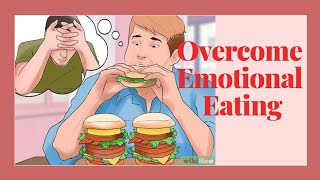
In this short video Dr. Priti Nanda Sibal explains why many people turned to food for comfort during the COVID‑19 lockdown, describing how stress and a loss of body awareness lead to mindless, emotional eating. She outlines a self‑created program aimed at helping viewers recognize the difference between physical hunger and emotional cravings. The core technique she shares is a simple mindfulness exercise: repeatedly stating gender identities (e.g., “I am a woman,” “I am a man”) while noticing bodily comfort or discomfort. By training this awareness, individuals can learn to identify true physiological hunger signals versus emotional urges, thereby reducing emotional eating and gaining insight into personal values and comfort zones. The speaker positions the exercise as an easy, daily practice that can improve self‑understanding and overall well‑being.
So that's what I did. I created a program on emotional eating during this lockdown, and I think that should— I should be able to help a lot of people with that.
Maybe if you can speak a little bit about it, because we, we did get questions where people are asking about eating, uh, problems and eating disorders and how to take care of it.
Okay, so what happens, Neha, is that, you know, I have been giving diet plans because, as I said, I was heading VLCC, but I realized I could never follow diet plans. And during this lockdown, what happened was I realized I was eating out of stress. I was eating out of not mindfulness but mindlessness, right? And then I, then I was going through data and I spoke to some of my friends and realized that a lot of us do that. Food we use as comfort, right? And we do it unknowingly. And second, I also realized that we do not listen to our body. We have forgotten to listen to our body. So I've created some simple tricks around that, and I will share for audience benefit here one of those which I use. So for example, I think you all can do it. Say, I am a woman, and just see how you're feeling— comfortable, uncomfortable. And you can say it loud. I'm a woman. And now say, I'm a man. How are— so how are women feeling when they say, I'm a man? And how is a man feeling or a boy feeling when he says, "I'm a woman." You feel differently. And the difference is not that little that we ignore it, but somehow we have just lost our connection with this. So I see that if we train on this, after some time we get to realize when we are physically hungry, our body feels comfortable and says, "Khana khao," you know, eat food. But when we are physically not hungry but we are doing emotional thing, then our body will not be comfortable. So this simple exercise actually can, one, help you not do emotional eating, second, help you become a better person overall. You know, we talk about values, we talk about culture, but from this exercise you will get to know what are exactly your values, whatever makes you feel comfortable. So this is— I found this very powerful with myself, and I'm hoping that, you know, a lot of people will find power in this one simple trick which they can do once or twice a day and just start to understand themselves, feel themselves.