Dr Avi Ratnanesan - Inspiring Leadership Speaker, NHCCE 2023 by HRD Corp
This content was created by Dr. Avi Ratnanesan. This content was uploaded by Dr. Avi Ratnanesan. This is a YouTube video titled "Dr Avi Ratnanesan - Inspiring Leadership Speaker, NHCCE 2023 by HRD Corp" featuring a speech by Dr. Avi Ratnanesan at the NHCCE 2023 conference. The speech, recorded on February 21, 2024, focuses on leadership development, challenges faced by Malaysian leaders, and strategies for inspiring leadership and organizational growth. Dr. Avi Ratnanesan shares personal experiences and research insights to guide leaders in enhancing their skills and impact.
Questions this video answers
Over 25 years.
34.
Over 100 Malaysian leaders.
Chapters
Good evening, Malaysia. How are you? You've just had Justin Cohen for one hour and you're still alive. Congratulations. How's it feel? Can you do me a quick favor? Can you just quickly stand up? Quickly stand up. Can I invite you to stand up, turn to the person next to you, give them a big high five and say, this next speaker is going to be awesome. Quick high five. This next week is going to be awesome.
High five.
High five. Excellent. Thank you very much. You may sit down. It's a little bit premature, but I will accept that. I will accept that Very kind hospitality. As Ben said, My name is Dr. Avi Ratna Nason. I'm the founder and CEO of Energess. We're an Australian company and I've lived in Australia for over 25 years now, working on leadership, growth, business and helping particularly CEOs and C suite organizations and executives build the greatest companies in the world and help their people grow into.
Amazing human beings at the same time.
Now, everything I'm going to share to you is knowledge that I want you to have that you can take back. And I'm so excited that you're here.
For this session because this session is.
Probably going to be the most important.
Session of the day. Why is that? Well, let me start with a story. Several years after I became a doctor, I decided to switch into a management role after doing an mba. And very fortunately, I got moved up the corporate ladder really quickly to the point that I actually got appointed as chief of staff of Pfizer in Australia. Anyone heard of the company? Pfizer? Yes. I was chief of staff of Pfizer in Australia at the age of 34.
And I was advising the CEO of.
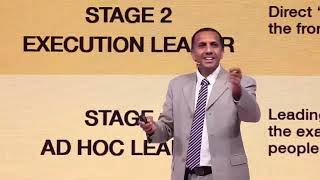
The largest company in the industry. The CEO at the time was a transformational and inspiring leader, a man called John Latham. And John, in his four years at Pfizer, grew it to become the largest and most powerful company in the whole health industry in Australia. When he retired, I wanted to learn from John. And I asked John, John, in all your years at Pfizer, what was your biggest success? Now, John, the former cfo, he's a chartered professional accountant. He used to be a PwC consultant. And I was pretty sure the thing he was going to say was, Avi, I loved it when we broke the one billion dollar revenue record in Australia for the first time in history. I was pretty sure he was going to say that, but he didn't. He said, avi, my greatest achievement is the leaders that I helped build in the company and the impact they went on to make in the world from what they learned here. That answer changed my thinking about success in business and success in leadership for the rest of my life. It set me on a path to think about what is it about change in the world? What is it about business that brings out the best in us if we choose it to be? Who are the inspiring leaders that you think about when you look at the Internet and do any of these faces come up? Elon Musk, Oprah Winfrey, Bill Gates? These are all business leaders that have transformed history. But one of the things that's really important, because before coming here, we did some research with Malaysian leaders, over 100 Malaysian leaders. And you know, one of the things that I found when I asked Asian leaders who the most inspiring leaders were, most of them were Western names. Hardly ever did an Asian name come up as inspiring leader. Now, you could say that that's a problem. But I say to you, that's an opportunity. That's an opportunity for you to start learning how to be an aspiring leader and build competitive advantage in your organization. How do you do that? Well, leadership is not something you're naturally born with. Yes, we do know some leaders who actually seem to be born with that natural talent. But it is built, and it can be built over time. So many of us start off as this ad hoc leaders, right? You're asked to go captain the football team. Maybe you're asked to lead a social group on a piece of travel. Maybe you're asked to lead a family event. We're all given these ad hoc roles as leaders, but then we start being given something formal. Go lead a project at work. Go lead a task that's a little bit complex. That's when we become the execution leader. But then for some leaders, you start to get promoted higher up into the rungs. And this is what I see very often, promotions that happen because you're a technical expert in the role, but you don't necessarily have the people management or professional or leadership skills. Does anyone know anyone like that in the organization? Put your hand up. Some people are like, my boss is sitting next to me.
I don't think I will.
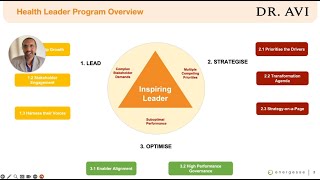
I start coaching managers and leaders in this stage, stage three. And a lot of them want to get to stage four. Because to grow your business to a completely different level, to grow your organization to a completely different size, you need to start building, empowering, and becoming an empowering leader. You need to start empowering other leaders and allow them to make the mistakes, to go out there and make the Big change in the organization that you will. But from all the CEOs that I work with, some of the best in the world, the secret desire for all of them is to be this, the inspiring leader. They all want to inspire others. And do you know why? Because the day you start inspiring others is the day you start inspiring yourself. That is the day you wake up in the morning and you start to love the job that you do. In our research with Malaysian leaders over the last six months, we discovered some of the common challenges that Malaysian leaders experience. One of the things they say to me is, avi, I find it really hard to motivate my people. So many of them are lazy. How do I get them to be more productive? I find it so difficult. Variable motivation amongst the workforce. The other thing that happens that Malaysian leaders have told me about is communication issues. We have different races, we have different accents, we have different technologies. We're using WhatsApp, we're using email, we're using computers. And then in Malaysia and in Asia, we sometimes don't really say what we want. What's your real agenda? It's hidden because we tend to suppress that because we don't want to create conflict. Can anyone relate to that? I see some nodding heads. Another big problem in the Asian context, then we have multiple competing priorities. Lots of projects. My boss told me to do this, My other boss told me to do this. Our head of Global told me to do this. Lots of competing priorities. What do I prioritize? First and numerous distractions. Bosses are telling me, avi, I have a meeting, and my staff are on WhatsApp. They're on email, they're checking the computer. I can't even get them to listen. Engagement is low. And finally, the silent killer, the mental stress, the burnout and the fatigue. As a doctor, I see this in organizations, but not every manager is skilled at asking an employee, are you okay? And not every employee is completely comfortable saying, no, I'm not. There's going to be a whole track about it tomorrow. But the thing about this is that these are real challenges in Malaysian audiences and Malaysian companies. Now, irrespective if you're Malay, Chinese, Indian, Dun lion, lion, you have a brain, you have a heart, and we all bleed red. Every single reaction that you're seeing these people react to comes from the brain at some point. Justin was talking about it earlier. The neocortex is processing the logic. What you're communicating to your employees, what your bosses are communicating to you, the facts they're communicating to you, is processed through the neocortex. The limbic system is your emotions. Any fear or anger that you might feel towards your boss is is being processed through your limbic system of the brain. The brain stem is your survival instincts. It's the fight or flight response. Thousands of years ago, the tiger would jump out of the bush and you would react out of fear and lack of safety. But today the boss is jumping into your office, where's that damn report? And you suddenly feel that panic, right? Our survival instincts are now challenged in ways never before in the workplace. So it's time for a change. And every leader and manager that I speak to has these problems. Changing environments and stakeholder demands, multiple competing priorities, and every now and again, suboptimal performance. Every inspiring leader has to deal with these three big challenges. And after working with CEOs and C suite organizations in over 150 organizations in six countries, I found three big things in common that they all need. Number one, leadership growth. You have to develop your leaders and upskill them on how to change and deal with these changing times. Exactly what all the speakers today have been talking about. I'm really just packaging it all together. Secondly, they need strategized focus, a clear strategy. Because honestly guys, you cannot do everything. You have to pick your bets and you have to decide what's going to give you the biggest difference in your work tomorrow. Do you know your strategy? And third, optimize performance. Please take as many photos as you like from this presentation today. The knowledge is here to be shared. But when it comes to optimized performance, it's all about how do we deal with and troubleshoot the issues that we have on a day to day basis. Now moving through this very quickly, there's lots of detail that I won't go into, but we will cover it a bit more. I am teaching leaders now how to become healthy leaders. Because coming out of the pandemic, so many people want managers that care and that can be designed. When it comes to strategy, there needs to be a clear transformation agenda. You need to know where you're going. And it's absolutely fantastic to see HRDC taking it to a completely another level with the conference they're having that shows great leadership. Finally, when it comes to optimizing performance, there are many aspects of performance that we need to look into. But so many leaders now are asking me for CFBE performance. Do you know what CFBE stands for? Dr. Avi? How can we make our business go do things cheaper, faster, better and easier? Every leader is trying to Achieve more profitability. Now, I asked my friends at Gallup. Gallup is one of the leading organizations in the world when it comes to human resource and leadership development. And I asked them to send me their data on the strengths of Malaysian leaders. They sampled 30,000 leaders over 10 years, and they found that the number one strength of Malaysian leaders is responsibility. So even though we have all these challenges, the number one strength of all of you is that you can actually take on more responsibility. You can actually take on more of a change if we know how to tap into that strength. Why is this important? Twenty years ago, one of the best books ever written about business, a book called Firms of Endearment, looked at leaders that cared most for the people in their organizations. And the study was remarkable. It followed companies over a period of 10 years, one being the S&P 500 companies. These are the biggest companies in the US stock market. Followed them for 10 years and looked at their returns. It then followed Jim Collins Co Good to Great companies. Anyone read the book Jim Collins Good to Great? Yep, these are exceptional companies as well. Followed them for 10 years and then it followed these companies. They called the Firms of Endearment, the companies that clearly demonstrated care for their employees, their customers, beyond the others. These were companies like Whole Foods, Costco, Disney, and so on. And what they found was, was that The S&P 500 companies returned 122% over 10 years. You invest $1 in them, 10 years later, you get 122% return. The S and P, the Jim Collins Good to Great companies turned over 331% over 10 years. But the firms of endearment turned over 1,026% growth over 10 years. If you're ever in business, this is the most important slide you need. If you're ever in HR and your CEO says to you, why should I spend money on training? Why should I invest in my people? This is the slide you need to show them. The amount of growth in companies that consistently invest in their people is far beyond any expectation. This is the ROI slide. The only problem with the Firms of Endearment book is that it didn't tell you exactly how to get there from where you are now. And that has been the basis of my research for the last few years. Because over the last few years, I've been researching 200 different leaders from CEOs, hrs, CFOs, and so on, and decoded and broke down the process of how you get there from where you are today. We broke it down into eight simple steps. You don't have to memorize all of them. Just take a snapshot of it now. But one of the things that we're really excited about is that Deepak Chopra, an author of 90 books, 22 became New York Times bestsellers, regarded by Times magazine as a top 100 icon of the century, endorsed this book, my very first book that is pioneering. But what's more important for that is how can this help you? So today, I want to share this book with you as a gift. All you need to do, send me a WhatsApp, connect with me on LinkedIn, come up to me after the conference, or send me an email, and you will get a free digital download of this book. Because my dream for my career is to help your dream as a leader come true. I'm Dr. Avi. Be well, do good. Thank you so much for your attention.
More from Dr.
EGN Webinar: How to Boost Your Revenue with Neuroscience and AI Techniques - Masterclass with Dr Avi
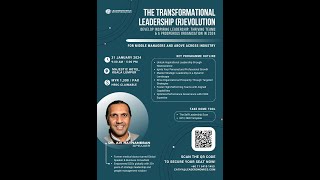
How CEOs Overcome Sales Deficits & Rebound to Profit with Neuroscience & AI - Masterclass Highlights