How CEOs Overcome Sales Deficits & Rebound to Profit with Neuroscience & AI - Masterclass Highlights
This masterclass (by Dr. Avi Ratnanesan) argues that CEOs can rebound profit and overcome sales deficits by combining neuroscience-informed leadership with AI tools. Key claims: leaders’ entrenched neural patterns shape a "decision horizon" with a blind zone that hides lost opportunities; incremental improvements to daily decision-making—supported by neuroscience coaching, data, and AI (including an AI clone prototype)—drive disproportionate improvements in profit and staff outcomes. The speaker presents a three-pillar solution (leadership growth, profitable strategy, team performance) and gives an applied case (Legend/Steve) where profit per employee rose ~35% over 12 months after interventions.
Chapters
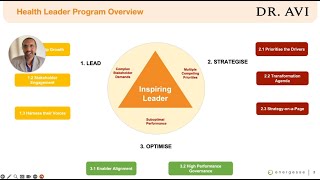
I'm really excited to dive into this masterclass with you, which is really focused on the leaders of a business. You're a CEO, group CEO, general manager, entrepreneur, business leader. This masterclass is really for you. What we are going to cover in this masterclass is very, very relevant for the challenges of business leaders today. We're going to cover some of the market problems that currently exist and what's actually driving deficits in revenue, deficits in sales, and how that actually can be transformed into business opportunities. Well, hello everyone. Welcome to the exclusive masterclass on Rebounding the Profit, how to overcome sales deficits with neuroscience and AI. I really want to acknowledge you for showing up today and investing in your own development and learning, because that's really what will set you apart from everybody else, everybody else in your industry. So one of the things that really, really was interesting at this time, it was really interesting when I kind of went into a world congress and spoke at that World Congress about 10 years ago, was I bumped into a individual who was in the audience and was working with a very large military organization. And this particular person was actually working on the elite, the elite soldiers and the most elite technology in that particular military organization. And they were having technologies like the ones you see on the left, things like exoskeletons, armaments and so on. And they already had AI technology in a very, very advanced manner. But the thing that he kind of told me and what he was sharing with me in the discussions afterwards was he was sort of confiding in me that, hey, you know, Dr. Avi, I'd love to run this challenge past you. And he sort of opened up this sort of top secret folder, which is no longer secret obviously because all this stuff is on the Internet over the last few years. But back then he sort of said, look, we have the best AI technology in the world available to our soldiers right now. But our challenge is how do we actually optimize the mind of that particular soldier, of that particular human to be able to select the right AI tool and use it in the right way at the right time. And that particular insight was a groundbreaking insight because it really showed that even for them, that all the technology that we have today, the focus was not only on advancing the technology, the focus was also on how do we optimize the mind of the human in order to be able to use the right technology in the right time, in the right way to make the right decisions. And some of these were split second decisions. Fast forward 10 into the future and we've all Seen, you know, sci fi, Avengers, Iron man and characters like Tony Stark. A business leader, a CEO who's actually got the technology already in place, you know, in his suit, and actually reviewing data from external sources from the Internet as well as his internal business to help him make split second decisions that are critical for him at the time. Now that's the future, right? But the past is already in the present, right? We already have a lot of these technologies now, ChatGPT and various others available to us at our fingertips. But the present competitive advantage for business leaders lies not only in how we can use AI, but how we train the mind or optimize the mind to be able to execute on using these into our business decisions on a daily basis. And this is a fundamental idea that we need to realize because it is at the root cause of everything. If we look at the science behind this, what's actually happening for business, let's contextualize that concept into today's business reality. In your business environment, you have the same thing that's happening. You have loans, you have debt, you have revenues and cash flow, but they're all shifting. You have those stakeholder requirements and AI kind of technologies coming at you at various paces. And that's all the inputs onto your mind as a business leader. At the same time, your current neural patterns that, that have been developed from your business experience, from your childhood experience, from your day to day interactions with your team members, with your colleagues, with your social networks is actually influencing your neocortex, which is your rational abstract thinking, your limbic system, where it involves a lot of your emotions as well as your brain stem, your flight or flight instinct. Some leaders are able to handle a billion dollar debt and not feel afraid at all. Others are worried about a million dollar debt and have a lot of fear involved in those decisions. And that affects what they decide to do, where they decide to invest, how many people to recruit, and so on and so forth. And so that business environment influences our neural patterns in various different ways based on the training, the neural training that we've had in the past that then results in the decisions that you make in your business on a day to day level. Some of these decisions are good decisions, some of them are bad decisions. But ultimately it's these decisions and actions and conversations. And when I say decisions, it also means what comes out through your voice, what comes out through your arms and legs, right? Your brain controlling all of that results in business performance results. Your decisions can be the meetings you attend, can be how you run those meetings. All of that comes into those good and bad decisions. All your business performance results to date is a result of all the decisions that you made as a CEO, as a leader. Like it or not, no matter what's happening in the external environment, all of that has been processed by you or missed by you at some point in time for you to actually create the team and influence them in the way that currently exists. This is called your decision horizon. Okay? Your decision horizon is all the options that you can see and all the options that you can make with your current thinking. The thing that most people don't know is that there is a blind zone. Okay? There is a blind zone, an area of where you don't know what you don't know the options that you weren't aware of, the decisions that you did not make, that you didn't realize you had a choice to make, but you did not make back then, weeks ago, months ago, and so on that resulted in the sales performance results that you have today. Often when I do coaching, and I coach my clients, my CEOs, we tap into that blind zone. We produce more options. We demonstrate how actually some parts of your brain were actually preventing you from seeing them. Some of your emotions were preventing you from moving forward on them, and some of your instincts were actually holding you back from using them or you weren't using your instincts enough. But that blind zone is really important when you think about your performance results today. What you could have done weeks and months ago to influence that. Right? All this has been processed by your brain at different points in time. Now again, I'm not judging anyone here, it's merely just showing that, you know, this is neuroscientifically what's actually occurring for you. And this is a deep science that is very true. Some of the leading companies in the world are already doing this. Companies like Tesla are developing their leaders using neuroscience, using AI. And, and, and they are actually well ahead of the curve in implementing some of these concepts. And, and, and that's why they grow as fast as they grow. Now. Don't look at day to day share price, because that's a distraction. But, but if you look at how companies like Tesla have been able to disrupt, obviously they've had good products, they've had disruptive thinking, but it's the thinking and the ways in which the teams have thought about things very differently and how they've rewired their brains to do things differently to the rest of the industry that has led to their success. And there are many other companies that are Doing this at the moment as well. I'd love to have a chat about, you know, kind of your growth, your challenges, what's going on in your business right now, and figure out how can we actually help you move forward and give you some personal tailored recommendations on some options for moving forward on your leadership and business growth development as well. So the solution as we see it to the problem of business deficits, of, you know, sort of how do you actually go from the deficits, how do you go from the thinking that's led you to where you are now, and how do you change that using different thought patterns, using AI, to your leadership? We call neuroscience and AI powered leadership, we call it nail N A I L as a summary. And that is probably, we think the most powerful, shortest, fastest, cheapest, best way to get your business back to growth. If we look at this model a little further, we've got three big buckets, right? Many leaders in this space are faced with overwhelming leadership pressures. Many have got multiple competing priorities, and many have also got that inconsistent team performance. I see this consistently over and over again. But there is a solution for each one. From our work with numerous leaders around the world, Leadership growth is one big pillar around how to solve this. The second one is a profitable strategy. Having a strategy that addresses these competing priorities and helps you improve your margins. And third, improving the consistency of your team performance is key to this as well. An optimal decisionship is really about how you actually focus on the, the, the best decisions at the best time. And why is this really important? Every CEO is making 35,000 decision a day. How do we know that? Because that's what every human does. Do I look left? Do I look right? Do I look up? Do I look down? What shirt do I wear in the morning? What color do I wear? What do I eat? Do I work faster? Do I work slower? All of these are mental decisions. Forget the business decisions that we're making. We're making in totality, 35,000 human decisions a day in businesses. The research shows that There are now 400 data sources on average in every company that can actually provide you with decision and inform how you move forward or backward in a business. So as a CEO, you are making decisions around strategy, how you manage your team, who you recruit, how you manage performance, budgeting, rewards, employees, stakeholders, and so on. These are the realms of decision making that you're making every day out of the 35,000 that you have to do in total. Right? That's just an enormous thing and it's no surprise Then that leaders get overwhelmed, they make the wrong decision, the right decision and so on. But here's really what that looks like in terms of the results of your business. Because no, many business leaders have failed to make that connection between what they do every day, who they listen to every day and how that actually has resulted to growth. Your daily decisions, big decisions on people, team investments and revenue. If you keep improving them, and we know the science shows that we make marginal gains in our business over time, that actually leads to exponential growth and transformation. And these decisions can be things like selecting the right market to start to sell, to effectively influencing a colleague or board member to go down the path of the strategy that you're working towards. It could be pitching to customers in the right way, it could be investing in the right talent. All these are big decisions, but we're making them in small increments on a day to day basis which ultimately result to the growth. Right? But the same thing happens if we make mistakes, if we make bad decisions, that same decline can occur. If we miss opportunities in the market on a daily basis, if we're listening to the wrong information, if we're listening to the wrong colleagues, if we're talking to the wrong customers, if we haven't seen certain competitors come into the market, you know, all these are in the blind zone that is resulting in the decline. If we're making wrong choices of investments, if we use the wrong sales tactic, if we started working with the wrong partners and wasted our time there when we could be working with the right partners, all that can lead to losses. What I also see happen a lot with founders and CEOs is delaying critical decisions, right? Taking too long on certain areas that needed to be acted on quickly and acting quickly in certain areas where more thought should have been put into the decision should have been. We need to bring more people together to make and bring them on board this journey. Otherwise, you know, we're not going to move forward. I see all these decisions and these mistakes happening when I talk to leaders who've suffered losses in the business as well. And so it's really important to really tackle that blind zone and actually use support coaches, technologies to actually turn that around. Now one of the things that we're doing, which is really, really interesting and I'm super excited to say that this is a world first almost for us, is actually building a clone. So we actually built an AI clone that's currently in alpha testing and it's the clone of myself, okay? It's the Dr. Harvey clone. It's a younger version of me and my clone has been programmed with a bunch of information from my presentations from, you know, 25 years of delivery and so on to be able to share insights with customers and to help inform decisions if I'm not available. Right. So what I want to kind of ask you right now is a quick question, right? In the last three months, did you miss an opportunity to win a big customer? Did you make a wrong choice in how you invested your time or how you invested your money in business? Was there a decision made where it was the wrong investment of time or money? Did you delay or neglect making a decision which has now led to a significant negative impact in your business? Right, let's type in 1, 2 or 3 if many of those things happened for you in the last week and just type that into the chat box. Right. Most of the leaders that I speak into, particularly those that are being challenged with slow growth or so on, have really missed an opportunity in the market. They often haven't invested their time in the right place but they don't know exactly what they've missed or they should have made a decision and now have some regrets or they should have made, they should have kind of made a quicker decision and as a result have led to not hiring the right person at the right time, which could have saved the company. Now we've worked with many different leaders, as I said, in different countries. This person, Steve, is a general manager in a company in Australia called Legend. His particular challenge at the time was the company was sort of in sort of having experiencing slow growth. One of the big reasons that was that the inability to attract talent or key talent to help grow the company and they were also spending a lot of money on external recruitment fees. Now we worked with Steve and some of his team to actually look at, gather the data around what was driving decision making around the people. What was driving decision making or improvement of culture helped him change those insights, get deeper insights, change that decision making and also which then led to better engagement and better staff retention over 6 to 12 month period. But what was interesting, the company over 12 months actually saw an increase in profit for per employee by about 35%. So when we influence decisions of leaders, the impact on the bottom line can be phenomenal, right? Especially if we're influencing decisions or if you're changing your decisions in an incremental basis on a day to day basis. Look, if you are looking for better, faster business growth, if you are looking for profitability, I'd love to have a chat with you. Drop me a line, take a picture of this QR code, send me an email or WhatsApp me on any of these phone numbers. I'm also on LinkedIn. I'd love to have a chat about kind of your growth, your challenges, what's going on in your business right now and figure out how can we actually help you move forward and give you some personal tailored recommendations on some options for moving forward on your leadership and business growth development as well.
More from Dr.
EGN Webinar: How to Boost Your Revenue with Neuroscience and AI Techniques - Masterclass with Dr Avi