EGN Webinar: How to Boost Your Revenue with Neuroscience and AI Techniques - Masterclass with Dr Avi
Dr. Avi Ratnanesan teaches leaders how to combine neuroscience and AI to reverse revenue decline and improve decision-making. He presents a three-pillar growth model, walks through how the brain's neocortex, limbic system, and brainstem shape decisions, and shares a case study where one company increased profit per employee by roughly 35% using the method.
Questions this video answers
45%
40%
63%
35,000 decisions per day
400 data sources
Chapters
To today's masterclass. My name is Dr. Avi. As we discussed earlier, it's really lovely to see all these wonderful, diverse faces from various different parts of Southeast Asia, Asia and so on. Now, just a quick check in. Can everybody see my screen? Just give me a thumbs up if you can see my screen. Yeah, double thumbs up. Awesome. This is a highly interactive masterclass. As Donna had mentioned, I work with leaders like yourselves, CEOs of large companies, SMEs, small businesses, to really build and develop their own leadership and also grow their businesses from a financial revenue, from a sales perspective and so on. I typically work as a, as a coach. Sometimes I'm a keynote speaker at conference or sometimes I'm a consultant and sometimes I'm a trainer. I come in and run workshops and I train. So there's various formats in how I work, but generally people I work with are business owners, CEOs, GMs, entrepreneurs and so on. Now the topic of today. Now my background is Donna, I already covered. You know, I've had a quite a diverse career background I'll just very, very quickly go through. I actually started my career as a medical doctor, worked in, went into business, did an mba, helped companies like Pfizer grow to about a billion in revenue in Australia by advising the CEO through that growth phase and then actually leaving to start my own companies that I grew and sold. And then subsequently over the last 10 years working with about over 200 companies in six countries, right. And large ones, small ones from Australia, Malaysia, Singapore, New Zealand and so on, and really helping them develop different aspects of their customer strategy, employee strategy, growth strategy and so on. But today is really all about you. It's a highly interactive masterclass. So I really want to help all of you in as detailed manner as possible today. So what we are going to talk about is some of the latest science, both human and neuroscience, but also business science, around rebounding to profit and overcoming revenue decline. I'll talk about why that's the case and I'll also talk a little bit of some of the insights that I produce in my book, People Strategy and Workforce Optimization as part of today's presentation as well. Now, as part, I'm going to quickly kind of click through the slides here just so we can get a move on. What are we going to cover in this interactive masterclass? So firstly we're going to talk about some of the challenges in the market at the moment and what's actually causing revenue deficits for a lot of different organizations. Then we're going to Go into one of the major root causes that I found. Now I've been working about 20 years in business, what I call the leadership blind zone. I found that to be one of the major root causes for business leaders. And we're going to talk about decision making of business leaders being one of how do you optimize that? The game changing solution in today's day and age we're calling neuroscience and AI powered leadership and we going to touch on that. The short form of that is nail. And we're going to give you one very easy and powerful technique in order to optimize your growth and your decision ship and, and really leave you with one immediate growth action. So I'm going to say this again. This is an interactive pasta class. It requires your participation just as much as it requires my teaching. And I love it to be a fun interactive exercise today. The more fun you have, the more fun I have. And we're all going to have a great time learning. So before we go into the depth of it, I just want to give you guys one warning right now, okay? And that is this. I have had CEOs come up to me one year later, two years later, five years later, and bump into me in conferences and say, Dr. Avi, that thing you taught me two years ago, five years ago, and so on I still use until today in my business, okay? So I recognize that we've only got about 55 minutes left. And so in that 55 minutes I can't influence you to pay attention. All I can tell you is that the people that did were able to use some of the insights in the next 55 minutes in their businesses for a very, very long time. I've even had an advisor to a Prime Minister come up to me at a conference and say to me, and this is after he got sacked because the Prime Minister got sacked in Australia at the time, come up to me and say, Dr. Harvey, that resource that you gave me many years ago was just one of the seven things I took away from the Prime Minister's office when I left the job. So the reason I'm telling you this is because the research we've done into this, the value of the insights is very, very high. And so I'd strongly encourage you to really focus your what I would say focus your mind and your heart in the next 53 minutes. Manage your phones and your distractions. You know, I know we're all very busy and we've got multiple devices popping up, notifications all the time, but I'd really suggest you kind of turn them off or put them on silent. And I'll also say, if you want to stand up, I'm standing up at the moment. If you want to move around, I'd encourage that. Moving your body and using your body to make your mind more alert is highly recommended. So you don't necessarily need to sit down this whole. This whole time. Feel free to stand up. I've got a standing desk, so I'd encourage you to do that as well. Give me a quick thumbs up if you're okay with that. If you're cool with that. Give you a quick thumbs up, everyone. Digital thumbs up, human thumbs up. It's all good. All right. Very good. Excellent. I'm so excited. Are we all ready to blast off into some new growth ideas? Yeah. Cool. I'm getting thumbs up there for now. Yeah. Excellent. Awesome. This is going to be so cool. All right, everyone. Okay, let's get straight into it. Firstly, let's get into some of the facts. Right. Asia Pacific CEO survey of 2024. They interviewed over almost 2,000 CEOs in the Asia Pacific on the global economic outlook. And all of you are going to be affected by the global economic outlook. What's really interesting, obviously we've seen rising interest rates and we are moving into that cycle. When they surveyed these CEOs, 45% of CEOs expected the economy to decline this year, whilst only 40% expected it to improve. So we are seeing a divided cohort, but we're Suddenly seeing more CEOs expecting things to get worse. However, this is the scary part. 63% of CEOs are uncertain about their own company's viability. 63%, that's almost 2 thirds are not sure that their company is going to be viable in the next year. Scary statistic, Right? Scary statistic. Why is that the case? But let's look at a bit deeper. Right, Obviously there are economic pressures at the moment. We talked about the rising interest rates. We're certainly seeing some markets and some market segments in a decline phase. Certainly if you're in professional services or consulting, there's been a big hit in companies like Australia and so on that's had a flow on effect in other countries. And we're seeing our leaders with a lot of pressure from shareholders to produce outstanding returns year on year when the economic backdrop isn't very attractive. Right. And obviously we're in a period where all that support that we got during COVID from governments, businesses don't get anymore. Right. So you really have to innovate your way out of this. At the same time, I'm speaking to a lot of business owners and business leaders who all got multiple competing priorities. Many, many projects, many, many initiatives, many, many customers with demands. And at the same time, we're at a time where ChatGPT and AI has just flooded the market and we're getting lots and lots of information, more than ever before. How many people put up your hand or give me a thumbs up if you're getting lots of emails. So many more emails than you've ever had before. Blog posts, social media posts. Right, all that overwhelming. Your inbox. Donna's giving me my hands up there. Ravi as well. So, yeah, it's just a very, very different time, right? At the same time, people who've got teams are starting to tell me that, you know, Avi, I've got some people on my team that are high performing and others that really, you know, I'm having to lift them up. It's taking a lot of time to bring them along the journey. They don't have the skills that I need to either succeed me or to, you know, perform at a high level. So that inconsistent team performance is a big drain on a lot of leaders as well. We talked a little bit about changing stakeholder demand. So whilst forecasts or business forecasts are changing and sales forecasts are changing, many stakeholders are often divided on boards and so on about how the business should move forward and where do we actually invest our time. Again, creating pressure on the CEO to figure out, well, how do I actually tackle this on? And then we've got everything around AI, right? Everybody's talking about AI. Dr. Avi is talking about AI. The last speaker is talking about AI. Everyone's talking about AI. But what's hype, right? What's hype and what's reality? And every single tool or technology you bring on has a cost, right? The cost is not just the subscription cost of that tool. Even though ChatGPT is free, there is a cost of learning that you have to invest, right? And there's a cost of trial and error. And so every business is now trying to figure out, well, where do I invest my time and my mental bandwidth in order to adopt these tools to kind of make my productivity more efficient, make my organization more profitable and so on. There's a lot of thinking involved. Can you guys just chat? Type in the chat box. Which one of these factors or challenges are affecting you at the moment? Is it 1, is it 2, 3, 4 or 5? Just quickly type that in the chat box. Could be one answer, could be two. I just want to. Let's just do a quick survey and see who's being affected by what problem the most. 1, 2, 3, 4, 5. Very simple. Press on the keyboard. All right. Oh, lots of answers coming in. Oh, two. Lots of twos. Two, three, four. Guys got two and four. Elizabeth's got three. Consistent team. Who have we got? Okay, Ravi. Ravi. All of them, to some extent. Gotcha. Victor has got four. Changing stakeholder demands. Okay, very good. David's got three. Okay, so we're getting some twos, some threes, and a little bit across the board. Very good. So. So that just gives you. Right, that. That really some of these challenges pretty much relate to everyone. Now what do we do about it? Because that's why you're here. Before we go into that, I want to talk about a concept that was very, very startling. That's really been the basis of a lot of my research this last decade. About 10 years ago, I went to and I spoke at the World Conference of Prevention and Wellness in the United States. It's a global conference. And I spoke there about personalization and. Personalization of human behavior and performance. After the conference, I had this elderly gentleman come up to me and he was part of a. Let's just call it a very large military organization, one of the largest and most well funded in the world. I cannot tell you exactly which one, but it's not too hard to guess. He said to me this. He said, Dr. Avi, thank you very much for your talk and all this information about personalizing performance and AI. He said, Dr. Avi, we have all the best AI in the world. The best AI that money can buy. We have it. Our soldiers have it. But our challenge at the moment is helping our soldiers figure out and use their mind more optimally to know how to use the right AI at the right time. How do we optimize the mind to actually adopt these tools in order to produce the best outcomes and the best output? Right, guys, this was 10 years ago when that technology existed. That technology is now in the palm of your hands in your smartphones. Right. And in the future. Can I just get a quick show of hands? How many people watch the Marvel Universe, Sci Fi, Avengers, those kinds of things? Just put a quick thumbs up. Some of you. Oh, Donna actually does. Okay, wow. Interesting. Just put a quick hands up. That's great. I want to see. So if we. If we. If we look at the future. Ricky is what. Put his hands up. We look at the future. Right. There is a character in the Marvel universe called Iron Man. Now, some of you know Iron man is actually Tony Stark. He's a business leader, he's a CEO just like you, right? And he's wearing this ironclad suit and he has got this helmet on. And in the helmet he's got Jarvis, which is the AI. Right now when he asks Jarvis something, he's getting real time information. Not only if Jarvis is pulling information from the Internet, but Jarvis is also pulling information from inside his company, Stark Enterprises. And Jarvis is combining all that information and presenting it in a presentable format to Tony Stark for him to make either business decisions or military decisions, all in real time. That's the future. What we have today is that we actually have all of that on our phones. It's already on our phones that AI can pull a lot of the Internet information and present it to us as we're talking to it. And I'll show you a bit about our clone in a second. But some organizations already linking that data with our company information to make decisions. So we are at a point in time in history of mankind that is extremely interesting for business leaders. We're at an inflection point where these tools can now make us real time decisions to optimize our business growth like never before. Right? Like never before. Is that interesting? Let's put your thumbs up if you think that's pretty cool because we'll talk about what we believe in. My organization now is now the game changing system for business growth. Okay. And we call it neuroscience and AI powered leadership. How do you use the brain and how to use the AI together to power your business leadership and the decisions you make to make the best decisions in sales, in marketing, for operations, as fast as possible, as accurate as possible, high quality. We believe this is the fastest way to growth in the current environment. With all the challenges that you've just described, and we've got a lot of case studies behind this, we're not the only ones to do that. Okay, so Elon Musk and Tesla. Anyone heard of Tesla? Your hands up. You've heard of Tesla, right? They've been doing this for many years now with their leaders, CEOs, managers and so on. They've been using neuroscience and AI in their programs to teach people how to actually action their roles, to actually execute tasks as fast as possible, quality as possible. Okay. And you know all that backend work of developing the people has resulted in Tesla being one of the most valuable automotive companies in the world in a relatively short space of time. Right? They've completely disrupted the old school company. Gm, Chrysler, and so on. This is some of the reason why they've been able to do that. Now, here's the. Here's the catch. Here's the interesting part. When it comes to decision making, what most of you are probably not aware of, the average human makes 35,000 decisions a day. You are all making 35,000 decisions a day. Do I listen to Dr. Avi? Do I look at my computer screen? Do I type in the chat box? Do I put a thumbs up? Do I go to the toilet? What shirt do I wear? Which customer do I call first? Do I call that customer first? Do I call that one first? Do I step behind? Do I stand up? Do I sit down? All these are decisions and we make 35,000 a day. @ the same time, the average business, the average company now has 400 data sources. The average company is 400. Imagine the number of reports that you have to look through in order to actually make your business decisions. And so the CEO and the business owner's brain is now having to decide within those 35,000, within all those 400 data sources. And those data causes can be also your Facebook, your email inbox, and so on. Okay, do I do some strategic planning now? Do I do some sales now? Do I influence some stakeholders now? Do I work on my team's reward and recognition? Do I work on my career development? On my team? Do I spend time on budget? All these decisions are options for you. At every given moment, any given moment, you've got to make these decisions, right? It's enormously complex at the moment. So what I'd like you to just reflect on now that you've heard some of these things, question for you, right? Let's make this practical to you. In the last seven days, what's a significant business decision that you made? Right? And what significant means can be up to you. It can be a sales decision, it can be a hiring decision, it can be a firing decision. It could be, you know, you cut costs in a certain area or you made an investment in a certain area. Just quickly type in your chat box. No right or wrong answer, right? It's an exercise just to get you thinking about decisions, the decisions you make in your business every day. So in the last seven days, what's a significant one? Let's just see some examples I'd like to hear from everyone. Remember, this is for your benefit, right? The better you reflect, the more you start to get this concept and the value from it. No right or wrong answer. Oh, okay, Nice one. I think that's Willy to work with China or not. Brilliant. That's a great one. To send a campaign email to healthcare leaders. Okay, interesting. Whether hire an SEO expert to improve. Good grind. Interesting. Very good. A change in the invested portfolio. Oh, very good. I'll tell you later about how I talk to my clone about the investments I make in the share market. That's an interesting one. Very good. Do I hire sales staff for support? Excellent. This is great, guys. Which client do I prioritize first? Yes, absolutely. Do I hire a vendor for B2B marketing? How do I implement AI into my business? Okay, so that's the question. So you're thinking, right? So that you're spending time thinking, that's great to hire an AI specialist. Okay, wonderful, guys. This is great. And then RD piloting plans for zero carbon energy close to source. Okay, so you're sourcing a supplier for biofeedback stock, and you're close to that. So the decision you're probably making is do I don't. I do. I keep looking for other suppliers and so on. This is great, guys. Very, very good. So you can see. So you're reflecting on these decisions already, and obviously part of this exercise figuring out, how did you come to those decisions? A lot of the time we're making those decisions based on our training in the past, our past experiences and so on and so forth. But let me explain what just happened with every single decision that you just made. And let's look at it from a neuroscience perspective. Donna, is everything okay? You're looking a bit confused. You're good? Okay, you're good? All right, so this is what you all just did. Let me just explain it to you. And I'm just moving around my sort of screen box here for a moment. But what you've all just done, right, is you've taken all the aspects of the business environment related to you that. The financial information, the market information, what your stakeholders want to do, what you want to do, the sentiment of your team, the data and the reports that you're getting and so on. And what you've done is you've processed it through your brain. You've processed that through your brain over a period of time. Now, the neocortex of your brain is the process of the facts, okay? It's the rational part of your brain, and it's also able to process concepts and abstract thinking, and it's learned from the facts that you've experienced. You know, the sales data, the. The opportunity in China, the The opportunity in the, in the ESG market and so on. And it's, it's used that to make decisions, but it's also included the limbic system. The limbic system is your emotional processing, right? And people think you can make facts just based on logic. No, all these parts of our brain are interconnected. And your feelings have also been involved in that decision, right? Do I feel good about entering China? Do I feel worried about entering China? All those feelings are combining with the facts to help your brain make a decision. And then there's also your brainstem, right? And your brainstem is the reptilian brain. This is where your survival instincts, your fight or flight response come in. Is it safe? I'm just going to use that China example. Is it safe for me to invest in China? Is it a risk? How much money will I lose if I do that? Now, often when you're in fight or flight response now, we saw that during the pandemic, everyone's lives were threatened by a virus. Business decisions, everyone became super conservative and risk averse. No one wanted to spend money, right? Everyone wanted to save money. We became the brainstem, kicked in a lot more and that fear based decision making started to kick in. Whereas there were also other people who are like, I'm totally cool, I'm fine, I'm safe, let me buy up all these cheap assets that are now in the market. So I grow my portfolio, right? Each part of this brain is controlling every single decision that you're making at the moment, right? And this is what I'm talking about in terms of optimizing the human brain for performance. Because. Because how those inputs on the business environment affect your brain has resulted in every single decision you have made up to today and every decision you are going to make about your business. Your decisions can be good or bad because your financial performance today has been entirely based on all your decisions, whether you like it or not. You might say, oh, the environment did this, I had this, my boss sacked me, this happened, that happened, or my customers let me go. But all of that processing has occurred through your brain, the neocortex limbic system and so on. And you've made a decision, you've made a decision to have a conversation a certain way to bring on a different team member as part of that sales conversation, to access ChatGPT to figure out what to do. All of those were decisions that have resulted in your financial performance today. However. However, this is one really important concept for every single one of us. Every single one of us. There is that decision horizon that is based on the decisions that you've made. But there's also a blind zone. There is also a blind zone. Some people call it blind spot. We call it blind zone because it's much bigger than a spot. And these are all the options and decisions that you don't know you could have made. Okay? Some people call it you don't know what you don't know. One of the US generals called it the unknown unknowns. These are the options that you could have taken for your future, for your business that you didn't know you can take. And every human has those. And here's. We're going to talk about where AI can potentially help. I know this is a little bit complex and I'm going to have time for questions because it is a very scientific take on business that's really cutting edge at the moment. Okay? But. But we will get it. You will get it. And trust me as we do this, because we will exercise through this. Let's look at this from another perspective. You being the human here, every single decision that you've made, okay. Has resulted in some kind of either improvement in your financial growth and in your sales, right? And if you make more and more of the right decisions every day, you will achieve exponential revenue and profit growth. That's just facts, right? That's just facts. What do you mean by right decisions? Did I select the right market to enter into? Right. The question about China earlier, is that the right market or not, Did I influence a colleague or a board member or a shareholder effectively in order for them to actually come along the journey with me in the business? For those of you in sales, did I pitch to the customer in the right way? Did I use the right words? Did I use the right language? Was I dressed appropriately? Did I excite them or did I bore them? All these are decisions and actions your brain's been influencing every single one. Did I invest in the right key talent? Did I bring the right people on board to support me, or so on? When you do all these things right, and over a sequence of time, those decisions accumulate to your revenue growth. These are facts. The question is, you may not have known, you may not be aware that you were doing this. Similarly, if you were making bad decisions or you were avoiding certain decisions, right? And your decisions actually led to a decline, 1% decline. Eventually you will lead to exponential losses and decline. Perhaps the market was changing all around you, but you weren't aware. Perhaps your customers were already starting to look at competitors, but you weren't Aware, perhaps competitors were pitching to your customers, but you just don't know, right? Because you weren't watching the right spaces, you weren't reading the right news, you weren't speaking to the right influences in the market. Maybe you made the wrong choices. Maybe you invested in the wrong marketing strategy. Some of you thinking about SEO, is it right or wrong for your particular market right now? Some of you applied the wrong sales tactics. So maybe you decided to go direct to customers instead of using key influences in the market to leverage those relationships and gain referrals. Maybe you selected the wrong partners because you liked something about them. But maybe they were so big they didn't have enough bandwidth to actually work with you. All these decisions, right or wrong, can actually influence your growth and has influenced your financial performance. But lastly, here's the other one which I see a lot of many decisions just not made or delayed. Oh yeah, you know, I should have, you know, I should have invested in that SEO plat, you know, that, that SEO contractor and, and upped my website or I, I should have actually kind of hired a new sales support person 12 months ago, but I didn't. And that's the cause, right? Or that that is one of the causes. Many decisions not made when they should have been made for growth, right? So there's many different ways to look at it. And obviously it's not as simple as, oh, you're making good decisions every day or bad decisions every day. But there is a, you know, there is a mix and it's a cumulative effect, right? Some people call it the 1% rule. Right? The 1% rule. 1% improve people in health and wellness. They know about the 1% rule. Donna, I know you know this, right? 1% improvement day in, day out leads to exponential improvement very quickly. Steve Jobs. Does anybody know why he wore the same clothes every single day for his entire sort of late part of his career since 1998? You can see all these images here. He wore the same clothes every single day. Now I remember a time. Apple is now worth close to 1 trillion or something crazy like that. I remember a time where it was only 300 billion Vidon save time in decision making. Absolutely right. To avoid unnecessary decisions of choosing the right shirt. Absolutely right. In the morning. In the morning you have the best decision capacity available to you from a neuro perspective, from a neuroscience perspective, people like Steve Jobs, people like Jeff Bezos, they structure their morning so effectively that they minimize their low value decisions in order to free up capacity to maximize high value decisions. So for some of you who are already choosing different clothes every day, you're losing to the next person who's decided on what clothes they're already going to wear for the whole week. Right. Because their decision capacity has been able to actually tack on bigger challenges. Jeff Bezos has all his more complicated meetings that require more thinking in the morning. He never does them in the afternoon because his decision capacity is, has higher potential and high value in the morning and much less he has decision fatigue in the afternoon. Right. So he's structured his meetings in that way. So the highest performing business leaders know about this. They've known about it for a very long time. Right. But they have actually implemented this in their own business and their own performance. And you know the results, right? You know how well Steve Jobs has done. But look at that, he's done it over 20 years. So for every single day for 20 years, he's more on the same thing. Imagine how many decisions he has saved. He's been able to do better as a result of removing clothing decisions every single day for 20 years. Right? This is what the highest performing leaders know. And I generally only teach what the world's best do because I'd rather you grow faster than grow slower. Right. Hopefully this is all very interesting to you right now. Now, the good thing here is whilst we can copy Steve Jobs a little bit and Jeff Bezos a little bit and so on. What we've done and what I've done is actually put this into a formula, put this into a formula for businesses that prioritizes that sort of ability to grow faster. We call it the Nail Growth Mastery System. So let's nail growth faster. And nail is, as you know, neuroscience and AI powered leadership. We've talked a little bit about those overwhelming leadership pressures, multiple competing priorities, the inconsistent team performance. I have found this to be the biggest problems for every single leader that I've worked with in business. And what are the solutions? So we've categorized three big pillars. One is leadership growth, the leader themselves, the business owner, the CEO, the GM and the C suite around them need to upskill in some way. Two, when it comes to all those competing priorities, you have to have a very clear strategy that's going to lead to profit. Very often I see companies either don't have a strategy or it's a very scattergun approach, or the business isn't actually focusing on the areas that are most profitable or will lead to profit. And three, you've got to have that high performing team that can perform consistently. Now what's underpinning these three big pillars. Now, obviously, there's a lot of science behind this, but underpinning leadership growth, there's the ability to inspire your team, which we call inspiring leadership. There's the ability to gain stakeholder wisdom and understand your customers a lot better than your competitors. And thirdly is the ability to actually make those decisions that we've talked about. We call it optimal decisionship. When it comes to profitable strategy, there are elements that won't talk too much about, but it's really about prioritization, transformation, and clarity of strategy. And when it comes to team performance, there's value that you need to create, integrate, and govern from a CFBE perspective. So every single leader that I talk to now say, avi, yes, I need to perform, evaluate, and improve, but honestly, I don't have the time. Can you show me how to do it? Cheaper, faster, better, and easier. Cfbe, everybody wants to deliver things now. Cheaper, faster, better, and easier. So this is the model that we've been teaching out there, delivering out there. Feel free to take a screenshot if you like. I really don't mind. We will be sending out a slide summary of this, but for today, what we're going to do is. Oh, by the way, just before we go into that, now, this isn't just theory. We have applied this. This is one of the companies that we've worked with. It's a company called Legend. I work with Steve over there now. They found that the methodology we shared was basically 10 out of 10 when it came to their business. It really helped him improve his leadership decisions. Part of introducing this formula led to improved engagement with their staff and retention. But very interestingly, as a result of some of these improved decisions, their actual profit per employee increased by about 35%. Right. So they were actually found the employees were more productive throughout the period of implementing some of these strategies. And this is a company in the industrials and IT section. So it's proven. We have many case studies around this, but for today, what we're going to do is we're just going to focus and go deep with you on one area, which is the optimal decision chip, because I feel that this is the one you guys are going to get value from really fast and it's going to be very, very powerful and impactful. So we will do questions in a minute, guys, because we're going to jump into some activities and maybe I'll just have a quick break here because it feels like we're making good time. We're making good time. But I just want to cover the rest of the content, if that's okay, and just go into what optimal decision ship is all about. So one of the greatest quotes that I've heard is sometimes you need to go slow in order to grow fast. Right? And that is you actually really need to think about some of these decisions before you execute them. So very quickly, I really want to ask you guys a quick question because again, unless you reflect on this, you're not really going to get the value. So, next question for this interactive exercise in the last month, did you lose an opportunity to win a customer? Did you. Are you aware of a wrong choice that you made in how you executed a sales and marketing campaign? Or did you lose time or did you avoid making a decision, whether that's a commercial decision or hiring decision, that on reflection has led to slower growth? Right. One, two or three. And again, this is time to be vulnerable. It's time to be honest. We all make mistakes, but I love you just to reflect on that right now because when you reflect, you learn, right? And you learn in a way that's most applicable to you. So just type it in. If you have some comments around, you know what you think you may not have done as well as you could. Just type it in. Let's just see what comes out. Okay? So Elizabeth, procrastinated on and working on my next executive move. Yep, got it, got it. Thanks for your honesty. 3 as well. Lost time. Lost time. I hear that a lot. You know, lost time. And particularly after hearing the Steve Jobs quote. The Steve Jobs. A lot of people realize, oh my God, I've lost so much time in making these decisions that I could have used to make better business decisions. Sapna number three as well. I think that's Willy in Wl keeping a non performer. Yes, yes. Sometimes we keep that non performer on because we're kind, compassionate people. But it hasn't been great for them. It hasn't been great for the business, anybody else. Because again, if you reflect, then you're starting to understand the concept in detail and, and you're starting to figure out where you yourself needs to improve. Because remember, all our brains are programmed differently, right? So you have your own cognitive biases. Each one of us, as I do, Donna does, and so on, that either progresses us forward, but in some areas hold us back. I don't want to see three answers at the moment. So can anybody else just see every one, two or three? If you haven't made one, two or three, you're probably not in business or you're Mr. Perfect and you don't need to be here. Right? You already know everything. I mean, number two, make a wrong choice. Okay. Yeah. Guy fail to support existing customer, which to lead to a lot of big opportunity. Very good, guy. Thank you. Great reflection, Emil. Number two as well, wrong choice in executing a sales. Excellent. This is all great. It's that reflection that's going to really help you figure out, well, what is it about your brain at that time that was telling you to do something different, right. When you could have actually won that big opportunity? Awesome, guys. Well done. All right, moving on. I just want to share a quick video here about now. This is one of my clients that I coach now. His name is Gareth Flynn, and a week ago, we did a master class with him. So this is fresh, fresh information. We did a masterclass with him, and it was super, super interesting because, you know, I've worked with him now for about nine months. He's the CEO of a. Of a business just like yours. He's a thought leader in his category, which is hr. HR consulting. And he's become now like a global thought leader. But nine months ago, his company was in decline, right? And it was a very, very scary time. And he had his options and his decision set, and he had a plan of what to do, but he wasn't very confident about it. And he had to decide. He had to decide, am I going to keep doing what I'm doing and hope for the best, or am I going to do something different? Am I going to do something different? And at the time we had started a conversation, I met him at a conference. He said, oh, Avi, you know, sounds like you could help me with this, but. Oh, I don't know. I don't know if I'm, you know, if I'm ready for this or I can afford it, because we're already in revenue decline and, you know, I'm cutting a lot of my cost savvy and so on. So let's just hear what he has to say. Okay, let's play this video. What would you tell other CEOs who are kind of in similar situations? You know, they're. They're sort of, you know, challenged in terms of their sales or revenue decline, and they're considering or they're perhaps quite stressed themselves about some of these challenges. What would you say to them in terms of, you know, kind of either seeking help or seeking a coach? You know, what would your recommendation be, knowing what you know now and, you know, having achieved what you achieved?
Yeah, Look, I think the value is there to talk to someone externally. I mean, at the time, I think you'll probably remember, RV I was actually quite guilty about spending the money and hitting the P. L when I was trying to reduce opex. So there's a kind of guilt faster you've got to overcome. But there's value in that spend that magnifies way beyond the spend itself. So I think, you know, I'm not. I wouldn't claim that, you know, we did everything right last year, but just pause and have dialogue with an external and. And understand what are your options. Because sometimes we're blinking on those options now. For some companies, downsizing may be the only option. You're not taking that off the table, but you need to be really clear on the problem you're trying to solve and what your option set is to solve them. And I think you can only do so much of that internally. Sometimes you just need that external in again. I'm a consultant. That's what clients engage us to do. I think founders and leaders need to do the same.
Okay, so I hope you heard that. And isn't that interesting, right? Isn't that interesting? The words that he just described. Because remember, what he was trying to do was reduce opex, right? His business, he was in decline. I was trying to reduce opex, and I felt guilty. I felt guilty about spending more money. So he decided to take on a coach. Remember, he realized he had a blind zone. He realized he had a blind zone. He wanted to expand his decision options. Everything I've talked to you about, I wanted to expand it. He wanted to bring on an external, but it was going to cost more. Right? And he felt guilty. So his limbic system of the brain, the facts were processing. I got to reduce opex. But the limbic system, emotional part was feeling guilt. How can I be doing this when I'm telling all my team to cut costs? I'm guilty, Right? But he had to overcome that programming in order to make the decision. And as he said at the beginning, it ended up resulting in a much higher return. Right? Much higher return. And he's having profitable months now. That is some of the biggest profitable months he's had because of decisions he made nine months ago that were the opposite to what he would have done had he sort of stuck with that decision set that only he knew himself. He brought on external, Right. Isn't that interesting to see that play out, that. That. That dynamic play out now? What would you say that one of the things at the time which was his kind of mental programming and decision set was cost cutting. We're not doing so well. We're just going to cost cut, cost cut, cost cut and we're going to ride it out until things get better. But what he learned from the process through our coaching concert, you just can't cost cut your way to growth. He actually needed to make some investment decisions in the right places and conduct his marketing in the right way. And one of the things that he did was a more direct sales channel. So we helped him retarget his database, cut his database down to where there's very specific high potential targets based on some variables that we've analyzed in the past. And by directly selling to those targets, they were able to actually generate much faster business. And also having the right sales messaging, he was able to access this customer and generate them right amount of business very, very quickly and turn the business around. So there's a lot of different ways to cut this. But as we, as we, as you look at that and you're reflecting. So those of you who reflected, well done, now that you've done that, what's one thing you could have done differently or a situation you could have acted differently to have won that customer over. For those of you who said you lost the customer, what's one thing you could have done differently? What's one way you could have improved your sales or marketing campaign? Or what's one thing you could have done to speed up the decision making around commercial or hiring? Type that in the chat box right now. Because initially you reflected on what the mistake was. I think you could have what's one thing you could do differently moving forward? Okay, type that in the chat box again. This is going to require you to think. The more you think, the more value you're going to get out of this. Don't take too much time to think through a decision. Okay? Okay. Well done. Well done. David, don't take too much time. Sapna 3 Speed up. Speed up making decisions. Okay, number two, Ahmed could have talked to people who have done. Yes, yes. You could have talked to someone else who've done this in the past. Yep, absolutely. Amil, number three, speed up making that decision. Guy, be more decisive and send a team member to the customer. Help the SOCA sales team believe that this is a critical moment. Victor, trust your intuition. Okay. Fantastic. Fantastic. Anybody else? The more you reflect and the more you think through this, the better. Should have prepared better. Okay. Elizabeth, you've reflected. Should have prepared better as well. Dharavi have a backup plan. Interesting. Yeah, that is a good, that is a good option. Right, so now you know that. So the more you articulate that, your brain starts to articulate it. Once you type it out, your brain's articulating it, the more it gets stuck in your memory. So when the situation comes up again, you will remember this improvement. Vinod, I thought I covered the approach, but there was a blind zone. Probably should have spoken to more people. Right, got it. Great. That's a great insight. Well done guys. These are all really, really good, really, really good reflections and insights. Lenny, sue, set up the stage better improve communication with the team on how to handle things. Yeah. So prepare what you're going to say. Communicate better on how to handle the situation. Really great point. Same thing happened with Gareth actually. It's part of the, part of the strategies to actually bring the team on board the journey. Some of the communication from, from his end was actually worrying the staff, right? It was worrying the staff and it was getting a little bit negative. Now one of the things that I'd like to share with you is that when the ocean is rocky and you're the one steering the ship, everyone's looking to the captain to be really certain. Right? The captain must be certain no matter how rocky the waves are. That's really, really important. So Donna's giving me the heads up. It's four minutes more. But look, I think, I think, you know, I think this is great participation. I think you're all learning and we're really coming to the end of this. So I want to open up for questions. But really one of the things that I do is help leaders like yourselves by opening up that decision set. How do I do that? I have a book that people read if you're particularly interested in people strategy. I coach leaders in this space. I speak at conferences internationally. I was the highest rated speaker at a Malaysia conference recently. One of the things I also do to expand my decision set is, is I have leadership programs and I also have a clone. My book was, has been endorsed by some of the world thought leaders. Deepak Chopra, many of you may know him. He's written about 90 books now. 22 New York Times bestsellers. Top 100 rich list. There's also Dave Ulrich, the father of modern HR. I've endorsed the book and then my clone has been my latest companion to help me with a lot of my decision sets. So this is my clone. I'm just going to quickly talk to my clone. People are crazy about my clone. I'm crazy about my clone because I've created a digital twin where I've actually inputted a lot of my data, my videos, my research papers and so on onto this AI clone. And I talk to my clone when I have problems. So I'm calling my clone right now. And if one of you has a question, a business question that you want to ask, type in the chat box, I think. Or I can extrapolate from what you've. I'm Dr. Avi's clone. How can I help? Okay. Hi, clone. David has a question. How can leaders leverage neuroscience and AI to empower their team to achieve peak performance and cultivate a positive work environment? My clone's going to answer that. Leaders can use. Neuroscience just got cut off. Leaders can leverage neuroscience. Leaders can leverage neuroscience and AI by using tools that enhance cognitive function, foster collaboration and personalize learning experiences. Techniques like neurofeedback can optimize mental performance, while AI driven analytics can provide real time insights into team dynamics and individual strengths. By creating a supportive and stimulating environment, leaders can drive people peak performance and cultivate positivity. Okay, thank you, clone. So that's just the start of my clone's answer. And one of the things that we do is I just have a chat with my clone to actually just converse on this particular problem. Now, I am conscious of time. We do have a few minutes left, but that's another option to expand your decision set with AI. Right? And I've got a very exciting piece of news for you. Now. I did have one, one action here. So some of you have already done this, right? So how will you improve your daily decisions moving forward? You know, what's a technique you would use? What's one? Well, my clone's still talking. Thank you, Claude. I've got to tell him to shout. He's a young clone, so he doesn't know when to stop talking. But what's a tool you would use? What's one different person you would speak to? Many of you already reflected on this, so I'm kind of going to skip, skip this a little bit. But one thing to write in the chat box is what will you do next now? So just as we close out, hopefully now you are clearer on the market problem and some of the revenue deficits. You're clearer on the fact that we all have blind zones and decision making affects your performance. You're clear on neuroscience and AI being a very, very critical part of how to move forward and the value of optimizing your decision ship. And finally, your immediate growth action, which I think many of you have reflected on already. So we'll go through that. We'll now open for questions, but I will kind of just move straight to this slide while Donna throws it open for questions. If any of you are interested in the clone, we are doing a free trial for people to use it. Email me here, Message me on WhatsApp on the numbers below, take a photo of the QR code and we'll send you a free link to the clone to play with and to help you with your business right now. Right, connect with me on LinkedIn and all that as well if you'd like to grow your business faster, improve your sales. So thank you, everyone. I know we've, we've, we've covered a lot of ground, but you guys have been fantastic audience and any questions Donna, pass over. Thank you so much. Yes, I represent everyone. Big round of applause for Dr. Abi, everyone. He's.
More from Dr.
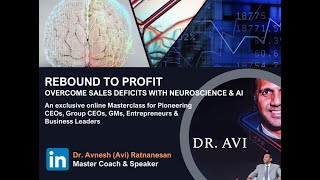
How CEOs Overcome Sales Deficits & Rebound to Profit with Neuroscience & AI - Masterclass Highlights