20 Years of Women's Health Research Distilled | Dr Betty Murray Interview
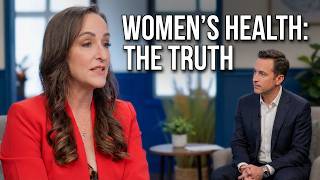
In this extensive interview, Dr. Betty Murray shares her 20‑year journey from a sales‑tech career to becoming a women’s health researcher, nutritionist, and founder of Living Well Dallas Functional Medicine Center. She recounts her personal battle with colitis, the catalyst that led her to pursue nutrition and functional medicine, and the creation of her first integrative clinic in 2006. Dr. Murray explains the distinctions between functional, naturopathic, complementary, regenerative, and precision medicine, emphasizing a systems‑biology, root‑cause approach that blends conventional Western care with lifestyle, nutrition, and emerging therapies. She describes the clinic’s patient focus—primarily women aged 35‑65 dealing with autoimmune, perimenopausal, and menopausal issues—and outlines the wide array of modalities offered (bioidentical hormones, gut health, qEEG, DEXA, bodywork, counseling). The conversation shifts to her telemedicine platform Minerva, a technology‑driven, AI‑enabled system that captures DNA, wearable, lab, and symptom data to deliver individualized, predictive care at scale. Dr. Murray discusses the impact of COVID‑19 on virtual care, her fundraising efforts, and the vision to expand beyond traditional healthcare constraints. She offers practical advice for newcomers to functional medicine—seeking certified “quarterback” practitioners, prioritizing foundational lifestyle changes, and using a tiered testing strategy (DNA, stool, hormone panels, blood work). Finally, she critiques the historic under‑funding of women’s health research, calls for greater governmental support, and delivers an optimistic message that mid‑life is a “second spring” for women, with opportunities to improve health, legacy, and quality of life.
Chapters
All right, Dr. Betty, please introduce yourself and tell us what is it that you do.
So my name is Dr. Betty Murray, and I'm a women's health researcher, nutritionist, and an innovator really in women's health. And so I've been in this industry for about 20 years.
Talk to us about your background. How did you get started?
So my background is actually really varied. So I didn't start in healthcare. I actually came out of school with a sales and marketing background, went into sales and marketing for about 8 years, didn't enjoy doing that anymore. When I moved I moved back to Texas. I got swept into the early technology boom in the '90s. So if you remember that, that's the days of dial-up and ended up starting working in that environment, getting a bunch of certifications and ended up working for a company hired as the first female answering to the CTO. And so over the course of 11 years, I helped build that company with along of a lot of other people. But during that time I was working 80, 100 hours a week and really trying to forge kind of a new way. And I was diagnosed with colitis. And at that time, when I asked the doctor what I thought was a completely legitimate question, I said, you know, could I change my diet and change the trajectory of this disease? Because the answer was, you know, immunosuppressive drugs, and this is your next avenue. And he literally laughed in my face and said it had nothing to do with what I ate. Wow. Yeah.
What is colitis?
So colitis is an autoimmune digestive disorder that affects the lower part of your large intestines and colon. And very unpleasant symptoms, but in many cases it can become very, very, very dangerous and in some cases fatal.
What are the symptoms?
Everything from diarrhea, cramping, all the things that you can imagine being really uncomfortable. You can also have bleeding and ulcerations and even some people end up having their colon removed. And so it can be pretty severe.
And so it just happened like that?
You know, to be really honest, it's, I think, being a kid of the '80s, you know, my family, we didn't go to doctors. And actually I was raised Christian Scientist, so I didn't go to a doctor until I was 18. And to make that more interesting, my dad actually had his first heart attack while we were camping in New Jersey when I was 6 years old and he was 42. And so as a small child, I go to the hospital, I see my dad, I see, you know, going into the ER, I see the doctors go to take care of him. And I have a bunch of questions 'cause I'd never been to a doctor, I'd never been in the hospital before. And so I had this kind of fascination with medicine and how do we have that technology even though I didn't really participate in it. So when I was told by a physician, you're gonna have to take medications, your next choice is potentially surgery, but you're gonna have to have these drugs that increase your risk of cancer later on in life. To me, it was too early to have that kind of conversation. And so I started taking classes, went back to get my master's in nutrition, other classes, and that's where everything clicked.
Wow.
That's what I needed to be doing.
Interesting. So talk to us about your first segue into the nutrition and the health industry. What was the first stop?
So the first stop for me in nutrition is, while I was working for that company, I went to school at nights, weekends for 3 years, and I started just in private practice. And I was able to get my digestive disorder, you know, under wraps. I was able to not take medications and control it with diet. And so I started working with people individually individually. And it became very clear to me that I could do a lot with nutrition. I could help walk people through dietary change, help them put in supplementation, make mindful choices with food. But there was a missing component of medicine that needed to be part of that. It's not an either-or, but it's an and. And so I started creating what I thought the next generation of healthcare, what it should really look like. And at the time, with a business partner. And so we created what became really the first integrative functional medicine-based clinic in Dallas in in 2006 out of my own back pocket. And there was a lot of bravado and a lot of naivete that really started that process. And so we opened in 2006 and have grown since then. But it was a lot of trial and error and just going with your gut really honestly.
How do people, sorry, go ahead.
Go ahead.
What's the name of the practice?
Living Well Dallas Functional Medicine Center.
Mm. Got it. So people, this is a brick and mortar experience. So people go there to see you. How do people discover you besides word of mouth? Mouth and referrals?
So we have a pretty strong online presence. You know, when we first started our clinic in 2006, there weren't newsletters, there was no social media, print media was dying already at that point. And so, you know, I opened the company out of my own checkbook and it literally was, okay, I've got a couple thousand dollars, I can do this this month. And so I learned very quickly that the way to, A, bring in people through the doors, but also help educate. I did not realize at that time that I really didn't have a tribe. The idea that you would bring nutritionists together with doctors and health coaches and counselors all under one roof was relatively foreign, particularly in a relatively conservative area like Dallas. And so I public spoke anywhere and everywhere. Wow. For years. Wow. For years.
So, What are some of the conditions that people come to you with?
You know, we really see two major clients in our, in our practice, definitely women, women between the age of 35 and 65, many of which have been left behind by medicine. So definitely people who have been struggling with autoimmune conditions, they are often very much orphaned. And especially the identity of women suffering at so much of a greater rate than men with those conditions. And then especially women in their 40s, 50s, and beyond. You know, medicine has failed women, especially in that age group. Once you get past sort of your fertility years, the idea is that you're no longer valuable. You know, the bikini medicine that we've been using in conventional medicine is not really helpful anymore. And so a lot of women are feeling the effects of perimenopause and menopause and the risk with health concerns ongoing. And so that's a big part of our clientele. Now, We do see men. We often see a lot of our men because we are taking care of their wives, mothers, sisters as well.
So what is your approach on different age ranges? Right? Because like in our family, Therese is 37, our daughter is 8, my mother's 86, her mom is 62.
We've got a whole—
So let's say you wanted to see all the women in our family. What are the different approaches?
You know, So I look at it as the approach is the same. So I'm, I'm a PhD, so I very much work in framework and research, right? So what's the framework that is shown to work and then what's the credence behind it? So if we understand that all diseases really have similar mechanisms, I mean, that's the, the, the foundation of functional medicine is that inflammatory responses, either getting too much or too little of something is either gonna add or take away. You can use the same framework. So you could look at a young child and say, "Okay, what things are they eating or coming in contact with that maybe they shouldn't be?" And same thing with a woman who might be 86, my mom is 90. So what, you know, what things might they be getting in their diet that they should have or shouldn't have? Because at the very basis, that's— our bodies are incredibly resilient. And when we look at how we get disease and where we get disease, it's often taking something away or adding something that's missing. And so when you start with that framework, Often starting with the gut and look at what is the diet, what's the lifestyle, what's the exercise and the experience of that person. The same framework regardless of age works.
Could you walk us through the definitions of functional medicine, naturopath, homeopath, alternative medicine, alternative medicine? Like you hear all these fancy words, right?
Regenerative medicine.
Regenerative medicine. Could you walk us through with specificity what each person does? Because I feel like people like to just kind of like going green, right? Everyone's going green.
And how—
the how, what does that mean? And what are the specialties and what are the accreditations?
Okay, so conventional medicine is what most people associate with medicine, and then you hear the word complementary. So complementary means that you are adding something to— so complementary implies that you might be adding other types of, of modalities. So that could be adding things like maybe chiropractic, counseling, acupuncture. So you might be using different modalities together to help somebody get well. So lots of different things could be considered complementary. So even within my clinic, to give an example, we have physicians, we have nurse practitioners, we have nutritionists, we have people that do different types of body work. That would— those things complement each other. Now, a naturopath, that's a certain type of medical training. There's naturopathic medical doctors, and then there's more conventional naturopathy, which is more of a herbal nutritional training. So if they are a medical doctor, they've gone to a naturopathic medical school. There's several in the United States, there's several in Canada and other countries, and they learn traditional medicine, but they also learn more holistic and natural means to treat conditions. So they might use herbs, they might use diet, they might use lifestyle. Um, and then you've got things like alternative. So alternative is often seen as other modalities ways that would be separate from conventional medicine. So some people might use the word alternative for a naturopath. I don't personally love that language because to me it implies an either/or, right? That they're very strict line, we either have this or we don't have that. And I think the best of medicine really bridges that gap and says, you know what, our conventional medicine, particularly in the United States, is very effective at helping somebody in an acute situation, a car accident, a trauma, a surgical intervention. It was really born out of warfare and disease states. We're really good at that. We are not good in conventional medicine at keeping somebody well and keeping them from getting chronic disease. These other modalities, because they help somebody understand how to take better care of themselves, eat better, you know, improve their immune system, stress, and those kind of things on top of treating diseases really allow us to avoid, hopefully, chronic disease or treat chronic disease in a way that's more effective and meaningful. And then functional medicine— functional medicine is a science. It's based on the idea of systems biology. And systems biology says, okay, we are not just a body part, we're not just a digestive system and a heart or a brain. We are these combination of body systems that have shared, shared biology, right? Inflammation can affect the entire body, and those shared mechanics, when you sort of pull apart the things that are going wrong and put it back into balance, can actually help the organism or the human being get healthier. So functional medicine says, hey, we're going to use what would be considered complementary or alternative things and conventional medicine nutrition, and all those other things to fix the biology so the person can get well and stay well.
Would you say that's more like root cause type of practitioner?
Absolutely.
Right, really resolving why this happened in the first place.
Yeah.
Functional medicine practitioners also lean heavy on the Western medicine, correct? They're like a good happy medium.
I would say in most cases, yes. Yeah. Yeah, they're gonna, in many, many cases, particularly if you look at the institutions that train clinicians on functional medicine, whether it's the American Academy of Anti-Aging or the Institute for Functional Medicine, they don't describe it as an either/or. It is an and all the way across the board. Got it. And then the last one you asked about is regenerative medicine that uses parts of each one. But regenerative medicine is often looking at some of those more cutting-edge therapies, things like peptide therapy, stem cell therapies, and other therapies, particularly to regenerate organs or systems to help them get back into alignment.
And now there's a new buzzword, precision. In medicine, right?
Which I like to believe we do.
Right, you're very precise in what you—
Individualized.
Individualized, interesting. So now, how many locations are you expanding? Talk to us about that.
Yeah, so we have Living Well Dallas Functional Medicine Center, which has been around right around 18 years now at this point. And we really started out with the idea I was gonna build clinics across the United States. So I really wanted to open clinics. That's really what I wanted to do. And I wanted to create that next environment. But, you know, I had that technology background And, you know, as technology grew, as connectivity grew, the growth of social media, and then particularly COVID, the pandemic, what it did is accelerated the application of medicine in a one-to-many and a much more expandable, scalable model.
Yeah.
That to me was very exciting. I was actually already on that train long before that. So COVID really accelerated that entire process because it really allowed almost everybody to start using what is a very scalable model. You know, even my mom had virtual visits, you know. Now, I had to set it up for her, but, you know, people got very comfortable with the idea. And so what it allowed us to do is really take the model that we knew that we could do, which was very much rooted in precision. It was looking at somebody's genetics, their epigenetics, which are the things that we can modify that either turn things on or turn things off, and use lab testing and the person's experience, and then apply our experts. In a virtual way and be able to help so many more people. And so my company Minerva was born out of that, and it's for women's health. What is Minerva? Yeah, so Minerva has 3 different spellings. So it happens to be the Etruscan spelling. Minerva is the goddess of science, medicine, and war. And so we of course chose her as our namesake because I really think that we are at this sort of tipping point, not only in medicine, but in the use of technology where it can really accelerate how we treat people. Minerva is my telemedicine and technology platform for women's health. So, um, several years ago, in late 2018, I went back to get a PhD, not because I wanted more student loans, but truly because I wanted to contribute to the research. Because what conventional medicine often says about functional medicine approaches is that it lacks evidence. That's not true. We have an extraordinary amount of evidence, but in order for us to provide that evidence, we have to create much more complex research models. You can't just say this one thing for this one condition and look at it because we're changing many, many things at once. And so Minerva is my answer to that. It's a technology platform that we're building to capture women's health information, their symptoms, how they're feeling, their laboratory data. Their DNA, their results of their testing as they start treatment, all the way to their pharmaceutical interventions like bioidentical hormones or nutrition. Because when we capture that data, then we can do n-of-1. I can literally look at you, Teresa, and say, here's all the information we have about you and thousands and hundreds of thousands of other women, and we can use AI to start predicting what you need to do next. Right.
I love this. I wanna hone in on the telemedicine side of things, 'cause I feel like the general public still doesn't understand how easy and how simple that process is. We're doing that ourselves. And now we even have our mother doing that. And so the process is basically— because what I said to Teresa is, you know, you go to these, what is it, walk-in emergency centers, or when you go to the hospital, they're not really doing anything but having a conversation with you, right? And so maybe they'll send someone in to do blood work. But when you do it the telemedicine way, you get to hand-select someone that can really with specificity hone in. First of all, you get to select someone that you like, that you read about, you can understand, and then you do a nice, essentially it's a Zoom call, a safe, I guess, sanctioned Zoom call, right? And protected Zoom call.
And the self-testing kits right now.
You can do everything at home.
You can do everything at home. Or someone can come.
Or someone can come to you.
It's inexpensive.
I think it was like— So much easier.
So much easier. Then the blood work and the tests come.
The phlebotomist, right?
The phlebotomist comes.
They meet us in the—
I mean, we got our blood drawn in a parking lot in the shopping mall. We're like, hey, where are you guys going to be? And then, you know, we give it to the practitioner. They know exactly what's going on. Then right there we can place the order for whatever supplementation we need.
Right.
So I love that experience. And I think more people can really have that intimate one-on-one experience And so talk to us about that a little bit.
Yeah, you know, and it depends on the state. So for instance, the state of Texas, I think it was 2017, approved the establishment of a medical intervention or a patient care through virtual means as long as it was video, right? Because much of Texas actually is lacking in healthcare providers. So we have entire swaths and communities that have no medical providers. And so, A, it allows access. It's much more accessible because you don't have to worry about somebody driving there, getting caught, or anything else. And you're on video. And to be honest, what, what I heard early on, because we've been doing virtual from our clinic for at least 7 or 8 years, uh, is people originally were worried that it wouldn't feel intimate. But what I found, especially because we were completely virtual for 2 and a half years in our own physical clinic— I walked into a 6,500-foot building and sat on Zoom every day. It was actually HIPAA-compliant Zoom, but but it allows people to be a little more intimate because it's not as confronting, 'cause you're not sitting in the room with somebody. So what's interesting is I would say that that relationship with a good practitioner where it's a partnership becomes much more intimate than it might be in person, you know? And it allows for us to use technology to add value. We can have correspondence through applications like my Metabolic Blueprint app. We can allow to deliver, your nutrition plans and supplement plans and how to take your prescriptions on top of that. We can do that and deliver those things to a phone where it's not, did you take feverish notes in your visits or try and find it on some buried EMR that doesn't make sense? It becomes so much more accessible.
What's interesting is your background in corporate America and working with big companies. You mentioned a little bit off camera some of the new things that you're working on. You mentioned you're raising seed capital, you're growing. Talk to us more about that.
Yeah, so for the telemedicine and technology piece, you know, I, I have been a classic entrepreneur. I think of something and I'm like, just make it happen. I don't care if I have to whip out a credit card, just make it happen. Right. But when I really started putting together this idea of what I wanted Minerva to be, you know, a lot of it coming out of my research background, I recognize that in order to do this well, we need an application on the front end. So imagine you're a woman. Most women in their 40s have no idea that the vast majority of symptoms they're dealing with are part of the menopause transition.
Mm-hmm.
Right. And so you can imagine you're there and you're not sleeping, you have headaches, maybe your hair is falling out, you're gaining weight, and you're thinking it's something else. And you don't realize it's this 8 to 14 year process of menopause. And so you have an app. That's not a fertility app, but it's an app designed for women to understand their own symptoms. And then from that app, they can order their own lab work and look at their own wearable data. So for instance, I've been wearing an Oura Ring for 8 years, right? So I can look at my own data, my own lab data, my own symptoms, and start to understand my body. And then obviously we add the telemedicine and the prescriptive activities, building that platform and then building the AI that allows us to not only use what they call generative AI, which is what most people experience where you ask it a question, it gives you information back. But predictive AI that allows you to capture data from your own database, and we're talking with a university that's been actually looking, you were talking about individualized precision medicine, they've been doing it for 30 years.
Mm-hmm.
Capturing laboratory data and being able to take our data against their information and then start looking predictively. That's a much bigger, bigger experience. So we're raising capital to build that platform.
Do I have to be a patient with you to be able to use and utilize Minerva?
Right now, we don't have the technology platform completely built. The intention is that somebody could get on the platform and they don't have to be involved in telemedicine at all. They can really use whatever part they want. But then when they are ready to maybe engage with healthcare and do a little bit more, they have somebody that, A, number one, is trained in functional medicine and The Menopause Method. All of those other things, but they also have access to your personalized data. So you have a better way of doing precision medicine.
Do you have modalities in your clinic?
Lots of modalities. We have lots and lots of modalities. So within our clinic walls, our physical clinic, we have internal medicine and bioidentical hormone. We have specialists that work with autoimmune conditions, things like mast cell activation and digestive disorders. We have psychiatry, both children and adults. And then we also have nutritionists that specialize in things like gut health. And then we have several different body workers that do things like Bowen therapy, which is an osteopathic manipulation. And then we have licensed professional counselors because a lot of times we have stress and other things that may be leading to our life, along with diagnostic tools like functional qEEG, DEXA scan.
What's qEEG?
So functional QEEG is, if you've ever seen one of those TV shows or documentaries where they show the, like, stocking caps with all of the electrical wires coming out of it, looks kind of like that. And what it's doing is you put it on and you actually do a cognitive test on a computer. And while you're doing that, what it's doing is reading the brainwaves. So think of it as, like, the electronic signals from your brain. And what it's telling us is, is it lighting up and doing what it needs to do? At those different cognitive loads. You know, let's say you're doing like a really difficult memory test. Is it able to do that? And so we can tell from that, is there something going on with your memory? Or maybe you had some, like a car accident. Did you have a traumatic brain injury? We can start to detect if there is areas of the brain that are underperforming, because then we can start to address those things ideally before it becomes a big problem.
So about 5 years ago when I started my journey into this, I called it alternative medicine, right? Because that's what popped up on Google. Then I came across functional medicine, and as a mom, I didn't know where to start. I didn't know how to search for the appropriate functional medicine doctor, like which one. I understand there's many functional medicine doctors and many of them specialize in different things. So what I did is I set a goal to go see 20 of them.
Oh, great.
And that was really crazy. And until today, it was such a— I can't even remember what I went through, right? But it was almost a marathon. So for somebody new who's trying to get into functional medicine, what should they search? Like, what should they search? What are you different with? Like, what is the qualifications or qualities that they should be looking for? Yeah.
So functional medicine has become a little bit of a marketing buzzword.
Yeah.
People have started to understand that, that individuals are looking for functional medicine. So there's two major certifying bodies. So the Institute for Functional Medicine and then the American Academy of Anti-Aging are the two most well-known. And they have entire education platforms. I went through IFM's training and certified back in 2013, 2013, 2014. And so those are year-long processes there. It's like going back and getting a second Master's, and I've had somebody tell me that it was worse than their medical boards. When you look at those organizations, you have to be a healthcare practitioner to sit for the boards, you have to participate in their education. I think that's highly important. There are a lot of people that have different credentials like health coaches and, and other, other specialties, let's say. I think for somebody who's looking for a functional medicine practitioner that can really sort of play that, I'd like to think of them as your quarterback. Quarterback, right? Our, our practitioners are the quarterback for our patients. Mm-hmm. And so if I'm looking for somebody that's really gonna be my partner, you want to have a skillset that sort of goes across multiple, multiple disciplines. So the first thing is I'd look for somebody credentialed with those groups. Second thing is I like to think of functional medicine as you sell ice cream. You go to an ice cream store, how many different flavors do they have? Hmm. Hundreds of different flavors. So the other thing is, is people that come to functional medicine, they come from all these different backgrounds. I happen to have a PhD and I'm on, on the nutrition side and the research side, but I have MDs and nurse practitioners, but they might have been psychiatry beforehand, or they might have been internal medicine or gynecology. So the other thing is you wanna look at things that you can find online, maybe look up the individuals that you're looking for. Maybe you found them on the Institute for Functional Medicine's website. Then the second thing I would do is I would talk to somebody in their office or see if you can have an interview with them.
Hmm.
Right. The reality is, is these relationships are partnerships. So you should never in today's world tolerate anybody who is providing you healthcare that does not treat you as an equal and a partner.
Hmm.
So I tell people all the time, I'm like, fire them. Right? You are, you're not beholden to your healthcare provider. You can fire them and find a new one. So when I go looking for somebody, I maybe I can, like our office, we do a 20-minute phone call. And so you can have a conversation and find out, can they help you with what you need help with?
You know? So what sets you apart?
What sets us apart? Or I, I like to think of it as us, cuz it's my entire team. I think there's several things. Um, I'd say first and foremost in women's healthcare, you know, I've spent the last 6 years of my life researching women's hormones, hormone metabolism, how it interacts with the gut. Um, so I have a unique set of skills from that standpoint. I've been immersed in that research and then 20 years in, in the functional medicine community. So I'd say it's just breadth of knowledge and depth in that area. Number 2, the other piece is I bring a unique set of skills because I have those backgrounds from before. You know, I heard JJ say that she said she didn't— she wasn't a very good employee. I would second that. I don't make a good employee. But the reality is, is because I come with those different backgrounds, I have a different lens. You know, we all look at the world through different colored glasses. My glasses have to be tech, happen to be Technicolor because I have the sales and marketing and the tech background and the other pieces. So I think because of that, I look at the world in a different way.
Mm-hmm. What makes you interesting and real is the fact that you're boots on the ground. You are, you're meeting people, you're brick and mortar, you have a wealth of knowledge. You've seen the belly of the beast with your own sickness and and ailments and recovered from that. You've helped so many people transform. We're going into a new health administration that wants to make America healthy again. And you have the best optics and the best POV for what you see wrong and what are you most hopeful for to see coming out of this new administration as far as governmental changes, institutional changes, you name it.
I'd say there's several pieces. I'd say, I think women's healthcare needs to be funded. Part of the reason why I wanna build Minerva is 'cause I want it outside of the conventional medicine, the FDA's hands, pharma's hands. I want to have an availability to do research and provide new products and services for women's health that is agnostic to that world, that isn't influenced by insurance money and all those other things. I think we all can understand that that system is broken. Number 2, women were excluded from research until 1993. 1993. I had already bought my first home by then. You know, I'm 55 years old. And so to me, the fact that we still have to fight for that kind of funding, even though we make up 50% of the population and we tend to live an extra 4 years past men with a longer lifespan poorer healthspan. We suffer from heart attacks and strokes and die— actually have a higher risk of mortality from the first event than men. And we are more likely to have dementia and Alzheimer's. I want to change that. So my expectations of this administration is that we go wholeheartedly into women's health and actually fund it, right? And really, really put some teeth behind it because we are not just long-haired we're not made smaller men. You know, we really aren't.
For somebody who's just embarking into this journey with functional medicine, holistic medicine, what are some of the first steps you'd recommend them to take without being overwhelmed?
Yeah, so, you know, I just did a podcast on this yesterday. The reality is, is we can get really excited about all the cool tools, right? You know, the biohacking tools, the supplements, the peptides, and all those other things. At the very basis, we have some very foundational things. We have to worry about our sleep and we have to address our sleep. We have to start eating better and eat or high eating higher quality foods. We have to move our bodies, right? Like those, if you think of a house, that is your concrete foundation. Everybody has to do those things. So before we embark on all the other things that you read about and the millions of things that come up on your Instagram feed, like it's better to spend time just getting the fundamentals underway and then starting to look at that next piece. Because once you have that foundation, a lot of times some of the things that you were dealing with get better. You know, I'm sure your experience after going through and kind of changing your diet as you found functional medicine, it's amazing what just cleaning up the diet and getting a good night's sleep can do with functional medicine.
There's abundant amount of tests.
Yes.
So when I used to go to traditional doctor, it's just whatever test that they did, whatever answers they gave us, that was it. Right? So you hear everything is normal, you're good, you're good to go. In this world, I've become test happy and I have boxes of tests. And, you know, like, I'm a very— would you say, like, perfectionist, idealist? Like, I want to understand what are the fundamental tests that I need to consistently test. The extensive blood work plus the hormone panel plus the DNA plus the allergy and plus the mold test, stool test, urine test, plus the stool and the gut test. But which one do you do, right? Because it can add up to thousands of dollars. And how often do you test? Everybody says, oh, you should test every 3 months. Well, that's going to be $100,000 a year just for one person.
Yeah.
So how do you stay on top of it, understanding all of you and all the complications and stay on top of it? Which test is the You know, so here's how I think about it.
You know, there's an order of things, you know, so you can't make a sandwich without starting with the bread, right? So there's an order of things. And so if these were all covered, let's say, by insurance, it would be great. I'm a scientist. I have done every test. I have every test. If there's a test out there, I use myself as a human guinea pig all the time. I got COVID, I'm like, oh, let's go see what happened to my blood work immediately. I completely understand it, but it is out of reach for most people. So the way I look at it is most people come to functional medicine because they have something going on.
Yeah, right.
And it's— so whatever is happening, the primary thing right then is to figure out from a, from a broad understanding, what are the most important directional things you need to do to fix that, right? So in many cases, it might be looking at a gut test, like a stool test, or, you know, looking at your hormones, because that's the screaming problem right now, right? That's the problem I need to address. And then it's, then you start looking at what's the broader picture. 'Cause tests are like driving directions. You know, they're the next stop sign, the next stop sign, the next left.
Sure.
And so in the real world, there are some very good basic things. So having your DNA tested, DNA is not determinant, but it can give you an idea of what you were generally wired to do. Right. But you only have to do it once. Yes, there are a variety of DNA companies, but your DNA never changes. Right. So you don't—
But there's also different interpretations of those DNA tests. Like, I've done 3 of those.
Yeah, I've done 12. 12?
What?
Because I'm always judging the lab. I'm looking at it from that standpoint.
So then which one do you pick? How do you pick which test to do? What results do you go by?
Yeah. So some of it, again, depends what you're looking at, because, for instance, there's DNA testing for for, let's say, cancer risk that are DNA-related cancer risks, or the most common that you see in the marketplace, which is your SNP testing, single nucleotide polymorphism. And that's— think of that as a spelling error in your recipe guide. And you can still read the recipe, like, you know what it says, but it's not quite right. And the reason why those are more popular, those are manipulatable with diet and nutrition, so we can make small modifications. So like the MTHFR gene, that's one of the best known. That one is very, very common. Almost 50% of people have that, have that gene mutation. And so they don't make the most active form of folate, which is B9. So you can just take that nutritionally. And there's a variety of those available on the marketplace. And I'd say the vast majority of them are relatively similar, some maybe a little more bells and whistles than others. And then you've got more like whole genome sequencing, which I think is really probably more than what most people really, really need, you know. So DNA testing helps if you're somebody that really wants to understand, like, what— why, why am I like this? Or why, you know, why do I have these things? I consider stool testing probably one of the most important tests you can ever do, because the reality is if you don't digest well, if you cannot break down your foods, absorb them and assimilate them, get them into your body, you are not gonna be well. You know, and a lot of the times if we fix the gut, a lot of those other problems may go away.
Mm-hmm.
And then I do think it's important to get blood work and it might be looking at your hormones or your thyroid, your cholesterol, all those different markers. Yeah. The frequency depends on the complexity of your conditions or, or what you're trying to work on.
Yeah.
You know, I'd love to see this covered all the time.
Yeah, but that's another thing with blood work. I had 20 different functional medicines, 20 different functional medicine doctors doing intensive blood works, taking 12 vials. Yeah, but they're testing different group of things, right? Yes. Some of the most important ones. And then they're like, oh yeah, yeah, you got to check this IgG and FGG and whatever. This one says, oh no, the most important is you got to check this, this, this, this. So then you're like, okay, so can I get a list of all 200 things? And just do that. So that's where like, where do we get guidance on this?
Yeah, so there's, you know, unfortunately when you look at like lab work, there's thousands upon thousands of labs, right? And so I think probably even more importantly is when you start working with somebody, that's where that quarterback idea comes in is you really need, that's, so that's what internal medicine was supposed to be. That was supposed to be the person that was gonna be your partner and help you work with specialists or help you sort to sort of synthesize what's happening and what your labs mean and help you make decisions. Yeah, I think the most important thing when people are looking for a functional medicine person is that they get the quarterback, right? And that quarterback helps direct your care because you could run into the situation where you've got so many cooks in the kitchen and you're trying to interpret what all of them told you.
I think, in my opinion, from going through the documentary filmmaking process, I I assimilate it to a car. If you're a brand new car, you know, top quality car, you don't need to test if you have windshield wiper fluid, if there's a flat tire. You know what kind of car you bought, right? So you know what kind of food you've been eating. You know what kind of alcohol you've been drinking, if you've been smoking or not smoking, how much sleep you've been getting. So are you a used car? How many miles do you have on you? And so based on those things, Like you mentioned, the quarterback, it's, I think it's really the having that honest conversation, right? What kind of trauma have you gone through? What have you done? Are you an athlete? You know, what is your toxicity exposure? All these, what, what, what is your medical history? And then at that point you can really decide, let the quarterback decide. In your case, you have so much repetitions under your belt.
Yeah.
You know, as a quarterback, you've won Super Bowls, right? You're like the Tom Brady of, of functional medicine. If you will. And so that's how I look at it and that's how I interpret it because I'm over here from the other side looking at her, really just want to do a deep dive into all these exams because it is a rabbit hole of discovery. But it depends on how deep you want to go because you can really go deep. And it also comes to a level where now we're at the optimization and really kind of—
Well, prevention too, right?
Prevention.
I want to catch everything at the slightest slightest negative mark or even like we don't want to hear normal, right?
We want to hear optimal.
Yeah, there's the moment it's falling a little bit less than optimal. So that's where we're going.
Yeah.
But in my mind, in my, if you want to call it OCD, it's like I just want to know all the tests that are out there to do it for all of our family.
Well, sure.
I get what you're saying. You're just saying like good is good.
It's Santa Claus, whether you've been naughty or nice. You know, that's really what it is. You know if you've been naughty or nice.
But some people don't. People like me who used to eat salads and this and that. That is the thing, right?
So we had this back and forth thing when I was fat. I was telling her, listen, I think you're going to get more sick than I am because you're swallowing glyphosate and all this stuff.
And none of that stuff is in my pizza.
None of that is in my pizza. Lo and behold, many years later, you know, we discovered that you had high levels of mercury.
Prior to pregnancy, my glyphosate level was so high that it also passed down to my son. How would I know? I'm eating salads, I'm being good. So that's another thing, right? The perception. So for somebody like me, I've been humbled so much where I was know-it-all, I'm healthy, I come from Armenia, this is not going to happen to me. I'm eating salads, I'm judging you. You're eating mac and cheese. And then all of a sudden I'm getting hit with autoimmune conditions.
Yeah.
So for me, I've become so attached to these testing, like I wanna consistently test, test, test, 'cause am I really doing right? Am I making right choices now? Like what about this? Are these really organic? The barcode 3 whatever, or the ones that start with 9, is that really true? So I'm almost doubting everything right now and thinking I need to test to understand if I'm on the right track, 'cause my children's and my husband's and my parents' life depends on me. So that's why I've been going down this rabbit hole with testing and it's so many options. But somebody like you, like you said, you're so knowledgeable and you touch on everything. You test DNA, you do hormones, you test obviously gut and blood work. So someone like you has it all together and that's why, you know, you were hand-selected by JJ because you cover it all. You're a one-stop shop.
You know, I think it's really important too is, you know, one of the things that all of our providers do that work in my companies is we're taking an in-depth history, which I'm sure you've been through multiple. The other thing is, is it's good to know where you've already been, right? I tell everybody that like one of my skill sets, it was my skill set when I was in IT and it still is, is I can look at the Jackson Pollock painting and see the pattern, right? See the pattern within it where most people's like, It really just looks like a mess of paint. And I think that's really, really important is that somebody that's working with you, your quarterback, should take everything you've already done and then it's a power of deduction. We already know this, we already know this, we don't know this, then that helps put that on the table. You know, there are some truths. The reality, so for instance, detoxing. I wrote a book about detoxing in '09, forever ago, long before the Amazon exposure thing because I was giving classes about it. And the reality is, as soon as you detox, you retox. All you gotta do is breathe the air in your own home. So some of it is understanding, is an acute situation, like my husband's a firefighter and paramedic. He has a lot of acute exposures. So he gets sort of pushed into doing things that he probably doesn't wanna do just 'cause I wanna take care of him, where my exposures are less. So that may not rank as high for me on the constant sort of surveillance. So I think it really is important to have that quarterback person that helps, 'cause I find myself talking people outta tests sometimes.
Mm-hmm.
I'll go, okay, we'll do that later. Let's fix this thing first, right? Mm-hmm. So like, I'm not gonna test your nutritional levels, your intracellular levels of nutrition if your gut's a mess. There's no reason to do that at the same time.
Yeah.
Right.
You know, I gotta fix the gut first.
What is your message of hope to the millions of women watching this? Because we've carefully curated and casted this documentary, obviously JJ's hand-selected you, and to no surprise, you're an expert in your field. So what is your message that you wanna deliver to women watching this?
You know, I would say, um, especially women in your forties and fifties, number one, this is the best time of your life, right? I feel better today at 55 than I did at 35, right? My sex life is better, my energy is better, my fitness is better, my brain is better. And the reality is this isn't a downhill slope. Nope, it's actually just a second spring. And so we have the ability to improve our diet, our lifestyle. We have the ability to do bioidentical hormones and replace the hormones that are declining because our lifespan is 30 to 40 years longer than expected. And this is the time that we often can make a really big mark. You know, we're thinking about leaving a legacy with our children and grandchildren. If we have children, we might be wanting to do that next thing and they have the right to feel good, and they can feel excellent through this entire time and have really the life and the legacy that they deserve.










