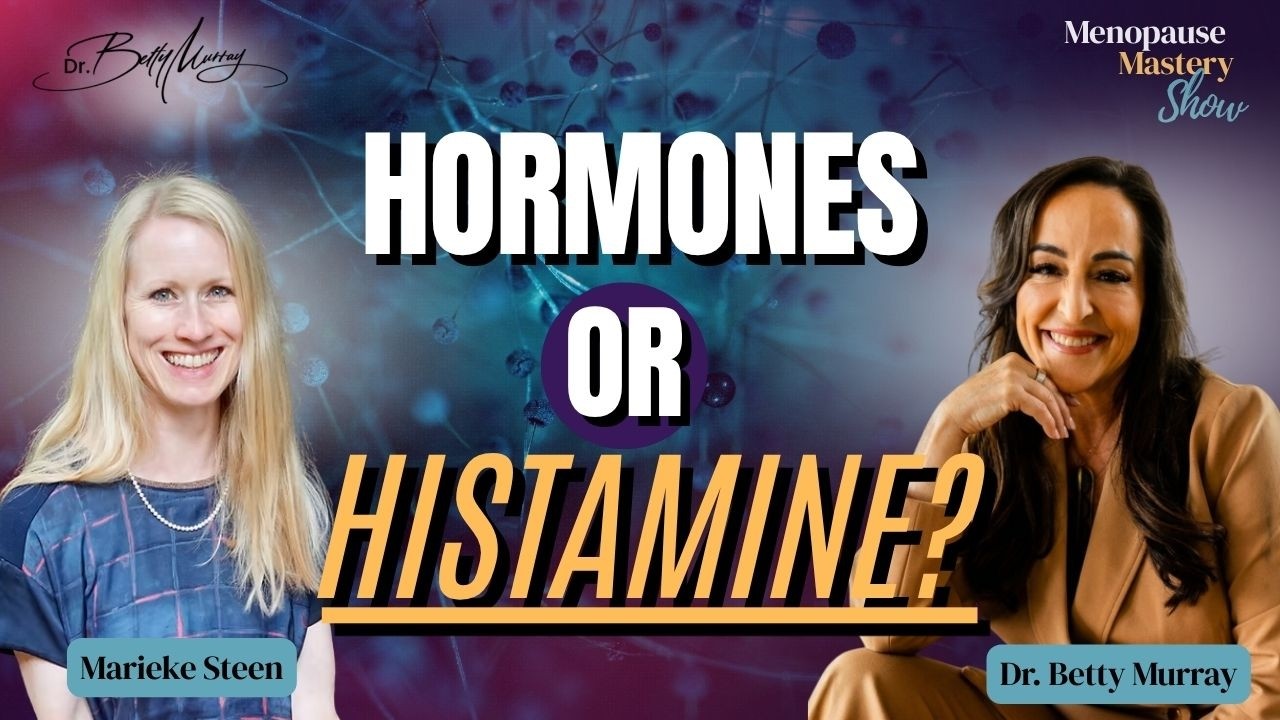
Could Histamine Be Making Menopause Symptoms Worse?

In this segment Dr. Betty Murray explains how hormonal fluctuations during perimenopause and menopause can amplify histamine‑related symptoms. She describes that estrogen binds to estrogen‑receptor‑alpha on mast cells, prompting the release of histamine and inflammatory cytokines, which can manifest as hives, eczema, and other skin issues. A surge of estrogen relative to progesterone creates a self‑reinforcing loop because histamine itself stimulates the ovaries to produce more estrogen. Dr. Murray also links this histamine‑driven inflammation to osteoporosis, noting that inflammatory cytokines affect bone health. Finally, she highlights progesterone’s role in up‑regulating the enzyme diamine oxidase (DAO), which clears extracellular histamine; as progesterone declines in menopause, DAO activity falls, leading to chaotic histamine levels and worsening symptoms.