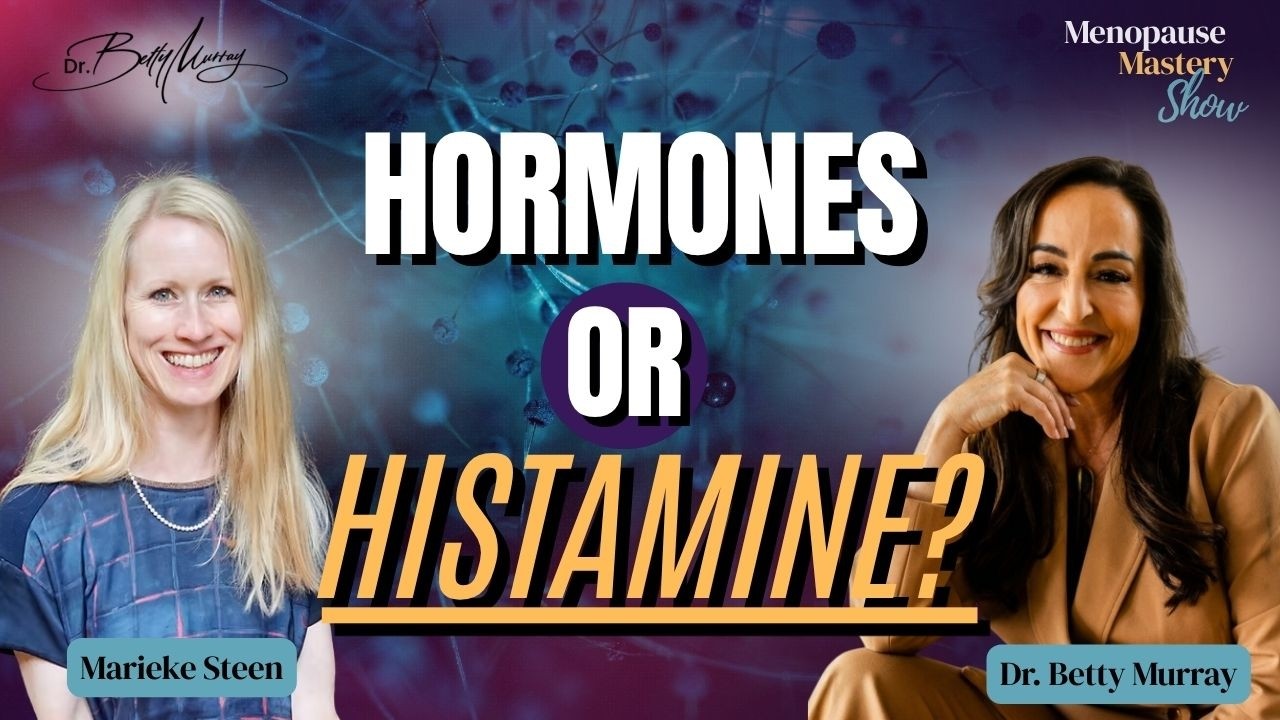
Perimenopause or Histamine? When Your “Histamine Bucket” Overflows

In this conversational segment, Dr. Betty Murray explains how perimenopausal hormonal changes can diminish the body’s natural buffers against histamine, effectively reducing the capacity of a metaphorical “histamine bucket.” She outlines multiple contributors that can cause the bucket to overflow: fluctuating and declining hormones, environmental toxins such as mold and mycotoxins, genetic bottlenecks, and anatomical/neurological factors like trigeminal nerve misalignment, dental health, and airway issues. Dr. Murray emphasizes that an overflowing histamine bucket may manifest not only as classic allergy symptoms (runny nose, itchy eyes) but also as hives, flushing, insomnia, brain fog, IBS‑like disturbances, Candida‑related gastrointestinal issues, and new food sensitivities. The discussion frames perimenopause and histamine intolerance as interrelated, urging listeners to consider a broader set of triggers when evaluating unexplained symptoms.