Hormone Health 101: HRT Myths & What Symptoms Really Mean | Q&A w/ Dr. Betty Murray
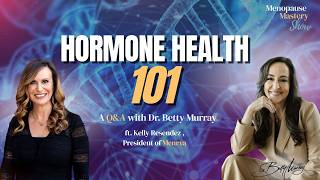
In this Menopause Mastery Q&A, Dr. Betty Murray and Minerva president Kelly Resendez discuss the most common misconceptions about hormone replacement therapy (HRT) and explain the physiological changes women experience during perimenopause, menopause, and post‑menopause. Dr. Murray outlines early perimenopausal symptoms—anxiety, fatigue, brain fog, weight gain, joint pain, libido changes—showing they appear long before hot flashes. She emphasizes that menopause is a whole‑body event affecting every organ, accelerating cardiovascular aging, bone loss, and Alzheimer’s risk. The conversation highlights the massive economic burden of untreated menopause (≈$26.8 billion/year) due to polypharmacy, unnecessary testing, and injury‑related costs. Dr. Murray details the four primary hormones that decline (estrogen, progesterone, testosterone, DHEA), their specific roles, and how their imbalance disrupts sleep via progesterone‑GABA pathways and cortisol spikes. She advises urine‑based free‑hormone testing as the most accurate diagnostic tool, while acknowledging blood tests for reference. The importance of the hypothalamic‑pituitary‑adrenal axis and the concept of “adrenal fatigue” are explained. Dr. Murray advocates early initiation of bioidentical HRT—ideally during the variable perimenopausal window—to protect bone, brain, and heart, noting that therapy can be appropriate at any age, even beyond 80. She clarifies that over‑the‑counter herbs cannot replace lost hormones, though they may alleviate symptoms. Finally, she recommends strength‑training, progressive overload, and high protein intake (≈50‑60 g at breakfast and dinner) to counteract muscle loss and support metabolism in midlife women.
Chapters
You know, there's a lot of truths and a lot of myths circulating around about hormone replacement therapy, whether it's safe or not, how old you are when you start therapy, how young you should be, and even when you need to stop it or not stop it. Today's episode is a Q&A with myself and Kelly Resendez, the president of Minerva, and we're going to go through some of the biggest myths that you need to understand as you look at your perimenopause menopause, and even post-menopause journey. So join me today on Menopause Mastery.
Hi there and welcome. I am Kelly Resendez, president of Minerva, and I'm joined by Dr. Betty Murray. Hi, Dr. Betty.
Hello.
Well, I know everyone that's here is excited to hear some of these answers, so I'm going to dig right into some major questions that people have about our hormones and our health. So, can you tell me a little bit about the difference between what perimenopause and menopause are?
So, we've gotta remember that menopause is technically one day in your life, and that is one year from the last time you had your period or your cycle. And so, the symptoms that are associated with menopause is really what's occurring in perimenopause, which is on average 8 years of your life, but some women may experience 10 to 16 years, and some women may sail through most of this period without a lot of symptoms. But perimenopause is the age of chaos. That's where we're starting to experience all the things that we think about when we think about menopause. And then once you have that day, that single day of menopause, you're always in menopause. It's postmenopause for the rest of your life. Rest of your life.
All right. And what would you say the top symptoms are that somebody would notice that, like, I might be in perimenopause?
Yeah, you know, I think it's, it's interesting because we've always kind of said, oh, hot flashes and night sweats, those usually occur towards the end of that process. So some of the very early symptoms are things like, I don't feel like myself, I feel more anxious, more depressed, more fatigued, brain fog, weight gain, particularly around the abdominal section, despite doing the same things that maybe worked for you before. And then you'll see things like potentially joint pain, frozen shoulder, hip joint, those kinds of things. Even things like heart palpitation, itchy ears, dry skin, hair loss. And then some of the things that most people don't talk about, but absolutely do happen, are changes in libido and sexual pleasure, and like whether sex is comfortable. And so some of those very early symptoms show up long before we get the hot flashes and night sweats.
Awesome. Thank you. And, you know, we hear a lot about symptoms when it comes to perimenopause and menopause, but let's talk about for the woman that doesn't have symptoms, like, is this still something that she should be thinking about when it comes to hormone replacement therapy or seeking some support?
Yes. So this is a situation where the lack of symptoms does not mean that there's not something really significant going on in the body. So every single cell, which means every single organ in your body, has a receptor for estrogen. So menopause is a full-body event. And what we know from research, it is clear now that the act of going through menopause accelerates the action of aging. So women are actually protected against heart disease and cardiovascular and vascular disease until menopause. And then we actually rapidly age and start to age match men within the first decade. And same thing, we have osteoporosis. Women have a very high risk for osteoporosis. Because estrogen is the hormone that tells the body to build bone. And so all women, if they are not on hormone replacement, are at risk for bone loss. And right now, today, if you look, you know, if a woman over 65 falls, 50% will fall, 50% of those will actually break a bone, and of the women that break bones, 50% will not be alive in the ensuing year from some sort of complication. And it's the leading, um, accidental injury that leads to loss of mobility and freedom. So, osteoporosis is a big risk even if you've never had a hot flash or a night sweat. And then, we look at the dementia data. So, the risk for Alzheimer's is strongly female. 3 out of 4 patients that have Alzheimer's are women. And we have a direct causal relationship to the loss of estrogen with the risk for Alzheimer's. Specifically, out of all the forms of dementia and neurological disorders, Alzheimer's has a direct connection to women's health. Hormone replacement therapy, particularly if you start in that first decade of perimenopause and menopause, actually slows that activity completely, and we reduce the risk in some studies up to 50%. So for a woman, what we're really looking at is not the reduction of symptoms. I, I really care if women have symptoms, and our medical providers and our clinicians really care about those symptoms. But what's driving Minerva is really the things that lead to poorer quality of life and poorer healthspan. And hormone replacement therapy in all of those big cases reduced that risk.
Yeah, thank you. That's amazing. And I think great information for anybody listening because the lack of education that we have in this area is just— it's astounding, right? What would you say the top unnecessary medical expenses are that are associated with women not being on hormone replacement therapy?
Yeah. So, you know, what we look at is there's, there's a couple things that happen. So women weren't being offered hormone replacement therapy. Less than 7% of women today, as of the time we're recording this, are actually getting treated. And so where a lot of the costs— the average woman goes through, you know, 7 to 10 different providers. And often they're prescribed polypharmacy. So lots of other medications to adjust symptoms that are all associated with the loss of hormones. So things like antidepressants, beta blockers for heart palpitations, sleep medications like Ambien and other things to try and improve sleep when it's a hormonal issue. And so what we see is not only are women having to kind of fight for appropriate care and often get gaslit by medical providers that don't understand how to treat them, often people they may have trusted 20, 30 years of their life, and they are getting gaslit, but they are often given a multitude of different medications that are really covering up symptoms of hormone deficiency. And we also have other things like heart palpitations where people might go get heart scans and see a cardiologist and get an EKG and a stress test where it's really a relationship between the changing levels of estrogen and the chronics of the heart, all the way down to orthopedic things like frozen shoulder, hip and knee joint issues. And so, it costs the American medical system. Mayo Clinic did a study, it's $26.8 billion a year either in lost wages and/or medical expenses. Women cost the medical system more because we are not treating women properly.
Wow, that's great information. And, personally, I've gone through some of those things that you just talked about and I unfortunately was educated to know that this was an estrogen level. So, let's get into what hormones really are affected here through perimenopause and menopause. So, from the top, if you wouldn't mind just sharing the top 4 that we typically deal with and what they do in the body.
Absolutely. So, most people think of menopause as a loss of estrogen, right? And so, we actually make 3 different estrogens, but I'm going to use the simple term of estrogen. Is a hormone that obviously fluctuates throughout the course of our life and fluctuates throughout the month, which is part of the two hormones that affect our cycles every month. So, perimenopause is the time of chaos. I like to call it a bungee cord. You know, one minute it's up, the next minute it's down, it's all over the place. And it truly is the loss of estrogen that signals the loss of ovarian function. So, we no longer have eggs in our ovaries. So, think of it as the carton is empty and estrogen declines. And actually, a woman in menopause, has lower levels of estrogen than a man at the same age, right? So, gone, just gone. And so, that is our major hormone. It's very protective to the brain, the heart, the bones, right? Not to mention all the things it does with your mood and everything else. The other hormone that fluctuates with it throughout your cycle every month is a hormone called progesterone. Now, progesterone is made when the egg flies out. And then the little part where the egg flies out sort of collapses on itself. We make progesterone. What happens in our late 30s to 40s is that egg doesn't always fly out. So, we start to lose progesterone and that one declines earlier. And that's where we start to see more PMS, more fibroids, more heavy periods, mood issues, sleep issues, insomnia. And so, progesterone usually declines before estrogen, but by the time you hit menopause, it's at rock bottom. And it very much affects the brain. So, it has an impact on sleep and your natural neurotransmitter called GABA, which is— I like to call it kind of your body's Xanax. It's what keeps us calm. It also is very neuroprotective. So, it protects our central nervous system and our brain. And so, progesterone does a wild chaotic sort of decline and then is flatlined by the time we end up in menopause. Testosterone. So, testosterone is something most women think of as a men's hormone. But, at any given time, we make 3 to 4 times the amount of testosterone in a woman's body than we do estrogen on its highest day. We just use different measures on blood work. And, testosterone doesn't do wild chaotic things at menopause, but what happens is it's at its height about 20 years old and has a steady decline. So, it just rolls downhill. So, for most women, by the time they end up in their late 40s and early 50s, it is very much lower than what it was before. And so, testosterone is a brain hormone first and foremost. It helps dopamine, so it's very important to mood, motivation, intentionality, sexual desire, and libido. Because libido happens up here for women. It doesn't happen down there. And so, testosterone has been studied for women's health, particularly around sexual interest and sexual orgasm and things that a lot of times we don't want to talk about but are very important. And testosterone helps with muscle building, with the brain. It has been shown to be a little bit protective even in breast cancer risk. It helps build bone too and muscle. And so testosterone is really important too. And a lot of your clinicians out there do not prescribe for women, don't know how to prescribe for women, or just try and say that other things are equivalent to it, which is not true. And then the last hormone we're gonna talk about is a hormone called DHEA. So, DHEA is a precursor to testosterone. DHEA plays a really important role in the body to counterbalance the response to cortisol, which is your stress hormone. And so, think of those like a seesaw. And so, as your stress goes up, cortisol goes up, and then DHEA tries to counterbalance it and to keep you from being catabolic. That's what cortisol does. Well, DHEA often declines along with testosterone, so you get more catabolic. So it's harder to put on muscle, it's harder to keep it. It also plays a role in mood and sense of wellbeing. And so if your clinicians are doing hormone replacement properly, they're replacing these all and also making sure they're at the right levels for you.
Oh, that's amazing. Thank you. And so much information that we just, again, don't really know. Like we, we think about estrogen and other things we've heard about them, but not what they do in our body. So, another question, like, why suddenly, you know, a woman gets into her 40s, you know, you talked a little bit about sleep, like, what's actually going on in the woman's body that's gonna stop her from sleeping as well as she did before?
Yeah. So, part of what's happening, so progesterone. So, like I said, progesterone, like, for me, my progesterone was declining in my late 30s. Like, I was already in perimenopause that early. So, it can happen younger, right? So, what happens is progesterone starts to decline. And progesterone has a pulsatile effect. So, it's more pronounced at night. And what progesterone does is it holds the receptor open. So, think of that as a keyhole for GABA. And GABA is what helps us get to sleep and also stay asleep. So, when our progesterone levels decline, GABA doesn't click in like it's supposed to. And technically, it's how it's metabolized. So, it's made into a byproduct that does that. So, with the loss of progesterone, most women are so exhausted they fall asleep. They can't stay asleep. And then, so they end up waking up in the middle of the night, staying up for quite a few hours, or they wake early. And also, a lot of times, we also have cortisol problems and blood sugar problems at the same time because this is also the decades of chaos for us. We're working hard. We've got kids at home. We might be caring for a family member. Like, everything is more chaotic. So, our cortisol levels will do that, and we can get cortisol disruption too in the middle of the night. That'll cause, you know, things like blood sugar to drop in the middle of the night. So you wake up kind of anxious. And if you feel like you're wearing a scarf, so this is a way to tell if it feels like you wake up and you're sweaty, like just around your neck, that is cortisol, not a hot flash.
Ah, wow.
And it's a blood sugar thing. Yeah.
So how, if I'm a woman, how am I going to know if my symptoms are hormonal versus maybe just because of stress or other things going on in my life? Yeah.
So, I'd say number one, trust your intuition. Women have extraordinary intuition and it's when we get kind of pushed up against a policy or a group that sort of questions it that we often sort of back off it. So, if you think it's probably hormonal, it probably is. Now, the other part of this is our hormones are a symphony, right? So, they all work together. So, you don't just have the drums alone. You don't just have the wind section alone. They all play together. So, when your hormones start to shift as sex hormones, it's going to change how your thyroid functions. It's going to change how your adrenals function because your two controllers in the brain called the hypothalamus and the pituitary are trying to create harmony. And so, they'll start adjusting. So, often, we'll have co-committing sort of hormonal imbalances. And over my 21 years, that's what we saw is women would get into this sort of perimenopause that were sort of fluctuating behind the scenes. But they were also developing thyroid problems. They were developing blood sugar issues. They were developing excess stress chemistry or erratic stress chemistry. And so you have these two hormonal imbalances that are co-occurring. And that's why we created our quiz, because that helps us look at some of the symptoms you're having and help you understand that it may not— because everybody's looking for the single bullet. What's the bullet that caused it? And I'm like, oh no, it's a howitzer. We have a bunch of bullets that are all together, and we need to figure out which big ones are playing. Right? And so, and so many times perimenopause, perimenopause might be a dominant thing or menopause, but there's other hormone problems sitting on top of it.
Great. And as we dig into that, you mentioned your adrenal system and there's been a term that's been thrown around a lot, adrenal fatigue, other things, but this is not a common thing that your primary care physician is really gonna dig into. Can you explain what the adrenal system does and why it's important that it stays in balance?
Yeah, so adrenal fatigue comes from— it's been around as a key phrase to kind of explain something that's actually quite complicated. But essentially what happens is you've got your hypothalamus and your pituitary. So think of those as the director of the show and the conductor, and they're constantly adjusting their world and then what they're telling your organs to do. So your thyroid, your adrenal glands, your ovaries, based on what's coming in in the world. So when you're under a lot of stress, they're going to take in that information and they're going to talk to— I'm going to call your percussion your adrenals. And so all of a sudden, let's say you're under stress, your body's gonna produce a lot of adrenaline, a lot of cortisol, right? And so that happens when we're under stress. Your body can't tell that you're sitting on the highway a half hour late for a meeting, stuck in traffic. It doesn't know that from starving on the Serengeti, same chemistry.
Mm-hmm.
So what often happens is as women, we live our lives, we're, you know, we're often saying yes to everybody. We aren't taking care of ourselves. We got too much on our plate. And so our hair's been on fire for decades. And what happens is those two controllers start to say, you know what, we need to downregulate. So it's the hypothalamus pituitary, and then they call it the adrenal axis. So they start to adjust everything else. And so when you get to that point, what often happens is you're either wired and tired. So you're so exhausted, you can't deal with anything. Small things are really troublesome. Like let's say you knocked something off the counter. 10 years ago, you'd have been like, "Oh, okay," and now it's like the worst thing ever. You're crying. Or your kids do something and you're just like, you snap. And then, you go to bed and you can't go to sleep, right? That is often where we describe kind of severe adrenal fatigue. It's not that the adrenals can't do it, it's that they're now being told to not do it because there's no more gas in the tank, right? It's an adjustment. And this is very much a time period of chaos. Because you have in perimenopause. So if you're over 40 up to 60, you've got a hormonal deficiency of sex hormones playing along with the ride. Great.
Thank you. And, and for the person listening, what's the best way to know if this is really a hormonal issue? Is it blood test? Like, what is the best thing to do?
You know, there's, there's kind of multiple ways. So the best way to really understand your adrenal system and your sex hormone system, if you're still cycling, is really to look at it in urine, right? Because we actually excrete these hormones. Because when we look in urine, we look and see we have how much hormones are what we call free. So hormones have taxicabs that drive them around. When you look in the blood, you can't tell how many are in the cab and how many were able to get out. So blood can kind of falsely make it look okay because they might all be stuck in a crazy cab in New York. Right. It's true. It's true. So when we look in urine, we see free hormone, right? So we see the hormones that are free. And if we track adrenals throughout the day, we can actually see how, you know, how much you made throughout the day. So kind of the arc— did I make enough throughout the day or too much? But we see the totality of what you make, which is 95% of what you make for the adrenals. And we can also pick up the sex hormones— testosterone, DHEA, estrogen— and then how you actually detoxify or biotransform the testosterone and estrogen that's going through your body that needs to go to the trash when it's done. So, it's one of the best ways to understand your total body function on your adrenals and sex hormones, but also how you get rid of those because that's very genetically varied. And, it's an area of an intense research to understand things like fibroids and endometriosis and other things.
Got it. So, definitely you want to get tested and see where you are. And I would guess when should a woman— when should I reach out to somebody to actually— a doctor, a practitioner, et cetera, to be able to support me on this?
Yeah. Yeah. So, definitely we want to test. We want to test and we do test in blood too. I think it's important because we're using that to also gauge against the research. And what I would say is, is the time to reach out is when you notice a symptom, right? This is not a time to like double down and then just assume that you can kind of override it with your own willpower, right? What we know from the literature, and there's some very large studies that are in, you know, kind of pre-publication work right now with peer review, but we know now from the overarching literature that it is better to start hormone replacement therapy while you're in the zone of kind of the variability. So being able to put hormones in before you get to the end, right? A lot of clinicians will tell people, we got to wait until your period stopped. No, guess what? We accelerated bone loss by 20%. We've accelerated aging in the brain. We've accelerated arterial aging. It's better to get started before that. However, big caveat, if you are 5 years out, 10 years out, 15 years out, 20 years out, and that happened a long time ago, either surgically or naturally, you still can be a candidate for hormone replacement therapy. Even if a woman is 80 years old, she deserves the right to look at it for herself because there is application in all age groups.
Yeah.
And in that respect, Kelly, there's never a time to stop it. Stay on it because it protects you against all causes of dying.
Yeah. And I would say this is definitely the, you know, area of education that we don't have out there. Is the majority of it is around symptom management and whatnot. And so what it sounds like you're saying is that for the woman in her 40s, you don't need to suffer through anxiety, depression, sleeplessness, weight gain, etc. You should just get help right away so that you don't encounter some of those bigger challenges that women have.
Yeah, because it's physical challenges, but also think about how if one of the major symptoms is I don't feel like myself, right? That's a mood, brain, that's not a physical symptom. And think about how you are interacting with your children, your loved ones, and everybody else. We don't feel like ourselves. We're not being ourselves. And why should we go through suffering like that when we can do something about it, right? Because there's a lot of chaos. Like if we look at the stats, there's a lot of chaos that happens. Divorce picks up in this time period. You know, family strife picks up in this time period. Women don't move into positions of leadership at the top of their career because they don't feel like themselves. And so, don't wait and suffer. That's not worth doing.
That's amazing. And for the women out there, there are a lot of women that, you know, want to take the natural way. Is there a natural way to manage perimenopause and menopausal symptoms?
Yeah. Now, we— I mean, we like to replace those hormones with natural bioidentical hormones, right? So, that would be a natural way to replace it. Here's the reality. I'm a clinical nutritionist and biochemistry nerd. I've been doing this for decades. There is not a single herb, supplement, vitamin, or anything else over-the-counter on the planet that can replace hormones that are no longer being made because those organs are no longer functioning. You can make the symptoms better, and we have products that help make the symptoms better, but the deficiency is still there. And so, natural bioidentical hormones are the most natural replacement to what your body is no longer making.
Awesome. Just a couple more questions here. For the women that have experienced some weight gain and/or are noticing, "Hey, again, I've been working out, but I'm losing muscle, other things," what is the best exercise and nutrition protocol for somebody in perimenopause and menopause?
Absolutely. So, you know, obviously, when we're working with people, we're individualizing it down to their DNA and kind of their build and what their body's going through. But if we look at sort of the general understanding, perimenopause and menopause and beyond is the time period that if you were like into cardio, it is time to change. We have to start strength training. And in most cases, we have to add volume either through heavier weights or more repetition with— and then progressive load, right? So, we have to get— it has to get harder over time because we are fighting against a natural biological event of losing muscle and bone, right? Here's the thing. I should grab it, but we have a 5-pound weight. Everybody's picked up a 5-pound little you know, hand weight, right? It's about that big. Mm-hmm. 5 pounds of fat. I have a fake one around the corner, but 5 pounds of fat is the size of a bread loaf.
Right.
When you put on muscle, you cannot get bulky even with testosterone replacement appropriately done for women. So it is a metabolic girdle and we wanna put on muscle. So that's super important. And I'm like, we need to at least weight train 3 times a week. My recommendation is 4, but if you've never done it, you start with 1. We get efficacy one. That doesn't mean we don't do some other things like some appropriate cardio, but this is not the time to kill it in the gym for 2 hours a day. And then the other side of that is what we eat. Protein becomes very, very important, right? That helps us make muscle and protein. Here's the thing, they did the study in 2024. When we're little, we can have— or we're young, you know, like in our teens, we can have a little bit of protein here and a little bit of protein here and a little bit of protein here. And your body will turn around and make muscle out of it. Well, when we get older, what happens is the body turns around and takes those little bits of protein and it makes glucose out of them. It doesn't even try and build muscle. So that first meal of the day needs to have a big chunk of protein, and that last meal at dinner needs to have a big chunk. So my goal is usually 50 to 60 in that first meal, 50 to 60 in that last meal, grams, right? We got to get a bunch right then because that helps your body use it to make muscle.
Wow. You're saying up to 100 grams?
Minimum. That's a minimum.
Oh, my goodness. Well, you've heard it. Yes, you've heard it from the expert. And thank you so much. I'm going to have to wrap this up so I can go eat some protein. But thank you, everyone, for joining us in this Q&A. Make sure that you just click on the link. We'd love to have a conversation with you about how we can help optimize your hormones here at Minerva. And thank you so much, Dr. Betty Murray Murray, for your incredible wisdom.
No, thank you. I enjoy. Yes.










