The Medical Gaslighting That's Killing Women
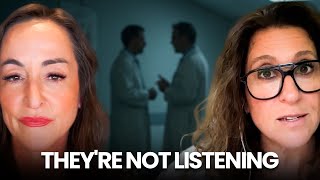
This is a YouTube video titled "The Medical Gaslighting That's Killing Women" created in August 2025. It features a detailed conversation primarily between Dr. Betty Murray and Esther Blom, an integrative dietitian and menopause nutrition expert. They discuss the challenges and controversies surrounding hormone replacement therapy, including recent FDA meetings, misinformation in the medical community, and the broader impact of medical and environmental issues on women's health. The discussion also touches on nutrition, protein intake, and advocacy for better care and education for women, especially during menopause.
So what do you make of The FDA meeting 10 days ago that talked about hormone replacement therapy and the safety of estrogen replacement therapy, particularly either vaginal estrogen or systemic estrogen. So today I'm joined with Esther Blum, Esther Bloom as a integrative dietitian and menopause nutrition expert who helps women find light at the end of the tunnel through nutrition, hormones and self discovery. She's a best selling author of See youe Later Ovulator, Cave Women Don't Get Fat and Eat, Drink and Be Gorgeous and Secrets of Gorgeous and the Eat, Drink and Be Gorgeous Project. She's also known as Gwyneth Paltrow's mentor and menopause mentor. Esther has appeared on the Today Show, ABC TV Good Day New York, and is frequently quoted in goop, Oprah, Daily well and Good and Forbes. And today we got into it. We really went deep into what, what did that FDA meeting mean and where do we draw the line and what does it mean to talk about systemic estrogens relative to vaginal estrogens? We also talked a lot about the fray that's happening in the medical community right now. And basically the old guard that are still trying to establish hormone replacement therapy is just for vasomotor symptoms. And then also looking at the more functional medicine side of why you would consider hormone replacement therapy from a longevity and disease avoidance and prevention plan. We also talked a little bit about some new things coming down the pike with Bill Gates and food and food safety and just a deep dive into endocrine disrupting ingredients and why we need to be concerned and vocal at this time. So join me today on Menopause Mastery, where I get to talk to Esther about all the important things about being a woman in today's world. Oh, Esther, we're going to have fun today. Yes.
Yeah.
So let's go ahead and get the elephant out in the room and talk about it. The FDA panel from what, two weeks ago now? Actually about a week and a half ago. Let's talk about that. What are your feelings about it?
Oh, I'm, I'm so stoked. I'm so grateful to the physicians who showed up to testify. I think it was Dr. Rachel Rubin, Kelly Casperson, Vonda Wright. Oh my gosh, who else?
Dr. Minken. And then there is two other.
Heather Hirsch. Heather Hirsch. And then there's one more. Forgive me for forgetting, but I'm very grateful to them for advocating for testifying in the FDA. You know, Dr. Rachel Rubin was talking about her mother being in the hospital with eurocepts and the legislative fight she had to go through just to get her mom, just to get the team to give her vaginal estrogen. I mean, it's like so basic, so rudimentary, so frustrating that we have to sit and testify to get black box label warnings off of hormones. And it's not just vaginal estrogen. I mean, I tell my clients who are using Prometrium the same thing. I'm like, the warning labels are actually for birth control pills. They're not for synthetic progestin. You know, they're for synthetic progestins. And prometrium is bioidentical progesterone. And I had a client who came to me hysterically crying because she had had long Covid. She had terrible reactions to, you know, synthetic progestins and was terrified to have clots and all this, and was blaming the Prometrium and myself and her physician had to educate her again and again, show her the research, show her the proof. And it's like. And eventually she ended up taking it and feeling amazing on it and doing great. But it shouldn't be this hard just to get, like, the most basic of basic care. It really shouldn't be. It's maddening how hard we have to fight just to get back where we were in 2002.
Yeah. You know, I look at it and I'm hopeful that we can remove particularly the black box warning off of it shouldn't be on any of them. But vaginal estrogen is a joke. Like, it's not even systemic. Like, I was having a conversation earlier with a client, and, you know, she had been terrified by her doctors, and she's like, I can only do estriol and in a really low dose because I want to protect my bones. And I was like, and it will do nothing to protect your bones, because estriol does not have that effect. You know, and the truth is we've been using conjugated equine estrogen, whether you like it or hate it, since the 40s. And not a single study before any and or after showed that taking estrogen replacement increased breast cancer mortality at all. Full stop. Never question. It's complete and utter bullshit. And the fact that we have to go fight just to get vaginal estrogen, and you have women dying. I mean, my mom's in assisted living. My mom has had. I took her out of skilled nursing because I would call it unskilled nursing, because they pretty much almost killed her three times with a UTI in 12 weeks. They kept Trying to go, well, she's decompensated. You need to accept that you're going to lose her. And I'm like, she was fine yesterday and now she's delirious. She's got a uti. If you don't test her, you're going to wish you never met me. You know, and, and every single time it was an infection and I'm like, this should not be a fight, you know, and, and the simple fact is, is, is medicine has, has done a disservice to women. It's the largest travesty in healthcare of our time and, and we still have to fight for it because of one shitty study. It's just mind boggling.
It's mind boggling. And you know, even with, I always tell my clients like, like you there, if your doctor tells you that hormones cause cancer, ask to see the studies because there simply aren't any. But b, even if they did get conjugated equine estrogen, right, Even if they're on birth control pills, like, what is the risk of clotting increase? It's like 6 in 10,000 if you take it orally versus transdermally. So it's like, come on, people. I mean, it's just, it's ridiculous, it's maddening. And yes, the. You, you. It really needs a rebrand. I mean, it's like a digital weaponization of hormones for women. It's, it's really like holding the hormones hostage for preventing women to get them even though they're FDA approved. And I always tell women to ask their doctors, like, this is FDA approved. Why wouldn't you prescribe it then? Why would these hormones exist and be FDA approved if you won't prescribe them? Or the, the other really big game changer. And this can feel uncomfortable for a lot of people. I'm like, you can also say, so you won't give me hormones. So now I need you to document that in the chart that I have asked you for hormones and you will not prescribe them. Oh, you know what? Let me, okay, if you want, I'll try it. It's like all of a sudden that flips the switch because, you know, I, I worked in hospitals the first five years of my career and befriended a family medicine physician who I would then refer people to, to run. And he would run all the lab tests for me. And I said, why is it you run lab tests for me but most doctors won't? And he said, a, I only run them for you. I wouldn't do this extensive lab visit for my own patients. He said, but b, doctors, when they find something that's out of range, they don't then want to be responsible for it. And my jaw dropped. I was like, are you following? Freaking kidding me? But it's really true. It really is.
Yeah. I mean, I've, I've, you know, I have a. I have a clinic that I've had for 20 years, and we've been doing bioidentical hormone replacement that whole time using the functional medicine model preventative. And we get patients all the time, like, why won't my doctor run this? And I'm like, because they're legally liable for you. So most people don't realize this, but if you come in, if you go to a doctor and they run just a simple blood glucose, let's say it comes back at 400, and you blow off your follow up and they try and track you down and you don't respond, they have to write a letter, fire you as a patient, informing you of that lab value and that you must go seek help somewhere else or they're legally liable. So if you show up in an emergency room in a diabetic, you know, a shock kind of situation, or losing eyesight or something like that, that doctor can be liable for that lab value, that you failed to do your job as a patient. So that's where it all comes from. It's the litigious environment of people expecting somebody else to be responsible for their health. This is how we got here. And then we weaponized health care, particularly against women in the United States, which now has made it even more so a problem, you know, but I think, I think people didn't realize that, you know, estrogen replacement therapy has always been on the table. It's only in 2002 that we added this stupid black box warning and that it needs to be removed from all estrogen products. I'm wondering, have you noticed the fray? So now we have a fray. We have two groups of physicians and other clinicians, people like you and I, talking about hormone replacement therapy. And so you have people like Dr. Kelly Casperson and Dr. Vonda Wright and the people that were at the FDA that are like, let's just open the doors and allow for hormone replacement therapy because none of the data shows that it's damaging. And now we have this subgroup, Lisa Larkin and Dr. Jen Gunter, that are like, oh, I, you know, all of a sudden they're like, no, no, no. It's only been okay for vasomotor symptoms, but we don't have any data showing it protects anywhere else. And I'm like, that's complete and utter. The patch, the patch data used to approve the patch looked at osteoporosis and vaginal atrophy.
Yeah, right. So I was like, they enraged me. They. I think Gunter, I'm going to go public, on the record and say, I think she is the biggest misogynist of all. She is cruel and inhumane to women. I, I don't. She must not have any symptoms herself. I don't understand it. It is the cruelest. It is so awful how she acts to women. I, I can't even look at her posts.
No.
And she, she, yeah. And she. I have a very dear friend who is very well known in the hormone space. And Dr. Gunter tried to send her a cease and desist letter and she got right on it with her attorneys and Dr. Gunter doesn't touch her anymore. But it's just, it's so unacceptable. Any of you following her, I beg you to really look at her as a human. I don't. I've never gone on the record saying anything bad about anyone, but I find her exceptionally horrific.
Yeah, I had a, I had a conversation. I had a conversation with Lisa Larkin at a conference because I've. So we've been doing hormone replacement for 20 years. I have a telemedicine company. I'm building a women's digital health platform. I am trying to privatize our health data so we can actually do research on women not beholden to pharma or, or, you know, NIH or anybody else. And one of the things that we want to look at is hormone metabolism. How, how your body metabolizes and get rid of these hormones and actually get verifiable data. Because we have science that indicates these are pathways of concern for cancer and other things when you're not on hormones just as much as when you're on hormones. And we've been doing these for a long time, but we don't have good data. And I was talking about building this with Liz Larkin and she looked at me very heartily and she says, betty, we believe in evidence based medicine. And I go, that's interesting. I have a PhD where I did a causal comparative retrospective study study.
Right.
Looking at hormone metabolism. And I said, but, you know, if we don't look for it, we're not going to find it. That's pretty easy to make sure you don't have evidence, huh? And I go, you and I both know that these are pathways that we should be looking at. Because we have concerns here. Even if a woman's not on hormone, she said, yes. And I go, but you're willing to let Gen X and elder millennials die before we bother to look at the research because you want to be 20 years behind? And she's like, well, we just believe in evidence. And I was like, okay, I'm just glad my assumption about you is correct. No, I was just like, I'm done. I cannot handle gatekeeping science because you want to hold on to your beliefs. Beliefs and facts are two different things. And you can have your beliefs, but you can't have your own facts. And, you know, and I think I agree. I think Jen Gunter has sort of taken this thing of, hey, yes, menopause is a natural transition. Living 35 years after it is not.
Right.
Like, we have to look at it and go, why. Why force somebody to go through a natural transition just because you yourself didn't have terrible symptom when. When you could reduce their risk for chronic disease? And dying like that is insane. No one would ever say that about any other health problem.
No. And it's. It's gaslighting women. It is. It is awful. It is awful.
Yeah, Yeah, I know. You've read probably Estrogen Matters.
I was just gonna talk about that. I'd point to it because it's on my shelf there, the Red Books. But, yeah, I was just gonna say, we actually have enough evidence. Jonathan Wright. I mean, go back to his work in the. What was it, the 70s with hormones and women. I mean, it's. It's incredible. We have the evidence. And my. It's funny. My grandfather was a physician. He graduated NYU Medical School in 1921. He was the nearest nose and throat surgeon. And brilliant. And I remember one conversation with him. I was young, I think. I mean, I think it was before I even got my degree in nutrition. And he said, you know the word hysterectomy, The Latin root is hysteria. Like, women are called hysterical when they go through midlife changes. And it really stuck with me. I was like, that is horrific. And I. I look at my own biological grandmother's journey. My mother's mother had severe bipolar. She had shock treatments back in the day. And I think of how unseen and unheard she was. Everyone just swept it under the rug, sent her to psych wards when her. She wasn't well regulated. They didn't. Her medication wasn't well regulated. But then to not have the hormone support, it broke me. I was like, this is horrible. I didn't understand it at the time, I was young, but in hindsight, I'm like, this is so horrible.
Yeah, we've. Yeah, we've done some horrific things to women in the name of science, you know, but what's science in quotes? Yeah, around that. What's interesting is Carol Tavros that wrote Estrogen Matters with Avren Blooming. One of the things that she said, and she says it in the book, she never had symptoms of menopause. She's in her 70s, almost 80s.
Right.
I met her at a conference and she said, she said, I didn't realize because I never had symptoms. So I was like, who cares about hormone replacement? I don't feel bad. She's like, now, you know, 10 years after the original, you know, writing of that book almost. And then, you know, now in your 2024, 2025, what an incredible disservice I was doing to women. Because I just assumed, because my journey was easy, that everybody was being, you know, hysterical and that she now recognizes that it's not just a matter of, you know, making hot flashes and night sweats better, but it is actually a, you know, health span sort of argument. And I think. And I think that's the challenge is all of this takes women who are already scared inappropriately so, and makes them more frightened. So then they just freeze and don't do anything, you know, over a risk that's not really there.
And they've also normalized their suffering.
Right?
They just say, well, the doctor told me, you know, I had this. I held these symptoms. The doctor told me it wasn't hormone related, so it must be in my head. How many women have said that to you? And you're like, are you kidding me? Like, why on earth would you question the wisdom of your body over a white coat who doesn't live inside your body? You're your own best doctor. And it really. I'm losing my tray of thought of where I was going with this. But, yeah, I mean, it's.
We.
Oh, this is what I was gonna say is a lot of women say to me, I don't have any symptoms, so why should I take hormones? But then you start talking to them and they're like, well, then I have this autoimmune disorder and I have all these achy joints and, oh, you know, I started having panic attacks 10 years ago. And do you not understand that your panic attacks are actually a symptom of your. Your hormone decline, in particular, progesterone. And so same with those achy joints, like Your progesterone is a natural opioid producer. Like you can really reduce your joint pain. And then the light goes on and they start to put together, but they, they don't. It's like you said, Dr. Bay. Like, they think it's just hot flashes or maybe vaginal dryness or moving. I've never had a hot flash.
Yeah, I've never had a hot flash. If that's my only gauge, then, yeah, then I would have been mistaken. But yeah, I just. Yeah. And I look at it and I say, okay, so women have paid the price for that. So we have an inability to get care for something very fundamental that can reduce our risk of all cause mortality, particularly things that put us in a wheelchair or a nursing home unnecessarily. And then on the other side of it, we have political policies and other things that are now damaging our planet that is probably going to make all of the endocrine disruption worse and make our food supply more dangerous.
Right.
It's like we have, we have this like on one side we're like, yay, we're getting something hopefully taken care of with the fda. And then in the back door, we have all these scary things happening with our food supply and our environment. Like, does it matter if we get red dye off the shelves if our waterways and our food are toxic?
I know, I don't know how Bill Gates. This may be controversial, what I'm going to say, I don't know how Bill Gates and Anthony Fauci are like, not locked up in jail forever. I really don't. Who on earth approved MRNA sprays on our food? Who approved this? Like, the only way, excuse me, the only way to avoid this, and I'm not even convinced it's 100%, is to buy organic. But a lot of times organic farms are next to non organic farms. So we do know there is, you know, cross pollination.
Right.
And so it's like. But not everyone has the bandwidth or resources or you know, lives in the countryside to grow their own food either. So it's just, it really feels, it feels heavy, you know, and frustrating. Like, oh my God, they're just poisoning our kids, giving them apples. It shouldn't be like this, you know.
Right, right.
Well, and be worrisome. Yeah.
So we have the MRNA spraying that's, that's happening out there and that. And I think most people just don't realize that.
Right.
But on the other side of it, buried in all of the legislature that was going through, they also removed culpability and Liability for pesticide and insecticide injury.
Right.
That includes glyphosate. So Baird is not going to get sued anymore for glyphosate causing lymphoma. Non Hodgkin's lymphoma.
Right.
Or paraquat. They can bring paraquat back, which was actually removed from the market because of its endocrine disrupting activities and its toxicity, you know. You know, and I think the, you know, everybody's. We're so distracted about what's happening elsewhere in the world and just so all the kind of craziness that we're not recognizing that we're putting profits in, in front of, in front of protection and you know, and that our children and our grandchildren are going to pay for this. And it's, and it's just frightening. So now that we've scared the crap out.
Everybody scared the crap out of you.
But you know, I don't think truthfully, I think it, it's important for people to be informed.
Right.
And to be righteously pissed and informed. Because the other thing is, is like, I look at it and you go, how do, how do people wake up 20 years later and they have a, you know, crazy authoritarian regime where they've lost all their control? It's because they ignored the early signals and they kept thinking it was somebody else's problem or it wasn't affecting them, you know, because they didn't maybe have all the information. And so I think what's important is that we do get a little righteous about it and we get a little angry about it because then we get aware of it, because that's part of it. But I think the cooler thing is that we actually have the ability to do things about it, you know, that we can actually enact change. Like, utility is never fun.
Utility is never fun. Is that what you said?
Futility?
Oh, futility is never fun. No, but I mean, aside from buying organic, like, what can we do? You know, I'm like, what is, is RFK going to address this? Is, you know, is he going to take this on? Like, why is that not being taken on? I, I'm just. Somebody's being bought and paid for. It's. It's where 100%.
Yeah, I mean, yeah, we have some extraordinary graft and corruption going on. We already had it, but now we're at an all time high, you know, and I, and I think it's because there's so much, there's so much chaos going on that, that nobody's, there's no single group that's sort of paying attention. That has any teeth.
Right.
It's dismantled and sort of. Not that it would have been able to be under control before either.
No, it's under every administration. For those of you saying it's this administration, it's. That it's under every administration. There has never been an administration where GMOs weren't an issue, where pesticides weren't an issue, where Bill Gates, I mean, he's been around a long time. He's been slowly taking over our entire food supply. I've been in functional medicine since 1998, and it was an issue back then. So, like, it's health is nonpartisan, but. Yes, it's just every administration. There's so much corruption in there.
Yeah, there's too much money passing, passing hands.
Too much money passing hands. I also, since we're on Hot Topics, I do want to address a piece that I haven't even had time to make a post about for Insta, but over the weekend, the New York Times. Oh, I'm. Did you see that piece they wrote about protein?
No, I haven't seen it yet. I was. I was on it. I was on a, you know, phone, social media, media break this weekend.
Yes, I get it. I get it. So there was a piece that came out called a protein boom, right? And it was all about how protein is remaking the food economy and how much do you really need? And the author, it was by Adam Kushner, and the author is claiming to eat now a very virtuous high protein breakfast of overnight oats, which have 5 grams of protein, kefir, which has 6 grams whey, which is 24 grams collagen and peanut butter. And he's complaining how stuffed he is and whining about how this is supposed to live. And then he interviewed, um, Alice Callahan, who was a Times reporter with a PhD in nutrition, and said that the main. The idea that Americans don't eat enough protein is a lie. And so they were really talking about, you know, the profitability of protein bars, but not actually looking at any bit of the research. And to me, a writer with a PhD in nutrition is nowhere near the same as a physician or a functional medicine provider in the workspace. So I. I don't know if you want to comment on that. I know I have a lot to say, but I would love to get your thoughts on that, because I saw. I was like, are you freaking kidding me? Like, who on earth is this serving again? The data is there. It is.
It is. I'm offended as a PhD that there was not a single bit of science in that conversation. No.
And no physicians? No physicians, no dietitians, nothing. Nobody was interviewed. One person said no. And that was the whole piece. I was like, again, how misleading is this?
Yeah, so, so I, you know, I think this is, I feel like I have to have this, like this podcast every other week. It's always looking at endpoints. So the question is, is what are we trying to answer with this question? So if we're talking about protein sufficiency to keep you alive, yes, Americans are eating plenty from a sufficiency standpoint, Right. We actually overeat calories because most of it is processed and ultra processed foods. There was a study that came out last week that looked at activity level, compared, comparing a bunch of different people. Very, very highly controlled Americans don't move any less than anybody else. We just eat more food stuff and caloric intake, carbohydrate and all of that in ultra processed foods. But so if we go to the protein, yes, we consume enough protein for sufficiency, but if our goal is to talk about longevity, muscle mass retention, lack of frailty, sarcopenia, all those things that will cause us to have a shitty health span, we do not consume enough as a total part of calories, and particularly the essential amino acids leucine, lysine, and methionine. And so at the end of the day, it's about muscle protein synthesis and holding onto muscle to reduce frailty. That is a different question, and that's not what they were trying to answer in that stupid article. But the problem is they also weren't clear with their language. And that PhD obviously needs some help because we should be pulling research when we actually talk about that. Ladies, if you're noticing more fine lines and wrinkles, it's not just about aging. It's about the loss of estrogen and that affects our skin structure, making it drier, thinner, less firm. But here's the great news. I've created Biased Mastery Cream to help. This luxurious bioidentical estrogen cream supports your natural hydration and elasticity. It's packed with nourishing oils like olive jojoba, aloe and coconut. So it feels amazing and helps soften those lines and bring back that healthy glow. I've been using it and let me tell you, I love My skin has never looked or felt better. It's smoother, more radiant, and those little cracks and creases are way less noticeable. If you're ready to give your skin some extra love, Check out by Est Mastery on the Metabolic Blueprint website. And that's metabolicblueprint.com B EST mastery. That's B I E S T mastery. M A S T T E R Y and your face will thank you.
That's exactly right. And also the research does show that we need more protein as we age for optimal longevity, not less. And so it's just like, my gosh, if you talk to anyone with a clinical practice, they will tell you also, like, the blood sugar issues, the insomnia issues, the energy, the brain fog. So much of that clinical clears when you optimize protein. And yes, your protein should be from real sources. I don't mind some protein powders in the mix. If you're trying to really hit a high target that you. And you just can't eat enough steak or chicken or fish, but you have a woman trying to build muscle on 80 grams of protein a day, it just doesn't happen. It's just, we're just simply not physically able to do it. You can lift all the weights you want. If you're not fueling your body, that's a problem. If you're not. And I always educate my clients on this too. I'm like, you need a minimum of four ounces at every single meal to hit that two and a half gram lysine minimum threshold. Leucine. Pardon me? Not lysine, leucine minimum threshold. I'm like, if you don't have that threshold met, you're not building protein. And even that, that's still only 90 grams of protein a day. That's still not even the minimum amount.
No, I mean, it's real. I mean, it's very real. Real. Like, as somebody I like, I, I'm really honest. I don't love protein shakes because I, I was in body into bodybuilding and so I had like two a day every day for like eight years. And I just, I have an aversion to them. I don't really, I don't like sweets either.
Right.
And so I don't like a lot of protein bars, but do I use them when I have to? Yeah. You know, and my preference is to get real food, but the simple fact is we have to consume so much more of that. I mean, there's even good studies showing just taking in four ounces of protein three to four times a day reduces anxiety and depression.
Right.
So how many people are dealing with that because they don't actually eat protein?
Right.
Just because you can survive doesn't mean it's it doesn't mean it's optimal.
That's right. That's right. And you're not. You know, I remember. Did you ever know Charles Poliquin?
Oh yeah, absolutely.
He was like one of my first OG mentors and he always talked about the meat and nuts diet. To get your dopamine and serotonin up and get your mental focus up for the day, get your energy up. And that really stuck with me too is you look at, you know, someone eating an egg in the morning and they're like exhausted and craving and can't focus and. Yeah. Depressed. It's like, of course you are. You're not even feeling. Feeding your brain.
Yeah, yeah, it is, it is a mess.
So I think that. Work to do, lady, we have so much work to do.
I know, I'm always like, why is this so why is it so hard to get this message across? And you know, it's, you know, I think it's, it's. You always have to sort of fall back on, you know what? I follow the money, number one. Follow the money or follow the paradigm that fails when the truth gets out.
Right.
So if you follow the money, you go, okay, no, pharma probably wants us to take medications, right. So they probably love forever to be on hormones. So it's not pharma doing it. Although if you look at it, if we can get you to take a sleeping medication, an ssri, a antihypertensive and a, you know, arrhythmia thing like a, like a beta blocker because you're having anxiety. And then if we can get you on a anti inflammatory for your joint pain when we now make a ton of money off you every month instead of just giving you extra dial, which is, you know, or you know, a biased, which is going to be bioidentical and also generic. Yes, but, but the other side of it you go, what does the paradigm, you know, that's trying to push for this, even the Jen Gunthers and the, you know, Liz Lar or Lisa Larkins that are like just old school, you know, get with the program, get with the more recent data that cherry picking data, what do they, why do they benefit and where do they benefit? What do you think? You know, because why would you hold on to this long held belief and hold it back?
I scratch my head at that is how do they benefit? I think it's an ego fueled fire. That's all that is. The only thing I can think of is they've chosen a hill to die on. Even if they Wanted to now they would never eat crow and admit they just can't. So I think it's all very ego driven, which again, it's, it's gaslighting women and it's their own fame. I mean, God forbid you comment negatively on any one of their posts. You'll be blocked and removed. They just shut it down and continue to go all over the world on all these big podcasts and all, you know, have their own. It reminds me of like a Marvel movie, right? Where like the superhero just keeps eating plant. I just saw Fantastic Four last night, right? So like the big scary person is, you know, eating all these planets, the evil person, and he's just consuming and getting bigger and bigger and bigger and bigger. It's like, it's just the same thing of just fueling that ego. I, I don't know. What do you think? I mean, what is in it for them? Who is paying them to speak against all the hormones? I don't know.
Yeah, I, I mean, I agree with you. I think it's, I think it's. We've, we've set our, our here and said this, and instead of going, huh, could I possibly be wrong today? Based on newer research, newer information, instead we just, you know, keep reinforcing.
Right?
Because it is. I, you know, I would say medicine as a whole, even science as a whole, often sort of drives that. I mean, as somebody that had, you know, went through the pain and suffering of a PhD, you know, all of a sudden coming in academia, all of a sudden, half of the pain and suffering of a PhD is tolerating the infighting and the BS of your committee, right? And, and the ego is involved in that. You know, like, so there's egos at every level and then there's always this, well, I've achieved this pinnacle of success, so therefore I don't have to question my own bias, you know, and I learned early on I have to question mine every day. And I reverse gears all the time because I'm like, new research came out, you know, like, you know, even like the protein research that came out a couple years ago. Looking at the different age groups, I'm sure you probably read this. I can't remember the gentleman's name off the top of my head, but they looked at young people and muscle protein synthesis and then older people, and they showed for the first time that you needed a larger bolus of protein in the morning and at night for an older person, because we can't make muscle like we used to. Muscle protein synthesis is Impaired.
That's correct.
Up until that point, I had the paradigm for decades of, okay, if you're trying to build muscle, yeah, you can have a protein bar here and a smoothie here and a little bit of protein here. And I had to rearrange my recommendations to say, no, I want you to try and get 50 to 60 in that first meal and 50 to 60 in the last. And whatever happens in between is awesome. Right. Based on muscle protein synthesis for somebody over 40.
Right.
Interesting. Yeah.
And, you know, and so I was willing to re. I mean, I literally had to redo an app. You know, I was like, all of those recommendations are now wrong for my population.
Right.
You know, yes, we can do that, but if we're trying to build muscle, we probably need to eat more in these bigger chunks, you know, and, and I think, I think it is that paradigm. And so, you know, if we were to look at it both as, you know, menopausal coaches and people that have been in this industry for decades, you know, how do we take this and say, okay, ladies, you now know that hormones are safe, right? And the black box warning needs to be removed. Testosterone included in that, progesterone, you know, you know, how do we empower them to sort of take that next step? You know, what's your, what's your sort.
Of go to things in terms of accessing hormones and just all the information. Well, shameless plug here, but you can read my book, see you later, Ovulator. This has a lot of information on mastering menopause with nutrition, hormones and self advocacy. So there's wonderful research studies the back of this book as well. And it's quite simply having the confidence and the unshakable faith that there's nothing that you think about your body that you know to be true that isn't true. And just because a PRAC provider, if it's an md, an nd, an np, you know, any medical provider, just because they tell you it isn't so, doesn't mean it's true. So when you know that, you become less afraid to either question your provider and say, hey, I've read the research on hormones, I want you to partner with me. Let me try it for three months. Let's go down the road. You want me to sign a disclaimer that I won't see you? Fine, I'll sign the disclaimer. But ultimately, committing to finding a hormone literate provider for yourself, and I always say, call your local compounding pharmacy. There's one in every state. There's at least one compound pharmacy in every state. And say, what doctors are running hormone prescriptions through here? What doctors are the most hormone literate? Who can I go to?
Right.
And then really again, advocating for yourself, showing the doctors the research. I always tell my, my clients, bring them my book. The research studies are in here. And then I also give people the list of the functional medicine blood tests that I run in my practice. I do run a dutch, I run a GM app. I don't, you don't have to have those done, but at least get some baselines. Look at your inflammatory markers, look at your cardiac risk factors, look at your glucose and insulin management, look at your hormones, look at your thyroid. And a comprehensive panel, not just a tsh. And you know, I think we are the alchemists. And when we start asking and doctors are showing up at conferences scratching their heads saying, I have so many patients asking for this. What the hell's going on? And wow, my empty room, my waiting rooms are getting emptier. What the hell's going on? You know, I, I think that that's really helpful. I think I would kill to bridge the gap also between the haves and the have nots. Like women of every income level. I've worked with severely underprivileged women and I've worked with high level privileged celebrities and still nobody's getting this information. Nobody. I'm talking top level people. Like, I could say their name on a first name basis and you would be like, and they're coming to me because they found me on Instagram because weren't getting their own medical care. I'm like, this is egregious. So you think about how people without resources are not, not getting the information.
Yeah.
Nobody at a local health clinic in a very disadvantaged area that are food deserts, no one is saying, well, you're, you know, you're midlife and we should really talk about getting. Smoothing out your perimenopausal transition with hormones.
Yeah.
So I think it's just continuing to educate ourselves, inform ourselves, bringing an advocate with us. We all have that one really outspoken friend or family member who will go to bat for us showing up, documenting a list of your symptoms and also documenting a list of your desired outcomes. I'm having hot flashes. I want my hot flashes to be gone. I'm having insomnia. My goal is to sleep through the night and also scheduling your visit. Don't ask for hormones. During a pap smear. Your provider has contractually obligated to have about 10 to 15 minutes with you, tops. So say, I would like to schedule an appointment just to discuss hormones, just to discuss menopause, so that your provider can solely focus on that. And depending on how your provider reacts, I mean, some of. A lot of women leave crying because their providers have said, if you talk about hormones, I'm going to fire you from my practice. That's been one. Or, you know, I myself, I had, like, an ovarian cyst that ruptured. And the nursing staff was interviewing me, and they said, we're gonna need to work you up for chlamydia. And I was like, I'm out. I'm. I said, chlamydia. I'm in perimenopause. I need an ultrasound. I almost went to the hospital last night in screaming pain. Don't work me up for chlamydia, you clown. So again, I just left and went to a new provider. It was that simple.
Yeah. Yeah.
I think it's.
Yeah.
No, fire them. Fire them, fire them, fire them. Don't be afraid. Most of us, I. You know, I find a lot of us in midlife, we're just. We're there, we lose the filter. We're just like, I don't have time for this anymore. I'm out. So love it or list it. You know what I'm saying?
Yeah. Oh, no, my filter is completely broken. Like, I thought it was broken at 50, but at 55, I'm like, yeah, it's gone.
Yeah, no more. No. And by the way, no filter needed. I mean, really, why do we need to filter ourselves? Like, is this. And ask yourself, too, a really great question I ask myself when I'm. When the old people pleaser in me is still chattering a little bit in the back, she's mostly gone, but sometimes she comes out and I'm like, is this good for me or is this good for someone else? Because if it's good for someone else and not good for me, I need to really speak up and say, hey, just like you did with your mom, right? Like, hey, this is a problem. I'm right here in front of you. And that is why, again, just to circle back one more time with, you know, doctors like Dr. Gunter, how do you look women in the eye, in the eyes who are in tears, who are falling apart, who are losing themselves and their souls and their vibrancy and their spirits? How do you look at them and gaslight them?
How?
That's what I don't understand. It is your responsibility as a provider to support and learn as Much as you can. You may not know everything. I don't know everything. That's why I refer out to physicians for prescriptions. But I know enough to be dangerous, and I know enough to say, this is a good provider for you. These are the questions to ask your provider. I mean, I have a whole, you know, handout I give to my clients on how to ask for tests, what tests to follow up on how to get the care you need and just, like, help give women a place to be seen and heard. My gosh.
Yeah, No, I agree. I mean, you know, it's. It's why I brought medical into my clinic well over 20 years ago, because it was mostly nutritionally based and it was like, well, we need medicine, but medicine needs us. And then even starting the telemedicine programs because we had hundreds of patients coming to Texas and just women reaching out, and they're like, I can't find somebody that has the right paradigm, because either we have people telling them that's going to harm them over here, or we have also sort of the fringe on functional medicine, like, oh, you can have it, but it's also dangerous in these particular areas when it's really not either. I'm like, the data doesn't support that. Like, we need to. We need to go with what we know. And the science says hormone replacement is safe, protective, and for most women, even women with all kinds of histories of different health conditions and. Yeah, and women just need to be able to feel comfortable speaking up and have the providers that they can have, you know, really help them be a partner.
Yeah. And you're like, what hurts worse? Like, saying, what, God forbid I disappoint someone or upset them, versus me actually not sleeping all night every night. I. I kind of need to sleep. So I'm gonna ask. Even if it feels uncomfortable, just get used to being uncomfortable, but getting what you want, because then that will also build confidence and proof of concept when you're like, I couldn't believe it. My doctor actually listened to me and gave me what he, you know, so sometimes we just have to ask and trust, you know, trust in the outcome no matter what.
Right.
No matter what.
Yeah. Because even conventionally trained, if they're in the conventional model, often they're not going to necessarily step forward and go, hey, have you thought about this? They're only going to respond to the question being asked.
Right.
Because they still are in this gray area of, I don't want to be responsible for that. Because it still has an FDA black box warning, despite being Approved decades prior.
Correct. And that's the other piece, is if you are driving like I've had clients to me can say to me, can you tell my doctor what hormone dosage I should be on? And I'm like, no, because I could lose my license. I'm not a physician. I can't. I can't practice medicine without a license. I can tell you to ask for a starting dose. If you're new to hormones, this is the dose that any prescriber will start you on. But even that may not be appropriate. Right. They might want to start you higher. So if you are driving your own hormone prescriptions with your provider and saying to your provider, I think I need this dosage, and the provider doesn't know, they're not going to be great for you. They'll be great to get you started. Great, get started on something. But then go find someone who really knows inside and out, hey, I started. I'm having these symptoms. How do I tweak my dosage? Like someone who knows how to troubleshoot, someone who knows how to optimize, someone who knows how to test your hormone levels and say, now you're at the baseline, you need to optimize your bone density. Now you're at the baseline, you need to sleep. Now you're at the baseline, you know, you need for X, Y and Z. Here's your libido back, you know.
Yeah. Because we have that data. We know where those therapeutic ranges need.
To be in blood.
Now we have a lot more technology to figure out other things like free levels in hormone and urine, but we know where those therapeutic ranges need to be. The challenge is we don't have good data on what's the appropriate dose for each woman to get to that therapeutic blood level.
That's right.
That's highly variable. Which is why I created the company that I created, because I was like, we should be able to figure out that data and be more proactive at being able to tell somebody, hey, Esther, based on your symptoms, your labs, your other things, this is the therapeutic range. And we can narrow that timeline because most women take somewhere between three and nine months to figure out their ideal dose.
Right.
And everybody is different. The combination is different, the delivery mechanism is different. And women are so terrified, they're afraid to go on at once just to try and figure it out. I'm like, I promise you, six months to a year is not going to do any damage to your body to figure out what your dose is, because, again, it's protective across all causes of Mortality.
That's right. There's more damage being done. Not doing anything and not going on any hormones at all. And guess what? Sometimes it takes even longer. Right. Like, if you see a woman in perimenopause, but she's kind of early to mid, you're still going to have years of adjusting and tweaking her hormones before she's fully menopausal, potentially. So I always, you know, like, I'm like, don't be attached to one dosage. Just surrender. Like, do what your body needs. If you needed more insulin or thyroid meds, you wouldn't even question it. It's the same. Like, I'm. Like, the dosage is still low and so, so, so safe. And, you know.
Yeah. It's so true. Yeah. Perimenopause is actually a much more difficult time period.
Yeah.
Because it's everywhere.
Right.
I call it the bungee cord.
Right.
You're on the bungee cord estrogen game. But once you get into menopause, getting to a therapeutic dose. But it can change over time as you age, as other things change. And again, like you said, it's such a low dose. It's such a low dose.
Yeah, it really is. Yeah. I call it whack a mole.
No, it really, really is because. Because it is the one area of medicine, for the most part, that's highly variable. Kind of like thyroid. Thyroid is the same way.
Right.
How much somebody needs. Where they go all that. Thyroid and sex hormones for women are very, very variable. And everywhere else in medicine we kind of go, okay, here's the dose, and then there might be two or three versions and that's it.
Right.
But this is. This is more of an art and a science put together, and you have to have a provider that sees it that way.
You know? That's right.
So where can. So tell my. Tell my listeners where they can meet you. You and I are simpatico.
We are so simpatico. So simpatico. Peanut butter and jelly or peanut butter and chocolate?
Really?
That's my.
Yeah.
So, yes, I'm on Instagram at Gorgeous Esther. I have a podcast launching in September called the Midlife Realignment. And my website, it's E S T h e r estherblom.com I have education resources weekly, weekly newsletters, and then some group coach. I run lab tests. So, yes, you can find it all.
Yeah, yeah, yeah. Everybody look up. Look up Ms. Esther. Yes. So you can be educated and know exactly what you need to do on your hormone journey through perimenopause. And beyond.
Yes.
You know, because this should be our best decades, right? This should be our best.
It should be. Yes. Hard to get here. Oh, my God. I know. We have earned. We should have earned our peace by now. Yes. Yes.
Absolutely. Well, Esther, it has been wonderful having you on Menopause Mastery. Thank you so much.
Thank you so much.
Thank you. And thank you, everybody, for listening to Menopause Mastery. If you happen to be on the podcast and if you happen to be watching us on YouTube, leave a comment below, let us know what you thought and definitely subscribe so you don't miss any further episodes. And we'll be back with you next week.










