10x your product and design performance with GrowthLoops
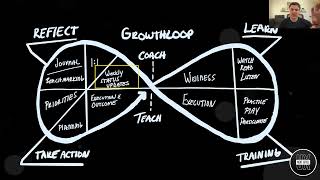
Drew Bridewell walks through a weekly growth loop: reflect on your work through daily journaling, learn via reading and one-on-ones, train with design jams and practice, then execute in focused 2-3 hour blocks. Repeat the cycle to compound productivity and creative growth.
Chapters
Foreign. So let's get into this really juicy thing called the growth loop. The growth loop is. It's so, so exciting. You know, I've been working on this map for a really long time, and I really like how I've dialed this in. But I think you'll find this so helpful. When you're thinking about how you do this, what is your growth loop going to be? Because what I want you to think about is where you fit into this and what you're doing on a weekly basis that may not or may be close to this, because you may be. You may be on doing similar things like this, but you just don't have a process for it. So let me show you this framework. All right, so the framework, first thing I want to draw your attention to is the outer rim. This is a figure eight, right? It is not the new meta logo for Facebook. You know, I worked at Facebook and, you know, it is really fascinating to see them redesign that logo and really do this. But, y', all, I've had this. I've had this. So this has been a big, big thing that I've already had. So we have the reflect in the very top left. Reflect, and then I want you to take your eyes to the very top right, which is learn. Take it down all the way to the bottom where it says training, and then take it back to the far left where it says take action. These are the four pillars of a growth now, these four things. If you're doing these every single week, then it's already. You're already 20, 30% better. You're already moving forward as far as, like, how you're going to grow on a weekly basis. Now you just do that. If you reflect a little bit every week, if you learn a little bit every week, if you train a little bit every week, if you take action on the things that you're. You're doing, you're in good shape now. This is how you're going to take it to the next level. What you're going to do then is think about what are you doing inside of these windows. So journaling and benchmarking, thinking about how you're performing, how you're doing, not just in your wellness, but thinking about how you're doing. Like, are you happy? Are you doing what's most important? Do you feel like you're making achievements? Do you feel like you're successfully approaching projects? Good. Like, are you getting good feedback from your peers? Like, all these things, right? Journal and write about it and reflect that way? It's going to help you course correct. Journaling helps you course correct. Let me say it one time. Journaling helps you course correct journal every day. All right. Then it kind of goes into this one on one in weekly status updates. These as an ic, as a maker, as a creator in the corporate world today. These two things are your two most important things that you need to do every single week. You need to have just an incredible one on one with somebody. Hopefully it's your manager or it's your coach and you need to have a one on one with them that is going to just absolutely help you. That's going to help you move the needle on things. It's going to help you have a plan, a reflection. It's going to help you get unblocked. It's going to help you learn that one on one is super critical. So you need to honor and respect and plan for that one on one. And it's also helps with your growth because you're doing it with your manager, your coach. The second thing is the weekly status updates. The weekly status updates is a simple Google Doc or a reflection post that you put somewhere private that is answering about four or five questions. Questions. Let me run them through you real quick. These are the things that first you're going to do for yourself. These are for you, for yourself. Okay, number one, you're going to find out, okay, what did you achieve or learn this week? Super important. I learned this, I achieved this, I finished this task, finish this, this, this and this. And I learned this, this and this. Great. Then you're going to be like, okay, well, are there any things that you're struggling with right now? I'm struggling with this because I'm not getting this information, whatever it may be. It's a way for you to kind of, okay, this isn't going so well. Okay. The third thing that you can ask yourself is, is there anything that you need help with? Like, yes, I'm struggling with these things. But what do you need help with? What are you learning? What are you trying to do? The fourth thing is do you or what is your plan actually, like you finish all these things in the first item. But what are you doing next week? Like, what are the things that you need to be preparing for and leading? Like three or four things that you're doing for the next week. And then the fifth thing is just a deep reflection about like how things are going. How are things going? Right. You asked for, you might need support, you might need some help in certain areas. But like how are things going. And it's just like a reflection that you can ask yourself on a weekly basis and have a Google Doc for it. So you always have what you accomplished, what's up next. And then the little reflections about support, things that you need help with, things that you need unblocked with. And it can be other things about, you know, when you're ready to ask for promotions or you're ready to do other things. You have a long list of all your accomplishments and things that you're shipping and things that you're building and things that you're doing on a weekly basis for the whole year. So these are so, so, so critical. I've been doing this for a really long time and it just makes you writing your performance reviews really easy. But it also helps you keep track record of all the things that you're doing, hold you accountable. So it's a really good accountability thing. I know I talked a lot about weekly status updates because I think they're so, so critical. The second half of this is the wellness. The wellness is such a big block in this because if you don't have a good healthy wellness, like working out, being physically active, being like keeping your mind sharp, you're solving big problems as a creative and as a designer and being in this program, you already care about your next level. So when you're going through this and thinking about your wellness, like what are you doing for yourself to be able to make sure that you're healthy and strong and, and your mind's right, your mind's focused, then what are you doing to learn? Like, are you spending time watching, reading and listening to things? When do you do that throughout your weeks? How have you dialed that into your schedule? So you are doing it on a regular basis, you know. Cause there's plenty to learn and there's so much growth out there. You just have to be able to box in the time instead of, you know, potentially watching a lot of TV shows, like how are you bettering yourself to watching, reading and learning and listening. There's other things that you can do with like habit stacking those things. But we'll keep it to this for a second. Then on the bottom half, it's practice, play and participate. Practice, play and participate. The three piece. So when you're going through and you're thinking about how am I training, how am I doing this? What are you doing to practice this new skills that you're building? What are you doing to practice the new things that you're learning? What are you doing to play and have a little fun. Like with this process, you know, are you having creative design jams? Are you, are you doing like little workshops? Are you hosting events? Like what are you doing to play have some fun? This is, this is supposed to be fun. Then the bottom part is participating. That's just like showing up for events. Like you being here today is participation. You're getting some training, you're going to take some action here coming up. But you're going to have a full growth loop in just this one week for participating in this session. Then we're going to get to execution. So the execution is like how you're actually performing, how are you actually like getting things done? This is tied to the top time blocks that you're putting into your calendar to make sure that you're actually spending two, three hours getting something done versus like 30 minutes here, 30 minutes there, 30 minutes here. You got to have at least two to three hour blocks. Let me say it again, you need at least two to three through Monday through Friday, two to three hour blocks. You need this time so you can get into deep thinking, deep projects, deep, deep work. You know, your reflection, you set some intention for what you need to do and then you go crush. So it's like you gotta really prepare for that time. Because if you're getting stopped, it's like you're getting jolted every time. You know, put on your silence notifications so you're not getting pinged like every 30 minutes. Because if you're like putting your foot on your gas and then you put in a stop to you're braking and then you're putting your foot on the gas and then you're braking, put your foot on gas and you're breaking it is so jolting for your creative energy and your creative spirit when that's happening. So let's not let that happen. Then we'll come down on the bottom left where we have execution and outcome. So your execution and outcomes like probably towards like Thursday, Fridays, when you're actually trying to finish the things that you, that you set out to do. You know, there's usually time where you have these blocks where you're doing things, but then you need to like that extra little hour to really push things over the finish line, to get prepared, to present it, to get it prepared for the outcome, the to get it prepared for engineering, to get it prepared for your product review, whatever it may be. This is like that second other part that you're going to schedule on Thursdays and Fridays to be able to like finish Finish, finish, finish. Then we go off into planning and priorities. These two things are kind of married because your priorities affect your planning, your planning affects your priorities. Like these two things will help you because you realize that something that somebody asked you to do, you don't really have time to do it, and you already know that it's not a priority. Then you can say, hey, I'm sorry, I don't have actually time for this, but let's get this into the next sequence and then you can get it back in when time opens up. So you're setting boundaries, you're being honest about what your priorities are, but you're always knowing what your priorities are every single week. And if you have a manager or if you're managing other designers, knowing what their priorities are and their plans are is incredible to help them course correct. And same for you when you're trying to really help the growth of yourself or any other individual. Like, knowing what priorities are can help drive this way faster, way better. Alright, so this is why I love growth loops, because it really captures and covers the full gamut of what we need to do to set us up for success. Because after you go through this loop many, many, many times, you start to become a kind of a leader in yourself and a leader in what you're trying to do, what to you're trying what you're doing on a weekly, daily, weekly, monthly basis. But then you start to get into this mode where like, you know what? I just learned this, I'm dialing this in. I have my projects organized, I have my training schedule organized. I know what I'm learning, I know what I'm growing. Now you can get to a point where you get to this moment of teaching and coaching. You know, maybe it's your family, maybe it's your friends, maybe it's you're teaching other designers what you learn about the product. You get back into this mode where we're always sharing and teaching things. Like, even if you're designing a product and you're not a manager, you're still going to be teaching other designers what it is that you did, why you made certain decisions to help them bring this knowledge further with, you know, so they can carry the torch too. Because you're not always going to be working on the same exact thing for the rest of your life. You need to be able to share and pass the torch, pass the ball, catch the ball, pass it back to another designer. And being able to share this information on a recurrent basis, this is teaching. So you're going to be able to do that with this growth loop. So take a photo of this growth loop, print it out, and just, like, examine it and think about, how do I do this on my schedule? What am I doing here?










