A Breakdown of how to get to Design Impact
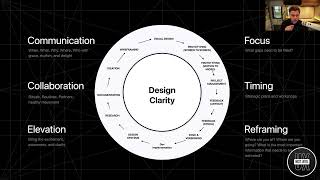
Drew Bridewell presents a practical, career-focused framework for achieving "design impact" through intentional leadership, clarity, and productivity. He emphasizes ownership (leading projects without over‑questioning), building scalable design systems, establishing routines/rituals for knowledge sharing and checkpoints, prioritization and delegation across teams of different sizes, and aligning projects with personal career goals and OKRs to accelerate impact.
Chapters
Foreign. So bringing it back to the core mission of why we're here, right? We're here to celebrate your growth. We're here to foster that clarity and connect you to your greatest purpose through intentional design. And even in design impact, you know, if you're a junior designer, you're a senior designer, principal designer, executive designer, we still need to be able to master these series of objectives. And when you're thinking about like, well, what's the quality of how I'm going to show up when I lead new net teams and experiences when my boss gives me the role to lead a new project, how am I going to show up through that thing? How am I going to be prepared for it? How am I going to share the information and really like just take it in under my arm and really just like lead it and help bring it to life? Those are the types of things that your leadership teams want to see. They want to see you lead. They don't want to see you asking a billion questions of things that you could go figure out yourself. Like you could just go figure out. You want to. You want to really take control and lead it, but do it in a holistic way where everybody can still feel a part of it. Building remote teams, same thing we over virtual space, we need to be able to do this. We still need to be able to optimize our approaches depending on where the business is at, based on how they're making money, based on the team you have, based on the resources that you have. Same thing goes down for just digitizing things that never were digital before, maintaining consistency across your platform. So if you are building a design system or you're on a kind of a new project to build a design system, you know, you're thinking about how that design system is leveraged or works across the entire company. That could be very design impactful, that can be very resourceful and helpful and reduce the amount of bugs and tickets and inconsistent issues that you see in your designs because you have a really solid design system. Very important stuff. Again, with developing execution strategies, with product, business and engineering, this is just execution 101. Like you're gonn have a lot of different ways to execute problems, whether you jump from one company to another company. But the best thing that you can do is just understand what you need to do to be able to push the needle forward and advance your projects and then start learning about, you know, what currently that your company is doing, what's working, what's not working, being very reflective. And that's where we get into the kind of, like the design in life awareness, like, really understanding what's going on so you can make better, proper, and more intentional decisions. You know, so all this good stuff, which is super important, and it comes back to, you know, our circle of things that we need to be responsible for in the development and design life cycle. And, you know, all of these things, they're never going to go away. Like, we're going to have these things even when the metaverse comes out and everybody is focused on, like, you could, like, close your eyes and snap your fingers and something will show up that you need. Like, in the design world, you're still going to need to be able to document it. You're still going to need to be able to, like, understand the wireframe, break things down. Even as technology grows up, we're still going to need to be able to think about the design energy. And, you know, these things all existed, you know, before I coined this design energy. But the thing is, is, like, what I'm trying to do is help you understand, like, these frameworks so that you have kind of these, these reflection points where you can go in and be like, okay, all right, Drew, what are my weekly, monthly, yearly priorities in my team, in my business and my project? You got to understand your priorities, because that's how you can course correct and know where you need to be. Right? If you're spending your time in other places, that's not very impactful. But if you're spending time, focus on the right priorities and you're using that time and optimizing it, that is impactful because you're spending time in the right areas. Now, imagine you lead a team of 10 people. Imagine you lead a company of 50 people or a hundred people. The priorities become even more important. To be able to communicate and to be able to delegate and to be able to, like, spread out what's happening, what's important, why it needs to get done. The same thing goes with efficiency, right? Just the things that I was talking about. If you know what the priorities are and you know who is responsible for what, then you can be more efficient. Efficient. If you know who's being more efficient, then you can increase your speed because you know when things need to happen and the win really comes into play with our friends over on the right side with routines and rituals. So the routines and rituals are like the kind of like these. Like when I was talking about benchmarking and like putting a stake in the sand, these are the moments to have, like, these checkpoints in your cycle. And these checkpoints are going to help you stay on track so you can have more impact, so you can get the feedback that you need, so you can advance and ask the questions that you need to ask so you understand, like, really, are we creating impact or are we just creating more work? Are we just creating like noise? What are we doing here? So super important, all these things kind of interconnect. Same thing with building integrated products. The best teams that I've been on, like units, the best units that are producing like so good, so fast, so efficient, they understand that these four things down here in the very bottom left are so, so critical. Right, Diagrams and maps, how we have active diagrams that explain how things work and do we have maps to be able to look at an aerial view and see how they function? Do we knowledge share? Do we have these rituals and RO routines built into our frameworks that allow us to share knowledge thoughtfully with a high intent where it's no nonsense, Right. Getting into it. The third thing is like the best teams have had expansive design systems and I'll call out Linda in LinkedIn and Facebook had an amazing design system. And these design systems are critical because they take all the noise out of decision making of a designer. When they can be thinking about the bigger problems that can be troubleshooting the bigger problems and focus on those bigger problems versus trying to figure out what button to use and or adding to the convoluted system that has too many buttons and then you end up having to rip those buttons out and rechange all the buttons, all these. This is one little basic example. So this design system is a growing thing and that's going to come with design maturity over and over. So you might be at a startup or you might be at a really advanced company. The design maturity is going to evolve, but it has to evolve with you. It's not going to evolve just nac, naturally, organically, like it's a series of people that care about the quality of what you're producing and the quality of the systems and the quality and maturity of how you problem solve, how you get in there and figure it out and how you have that cohesiveness. And you do that with these routines, these rituals and with, you know, building up your design experience. So all these things super important leads to design impact, right? So you need to keep that in your mind also you need to keep in the other part, right? We talked about design clarity in the previous months and this is like the second tier of how we can create design impact, right? How do we communicate? How do we collaborate? How do we elevate? And elevation to me is like the. Those weekly syncs that you have or those biweekly syncs where you're like, you got the people in the room that are gonna help you push something forward, but the only way they're gonna help push something forward is if that you have your ducks in a row, like your presentations, your advancements, your confidence and experience about what you're doing and why you're doing it, and the research and information you have to support it. And you're bringing the fire to it. You're bringing it and you're sharing it. And you're elevating. You're elevating the thinking. You're elevating maybe the research that you got from usability testing, you're elevating maybe the insights that you pulled from customer support. Maybe you were talking with sales and you understood another thing and you're elevating things, right? Because when you get into design clarity mode, when you start helping all your team move forward, that's where the fire begins. And that's where you're like, all right, we got five or six people on this team that are absolutely on the same wavelength, and we're crushing together. Like, that's collaboration, communication, the responsible, like the rituals, routines, the partners, right? The healthy, healthy movement. So crucial, so critical. And then we have focus, timing, and reframing, which, you know, you're going to hear. Nonsense. You're going to hear, you know, product managers or designers or engineers or content managers come in with something that just throws you off your game. And when that happens, the best thing that you can do to get back on your design impact flow is to just reframe. Is to just reframe the problem. I'm hearing this. Is this what I'm hearing? You know, it's like acknowledging the pain maybe they're feeling, acknowledging the work that's going on, but then circling back and reframing it into an opportunity so you can get back on track with your team. And that comes with timing. You know, that's. Timing's really important with that, like when to have these workshops, when to do strategic plans, you know, focusing on, you know, well, what are the gaps that we have currently? You know, we keep failing. Maybe in, like, wireframing and ideation, like the last two quarters, we didn't really do this very well. All right, for this next quarter, how can we do ideation and wireframing better? You know, you pick the things, and then that can lead to design impact. That becomes an initiative, that becomes a responsibility, and then that becomes an actual thing that you get to go and crush. All right, so then the third one. Right, the third tier, design productivity. Well, cool. We. We talked about these other elements, but now. Oh, I think I need to. Let me turn this real quick. So we got design clarity, design productivity. I'll go in a second. Let me come back to it. So design productivity is like, you know, the systems, that craftsmanship, that velocity management, which we talked about. But I think that slide was outdated, which is all good. Keep rolling. But the design clarity is like reigniting these projects. These okrs and okrs are essentially your key markers of what you're trying to measure your objectives and your timelines. Like, well, is it two months? Is it three months? Is it four months? Is it two years? Is it four years? What is it? Getting that and then cycling in your goals, your personal passion, career project. I also don't want you to forget about these things, like your personal and career ambitions. If you get handed a new project to work on, I really want you to think about how that new project is going to help accelerate your career. Like, think about, oh, well, I'm going to get a new. I'll use design systems again as a. As an example. I'm going to get this new design prod, this new design system project. Great. That's awesome. Is this something that you want to advance in, in your career? Is this something you want to advance the company in? You know, thinking about how you can play on that and, you know, kind of amp yourself up and inspire the situation. Like, you just got this really great project. What can you do? How can it impact, you know, things that you're doing, your passion life, things that you're doing in your personal life, things that you're doing in your career. And then your project, obviously the thing that you have to do to make some money, they're going to pay you to do the service. You got to do the service. But thinking about, you know, how that plays with your other projects or your other goals, then we have values and principles which are always going to be important. Which, if you never talk about your principles and values, then you might be, like, flailing and not really focused on what really matters because it ends up coming back to these actions that you need to take, the actions that support all these things. Right, right. Because the goal. And if I go back to design productivity, the goal that is literally, you're optimizing, you're optimizing your design effectiveness. So you can scale, learn, and grow, because you want to still connect to that flow and produce better and see the results faster. Those results are where that design impact is. But you really need to kind of combine the clarity, the energy, and the productivity of design so that you are not just thinking about one thing, you're thinking about, like, in learning about how to do all these things at the same time, it's really, like, super crazy impactful. Sam.










