Action Planning with Next Level UX
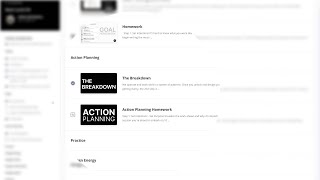
Drew Bridewell walks through month 3 of Next Level UX coaching, which focuses on action planning. You break big goals into prioritized tasks, build weekly rhythms and habits, and use a growth loop of reflection, learning, training, and action to sustain progress.
Questions this video answers
$49.99 per month
Chapters
Hey, what's up? Drew Bridewell here, founder of Next Level UX and head of design at Growth Day. Now this Thursday, I'm really excited because I get to do another live session, doing a morning session at 8am Pacific Standard and also at 4pm Pacific Standard. And this month we are going to be discussing action planning. It's week three or month three of ACT of the Next Level UX coaching program. And I'm just so honored and excited to talk about this because it's one of those things that once you dial it in and I'm going to kind of move around my seat a little bit, once you get this mastered or once you figure this out, it is like so incredibly powerful to your execution, to your abilities to achieve more and also to do it in a harmonious way, to actually go through your execution on a weekly basis and feel really good about what you're achieving, but also doing it in a way that's not only benefiting you, but benefiting all of your goals and all the things and important things around you. So let me just break that down for a second. So with our first two months of the coaching program, we focus on clarity first and clarity is all about understanding how you want to show up, how you want to interact with other people, what success looks like, really defining your identity and defining your vision and destiny of where you want to go. Then we lead into month two, which is all around goals. Now goals are important because after you've kind of identified what you want and what you desire, then you get to go in and really kind of master out. Alright, cool. So now I know what I want and how I want to show up. Now I need to know what kind of goals do I want. And we focus on four different categories for goals because looking at the holistic self, not just your career, not just your projects, not just your passion goals and not just your personal goals, we want to look at all of them collectively together. So that's what we did last week. And if you didn't sign up yet, you can still go in and sign up and watch all the past replays and go through the homework as many times as you want and you can still have access to all this. And then in this next month, like I'm talking about is action planning. And what I wanted to do was just show you a couple screens from the, from the training that's going to be coming up this Thursday because I'm so excited to talk about this because it's so incredibly powerful. So I'm just Going to switch screens here and kind of dive into what we have here, which is the next level UX training map. And we're on action planning right now. And again, this first phase is to help build that foundation, plant the seeds, develop a plan, discover your practice schedule. So let's dive into this a little bit further. So for action planning, what we're going to be thinking about is, you know, every, every time I have a framework or every time I have a new training, I do a framework for what it's going to be for this month. And this month is about, you know, getting clarity and reflecting on your goals and then leading and building on that momentum and putting it into focus areas. So we're going to be focused on developing your planning skills, setting boundaries and developing rhythms and rituals that help complement your day to day operations. We're also going to look at growth loops, we're going to look at habit habits and scheduling. And then we're going to look at the breakdown. The breakdown is basically just taking your big giant rocks, which are from your goals, and breaking them down after you prioritize them and after you understand what's most important to you to achieve right now, then we're going to reinforce it at the end of the week with some homework. And this homework is important because you got to actually go practice, you got to go take this, these skills and go get some exercise on how to do this on a reoccurring basis. When I first started out planning, oh my gosh, let me come back to you for a second. When I started, when I started planning or learning about planning as a designer, as a creator, I didn't, I didn't have any skills for this. It was hard for me to be like, oh my gosh, I have this massive project. How do I plan it out and design it and do all the other skills and requirements and things that need to happen from a design perspective. But, but then I started realizing, oh my gosh, by me, not by me giving away the control of not being able to plan my own schedules and letting everybody else run the show, I was giving out my control to other people. I was just like, okay, this is what I need to do. But it wasn't really helping me get to my next level. So when I really started figuring out, okay, yeah, I can break down these projects, I can break down the tasks required for me to achieve and to be able to help every single role move forward. I can do this in so many other ways. And I just needed a formula to be able to do that. So this is what I'll talk about this week. It's gonna be. It's gonna be great. I'm gonna really enjoy sharing it with you and then coming back here. So the homework again, taking those reflections, taking those, those big skills of breaking things down and prioritizing them and figuring out how to tackle them. Then we'll go into this reflection mode, which reflection is a big part of the growth loop because it helps you identify, you know, how you did what you learned, you know, what are some improvements, what are things you could have done better, but also what are the next steps, you know, what are the next things that you need to accomplish. So let's go to the next slide. So then once we start building this momentum, because it's all about building the momentum in next level UX from week over week. So we got our goals, we have our clarity, then what we're going to do is jump into these growth loops. Now, the growth loops are important. I'll share with you the big diagram now and I'll go into great detail for all of these elements during the session. But we really have these big four core sections. We have reflection, we have learning, we have training, and then we have taking action, taking initiative, getting after it, doing something about the things that are important. Now, in order to kind of harmoniously work on all these things together, we just need to be mindful about where we're doing these things in our life. If we're never working on our wellness, then then we're going to probably have lower amounts of energy and capacity to do certain things. If we're not watching, reading, or listening or learning things, then it's going to be hard for us to be able to know how to really what our level could, how we could raise our level so much more, because we're never really pushing ourselves and learning outside of the box. Then if we're not practicing, playing and participating in events and training and actual like, learning, social learning environments, then it's going to be also just as much challenging because we're not really, we're not really pushing ourselves or having that, you know, that, that social accountability to really just show up and learn things that we didn't learn before. And it's always better to grow together, in my opinion. It's just like, it helps grow, it helps you develop so much faster when you have a group cohort, a learning cohort to do this with. And then, and then it comes back to, you know, journaling, benchmarking, where you're at. Those are Things that you typically want to do on a reoccurring daily basis. But then you have these two really magical meetings throughout the week. You have your one on one with your coach or your mentor or the people that you re that you manage and you lead. But then you also have this like weekly status update. And if you're not used to sending weekly status updates, that's totally fine. But what I'm going to encourage you and challenge you to do is start doing that, even if it's to yourself. If you, even if on Fridays you're making a letter to yourself that's saying, this is what I accomplished, this is what I'm focused on next week. These are the things that I learned, these are the things that I'm improving. And do a deep weekly reflection every single week and have that stored in either a Google Doc or in a personal journal or something you're writing down. Because this is going to be your, your course correction sheet that's going to make sure that you're actually working towards and achieving your most important things. Things. Then it comes back for me, I put coach and teach in there. Because if you start developing the awareness and maturity around what you're learning, then you can get into a place where you're teaching it back. You're mentoring people, you're teaching what you've learned and you're showing best ways to do that. And then again, if you're coaching or you're leading people, then you really need to have a coaching mindset where you can help support people on different levels and just telling them what work to do. It's not about telling them what to do, it's about helping them. It's about helping lead them in a way that helps them learn and grow themselves and learn the chemistry and the ingredients that really accelerate the growth loop mindset and what people can actually do. So this is also another big giant mind map of all the things that typically happen inside of a, you know, in a team environment. And I'll dive deep into this. But on the left side you can kind of get an idea of what intention based discovery is and understanding life problems. But then on the right side it's more about the things that we're doing as product designers and learning and growing and even understanding like first level management and what the responsibilities are at that level. So if you're getting into mentorship or getting into management, these are really important things to have mastery level first level managers really focusing on these things like principles, coaching, product strategies, staffing, you know, these These product visions that you're trying to help manifest and create, like, it's so critical to be able to have alignment with your team on that. And then, you know, I'll circle it back to some other really important things like really mastering your vision, your goals, your planning, your learning, your reflection, your training, your playing, your practicing. All of these things are so critical to really having a touch point in your weekly monthly regimen for how you're moving through things. And you might be thinking to myself, you might be thinking, oh, my gosh, Drew, like, are you really looking at all these things every week, every month, every day? I did at first, but now they become natural parts of the creative growth loop process, which is an incredible part to how I'm able to get what I want to get done, how I'm able to show up for my teammates, how I'm able to get to that next level of performance and be able to really manage it in a harmonious way. I'm not, you know, this is. These are just, you know, if you pull together tons of tons and tons of books on creative process and masterminding and being a mastermind at what you do, you really have to. You really have to practice all these things. So, yes, I do practice these things, and yes, I really do like all of these things. And if you need support, these are great places to start. So let me come back to those, because these are little triggers. And if you're not thinking about how you're doing these things, then this is the time to start again. Here's the coaching outline. We're on week three or month three of the program, and we're just going to have a lot of fun, you know, because after we go through the month three and month four with this practice, we're going to start getting into more of these design energies. Design clarity, design productivity and impact, which are again, raising the bar for how you show up with your team and for yourself. It's going to be a ton of fun and we're going to really crush and get through these things. And oh, my gosh, we're here. It's at next level. Ux me if you want to go check it out. And I'd love to see you, I'd love to meet you next week. And if you don't join this month, it's all good. We post the replays up there so you can go watch them later. And this is going to be a good opportunity. We're gonna have two hours, so we have a morning session, afternoon session to really go deep on these things. I will go through the presentation and the workshop twice. So sometimes the morning session is a little bit different than the afternoon session, because just getting up and getting going and the afternoon session, you know, after a full day of events and things that happen at Grote, I'm, like, super jazzed and ready to go for another afternoon session. So I hope to see you there. If you have any questions, feel free to DM me again. If you're interested in next level UX, it's 49, 99amonth. So it's a 50 bucks a month to get this training, get access to it, and to get your live coaching with me every single month. And y' all just really appreciate you watching this video. And again, just reach out if you have any questions. I know, like, coaching in the 20. It's 2021, 2022. Like, coaching can sometimes be like, I don't want to coach. Well, I'm here to help accelerate you, help bring accountability to your. To your passions, to what you're trying to focus on. And, you know, sometimes we just need a little bit of coaching. Sometimes we just need a little bit of mentorship. Sometimes we need that person that has a structure and some guidance, and that's what I'm gonna bring to you. And I'm just. Yeah, just really excited to get to know you and just to help get you to your next level and to really take this serious. But have some fun along the way. So hope to see you there, and we'll continue this conversation. All right, see you, everybody.










