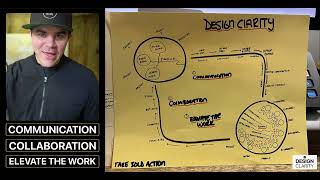
Drew Bridewell maps design clarity through three Q1 OKRs, strong documentation, and weekly rituals. He argues designers have influence through their tools and should focus on communication, collaboration, and elevating work. Empathy, patience, and flow help coordinate across sales, marketing, and finance.
Chapters
So I drew this last week and I was like, okay, how could I explain what's going on in my mind when it comes to design clarity around this, this last week that I have? Well, I was like, you know, I can't. I couldn't, like, write out certain projects here because it would just share, like, IP that I can't do. But I could talk about, okay, it's a project. Okay, sure. Project one, project two, project three, with these three major OKRs for Q1. And inside those OKRs, there's key objectives, right? You get those down from you, CEO, your finance team, your business. Like, what do you need to move? What needles do you need to push? Right? And then you have timelines associated to those things. Great, got it. That's the thing where I started. And then to me, it's like, okay, well, what does design clarity look like? Well, I'm going to have fun. I'm going to do my best. I'm going to develop rituals around this. I'm going to develop routines. We have new people coming into the company, new people leaving the company, new designers that join, designers that leave, engineers that join, engineers leave in your company for the rest of your life. People are going to leave, people are going to join. And the better that you're organized, the better you're documented, the better you're dialed in with the guts and bolts of what your company does and how it makes money and how it functions and, like, how things actually work, the better designer you're going to be. Now, a lot of times, like over the last, like, 15 years, people are like, oh, designers need a seat at the table. You have a seat at the table. You're a creator. You have Figma, you have sketch, you have these tools. And it's like you have a design weapon in front of you. Like, not in a weird, like, scary way, but you have a design weapon and you get to use it. And that is a skill to be able to bring clarity to chaos. And you get to do this through these rituals, routines, like, through people, leadership, like, through yourself or through the people that you manage or you're going to manage in the future. Because you want to be a design manager or a product manager or a leader, and then you want to think about how are you growing the impact? You know, for me, it was like, okay, well, what's the growth impact for not only me, but for my team, for the people that I get to coach, for the people that I get to work with on my team, and how am I going to be growing and helping them. So, right, it's. It's all happening. It's coming down. And then at the very bottom, it's like, wow, we got corporate, we got learning, we got sales, we got marketing. On all the disciplines in an organization, all those people got actions, all those people got responsibilities. They're all doing things like, they have families. They got things going on, too. We all are people. And when we're working together harmoniously, we need to understand, okay, when are we presenting, when are we brainstorming, when are we having creative jams, when are we doing design jams, when are we researching, and how are we sharing out those learnings that we have in our company? And when we do product reviews, like, these things help the product work and make it. Like, I didn't add anything else outside of this because this is really all that it takes. Like, you know, you got. You got those things, you have those sinks and you have those meetings. All the other work that happens behind the scenes, it just happens. Like, you just got to do it. And all that still comes down to if you excel in communication and you excel. Excel in collaboration, and you excel in elevating the work week over week, you know, imagining what that 10x would be better, then you're going to succeed, you're going to show up better for your team, and you'll see the results. Then we come back in to the bottom left down this magical road where we have principles, empathy, patience, and flow. I want to be in flow. I want to have patience with my team. I want to be empathetic to life. We still dealing with COVID We're still dealing with nonsense out there in the industry. Like, we have to bring our. We have to bring our positivity in a game because it just needs more of that in the world. So that's how I'm going to show up, and I'm going to bring my principles that define, you know, that I'm just going to follow. So to me, this is design clarity. I know what my projects are, I know what I'm doing, and I'm going to show up and have a ball making products and building clarity in my organization. This is an example Ra.