High-Performance Planning in Design
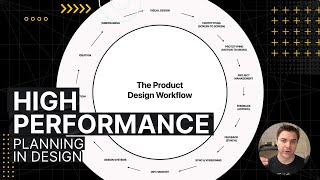
Drew Bridewell argues that planning across design activities like ideation, wireframing, and prototyping directly improves product outcomes. He breaks planning into micro-moments before, during, and after meetings, and recommends a four-point kickoff method: people, processes, purpose, and projects.
Chapters
Yeah. And circling back to all the things that we typically do in the product development lifecycle, right? From visual design all the way to dev, handoff to design, systems, research, documentation, all the things that we need to do to be able to create a successful product. All of these things are typically inside this flow, right? Inside this, this kind of unique flow that we take and we look about and we think about, like, how we're doing everything. All of these things require some form of planning. They require certain checkpoints of when we're going to do this and how we're going to do this and how are we going to get feedback collectively from each other. When you think about plans, you don't have to, like, write out all these individual things. You just need to be aware of that chemistry and that flow and that rhythm of when you're going to do this. And who needs to be prepared. What can we do to anticipate the types of challenges and problems that we're going to have in our experiences or across all of these different things? And then if we're at, you know, 1 to 10 score rating or benchmarking across all these different topics that you see on the page here, you know, ideation, wireframing, visual design, prototyping, project management, feedback, async and sync, like in person, facilitating sessions, versioning designs, building design systems. How are we going from, like level one to level 10? And what does that look like? What is the next version of how you can improve this scenario? Every team is going to be different that you work on, but it's not about trying to, you know, trying to, like, control this cycle of development. It's about understanding what you have to work with inside your organization and how you can slowly get 1% better with your team. Sprint after sprint, week after week, day after day. When you have those moments to collaborate, I just want to remind you, I've mapped out hundreds of companies have been across the world looking at designers and product makers and how they build these things from the ground up. And everybody's working at it differently. So trying to say it has to be the certain way has to do this. It's just a battle that you're probably going to continuously lose. So mapping out and understanding your ecosystem and how you're going to improve and bring value to each of these different elements is going to serve you in the long run. So it's raising your maturity across all these things, but not trying to overanalyze or over, like, over control how that team is going to function, how it's going to work. So when you look at these sorts of things, think about, like, how am I going to make it better? How am I going to help the team that I have in front of me? How am I going to make sure that I'm delivering an excellent experience or an excellent solution of what my role and discipline is for each one of these phases? And then support, support your team. The same story goes for the processes we go to. You know, I was showing this, and you'll see this, like, little map throughout this, throughout the program. Because when we think about planning and we think about the things that are required to be planned out during a product development life cycle, we have to think about these little micro moments. These micro moments have so much opportunities to be improved, not by telling people what to do or how to do it, but by enlightening people that, hey, how are we going to decide as a team how we're going to make decisions? Or when we generate ideas, what's the best way that we can share them with each other so that we can all work cohesively together? And when are we going to do that? Throughout the week so the team can be informed and anticipate those moments to be a little bit more effective and efficient with that time that we're going to spend together. You know, I often think about, like, the, the programs and the teams and things that I want to be a part of. I want to be like the Navy Seals team and the championship team, you know, the Golden State warriors team of intention and detail, orient orientation, orientation for how we're going to approach something. But I don't want to, like, destroy relationships. I don't want to, I don't want to hurt people at the, at the expense of making a product really, really good. I don't believe in that. I think that there's a way that we can build cohesively together and really just understand how to make each of these moments special. And I think that's a beautiful thing of building products, services, and people. Experiences that I think should live on for all of eternity. People deserve respect, they deserve creativity. They deserve to be able to do these things in a safe environment. And I think it starts with how we end up, how we design these things, these moments. And that starts again with how we plan for it. Right, Cool. All right. So we're still going through the product building process, breaking down these stages. So even when we're going through our action planning experiences, right, we have these big, giant milestones that happen. You know, when I'm talking about Three big rocks. We're not that point yet. And I'll show you that template a little bit later. But getting started and doing discovery and doing ideation, each of these are like high level phases of things that we need to do as a company, as a team. So when we think about like planning, getting started, like I started, I have a course that's called on LinkedIn learning. It's called like project kickoffs. It's like a four point method where you can learn about the people, the processes, the purpose and the projects. Like, so what actually things do we need to break down? And then in that course I broke down how you can like ask a series of questions before you actually even kickstart a project. And if you don't know those questions, then you're going to be more likely to end up asking those questions like later during discovery and ideation and validation, which you shouldn't be learning. Like you should learn a lot of that stuff before you even get started so that you're being effective and efficient, strategic with how you're doing discovery with how you're doing, ideation, with how you're validating and learning about the experience. But you have to do a lot of those things up front. So the reason why I want to show you this today is I want you to think about like the things that you do before and after specific themes, moments. So when you're getting started on a new project, what are the things you do before, what are the things you do during and what are the things you do after? That process right before would be like, okay, I have a series of questions that I need to ask. I need to build clarity, I need to understand who's going to be here. I need maybe need a decision making model of who's going to be making decisions and when. And I also need to know like the scope, the timeline, the frameworks, like who and how are we going to make decisions? And then during that process, when we're getting started, who needs to be involved? How many people do we want to bring in right now and how should we phase those people into the project so that it's not overwhelming for the entire product? And so we can, or the entire project and we can make sure that we're being very strategic. Right? Strategic was a number two thing that we talked about in the beginning of the ideas. And then also when we're getting started, okay, when we kick this off and we move this into a discovery phase, how are we going to do that? Are we going to have a kickoff meeting or who's going to be in that meeting, how long is it going to be? What kind of intentions can we bring into that session so that everybody is aligned and feels confident with where we're moving? So you can do that for all of your meetings. And action planning is also a way that when you're, when you know that you have these responsibilities, what can you think about that could set this thing up for success? Before, during, and after Hope that makes sense.










