Keeping Score and Benchmarking in Product, Design, and Life
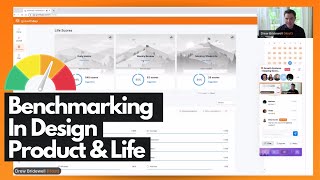
A Growth Group session led by Drew Bridewell about benchmarking and ‘life scores’ — using daily, weekly, and whole-life assessments in the Growth Day app to track personal development and design/product performance. Drew explains how to use the app’s life score assessments, history/trends, recommendations and journal links, and he outlines frameworks for benchmarking workflows, design clarity, goals/OKRs, timelines, and values. Participants share how they integrate scoring into morning routines and reflect on challenges like self-judgment and customization needs.
Chapters
There's going to be a nice little reflection day. You know, I know last week we're talking about the journal. This week we're going to be talking about benchmarking and life scoring and just keeping score of how we're doing. And I think it's going to be really interesting because I'm going to put a little take about it, thinking about, like, design and thinking about product. But I also want to learn about what your roles are, what your disciplines are, and thinking about how you can go beyond just doing your daily, weekly, and monthly benchmarks here in the tool, but thinking about things that you can benchmark out in your career or in your family life or whatever it is that you really care about. And we're going to talk about that today and start building those routines. And it's going to be just a really impactful session, because benchmarking and keeping score is not a. It's not about, like, stressing yourself out about how you're scoring one day, but it's about keeping track of how you're showing up. So I'm just going to let people roll in here. What's up, Marlene? What's up, Linda? Welcome. Hey, Debbie. Alita, let's go. This is your first growth group. Definitely would love to hear it as well. If this is your first one, Debbie or Julie, if this is your first time, thank you so much for being here. Just taking. Taking an hour out of your day for a little personal development on top of all the things that you have going on. Just really want to really appreciate you right now and just. I'm grateful that you're here, so it's going to be super fun. So thank you. Thank you. All right. Just. All right, let's get after it. All right, so first things first. How many of you would say that you have made. And this is going to be kind of interactive. Part first, quick second. But how many of you have made doing a daily, weekly, or monthly life score in the product? Like a habit? How many of you can raise your hand by saying. Or you put in the chat, like, how many of you have done the daily, weekly, and monthly life scores? You can check these out. If you haven't been there. It's. You can click three on your keyboard, or you can just click the third icon from the far left in the app and you can head over there. We're doing it. Yep. Okay. Cool experience that we needed to have inside the tool, because what we had previously done was we had these assessments outside of the tool, and they were long Forms and in the like years ago they cost about 300 to even go take. But now we've integrated into the tool so that you can have these assessments that you can go through and start learning about the high performance habits. You can start learning about weekly assessments which each have their own individual question set that you can go through. And then the whole life assessment, which is 10 questions measuring from a 1 to 10 how you're performing across all these categories. All good, all good. So what I want to do first to kind of get going is I want everybody to go over to the life score section. So just hit 3 on your keyboard and head over there with me. And I'm not going to share my screen for this. I just want you all to go over real quick over to the life score assessments and when you're there, just go ahead and let me know in the chat that you're there. So I'm here right now. So we have these three assessments. Now the whole idea for keeping score, keeping these benchmarks is not to stress you out, it's not to a burden on you every day. These are just your opportunities to check in with yourself, to check in on your personal development and figure out how are you measuring across these 10 key categories. Now if I was to go through and just go through one of these assessments right now, we key categories and then we have a little prompt that goes underneath. And I know a lot of you that have gone through this already, your go through these and you start to learn the types of questions and you learn them over and over because you just take their daily assessments. So as you go through this, I want to just encourage you to not harshly judge yourself and don't beat yourself up if you're scoring 60% or 70% or even lower than that because these are the ways that you can benchmark over time. So if I was to go through like my clarity is clear because a practice for tapping into my clarity every day or my energy, I manage my mental energy. Okay, Energy's feeling pretty good. Necessity. Feel like I'm necessary to be my best and make success a must. I'm like in it right now. I'm so focused. Productivity keeping us going. Influence. I'm gonna give myself a four. Courage. I'm gonna give myself five. Had to have a lot of difficult conversations this week going through and not like bad conversations, but just conversations that are tough. And then movement, like getting a ton of movement in. And my mood's been chipper, sleep's been really good and my nutrition let's give that a 4, I think be a little bit better. So after I get through my score. Now, this is something that you're probably all familiar with. We've just recently updated and added a ton of new recommendations. So when you go in and you see these recommendations at the bottom, you can always click on these, watch these videos. You can come back to these later. You can also see your history over time. And that's where we can see, like, why benchmarking over a long period of time is so helpful. So if we were to actually go do that, I'm seeing a click in and see my history here. Yeah. So in this view, this is the history view. You can see this view by just when you click three on your keyboard and you're in the live scores. And it's just loading here because I'm pulling a lot of windows. You can see the View History link underneath each of the category cards. If you click View History, it's going to allow you to see your trend lines. And this is why keeping score is so important, because you want to see how you're progressing over the long term. Now, it's again, it's not about, like I was saying, it's not about being hard on yourself, but it is about learning about how you're going through your weeks, your days, your months, and when you can filter these things and see, like, the last three months, how was I doing across all my different categories and also how am I doing it on all of them? Or specifically, I can dive into a specific category. Now, we put this in here so that if you're feeling like you're like this month or this year, you're really trying to strive for more courage or more productivity or more clarity, then you can really zero in and focus on that specific category. And then you can get those recommendations for it. Now, as you go through and look at your history of activity, I want to remind you all that you have the ability to go into your recommendations just right here in line. So you can tap this recommendations button. You're going to get recommendations. It's just kind of here. Let me just come through. Just letting it catch up. And you can see Brennan's here telling this productivity example to stop making excuses. You can go in here and just watch this right here in line, just from this page. So you could literally spend all day just watching recommendations for the topics that, you know, maybe scored a little bit lower it. And then you can also reflect on those items by writing journal entries right here in line. So we have these Two embedded components that are components are essentially these other tools that we have in the product that you can come in here and learn a little bit more. And you can even finish it in your journal if you don't want to. You started writing here and you wanted to finish it in your journal. You could just tap this button right here and be able to finish in journal. So I hope that's helpful and hope that makes sense. What are some things that maybe block us from doing these scorecards now? I think oftentimes if you don't have a designated time throughout the day, and if you're like, oh, I'm really like doing this in the morning from the night before, or I like doing this at the 7, 8 or after dinner, I think it's really important to find a time and just have a build in a self rule where I'm gonna score every day. I'm gonna just like checking into your personal development every single day so that you have that self accountability, you have that self ownership, that self leadership. And you're taking that moment and it only takes a couple minutes. So you could be doing this if you needed like another trigger, another cue. It could be like right after dinner or right after the dishes, or it could be right after you brush your teeth, or it could be right after you do nightly journal and you're just trying to like calm down and reflect for the day, like how did my day go? It could be after you do a nightly walk with your family. It could be all these different times. Just think about what is the cue going to be that is going to remind you to tap in to your daily habits. We have this daily. Now let's just tap in and look at the weekly. Now I already took my weekly score and I did that on the weekend, but let me dive into kind of the categories. So the weekly assessment only dives into six of the high performing habits. So we have seek clarity, generate energy, raise necessity, increase productivity, develop influence, and demonstrate courage. So even if you were just to do these assessments, you know you got about 42 weeks in a year, right? You can go through and do one of these every week. And just doing this alone is going to help. If you're practicing these habits, you're going to be moving in the right direction when it comes to your personal development because these are the most high performing on your personal development. So seeking clarity. I have a couple prompts that I'm going to show you later in this growth group of how I think about clarity and building clarity and like benchmarking clarity in the design space, in the product space, and the things I think about or things I like to measure. And these are really helpful measurements because if we're not all, like, have a research lab right in our back pocket, it's difficult to know where you should be focusing on, where you should be elevating your intention. So what we have here is it's just built into the tool. So this is going to just help you. And you could still have the same functionality to be able to get your recommendations, to be able to write journal entries, and you can just stay on point. So think about again, okay, there's my weekly cue to be able to get back in here. It could be after my Saturday or my Sunday events that I do with my family or friends or my whoever. And just thinking about when could you do this? And thinking about in your mind right now, maybe writing a note in the notes on the sidebar, thinking about when can I start thinking about when I could integrate this into my rhythms? And I'll come back to. There we go. So we have our weekly review. Now, the whole life assessment is something that we also, for new strivers coming to the tool, we start the entire product off with asking you to do a whole life assessment so we can get you recommendations and we can get you in the game for personal development. So in this state, we are really thinking about again, the whole life, like the holistic life, right? From health, mental and emotional, partner in love, family, friends, mission, experiences, spirit, finances, learning, right? A lot of these things also are just really good, strong foundational questions and categories to be thinking about when we're trying to strive around, like the three areas of growth. Like, Brendan talks about a lot of his trainings like connectedness, aliveness and meaningful pursuits. Right? We have missions, we have incredible experiences, we have spirit in the things that we are striving for. We have our finances in check. Like, all of these are really good categories to stay, like, sound around, like your holistic view of your personal development. So again, you have these things in here as a resource for you. And I just want to encourage you to think about the times that you're going to be doing this. We do remind you as well inside the tool so you'll get like reminders like score in one more day, score in five days, score in four more days. And this will keep you on track. But just in case you miss it, you can just come back in and be on your way. And life scores is also going to continue getting and recommend is going to continue Getting recommendation improvements. But I also want you to see the sidebar to the right. And the sidebar to the right is going to allow you to keep track of the days that you're doing this, but it's also going to give you a little bit more insight of the things that you're doing inside those days. So if you journaled, if you start a new plan, if you took a scorecard, you can see that in the right side and you can also see the sidebar in the journal. Now that you know how to benchmark, you know how to keep score. Let's think about here. I'm going to come back to the growth group. Let's think about, like, the rituals and the routines of when you can actually be keeping score and benchmarking, not just inside of growth day, but, like, with the things that you care mostly about. So you have a journal, you have these reflections and things that you're writing about. What are some other things that you could probably level up above just doing the daily, weekly, and monthly life scores that are more particular to maybe your discipline, your role, your career? What are some things that, like, really help you just shine in your career and your role? Are there any things that come to mind when it comes to your role and your discipline of things that you wish you had a little bit more clarity around how you're performing or how you're showing up? Like, I know that the benchmarks are around, like, your personal development, but think about your career for a second and think about, like, what it is that you're trying to do this year. We're about to head into the second half of the year. We got about one. We got one more month to go, and then we're really gonna just tackle and crush this quarter. Three and four. Okay. So, yeah, let's come up with some things here. We got leadership. Leadership's a good one. I'm gonna put that in my notes, too. Leadership is like an ongoing, absolutely ongoing effort. What other things are you just really wanting to benchmark and measure this year so that you can get to that another level of what it is that you do. So we had leadership. What other things are. Are hitting your thoughts of, like, could I improve in this here? Self discipline. Okay, cool. That's a good one. What else, Wells? Keep them coming. Consistency. Okay, great. So let's just. Let's stick with those three for now. I'm going to add probably. I'm just going to add one called design clarity. We talked about this last week, but design clarity for me is Just really helping make sure, like whatever I'm building, whatever I'm putting my energy into, when it comes to creative work or creating something that doesn't exist, like innovation, I want to have a really clear idea of the design clarity that I have and how I'm articulating and reflecting back on the things that we're going to be building both in my life, my personal life. And I want to really know how to articulate it. I want to really know how to describe it. So I even want you to think about like for leadership or self discipline or consistency, the ones that you put in the chat, how would you describe that for yourself? How would you describe it for your, like the intention that you put behind those words? How would you benchmark and know like what your level is? Is your level Here, let me come back to you real quick. My screen just kind of here. Okay. What would be the level that you're currently at? If it would be like, oh, I'm a novice at this and just you can keep this internally in your thinking, but think about how do you get to that next level? Or where would you benchmark yourself for this? All right, yeah, so maybe put that in the chat, like what would that be for you? Because I think when we come, when it comes to benchmarking and scoring and keeping like keeping score, the benchmarks help you keep track of your habits, but also think about like what you could be doing outside of like get really personal and really think about the things that matter most to you, about the things that you're advancing this month, maybe that even today. And that whether it's leadership or design, clarity or self discipline, like, how could you benchmark where you're currently at for that? And think about what would be the next level of that? What would be the, like if I was to make that 10 times better, what would that even look like? If I was a 10 times better leader, or if I was 10 times more self disciplined, or if I was 10 times MORE consistent with the things that I'm doing on a daily, weekly and monthly basis, what would that look like? And maybe write about that in the journal and think about or in your notes and start thinking about. Well, how would I would describe that? Because if you can't describe it, then it's going to be, it's a lot more challenging to start moving that energy and that building that momentum towards that thing. And that's why journaling and reflecting is so important. But we also have to keep the score. We have to benchmark where we're currently at. And also in the product world, we think about this quite a bit as well. Because in the product world, we're thinking about how do we benchmark, like the performance of maybe the people we work with, the products that we build, and the outcomes that we're shooting for. Like, obviously we're all trying to make things better when we're working in product and design. And all of you in this app, you're in personal development, you're trying to make something better, whether it's yourself, whether it's the environment, whether it's just making a better day. We are trying to level those things up. And yeah, right on, right on. Definitely check out the high five challenge and the confidence challenge. High five for getting good, solid self leadership, self motivation in the morning. And the confidence challenge from Brendan to help really build that internal confidence. Super. Just impactful, just doing the work, getting after it. So I think those are some really like those four things, like thinking about benchmarking, thinking about doing those things beyond just what your. You're currently thinking of. Because if you don't keep track of it and you're not measuring it, then it doesn't actually. Then there's no way for you to know if you're actually like getting better at it. And this doesn't have to be like rocket science. This doesn't have to be a huge giant research study. This can be you taking notes at a certain time and just journaling about that in that time. Like how you're feeling, where you currently at, what could be a little bit better and putting that little like marker in the sand and saying, like, this is where I'm currently at. This is where I want to be. And you can do that again. If you are an entrepreneur and you're running a business, you can measure your performance of your product. You can measure the performance of even the team's energy. Like, how does a team flow? How does a team feel in this moment? And you can measure that as well. So I think those are a couple like really quick examples. And the same thing goes for pretty much any topic that you care about. You can measure it. It's just about like thinking a little bit more like thinking outside of just the, the core thing and think about like the things that it connects to, thinking about how you can measure it. And it's, it's just really just doing this work. Yeah. Plus, what was this? Let me see. Let's see. It totally is like questions about like over complicating things. I tend to like, okay, why would I explain this? I don't know. A lot of you have kids too, and like thinking about how you would explain it to your kid, and sometimes we can even over complicate those things. But just thinking about where you're currently at, you could even just score it just like kind of growth day does it where it's like a 1 to 5 or a 1 to 10, one being like it doesn't really exist and 10 being like, it's going really great. You can benchmark and measure just pretty much about anything and. But it's just like, about liking it, a discipline and making it a, like, kind of a new skill that you have. But you don't have to. You absolutely don't have to to be like a research scientist to be able to, like, benchmark and measure things. So I wanted to share just as a little, like, quick little pivot beyond using. Beyond using Life scores. For your daily, weekly, and monthly Life scores, I want you to think about. I just want to, like, help you build the confidence that you can benchmark pretty much anything. And I'm going to show you a couple visuals that can help, kind of just help tap in, help you tap into. You could do this for anything. Okay, so I'm gonna share my screen again. I'm gonna set my timer, and I want you all to start thinking about questions that you might have around the app or about benchmarking and scoring. I'm gonna. I'm going to go into this for probably like 15 minutes and just like. And I'll keep checking back on you, but it might not take that much time. I just want to share this with y'. All. All right, here we go. Coming back. Okay, so the big thing here. Let's go to full screen mode. Now, one of the things that I really love to benchmark, to keep track of, and this isn't just like, for things that I'm measuring with the team. These are things that I'm thinking about for the performance and myself and the things that I'm thinking about around, like, the entire design life cycle. Now, you could put any topic in the middle of this circle, and then you could put any categories of the things that you go through from a workflow perspective. Now, a workflow is a series of tasks that you have to complete to finish an objective or a task or something that's important to you. So if you're in. In. In the tech world, this would be like, okay, we have an idea. You take that idea and you ideate around that idea, and you Might do some discovery and then you build and you prototype and you ship it, and then you measure it and you optimize it. There's all these different stages, right? This is just an example of. In this circle is example of a design workflow and different tools that you use in different steps of the design process. Now, I'm just sharing this with you too, because you can plot this for anything that you deeply care about and things that you really want to improve the process, right? To improve the process, we got a benchmark. We have to understand where we're currently at. So in this visual or in this representation, I want you to think about, okay, in your workflows and the things that you do, how do you currently measure success or how do you currently benchmark whether you're doing well or not well? You could ask for feedback from your friends, you could ask for feedback from your team. You could benchmark where you're currently at on day one, and then you could do this process another hundred times and then see where you're at after you've completed a hundred times of doing this process. And you can see how you've improved over that hundred reps. Same thing like with baseball or football or any sport that you've played. If you've played any sports or if you're a musician. The more you practice, the better you get. The more you learn the patterns, the better you can anticipate how to react to the patterns and then you can start going through the process again. Now that's just like the workflow part in the middle. Outside of this circle, we have three categories on the left and three categories on the right. Now, in this framework that I've been developing around design clarity, it's like, what are things that you need to build? Incredible design clarity. You can have communication excellence, you can have collaboration excellence, you can have elevation, which is essentially in this framework is like you have to work with people when you build things. And when you work with people, you do need to bring in awareness. You do need to bring in like just straight up clarity around what it is, how it works, what how it functions. And you also need to bring in a little bit of excitement around the things that you're building or doing. Because it's not much fun listening to somebody or working with somebody that is just not enthusiastic about what it is that they're doing. If they're. There's different ways to look at this. The collaboration side is like, okay, I know that in this workflow, I'm going to collaborate and that in itself could be something that you benchmark and measure. Communication, like, how well are we communicating and when are we doing it and what are we talking about and why is it important? Where do we do this? Like, where do we communicate at? Do we communicate in Slack or do we communicate in email? In learning about these environments that we create and being aware and benchmarking how they're doing and where they're currently at from like a Q1, Q2, Q3, Q4, beginning of the year, end of the year, mid year, whatever. We must take stock in writing down and reflecting about where we're currently at in our work streams or in anything that we're really trying to improve. And that is the art in scoring and benchmarking. Because once you do this, then you can get better. Then you can learn about elevating your surroundings. Like, for example, in this scenario, on this right side of this bar, I have focus, timing and reframing. Reframing is like, hey, there's going to be a lot of obstacles and challenges that we're going to come across in this experience. How might I reframe some of these challenges into opportunities? How might I reframe some or rephrase some of these challenges and difficult conversations that I'm going to have about a project and turn it into an opportunity for myself to grow? I could have a entry level version of how I do this when I first start with a team and then when I'm working three years or four years with the same team, I can have another level if I'm really conscious and aware of what that looked like when I first started. And if I know that I can improve this over the lifeline or the life cycle of my relationship with these people, then I know that I can get better. And I can see that trend line of how I get better over the years. Same thing goes with your personal development, and that's why life scores. Doing it in the tool is going to not just help you for this year, it's going to help you in year three, four, five, six, because you're building the muscle of personal development. Hope that makes sense. Hope this is starting to tie together. That's just like one example. I could do this literally for anything about mapping a workflow or mapping experience and thinking about, okay, how, where are we at on level one and where could we go? Level 10 and just really measuring that. Does that make sense? So let's keep this, let's keep this going because I want you to have a really big picture of like, why Benchmarking and keeping score is so important. So let's keep this going. The next one is thinking about in that whole, that circle that I was just in around design clarity. Now when you start thinking about, okay, as a maker, as a creator, as a human being, we have projects that we want to work on. We have projects that also have objectives and key results. Like the things that we're trying to achieve in these projects. Whether it's pinning up pictures on, in, in the house, whether it's remodeling your kitchen, whether it's moving to a different location, all these things. If you know what success looks like and you've defined it, then you can have objectives and key results for that project. And across those projects, you also can have timelines. Timelines are like what we have inside the plan tool, where you can choose a due date. A timeline is like, hey, over this four weeks, I'm going to break it up into four chunks. And every week we'll have a milestone. We'll get to that at the end of the, we'll get to that success at the end of the four weeks. All of these, from a project to a project, OKR to a timeline, all have the ability for you to benchmark how you're performing in creating definitions around your project, building clarity around your project, building clarity around what you're measuring and what success looks like. Because success is different for everybody in different ways, right? How we imagine and envision success in business is a lot different from how we do it in our personal life. But we get to define it, right? And you can define it inside your goals, inside the plan, or your goals inside your growth profile. You can define it inside of your journal when you're reflecting, like, this is important to me. This is what I care about, this is what I value. And then when it gets to the timeline side, if you're working with the team, you have to collaborate around the timeline with the team. If you're in a business and you need the timeline in order to move things a lot faster, you gotta keep track, benchmarking and keeping like score of how well we estimate things, how well do we progress things, how well do we collaborate to move these things forward. This is just a really foundational thing that we must do. But sometimes you're not writing it out or not documenting it. And if we're not doing that, then it's a really difficult to know if we're getting any better. The same thing I put down here around passion, personal, career and project. These are categories for goals that I like to have in my back pocket. So I know am I working on different areas of my life and am I benchmarking and documenting these things? Same thing with values and principles. Your values and principles are going to evolve. The more that you evolve as a person. Your values might change, your principles might change, they might stay the same your entire life. But if you're not having that conversation with yourself inside your journal or in your your growth profile, then your is maybe following what other people's plans for you versus you, creating that plan of how you see things and how you value things. And doing this with your team is also like a really empowering activity. So actions as well, like how am I producing actions and how am I moving these things forward? And then we get into this whole like growth loop. The same thing can happen from if you looked at like a more linear approach where all the things that you do inside of your projects or your life or even your daily activities inside of the Growth Day app. When you're thinking about preparing for something, what are the levels of preparation that you can put in from one project? You do the same project over and over every week. You're going to get better at it. And if you're measuring off a certain criteria like how is my communication, how is my collaboration, how is my execution, how is my energy during these moments, then I can see, okay, I can do a little bit better or I can improve this communication, or I can improve this environment because I'm aware of it, because I'm seeing that there's issues, or I'm asking for feedback and I can course correct because I got the feedback. You can do this across this entire workflow of different categories. Like this is an example of, you know, design and product life cycle. You're understanding and collecting information, you're choosing where to focus, you're generating ideas, you're deciding on which ideas to go with. You start to prototype and build ideas, you improve those ideas, you test and learn them, then you improve them a little bit more. Then you prepare it to be able to get built, then it gets built, then you support that build and then you verify that it's actually working and doing the job that it was meant to do. And then you have a beautiful solution and then you just do this process over and over. This is the process that we go through. And even just building this app, this is what we go through. We do this a lot and we get through. You get really comfortable doing this. And then these bottom level graphics or communication, collaboration, elevating the work, these are just little things that you can know. How am I progressing? How am I doing? And if you can ask yourself those little questions, then it's going to help you build a higher level of awareness for how you're keeping score or benchmarking the things that are important to you. And again, you can create your own value system, you can create your own markers of success, but if you don't do it, then you're just. It's basically a lack of awareness around how you could really be improving it. So these are just opportunities. The last one that I'll show you is thinking about, you know, clarity. Seeking clarity is one of the biggest high performance habits. And it's something that we end up going back to. Every single project we work on, we get clarity. Now in this clarity example, it's like knowing your big whys. We have that big why in the growth profile that you can add understanding, like the thoughts, feelings and habits that are standing in your way or AKA in this example I called it Kryptonite. Like what are the things that are blocking you? Just knowing what those things are so that you can improve them over the long term. That's benchmarking. That's helping you understand so you can measure it and get better at it. What are your priorities? These things change all the time, which end up changing how you get things done. But it's really important to have a really good grasp of your priorities. And then these three on the right, identity, interaction, success. These are just things to help know. Like what's important to you, how do you identify? Like a creative spirit is it you're a connector, you're a uniter. What is your kind of mojo and how would you describe it? And then how do you want to interact with other people? And then what success looks like ultimate clarity. Same thing with goals. When you create your goals, you can go through and think about how you're measuring your goals and are you obtaining them and are you working towards them or are they just afterthoughts? Same thing with your plan, like how you breaking things down and working towards those things. I just think these are all really good examples. If you're going to benchmark something that matters, if you're going to benchmark something that matters, keep score so that you know that you're doing good or you know that you're improving. And I think those are just some just incredibly important aspects that I want to just leave you with as you go in and you start learning about how to elevate your benchmarking and scoring in your personal development or in growth day? Yeah, I mean, it's just. That's the main premise of today, and I just wanted to help encourage you guys to do that. And thinking about, you know, it comes back to these design clarity and leadership and self discipline. How would you break those things down a little bit more to tap into that next version? And now I just want to, like, literally open it up for questions or comments or bring some people up on stage, if anybody wants to join the conversation and discuss this, because I'd love to hear how y' all are benchmarking and thinking about benchmarking and scoring outside of the app or how you integrate it into how you integrate live scores into your practices. Would love to. You want to raise your hand and come up on stage and talk about it? Would love to bring you up. We got a good time left, so there's plenty of time. No rush. My timer just went off. Cool. All right, Kim, what's up? I want to bring you up. What's up, Kim?
Hello. I'm in my office. I'm not going to turn my camera on. I hope everybody's having a great day. I was saying that I integrate the life scores and benchmarking into my. My daily habit of listening to the daily fire, journaling, using the plan, it takes about five minutes in the morning. If I want to journal more, I do it later in the evening. But tying it to those habits of coming to growth day every day is when I do my life scores. So that's how I do it.
I love that. I love that. Does anybody else do that? Cause that's like, morning ritual, Daily fire, for sure. And on Mondays now, with Ed coming to the platform, like, it's like a little bit of Brennan, a little bit of Ed, a little bit of journaling, a little bit of life score. And that's really great, Cam. Thanks for sharing that. It's awesome. Let's bring up Alita too, here, see if anybody else wants to come up to stage, come hang out with us. Gonna do this. Hey, what's up?
Hello.
Yes. I think Marlene also said there, I do the scoring Dale, sometimes a little bit too late at night, and sometimes I go past 12 o' clock and then I'm onto the next day's one. But, yeah, I. I do score. Sometimes I think I score myself too low on some of the. On some of the subjects. And, you know, like, sometimes I. I moved the whole day, and then I just didn't exercise after work or in the morning. And Then I feel that I didn't move enough, and then I score myself at three, which isn't always right. So. Still working on that. And yeah, the other thing that I wanted to say is that I should probably look back a little bit more. Like, you showed us about the history going back and you're seeing maybe times of the month when I'm down and. Or what maybe happened at that specific time in my life that made it that way could have been the cause. And yeah, I think I'm a lot more, you know, more aware of what is going on in your life and the areas that need more attention. Thank you very much for all the work that you're doing with this, your software. I appreciate it a lot.
Thank you, dude. Oh, yeah, thank. Thanks for your. Just, thanks for getting up on stage and sharing that. Whenever we have those, like, those moments where we feel like, oh, well, I wasn't like, at my best today. I think it's just. That's where I hear Brendan in my ear saying, like, give yourself some grace, Drew. Give yourself some grace and know that, like, tomorrow's a new day. Get back out there. It's about, like, new at bat for baseball. For me, it would be like, new at bat or new play or get back out there on the field. And I think just having like, a safe space to know that, like, we all got each other's back in this platform and, like, what we're trying to do. So, like, when that happens, it happens. I think I've gone through. I've gone through the scores, too and scored really low. And then I'm like, huh? Did I really feel that? But I think just that I'm asking those questions is completely different than when I didn't have the tool to be able to ask those reflection questions. And you know what I think about what I was doing before Growth Day existed? I wasn't doing this sort of thinking because it was all stuck in my head and I didn't have a tool to be able to write it. So it's good. It's such a. It's such a mind boggling thing now that we have it.
Yeah, it's true. Yo. It's just, you know, I think I should give myself a pat on the back just for, you know, for doing it and. Yeah. Just raising the awareness. Thank you.
Yeah, absolutely. Does anybody else want to come up, hang out? Me, Kim and Aletta, and we're gonna, like. Yeah. I'm just curious, when you think about benchmarking or scoring, like, what comes to mind or maybe what was something from today's just discussion that maybe was like, oh, okay, like another way to look at it or something that you maybe didn't know about the tool. Would love to hear from you. Marlene said we need a button to remember to be kinder to ourselves. It's so true. The buttons. The button we press every day. Aw, great. Ah. So, Kim, interesting question about customized life scores. Would definitely love to hear more about what customize could look like and feel like. I think the biggest thing around, like, research shows around the current life scores that are in the tool, like the tie directly to the high performance habits research. And I think when Brennan was even even saying the studies that there were, you know, hundreds of other habits that were really good habits, but the ones that correlated back to high performance wellbeing over the long term were these six habits that are in the weekly assessments. But I do think that there are, like, very niche things that we do need to track internally on a regular basis. So if that's what you're meaning, like, oh, well, like, communication was one thing that you wanted to elevate, like, as a focus area. How might growth day support you in making sure that communication is your focus every single day? I think we could do things out maybe outside of life scores to help you with recommendations there. But I'm curious if you wanted to add anything more to it. Any questions, anything that, like, while we're here, if you need anything, want to be sure, make sure that get you some support or answer your questions about the app. It could be about anything. Hope everybody's having a really great Thursday too, by the way. Oh, cool. Kelly's out running. I love it. I love it. I can't hear you. I have to bring you up on stage. Do you want to come up on stage? I'll bring you up just in case. Love it. Brita was sharing that she loves to frequently revisit her goals that keep she keeps in the plane section. Heck, yeah. Oh, yeah. We all have busy lives, so if you're not on time, it's totally fine. Did you have something you wanted to share?
I know. I. I hope you guys can hear me now.
Yep.
Or being late. I was nearing my passport, and I thought I was.
Ah, no. No worries.
But I figured out the agenda. And what are we discussing? Sincerely.
Oh, all good. Today. Today we were like. So last week we were talking about the journal. The week before that, we're just. I'm doing. I was doing an introduction to personal development, and then this. This week's Focus was just about like keeping score with benchmarking with Life Scores. Life Scores is the. If you click 3 on your keyboard, it will take you to the Life Scores tab. It's like a keyboard shortcut where you can click the third icon on the far left of the menu in the app. And Life Scores is, you know, daily, weekly, monthly Life Scores. And I was just talking about the impact of just keeping score and benchmarking where you're currently at so you can get better, so we can all get better at the things that we care about. And I was also sharing some of my personal slides when I'm teaching product and design. That kind of look beyond just our core, the core ingredients of the high performance habits, which is what we have in the product. But thinking about like the other things that are important to you that you need to run your business or you run operations, how can you measure success in each of those different categories? And that can be whatever it is that you care about. But just thinking that you put a stake in the sand that you can measure success across anything.
Wonderful. Yeah. Drew, I don't think I can see any of those assignment items highlighted. So maybe I'm missing something. I not have done something that I needed to do before.
I'll reshare my slides, but I didn't share anything. And here it's just chat notes and agenda in a growth group. And I shared my screen a little bit earlier. You might not have been in the call and then. And then Life Scores to get there. If you're inside of a growth group, you can just hit three on your keyboard and it will take you to it and you'll end up seeing like little mini player of the growth group. Life Scores is a third section in the app on the far left menu bar. There are keyboard shortcuts across the whole left side of the app. But we'll definitely. I'll look into it for you. Okay.
No problem.
You can always. Yeah, you can also DM me on Community if you. If you got any further questions like Kim, if you want to share your other thoughts around custom Life Scores and stuff, be interested to hear more about that. Also on our team, Britt is here. Britt is our also on the product team if you saw her in chat. And she's also would be super keen probably to hear any of your thoughts and feedback too. Atul, like, thanks for showing up today though, man. Even if it's late. It's all good.
Thank you. Thank you for doing this.
Absolutely, absolutely. I'm just gonna check in real quick on the comments. Yeah. Cool. So again, just to like, quickly recap, if you're gonna take anything away from today, remember that if you don't score it, then you don't really know if you're improving over the long term. I mean, you can imagine and know like internally, like, am I feel. Yeah, I'm feeling good. It's great. I can go through the day and completely be like happy and cool and calm and collected, whatever. You could be awesome. That's totally cool. The reason why we built this in the tool is sometimes you, if you want to take it to that next level and just know where you're currently at, then benchmarking and life scoring is a core foundational tool to part of reflection. So whether you're journaling, which is awesome, you can reflect about your journal all day long and know where you're currently at and how you're feeling and being able to articulate those emotions and. And that's gonna be just really good for you as well. But if you wanna be able to track it over the long term, that's where life scores come in and that's what, that's why we put it in, in the tool. So if you have any other questions about life scores or you wanna dive deeper into it and understand like any other, the research behind it can reach out. Or you can also just Google like high performance habits and check out Brendan Burchard's book on high performance habits. He's our CEO. You can learn all about it there too. But I hope you all enjoyed today's session. Next week, we're going to keep this momentum going. I'm going to be talking about plans and the systems behind the plan. So just like Britta was talking about, like tapping into our goals and revisiting them in the plan, I'm going to show, like, how I think about creating plans, how to create systems inside the plans, how to how I think about them in recurring ways and creating habits from those plans. And if you need a refresher on this, like how to get the most out of plans, then come back, invite your friends. Thursday next week at 1:00pm Eastern Standard Time. And we're going to go deep for an hour on plans. And then I'll also probably, like, just throughout the series be showing other visuals because it's like I'm a super visual learner, y', all. And like, if I can share a visual that helped me really learn how to break, break something down, I might help you as well. So I'll be sharing more of those visuals, but also you can come with any questions you have at any time. And if I can't answer, we'll go get the answer from our team. We got some really great people that work here at growth day, so we're going to be able to help you figure it out. So thank you guys so much and have a beautiful rest of your day. See you next time. All right, later. Thanks, Britta. Thanks, team. See it, Sam.










