Learn about Next Level UX! An Interview with Sam Harper and Drew Bridewell
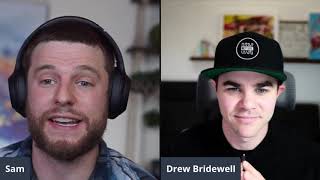
Drew Bridewell, who worked at Facebook and LinkedIn, talks about his UX coaching approach centered on clarity: knowing yourself, navigating your workplace, and leveling up your skills. He offers three programs including a 12-week Career Accelerator launching Jan 1, plus free resources like a first-90-days guide.
Questions this video answers
December 12, 2020.
Mapping to Learn; Action Planning; Career Accelerator.
January 1 (planned release date mentioned).
Seventy videos (two seasons).
Chapters
All right, welcome everyone. I am, I am very excited to have someone on the show who has honestly really made a huge impact on my UX career. So this is Drew Breibaugh. So Drew is the. He is a product design leader focused on personal growth and development. Recently he's been focused on delivering his learning development program at Next Level UX and beyond. Beyond Next Level ux, he's building products and services for high growth startups entering into the service as software, as a service market, going from zero to one with their new products. Previously, Drew's career led him into developing learning and growth product product experience at Facebook, Envision, LinkedIn and Lynda.com Drew has also also has two seasons of Practical UX Weekly, which has 70 videos about practical lessons from the trenches and the and these companies. Drew, thank you so much for being on. Like, it really is an honor to have you on here.
Oh my gosh, this is, this is. The honor is all mine. Thanks Sam, for having me. Like, dude, it's so much fun to be able to talk shop and be able to talk about the things that we loved, love to do on a day to day basis, especially design and growth and yeah, I'm just honored to be here, man, with you. I can't wait to get the conversation going.
Yeah, absolutely. So, Drew, could you just first off, tell us a little bit about. I know you said, we talked about how you worked at InVision and you worked at Facebook, you worked at LinkedIn. Can you tell? Just obviously you could probably write a whole book on this, but could you kind of summarize how you kind of got to this point in your career?
Yeah, this is, this has been a wild ride. But I think it all starts, it all started when I took my very first class, my very first Photoshop class at my sophomore year in high school. And I started realizing, oh my gosh, like I can. There's a, you know, Photoshop came out and there was a tool for us to be able to like just create posters or create anything. And I'm like, this is just amazing. I ended up taking that class twice in high school. And then I'm like, okay, this is it for me. So then I was Sam. I was a big jock and growing up I was like a wrestler, a football player. I played baseball. I ended up getting a baseball scholarship to, to play college baseball. But then I, for two years I was at a junior, like a nai school. And I went to Nai school because I wasn't a very great test very well right not acts, SATs. That wasn't really my thing. I loved art, and I loved creativity, and I loved making things. So I started realizing, like, oh, my gosh, like, I need to get into a field of, you know, graphic design or I need to get in the field. So I found a. A school in Savannah, Georgia, called Savannah College of Art and Design. And this was the school that changed everything for me when I started realizing, oh, wow, illustration, architecture, sequential art, jewelry, all these amazing, amazing maker skills were at the school in this university. And I got to play baseball there. I was on a full ride to play baseball. And then I got to just make things. And then from there, it was just like. Like a crazy story of, you know, getting my first role out at a company called Magellan Network in Durango, Colorado, where.
Oh, okay.
Yeah. So it was my first role out of school. And literally, like, you know, a lot of people that are watching this right now, they're probably like, how do you go from getting your graduating and then what's the first thing that you do? Well, for me, during that time, I had, like, this actual, like, handheld portfolios that I made, and I would send these portfolios to all the companies and all, like, the places that I wanted to work, and I did it. I didn't at that time, I didn't, like, send these portfolio portfolios to these big companies. I sent them to all of the. All of the towns that I wanted to live in. So it was like, my wife wanted to live in Durango, Colorado, so I sent them to all the agencies in Durango, Colorado.
Durango is beautiful. I'm from Denver, so.
Oh, cool.
Been there a few times. Yeah.
Yeah. So it was like doing that sort of thing, sending it out, and then it fell into the CEO's hands. Flew me out the next week, got the job on the spot. And then that was the first entry point into an interaction design job in the industry. And what happened there was. That was a game changer for me because I was entering into a team that was winning a top 10 Nielsen Norman application of the world award. And I immediately got exposed to some really top talent, some really great system thinkers. And, you know, a lot of those people are still my friends today. They're across doing amazing things in the industry. But that was like my first entry point into interaction design. And then from there on, it was just like, you know, hitting, hitting, finding my passion, finding the projects that I wanted to work on, building the skills, learning, developing, and now come full, full swoop to where we are today in 2020, with COVID and everything else, I've been exposed to thousands and thousands of systems and designers and people, and I've just really taken into account that I. That I wanted to. I wanted help. I wanted to help evolve the industry and elevate the industry and design. And for me, it was about doing it in personal growth and building products and tools like Lynda.com, building next level UX, which is all about breaking down some really challenging areas of the industry and what we're going through, you know, from planning to mapping systems, to figuring out, like, a really good system for how you grow and develop yourself without having to depend on all these other outside things that, you know, affect it. So really, Next Level UX is like all these. All this knowledge, all this information coming in, and for me to be able to share it in an authentic way that, you know, I just love, love doing it, because at LinkedIn and LinkedIn learning and some of these other products, you. You get to develop your content, but it is still underneath a whole other brand. And there's certain things that you have to take into account when you do that.
All right, Drew, I love that answer. So what I, you know, what I want to. I want to dive a bit into is you. You sent me a list of topics that you wanted to talk about. So this is new UX designers navigating the workplace, leveling up, biggest takeaway, and the next steps. So, first off, I'd like to ask you about new UX designers and really what kind of clarity can they get around. Around starting. You know, that's. You get a lot of people coming out of boot camps, but they still don't feel prepared or they don't, you know, maybe they haven't gone to a boot camp and they're not sure if UX is right for them. What would you say to those people?
Yeah, well, first I'd be like, let's. Let's figure out, like, ourself. Let's. Let's get clarity about who we are, how we want to show up, like, in this industry, what type of. What type of things have gotten us to this point in our life that has been like, what. What does success look like for us as individuals? Like, what are all the things that we've done up to this point to get. To get us where we are today? What's working, what's not working? So in all the programs that I teach now, I've really learned that instead of just going and jumping in right to the. Right to the Training and the tactic that I want them to learn, I really want them to really learn how to get clarity about who they are and what they're doing in life. So to an example of that, Sam would be like, you know, say we wanted to work together, and you're going to be going through one of the programs that I teach. The first part of this is establishing what your priorities are, what your kryptonite is, what's actually things that you struggle with and things that you need assistance and coaching and support on. How do you want to show up in front of people? And I usually start with what are three words that you can start with that are going to help anchor you to how you want to show up every day? What are three words around success, like three anchors of things that you want to do on a daily basis that are leading to success. One of my words for that is consistency. And I realized that, you know, during my career, like consistency over time is really what matters for these new designers. So understanding these really core foundational things can really help. And then again, like, I want that for people because I want them to be able to find the roles that really lift them up and really get them like, excited in the problem space. Like, you know, if you're really excited about the health industry, co work in the health industry, if you're really excited about the, the sports and memorabilia or, you know, whatever it is in a certain area, go research and figure out that industry so you can get a job in that industry. Because it, it excites you, it, it drives you. And that's some. That's basically what I follow. That, that sort of, that thread. Throughout my entire career, I'm like, I'm going to follow the roles that lift me up, that make me better, that put push me and that I actually like, really love solving that problem. And that's what I would encourage. New designers in space, like, get clarity, understand what your goals are. And then we have tools and practices for breaking down those things, implementing a development plan. So a lot of designers I work with don't, don't ever go near a development plan. Like, what is that? What does that mean? How am I going to do that? That's a big part. And then the last one for new designers is like, courage, right? We don't have to know everything in industry. Like, even in me. I've been in the industry 15 years. I don't know everything, but I know that I know how to go figure it out, and I know that I can figure it out. When the time comes and I have enough tactics and practices and tools to be able to go figure it out.
So that's. Oh, go ahead.
Yeah, go ahead. But those core little things, clarity, goals, development plan, courage for new designers, that's where I would start.
Yeah. So I just, I want to go ahead and unpack each of these topics a little bit more because I, I personally think this is, this is a very interesting way of going about career coaching because most of the time whenever, whenever you hear about career coaches, it seems like they're very, they're very outcome based, you know, and by that I mean, like, I don't have a job, I will help you get a job. Okay, here's a job. That's it. And it seems like the way you take this is much more of a holistic approach. You're not just saying, okay, you know, I want to be a UX designer, I'm going to help you be a UX designer. But you're really kind of like doing a little bit of life coaching in there too. You're really getting them, you know, clarified on, you know, what, what do, what do these new UX designers want? You know, what are they trying to achieve, how are they going to go about doing it? And you know, what's that internal drive that's going to make them be able to overcome these problems? So let's, so let's dive a little bit first into the clarity. Now if some, do you find that a lot of newer UX designers don't really have, do they or do they not really have a lot of understanding about like what they want?
Yeah, definitely don't like that. I think that's, that's one of the biggest problems and that's, I think, why, like in, in the, in the career accelerator, like one of the programs of where it started when I, like, I gotta develop this coaching, this coaching plan and this, this framework for this Clarity is number one. Because when, if you just jump into like, you know, what, what a customer, what a customer or a client or, you know, yourself wants the end state, it's kind of like basically going in and designing the experience without really understanding the problems that you're trying to solve and understanding what the priorities are and understanding what, what strategies you're going to put in place and in order to execute the plan. It's like basically designing without research. And the clarity is a part of the research for yourself and taking care of yourself first. And so I totally honor and respect like all the industry and all the pro, I mean, I Love. I'm like, probably watch more content and training than probably anybody than anybody that I've ever known. Like, I love masterclass. I love Linda, I love LinkedIn learning. I love all these boot camps and things that are being created. But, but the problem that I've seen and that I hear from people coming back is they just don't have clarity on, like, what their priorities are, why those priorities exist, what their, what their goals are, understanding, even how to write goals, personal project, career and passion goals. Like all these things that just like you're, you expect people to know, but they've never been trained, coached, or like, like, kind of crafted to be able to do these things. So that's where, that's why I start, because I think it's just more important for people to be happy long term and have a sustained career versus, like, getting just the first job. But they really don't like what they're doing and they show up every day kind of miserable. I just don't, I don't believe in that. I. Yeah, I think we can do better. I think the industry can do better and align people to the roles that kind of lift them up and get them excited, you know, and that's what you get to do when you're more like a senior designer. But I think junior designers and other people should be still thinking about the industries that they, they care about most.
So do you think that, do you think this is probably one of the, one of the biggest areas where boot camps and UX training is lacking is that it's not, it's not giving them, you know, giving them really, like a lot more of these, like, soft skills of what, what they need before they dive into ux.
Yeah, I think, I think probably that's, that's definitely true. I mean, if you think about it, like, people, they sign up for these, these programs, they're ready, they need a job, and there's a sense of urgency there. Totally get that sense of urgency. But the thing is, like, when, when you graduate from one of these programs or when you graduate from a bootcamp, there is a lot of, a lot of soft skills, a lot of communication challenges that you actually have to deal with when you go into, you know, company like envision a company like LinkedIn, a company like Facebook. And I think it's even at these companies, I would just be in that mode or in that environment where I'd have to work through these challenges, like on the fly and be in the zone and do it. But I think in those boot Camps you're not really getting. From what I've heard from people and what I've got, I haven't gone through a boot camp so I don't want to say that this is like every boot camp is like this. There's a lot of these things out in the industry and especially the research I've done from the offerings that they have, they're great. But the transition from those states to like a full time role where now you're having to have difficult conversations with PM product engineering, you have to have an understanding of how to develop plan with your, with your manager and you have to tell and articulate to your manager what you want, why you want it and how you're going to actually execute your plan and your project. Like that's another big thing that doesn't happen in teams and you don't see that for people and it's a really big struggle. And then also like measuring success, like we have to measure success for our projects, but we also have to measure success for how we are evolving and growing as an individual. So a lot of those tactics and practices are not trained taught in these boot camps to learn like the best ways to do a sprint, the best ways to do wireframing, the best ways to come up with a design solution. There's so much more outside of that, that path that people are not being exposed to and it's making their job a lot harder when they actually get into the mode where. All right, we're showing up. It's nine o'. Clock. How are we going to do standup? All right, what is our cadence throughout the week for our team? How are we doing touch points? What's our strategy for, for when we do testing? How do we get, get that feedback implemented into the designs and make sure everybody on the team understands why we went certain directions. How are we giving design clarity in the, in, you know, throughout the project? So engineering, product, business policy, everybody can be along for the ride. There's a lot of things like that just aren't discussed and but I still, it brings back for me is like I want people to have strong self before they start going into being a strong executor. Like I want them that strong like identity of the designer or practitioner or maker before they go in full tilt boogie to just start cranking on their work. Like that's really important to me.
Love that. You know one of the things that I found when, when I got my first UX job that I didn't learn from my bootcamp at all. Was I found. I, you know, and I actually found myself at an agency where I was the only UX designer. And the problem with that was because, first off, I didn't really have the right mentorship also because there were all these outside people who were kind of assigned to like, work with me who all had a different opinion. And it's, you know, one person, the project manager would tell me, do this. You know, another person would say, well, maybe you should do this, maybe you should do this, maybe you should do this. And one of the things that I found myself in is that I kind of became a yes man. And that was one of the things that, you know, it's, it's so important, you know, for, I think for boot camps to be teaching soft skills like this. You know, one of the things I would add in there is how to, how to justify your design decision and stand your ground. Yeah, yeah.
I mean, well, I mean, for that, that specifically, like, like, if you're going through, through the, the process of sharing and having a system for like, okay, this is how we make decisions as a team. This is how we communicate at the team. This is how we give feedback in certain areas, in certain times in the project. So there's a flow to how we work as a team. I'm a big advocate for team dynamics and how you design your weeks, how you literally design your weeks as a team so you can be more efficient, more effective as a unit and not necessarily as an individual contributor. So I, I have a different, a little bit of a different approach for that when how I coach designers because I've just been a part of big teams and big initiatives and, and I've just learned that like, no matter the size of the project, you're still going to have to bring everybody along for the journey. And you shouldn't have to have a lot of fear or fear or just confusion about how you're going. Everybody knows what you're doing along the way. Your job is to kind of help navigate and help everybody else, like, kind of be along for that ride. And, you know, everybody has their little times where they can jump into the conversation, get feedback, iterate, and you can iterate on it. But I don't know, I just think about, I think about this as, like, we're all on a moving, a really beautiful, moving, I don't know, boat, ship or whatever, but we're moving together. And then you have to, as a, as a commander of the design, you have, you have to make sure that you're hitting different parts of your team, making sure engineering is good, making sure product is good. And I think all those things as designers, like, we are this connective tissue, and we can really help facilitate those moments. And I think that I would just prefer to teach those methods so it's not like, constant. I keep hearing this thing about designers have to have a seat at the table, Designers have to defend things like, we're just articulating what we're building and why we're building it. It's not a. It's not a defense mechanism. It's just like a story, a conversation. And I really, really want the industry to change that narrative because it creates these, like, silos. It creates this like, like authority, authoritarian type of thing. Like, you know, I'm saying this or you're doing this. I. I prefer, you know, the team to be kind of not. Not having to feel like they're debate that. You're having negative debates. I mean, debates are fine, but I don't know, this, this whole. This whole kind of direction, I think we can be a lot more positive about it and not, like, think that it's a, like a defense. Like we're. We're, you know, putting up a wall of, like. I don't know. Yeah, yeah. It's just. I think there's a better way for it.
Yeah. And that leads. That is a perfect segue into our next point, which is navigating the workplace. Now let's talk a bit about that. You listed in your topics as tools, people and tactics, the three E's. So let's go ahead and talk a bit about that. First off, let's start with tools.
Yeah. So. Oh, this was. This. A lot of inspiration that I got from this was when I worked over in Envision and just exposed to so many tools and researching tools as a design transformation specialist. And I was just really. I was just really blown away by the constant stories of how teams were deciding to use tools and how they were weaponizing them or operationalizing them or how they were being effective with these things. There's so many amazing tools out there, as designers know. Right. We have all these things, but I'm a big fan. And also in the science of using tools that are effective for the team and not just like siloed individuals. And this is definitely a controversial thing. You know, you have some designers that are in Sketch, some designers that are in Figma, some. Some still are using, like, Principle. And you got all these other things around, around the board. But you really have to establish as a team, as you Scale to like a common, a common framework for everybody to be able to work in. And the more, the more tools you have. And you know, at Facebook, right, there's a lot of different tools and internal tools there as well. Like, you have to be really thoughtful about how your team, you know, speaking it from a design leader to, you know, your, your group, like, what are people using and what's effective and what's not effective. And during the programs that I teach, I'm teaching designers to really think through not only the tools that their team's using, but, like, what are all the artifacts that you could be using or the tools that you can be using in your life. And they start, you know, I have them write out, write out these, these tools and these, all the different things that they're using. And then I start seeing, like, are there patterns where you're using different tools to do the same things? Are you, is your team doing that same thing? So it's more like operational and operational design and thinking about program management, but like tools, we really need to be effective and fast and efficient with tools. So I really like having a foundation, almost like doing an audit for how, like the, to all the tools in your life and how are you strategically using them to get, get work done so you're not like working crazy hours. So you can have more time to go for walks during the day and you can have more play time and more creative time and less time like finagling with all the, all the nonsense of tools.
Yeah, I always think about like, symbols and sketch. So I'm sure you're, you're probably a big fan, you know, more of like the actual tools. I'm sure you're, you're a big fan of that too.
Oh, my gosh. Yeah. I mean, yeah, like, obviously, like, like creating design systems. It's like I, during my time at Envision, that was like, I think I was eat, sleeping and breathing design systems, like every day of my life there for like 18 months. And I was just like, you know, I was teaching workshops on it. So, yes, design systems are incredibly important, you know, for efficiencies. And there's a lot of stuff, science and proven stats around, like, how powerful design systems can be. But there's also bad times for investing in a design system when you're starting something up. And it's just like, that's not where it's good to invest in that right now because it's going to change in like six months or three months. And you got to be smart about how you, how you invest in those sorts of things. But yeah, yeah, yeah, man, you're on it.
I love it. And then the next thing I want to talk about is people. Uh, so I assume that, you know, this is your coworkers, this is your boss, this is the clients you're working with. What, what kind of insights do you have around the people you surround yourself with?
Yeah, so from, from the tools and the people side. So this is like understanding the team norms and understanding that the teams, what the team's going to be using in certain, certain times of the day, certain. And this is like, we're talking high performance here. So if you have a team of five people or a team of 20 people, the bigger the team, the more important this is, like, the more impact it will have. It's still important if you have a team of five. But you really want to understand, okay, well, when are we using, like, what tools are we using for workshops? Especially now that we're remote, what tools are we using for that? We use InVision. Are we using Miro, are we using Figma? Why are we using those things? Does the team understand how to use them? Are we being like empathetic to make sure that like engineers know how to navigate inside of figma? So like in that case, like, there's a lot of things that you can do, like having workshops for them, like a 30 minute education time where you just walk them through how you're structuring your design file. So the next day when they go in there and the next day after that and the next day after that they can swim through it and you know, like a nice, a nice smooth wave and you're not having to like hold their, necessarily hold their hand. So you can have all the engineers come together, do a quick little workshop on how to use it can also be like, well, this is also what we're going to do on our Wednesdays when we have design clarity Wednesdays, which is something that I implemented when I was at Facebook, which is we had like a ton of people building this product and we needed the ability for everybody to get on the same page every single week about like, what were the, the needle moving things that needed to get decided, what were the big items that needed critical feedback and like, and then we'd have next steps as far as how we were going to finish these things. But we had tools and the team knew and expected, okay, we're doing well. It's like a, you know, internal video chat for what Facebook had. And then it would be like okay, we're also going to have our figma file open and then we're going to be walking through this. So always like leading the team for what was going to come and thinking about what their needs were. Thinking versus thinking about what I need to get decided today. I was always thinking about what the team needed in order to push the project forward. And I think it's just like thinking about people first instead of like, you know, my project first. It's like people first, then project, then execute.
You know, now I want to, I want to. Oh, to uh, you were, you were probably, you were touching on this a bit. But I'd like to now ask about the tactics. It seems like you're, you're covering that already.
But yeah, I mean it's like this, this tools, people and tactics is, is week 11 in the 12. No, it's, it's week 10 in the, in the program, the career accelerator. But this is like there's so many different ways and so many different things that you're going to need to do as a designer on an ongoing basis. Right. You're going to have workshops, you're going to have like stand ups, you're going to have like check in meetings. You're gonna have different style of things that, different types of meetings that achieve a certain objective. One really valuable thing that you can do is understand what those meetings are like. When are the design reviews for the team? When are the team reviews for the team? When are the weekly updates? When are the business updates? When are the. Oh, I lost. Here, let me fix that real quick.
That's okay. Just keep going.
Yeah. So what are the, what are the, what are all those different types of, what are all those different types of meetings? And then let's see if this comes back. Sorry man.
No problem. That's fine.
Oh wow. Twilight.
Oh.
1, 5. I have it in 5, 4, 3, 2, 1. This is like what you don't want to happen, right? On a live stream.
That's, that's all right. We could, we could just keep going. I'm, I'm fine with this.
I am holding the phone. No, there we go.
Kind of back.
Yeah. So here, I'll, I'll keep, I'll keep talking and we'll see if we can figure that out.
Cool.
But the idea, the idea is we have, we have these certain tactics. Where was I at? We were talking about tactics and, and, and you know, you have these, these events throughout the day, you have these moments and if you strategically understand what the purpose of those meetings are in the. In the. In the moment. You can be way strategic. Way, way, way, way more strategic with how you execute each of these things. So, like, that's why, like, I. I go to the moment of, like, what is the purpose of every single meeting that we're. We're having? Is it adding value? Is it. Oh, here we go. Cool. I'm back. Sorry, man.
Yeah.
Yay. So, like, what are all those meetings? What are all the. The purpose of those meetings? Are they serving a purpose? How can we show up for those meetings and bring certain, like, levels of design tactics to that? Like, all right, we're going to use the whiteboard for this. We're going to use Miro for understanding how to break down and make better decisions about a certain direction we want to take. You know, there's. There's just, like. And there's certain preparation that needs to happen for that to happen. For that to happen. So I just like to think through, what are the meetings? What are the needs for. For that? And then initiate those tactics. So it could be design tactics, it could be communication tactics, it could be, you know, worksheets that we have the team fill out before a workshop. So a lot of that thinking is done, and then we can spend the time when we're together debating things. It's just being strategic about it, you know? Mm.
Love that. Yeah. I remember when I was going through Practical UX Weekly, you had a section where you were just talking about. You're talking about, like, filler meetings and how to really just cut down to the, you know, cut down to the meat of it. So I'm sure, obviously you've. You've been in probably more meeting. You know, we've all been in more meetings than we can possibly count that didn't really seem like they served a purpose.
Yeah, yeah. And that's. That's the painful thing, right? Like, we don't want to be. We don't want to be in those types of meetings, but we want to connect with people. We want to move projects forward. So I would say, like, to anybody that's watching this, even right now, like, were you in a meeting today where you were like, whoa, that was a waste of the. Waste of time. Okay, now that we know that that felt like a waste of time, what's like, one or two things that we could have done differently? Could we have prepared for that meeting a little bit better? Could we have message the leader of that. Of that meeting and said, what's the outline? What are the goals for this meeting? What what does success look like? What are we trying to do? Like, understanding some of those dynamics before, you know, you jump into the next one. It you're making impact, you're trying to help evolve the situation. You're trying to think. It's like chess. You're thinking a couple steps ahead. And I like to play a little chess, but, you know, in a strategic way.
So now I want to ask about your third. Your third pillar that you want to talk about, which is leveling up. So you've got action planning, design clarity, design energy, and design productivity. Let's start with action planning. What is that?
So this whole kind of theme is about leveling up. And I'm talking like, any role, any discipline, like, really just kind of getting fired up about what we're trying to do. And that's why, like, even I was telling you earlier, Sam, that's why I start with Clarity. Because I want people to be focused on their goals and their priorities. So when they're working on a certain project, they can align their goals, their personal goals, their project goals, their career goals to the project that they're working on. So, you know, if you're trying to ship a new experience next for the new year and you have some personal growth ambition that you're trying to do, like, you gotta. You gotta kind of plan ahead for that. It just doesn't naturally just like, fall into your lap and happen and say, I ship this product and then all of a sudden, like, all my goals have been accomplished. Like, I've done this. Like, we're thinking with action planning ahead of time. So the first thing is getting clarity. Second thing is figuring out what your core, core goals are, like the biggest goals. So I take people on action plan, like, let's go for a shopping spree for your dream goals and write, you know, we'll write out like, tons of goals around your personal. Like, personal things. Like I'm trying to get physically fit. Or your project goals, which is like, I'm trying to ship this product. Your passion goals was like, I'm trying to learn guitar. I'm trying to, like, get more creative. I'm trying to become a better illustrator. I'm become a better photographer or like, better film, you know, like your background in film or. Or like, I'm trying to, you know, you're trying to do that. And then there's. I know there's like, there's passion project per. And then you're like, you're kind of like community type of like, relating goals, like how you want to Give back or contribute to society. And so you basically write all these goals out. And then when you go into your priorities, like the things that you need to actually do for a project, you start listing those things out like, okay, well I need to ship this. I'm gonna have, I'm gonna have X, Y and Z that I need to do. And then from there it's like taking those big giant dreams and goals and things that you have to do and break them down into, okay, what's the easiest, quickest first milestone that I can get to? And a milestone is essentially like an a, an anchor or like a checkpoint in the process. So if you have a three month project or a two month or one month project, which maybe sometimes you even get to decide, you're like, okay, in that one month, I'm gonna have, I'm gonna have four milestones every week. Friday, I'm gonna shoot for this milestone, this milestone, and this milestone. And what you do from there is you break it down even more and into like, okay, well what are the five needle moving actions that I need to take to be able to get to that point? To be able to get to that Friday? And then on top of that, right, we have to layer in all the work, all the meetings and all the things and things that we're doing so we can really get super crisp with our calendar and we're blocking time, we're being strategic. And then we go into execution or swap mode or whatever you want to call it. Like, it's like you turn into.
You.
Just basically you have clarity on what you're doing and you get to go have some fun and just create. That's how I've been able to like ship, ship products faster. It's been how I've been able to know what I'm doing and why I'm doing it. It's because I just prepare, I would prepare, I plan ahead. And I created this program to be able to help teach that process in a fun way on a four week program that is now available. So that's, that's, that's action planning.
I love it. What about people who get excited about a certain like getting their action plan set, but then they have a hard time following through and actually making it happen. Like, how do you ensure that they, they go through with that?
Yeah, so that, that, that motivation usually is lacked when there's no purpose. So like, if you don't have purpose, you're gonna have like a, A, a missed excitement for like your, if you don't have Purpose, then you probably have lack of motivation. If you have a lack of motivation, then you probably don't have clarity on what you're doing and why you're doing it. You're flailing your arms and you're working on something that you probably shouldn't be working on because somebody told you to work on it, but you didn't really, like, question it. You didn't ask, why am I working on this? Like, yeah, why am I spending my time and hours. I'm getting paid to do this. Why am I doing it? Like, there's some pretty, like, pretty straightforward questions that you can ask yourself, and that's why. Again, I start with clarity, because everything comes back to, do I know what I'm doing? Do I know why I'm doing it? How am I going to. How do I want to show up every day in this environment? Do I want to be positive? Do I want to be. Don't want to be, like, you know, negative? No, you don't want to be negative. You want to be. You want to, like, enjoy what you're doing. You're. You're getting to create product or you're getting to make something or you're getting to help some other person, like, if you know what your core purpose is. And it's just so much more enjoyable to show up every day and just like, you know, and perform and. And you know what you could be in a project that you just really don't like what you're doing, but then you would at least like, okay, well, after work, you know, I'm going to go work on my goals so I can get that job or get that experience where I'm going to be working on the projects that I love. I'm going to be, like, working towards, you know, my ambitions. And so it comes back to clarity. So, I mean, there's a lot more things that you could unwind. Like, if I was on a coaching call with a customer, I would be like, you know, I would unwind that problem. If somebody is kind of procrastinating or not getting things done or, you know, that's when. That's when having a coach is really valuable. Or having a mentor that understands how to coach you through that sort of situation, and then you identify some of the others, you know, underlying problems that might be maybe because there could be other problems. Like, for example, you don't work out at all during the week, so you have, like, a lot less energy, or you're not eating healthy or you're not drinking any water. Or standing up throughout the day. Those things all lead to fatigue and being tired. And if you're tired, then it's hard to function. You know, as a designer, we need a very, a very sharp brain to be able to design some experiences and think through systems. So, you know, there's a lot of things to unwind there.
Yeah. So the other thing you, the next part is design energy. Now what I'm curious about is with design energy, you know, this is. How would you say that differentiates from something like clarity?
Yeah. So design energy comes into. Okay, well, as a designer, clarity is like understanding design energy is like evaluating, evaluating and preparing your physical body and your mind to be able to execute. So like, you go in five days, you know, maybe you're working seven or however many days you're working, but you still have to show up and perform. Especially like in a zoom call where you got 15 or 10 people like, you know, you, you, you've all probably who are watching this have seen like people zoning out, turning off their video, like kind of not really focusing on the discussion at hand that just stuff happens because it's, you know, it's like you're sitting in front of a, you know, a screen right here. And what I like to coach designers is like understanding their physical too. So when they are showing up, they, they feel, they feel sharp, they feel focused, they feel energized, they feel like they, they know when they need a break, they schedule in those breaks in their day. They know that they're going to work from 8am to 11am and design and crush it and just like totally go deep into what they're doing. And, and then they're going to take a nice 30 minute walk around the neighborhood or they're going to have a workout session at lunch, or they're going to have a salad at lunch or whatever it is to stay like, physically motivated and healthy and then they're going to get back to it at a certain period of time. So there's other things that, you know, I would, I would probably, you know, if we were working together, Sam, I'd be like, well, you know, when is your Einstein moment? Like, when in the day are you most effective? And I would have you monitor that throughout the, like the next couple of weeks. I would be like, all right, think about, like when you wake up and when you go to bed. When are you most effective? When are you most sharp? And then we would design your schedule and your calendar around the moments and then we would break it down and understand it And I want people to be able to do that themselves so they're a lot more intentional about the work that they do. Design energy plays in design energy.
So let's wrap this up with design productivity and then we'll get into the, we'll get into the final moment. So what would design productivity look like and how would that differ from standard productivity?
Yeah, so design productivity is more like tacking in all the efficiencies that designer that, that are for design practice. And we're talking like, like, like using temp like these certain templates and storyboarding templates and things to enhance productivity. And a lot of that stuff is just behind, a lot of that stuff's behind, behind the next level UX like program. But like you know, really identifying all, all the, all the elements in your life and all the elements that you're trying to do on a day to day basis and trying to carve out like all the nonsense and really like focusing in on the needle moving activities so you can be more productive. And again, it's not like about working more, it's just about working more intentional and being more, and being more intentional about the things that you do and the way you move and transition from meeting to meeting, the way you schedule and block time in your calendar so you can actually get the work done so you can give yourself the room that you need to really think critically and not like 30 minute hour meeting, 30 minute design time, our meeting, 30 minute design time. Those sorts of dynamics really stiffen and really just destroy productivity. So that's like you know, a certain tactic or practice that we would evaluate. And it's just like understanding like where you're spending your time and just having, having an awareness to change it or try new things so you can get out of the like the flow that's just not working for you. So it's about trying to find flow too.
Yeah. So let's, we are at time. So I would like to ask you about your biggest takeaway. What would that be?
Oh, my biggest takeaway of 2020 is clarity. It's like sound like a broken record talking about clarity. But, but I would, I would just say like for, if I was to give the gift, if I was to give everybody a gift for 2021, it would be like you have, you have, you know, what is it, 20 days, 20 days before January 1st to really just start scheduling, start planning, start understanding what you want out of this next year. Covid or not. Like Covid's been tough for people, but now we've had to kind of go into this adaptation mode.
Right.
Because it's, it's still here and we have to adapt and figure it out. But like you still have control over finding clarity on what you want out of 2021. What are you going to do about it? How are you going to create a plan for it? How are you going to start finding help when you where you need it and then start putting in the time and effort? And that to me starts with clarity. So if you have questions about that, let's chat. Let's, let's figure it out.
Absolutely. So we've got some next steps of what you guys can do from here. So Drew, go ahead and tell us about Next Level UX and your, your one on one high performance coaching and your free tips.
Yeah, yeah. So, so right now, Next Level ux we have three programs. The first one is Mapping to Learn. It's all about simplifying massive complex systems. So in that training I have three, I have three personal projects that you get to go see and how I think through problems, how I break down systems and, and how I journey map and break down things. So you can actually do that for your big projects and just feel a lot more confident and courageous when you take on these big, big challenging tasks. That's mapping to learn. The second one is Action Planning which is out, it just came out like this week. And Action Planning is what I was explaining earlier. Right. You have a big giant project or you have a, you're trying to just become a better planner. You can go take this, get clarity, go through the worksheets, ask questions, join the community inside, inside my product. And then basically it's like Action planning, boom, get better at planning. The third one is Career Accelerator which is a more extensive, that's coming out January 1st. That is a 12 week on demand coaching development program that basically covers the 12 sustaining career topics that I'm talking about, some of them today. But you can go to the, you can go to Next level UX me and read all about those under Career accelerator. But there's 12 topics and we go deep into each one of those every single week. And then, and then I do offer for, you know, a more, more higher end clients. It's just like I do one on one coaching for people that you know, because I can only take on so many, so many customers and so many clients. But I am, I'm still doing that and then building some new products and services that I can't talk about right now. But you'll see it in the coming weeks and months, it's going to be pretty exciting.
What about these free tips you have?
Yeah, so as far as far as free tips, there's a couple things that I definitely want you to get access to and I'll be putting them and I can be putting them in the links and stuff on this, on this video of what we're sharing. But like there is a your first 90 days at any company. How to set yourself up for success. So I have a video right there I'd love to share with the community in the group. There's also the five top case studies that when I was working@lynda.com, the five case studies around just understanding the course page experience and sign up and just understanding how to make and create case studies. And there's a couple more things in there that can definitely share. But yeah, we just have to make sure we share it under in the chat and I'll get those links out to everybody that, that maybe tuned in on this thing so they can get access to this. And then also if you do sign up for Next Level ux, there's. There is inside of the email subscription, like if you sign up for that, I'm sending out weekly reflection and I call them Reflection cards. So I sent. I'm sending tips and videos and things every single week. So just subscribe there so you can get some of the free stuff.
Love that. All right, everyone, this is Drew Bridewell. He is the founder of Next Level ux. Drew, thank you so much for being on.
My pleasure. This was fun. Yeah, thanks for the time. Sam, man, thanks for what you're doing for the community. Thanks for showing up every week and I'm glad that we connected. And thanks for watching. Thanks for even watching my stuff when you did. It's cool, man. Thanks.
Yeah. And also everybody, there is a link to Practical UX weekly in the chat, so definitely go and check that out. It's got a ton of free stuff you can check out, so do that for sure. And check out the links that Drew's going to post in the chat too. Have a good night.










