Moving teams or roles? Use this framework to gain clarity
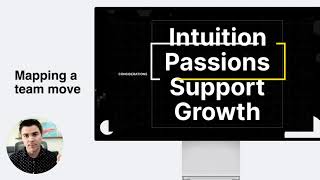
A short YouTube talk by Drew Bridewell offering a practical framework to decide whether to move teams or change roles. He recommends analyzing opportunities across four team-focused dimensions—People, Process, Purpose, Projects—and personal considerations—Intuition, Passions, Support, Growth—plus manager fit and whether you can drive impact for 1–3 years. He illustrates the framework with examples from his own career transitions and urges deliberate research, pros/cons lists, and alignment with core meaning before switching roles.
Chapters
Foreign hey there. What's up? Today's episode is about clarity, and not just clarity about what it is that you're doing in your life, or what it is of how you're showing up in your life, or how you're performing or getting understanding about things in a clearer way. Today's clarity session is about trying to define whether or not you should move from one role to another role. And as a designer, as a product maker, as a thinker, as a creator, this can be a really challenging feat for you if you don't have a framework for how you think about it and how you break things down and how you decide what are the pros and cons of going through this route and what are some things I should consider. So today I'm going to show you how I think about it when I'm transitioning to a team, because I've had the opportunities to shift many, many roles, but I just don't shift roles because I'm going to get paid more. I'm going to get a new title. It's really focused around what are the new growth opportunities for, what are the things that I can get excited about? And I'm just going to show you the entire framework right now, so let's jump right in. So, first things first. Mapping a team move, like deciding to go or not to go, that is the question. So there's some things that you should definitely consider when mapping a team move, like, should I go here, should I go there? What should I actually do? So let's just dive right into that. So the first thing that you need to do when you're mapping a team move is you need to start analyzing the opportunity. And this is a way for you to start writing out your feelings and emotions and start thinking about what it is that you want. And to do that. I break it down into four categories, and these are the same four categories that I use when I'm thinking about goals, when I'm thinking about project status updates, when I'm thinking about structuring teams and thinking about how to accelerate teams and improve teams, these are all things that I like to consider. So you want to think about the opportunities around the people, around the process, around the purpose and the project. So let me just dive into this really quick. So when it comes to people, what are the people that you're going to be interacting with on a daily basis? What are the key things that these people care about, and what is the things that the people value? When you're diving into a new team, it is important to know for my current team, how big was it? What was the size, what was the scale? Is that aligned to what I want? Or am I really looking for a bigger team or a smaller team? Or I'm looking for a team that has a little bit more camaraderie or a team that gets together a little bit more? Like, what kind of emotions and feelings do you want to experience with these people? The second thing is about the process. So how mature is this organization that you're diving into? How do they think about the work that's ahead? How do they break down and project plan that work? Do they have systems and processes in place? Are you going to have to create those processes? Are you going to have to kind of reimagine that for the team and help shepherd that through your role? There is a lot of different ways to slice this, but like, think about the processes that are existing and things that you might need to jump into. Because if you dive into like a new startup that might be paying you another 20, 30k, but it's a chaotic startup and you have no clue what's going on. They have no clue what's going on. It could be a pretty stressful environment that you might not want to walk into. So understand the process around the team, around the people, around the projects, around that work. So the third thing that you want to know is like, what's the purpose? What is the purpose of the team? What is the purpose of the projects? What is the purpose of why your role is needed or why a transition would happen? So you can look at it from a project team perspective perspective, but you can also look at it, do your purposes align with what these teams purposes are? And that kind of gets into like, do you value the same things, do you appreciate and honor the same things that these people are that you're about to work on, or the project that you're going to work on or the product that you're going to work on? Do you align with it? The next one is around the project work, right? Okay, so is the project work exciting? Is the project we're going to get you out of bed every day and get you really excited and get you jamming on? I get to go solve these problems today. This is what I want to work on. And is there actually a lineup of projects that you can anticipate for the long term? Do you want to work on many, many projects or is there just one project you're going to work on for the next two, three years? You want to Understand that and understand what the roadmap is and think through that thing before you start jumping into a new team. All right, so that's these four. Let's dive in to the next things, which is around, like more about your feelings and thinking about yourself. Because I think what these are, is a projection of what's happening, what you see around you, what are the people, like, what are the processes, like, what are the purpose and what are projects that are happening. But this view, these considerations are around like, how are you intuitively feeling? Is this feeling exciting or is this feeling a little nerve wracking? How are you processing that information? What I'd encourage you to do is write out a list of pros and cons and things that you can just think about and just initial thoughts that you can write out. Do the research, talk to people, understand what you're getting yourself into. The second thing is around passions. So passions are really key because do you passionately feel excited to work on what you're about to work on? Do you get excited? Do you get. Are you just passionate about what's going on and do you align with those things? So find, is it aligned with your passions? If it isn't, then you might want to reconsider it. Third thing is support. What kind of support are you going to need in this new role? What kind of support are you going to be able to offer to the people that are on this team? If you're a senior designer or if you're a junior designer, or if you're an executive and you're trying to coach people and your role is to come in and coach, do you feel like you'll be able to get the support that you need to get to your next level? And do you feel like you'll be able to coach the other people on the team to help them get to the next level? So what kind of support systems are set up and what kind of support could you be offering to this new role that's coming? And then the fourth thing is around growth. Do you feel like this is a growth opportunity and that there are opportunities for you to grow beyond just like, okay, cool, it's a new role, I'm going to work on some new things. But do you feel like you can jump into, you know, two, three, four levels above where you're coming in at, so you can really feel the growth of what you're trying to do? Because, well, actually there's studies around this all over the Internet and around people leaving their existing companies because there's no longer they've hit up. They plateaued in their growth and they plateaued in their growth because they didn't foresee the other roles and opportunities that they could have jumped into. So I would definitely consider what it means to you when you're thinking about growth and what your ambitions are around this, because it's something that I wouldn't take for granted. The next thing is like, do you respect and align with the manager? Most people leave their roles because of lack of solid leadership and lack of management and support from your manager. So it's important to make sure that you align with your manager and you respect your manager and they respect you and there's a good relationship that can be built there or that you can see how you can evolve that relationship over time because that relationship with your manager is incredibly important. You're going to be having weekly one on ones with that person. You're going to be learning and developing from that person. You're going to be having to ask questions and having difficult conversations with that person. Person. Can you do that? Can you have that relationship with that person? If you don't like having conversations with your manager, you might want to reconsider moving the team since that person is somebody you're going to have to see every single week and you want to make sure that you're dialed in with that person. So that's another thing. But let's dive into the other one. So can you see yourself driving impact this team for at least one to three years? Like for the next one to three years, can you see yourself driving an incredible amount of impact to this team? It's not just about the project work that you're going to do, but do you align with the vision of what the team's trying to do? And do you align with the purpose? Do you align with the project work that's ahead? And are you really ready to roll up your sleeves and get into it and jump into that team? Do you feel like you can drive impact? And if you don't feel like you can drive impact to a team, then you should reconsider. Maybe that team is not the right team for you. So this is another thing to consider when diving into this. And these are some of the framework around how I'm thinking about and how I work through my transitions. Because I'm going to show you one other screen of my transitions as a product designer in this industry and kind of how it's kind of evolved and how. Let me come back to screen share here. So over the period of my career, there's been knowledge and gain from all of these companies, you know, from Scad, Magell Network. And I see I'm not going to read them all off for you, but you can see them. And then coming into this next phase where I've kind of jumped more into this entrepreneurial career with Next level ux, with makers, with Mapping to Learn, with Action planning, Career accelerator and now I'm head of Design at Growth Day. Each of these roles have been tiered and aligned to how am I going to grow from transitioning from one role to another role. When I was at LinkedIn and I was looking at transitioning into InVision, my ambition was to train and to teach and to educate and to learn to grow and meet a ton of designers and companies that were on that same mission. And that was the thing that was so exciting for me and that's what carried me into that next role. And then when I was transitioning from Envision to Facebook, I was really passionate and excited about getting back into the team dynamics because that's where I felt like I shined the most. That was what I missed. And I like, I just wanted to be a part of a product team again after having that experiences, you know, with Nic, with QuickArt, with CrossCab, with Linda, with LinkedIn and that vibe, that energy was just something that was deep and core important to me. So I want to encourage you as you're going through and deciding on whether or not you should move companies or you should switch to different roles, consider the points that I was sharing with you earlier. It's so critical to take this time to find your core meaning and core perspective of really what you want and write it down and try to get alignment and try to focus on those things. There's so many other things that you can consider, but like if you need some certain things to anchor to, I would encourage you to look at those again. Again, it's people, process, purpose and projects. You're thinking about intuition, passions, support and growth. You're also thinking about, okay, do I respect my manager and can I see myself driving impact over the next one to three years? Because if you don't see yourself doing that for one to three years, then you don't want to waste the team's time and you don't want to waste the time of the team because they're going to be investing in you, they're going to be teaching you things, they're going to be helping you onboard and you want to be mindful and respectful of those people, too, coming in. So if you. If it's not really a great fit, you might want to reconsider it. So I hope you enjoyed this episode. On transitioning from company to company or moving from role to role. This is just a quick framework on how you can analyze that, and I wish you the best of luck in your next transition to your next role and have an amazing rest of your day. All right, see you next time.










