New initiative coming up? REFLECT with these 4 key sections!
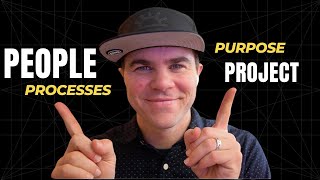
Drew Bridewell walks through four reflection categories for new initiatives: Project (what it is and constraints), Process (how work flows), People (roles and team health), and Purpose (vision and success measures). Each section includes concrete checklist questions and a system-mapping exercise using Next Level UX as an example.
Chapters
Do you have a new project coming up? Do you have a new big giant thing that you're trying to get more understanding and more clarity around? And you just don't really know what questions you can ask because you're either new in the industry or you just kind of need a refresher on the top questions that you can ask before you kickstart a new project or before you get into it with your team. Now, I'm gonna just walk you through four core key questions and sections that you can ask yourself before you go into anything. Really, it's about understanding the purpose, the people, the project, and the process inside of these things. So again, it's people, project purpose, and processes. And on top of that, we're going to go into some system mapping to help you understand at a high level what it is that you're going to be doing across your company or across your. Your new system, your new project, whatever it is that you're creating. So let's just dive right into it. So the first thing that I want to draw your attention to is this project board. Now, last week we were talking about the scheduling and working on your projects, and you're coming through and having all these different projects that you're working on. We talked about all the different systems, rituals, routines, and habits across the week. We looked at the intention blocks, which were a set of really good questions that you can ask yourself. And we also looked at advancements. So the things that you can do inside of each of your milestones and how you can work those in and go really deep into each of those. We even looked at across each of these things, the passion, ambitions, roles and responsibilities and how you're learning and growing. So if you take all that into account, but you still have people that you work with, you still have processes, and then you also have your rhythms and flows. So let's just dive into the four categories here that we're going to need to look at as we jump in to our work. All right, so let's do this. So the first one that I want you to start thinking about as a pro, we need to think about the project actual, like the ingredients that make up a project. And I'm going to kind of go through these. I'm not going to go through every one of them, but I want you to know that you have the ability. You can take a screenshot here or just pause the video here and look at all these. But, like, what problems are you trying to solve? What tools will the team use in the project? For communication and design and product execution and who is on the team and what are their roles? Like you got to understand all these things so that you can know and you can have some established norms going into the project. Like how much time do we have to complete this project? Why was that link decided to? Do we have content to support this project and who is responsible for writing that content? Another one is what do we know and what do we need to learn? Let me just. There we go. Who are the key stakeholders for this project? Like who is going to be making the decisions in this project as we go? Is there any research that exists that would help with this project? Like are there any research studies that have been done that we can check into and use Helper? Do we have any subject matter experts on this team or is somebody already know tons about what we're about to build and what we're going to do for this project? You know who's the final decision maker? Another one is do we have any technology limitations and what do we need in order to start this project? Do we have any dependencies? Why is this project important? What are the team norms and expectations for one another? Have we tried solved solving this problem before and what happened? Why didn't it work? How will we ensure a high level of craftsmanship for this project and how will we delegate out responsibilities of sharing out with the team updates? Could the work we do on this project benefit another team in the company? And what's the business goal or key metrics of success for this project? I know I just went through a ton of these things, but hey, let me come back to you. It's important to ask all these questions because it's going to increase your awareness of how you can help and support the team. If you're a junior designer, you're just somebody that's taken a lot of instructions from your leadership team. It's still important to ask these questions up front and to get an overview of all of them and understand how you're going to get to them. It's just so important. So let's dive in to the next set of questions. So yes, we have projects, but what about all the other processes inside? So a process could be, you know, where the project steps in getting this idea created, built and shipped. Like what is the software development life cycle? What is a product development life cycle? How do we make time to try new team rituals and processes? Like what's new and what do we need to do here? Where do we go to document this project? Like, like where Is it going to be stored in JIRA and Productboard and Notion? Where is it going to be stored in figma and how does the team currently bring contributors together for each project? So when you are contributing to a project, how do you bring everybody together? What is the sequence, the frequency of when you do that? Another one is are there any points in the project where you don't know what's going on and why is that like where at in the process? Is it confusing for you? Another one is you have an idea, how do you share it? When is the next customer call or usability test? When will we share this experience with our customers? And how might how might we train our team to facilitate successful meetings and engagements? How do we make sure we share our work before we come together as a group? How do we onboard new team members? We what are the best times for the team to come together, to work together? Does the team understand why it's important to invest in the team? How do we make sure each meeting has actual next steps? How do we ensure best guess estimates when we state how long something is going to take? All of these questions again are ways for you to elevate your team's performance and elevate how you go in and go in and approach the processes inside and I'm sure you can think of so many more. The next one we have to start thinking about is people. So what are we doing well as a team? How do we ask for help? Are there behaviors we should stop? Are there any existing rituals or practices we should be aware of? If you're new coming into a team, you want to be able to know what's new with the team and how can you best integrate? Another thing is are there any existing rituals or practices we should be aware of? Do we have do we have content to support this project and whom is responsible for writing it? Same thing with people you know. How frequently will we come together to brainstorm new ideas? Did we try this before? Is it acceptable to email after work hours? Yes or no? Like what's the rules? Do we believe we're solving the right problems? How might we pair up as a team members that can help cross train one another? How will we know the happiness and health of our team? Does anybody have relevant or prior project knowledge? Like you want to understand the people that you work with and what their plan, what their what their goals are, what their desires are, what their needs are, what the challenges are, what the problems are. All of these things really help you get a better grasp and increase your Awareness of how you're going to go in and support your and approach your team in your projects. So how do we protect weekends and family time for all teams? How do we define when it's okay to message, email or meet and reflect? How do we point out bad habits and behaviors? What skill gaps do we have on our team and how do we escalate a disagreement? How do we share our skills with each other and how might we share and encourage better behavior? Right, all of these things. Again, super important. The last one I like to answer is around purpose. Like you can have all your processes, your people and your projects all defined and worked out, but if you don't have a clear picture of the purpose, like what's the vision for you, your team and your business? Like, what are you guys going to do when you go in and start focusing on something? You know, what's your mission, your team's mission and your company's mission? How will we measure success? Are there any team rituals or processes are causing duplicate work? Are there any team rituals or processes that is creating conflict or frustration? What qualities do you appreciate in a team member? Do you believe we're solving the right problems? Is our team doing things that are not in line with the company's purpose? How might we pair up our team members that can benefit from cross skill training? How might or what are some things that drive you absolutely bonkers when it comes to your work? When do you like to work and collaborate with others? What do you want to learn while working on this project and team? What is a skill or hobby that you enjoy? What skills would you like to share with your team? Have you tried solving this problem before? What happened? Why didn't it work? What's your, what's your name and role? What, like all of these things are questions that you can write and I can guarantee you that you could probably come up and write a ton more. But the key here is to really think about do I know my team really well? And if, if I don't really know them well, then I need to look at my projects questions, I need to look at my process questions, I need to look at my purpose questions and I need to look at my pieces questions like how can I get to know each one of these things? The last thing that I want to draw your attention to is this really cool, simple way of. Let me come back to you. Okay? So whenever I do start system mapping and I like starting really high level and I'm going to ask these questions about the companies, the clients or the people that I'm here to support in my business. So the first thing that I'm going to do is I'm going to think about like, well, what is the goal? And you know, if we had a system mapping, we might say that this might be the company name, your company name. Then we might say the goal is to do X, Y and C. I want you to fill it in. You got to understand what the goal is of the company. And then the second thing we're gonna do here, I'm gonna actually make these white and then give them a stroke. Okay, what problems are we trying to solve? So and I typically have two sets of these. Just so like you can be really super radically simple. A and B, what are the two problems that we're trying to solve? Another one, what are the primary offers? So in the business, what are the primary things that you're selling? You're selling maybe an annual plan A, B and C, like a good, better, best model, super simple. Then we have a team who is in the team team. You know, you might have team A through Z. You might have like thousands of employees. So you might have these set up by projects. But you want to know who's on your team. The other thing you want to know is what's the vision? Vision is to become the world's best at, you know, what problem are you, is when you go back to the problems that you're solving, why are you trying to do that? What's the vision? And then the connections are all the other nodes of products, services, communities and companies that you're connected to. That's really important to note and this is how I do a quick little snapshot of these companies. So let me actually show you what that looks like for Next Level ux. And I think that will, you'll find it quite fascinating for how I think about it for Next Level ux. All right, all right, just grabbing the file, coming on back over to you. All right, here we go. All right, so I just copied this over. So when we think about, you know, what is the goal here? I'm just going to make these. All right, so for Next Level ux the goal is to build product and design growth systems. That's the goal. The problems that we're trying to solve is for people who have reached plateau, that need to reignite, that need support, that seek guidance and recurring motivation. What problems are we trying to solve? Trying to solve an integrated holistic approach versus an individual non holistic approach where you're not focused on your entire Self and instead of it being somebody telling you what you should learn, this is you defining what you should learn and why. The primary offers is coaching, courses, mentorship and projects. The team is just an ADS team, video team and a network of supporters where the vision is to be the world's number one system for high performance product and design training. And then the connections are scad, Growth Day, Figma, Adobe, Confluence and Productboard. And this is just a way to organize your thoughts because each one of these things, as you break them down, you need to be able to talk about like these problems that you're solving. You need to talk about the, you know, just knowing each individual array of people. Like you might have huge teams, huge process, but, but just doing a mapping exercise like this can, can create a ton of clarity as you go through and you understand your team because then you use all those things that you, that you learn with your team to fill the gaps of the product. So if we come back in and we know that, oh well, we have plans, we know the processes of how all these things are getting done, then we can start filling the gaps and improving the processes and the people relationships so that we can achieve more of these projects successfully and really just nail it when it comes to our project, our projects that we're knocking down every single month. And when I was talking about environment last week, you know, the in product ecosystem that you create and the people ecosystem that you create, these things need to collide in a really positive, beautiful way. You also have to really think about like, well, for all these things that we're doing, we still need to have a really smooth rhythm ritual that we want to maintain. And that's, that's really what I'm trying to show you in these videos is that when you increase your awareness and you can ask yourself some of these bigger questions and then you can start defining it with your team and having discussions about it. It allows you to unlock the true gaps that you have in your business. And then once you understand the true gaps that you have in your business, then you can start making really, really great decisions. You can increase your velocity, increase your performance overall, can have better schedules, better ways of process getting your processes in check and getting your projects in check, making sure you and your team understand the purpose of what it is that you're trying to do and you have more successful projects and the results of that. So I hope you enjoyed this. And if you haven't yet checked out some of the newer content that we have creating, I'm going to be hosting a live coaching summit. And this is going to be really great because it is 12 weeks long and it's going to be like a week over week sessions. We're going to have 12 growth groups. We're going to get to go deep into each of these topics that I talk about. You know, from clarity, goals, action, planning, practice, design, energy, design, clarity, design, productivity, design impact, and then purpose, influence, encourage, tools, people and tactics, and reflection. We're going to go through all of those over the 12 weeks and that's the next level UX system training map. It's going to be a ton of fun. So I hope you enjoyed this and I'll see you in the next one later.










