Drew Bridewell walks through four awareness areas for product and design planning: understanding your environment, your intentions, your organization's rhythms, and your feedback loops. He connects deliberate structure to measurable design impact through rituals and benchmarks.
Chapters
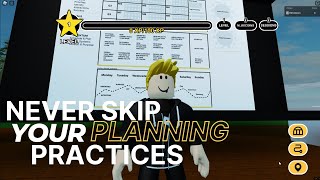
Hey, what's up? Drew Brago here. And today I wanted to walk you through a quick little foundational lesson on why it's so important to have some basic structure on how you plan and execute your big, giant rocks. So what I want to do today is I just want to break down and walk you through why it's so important to have a series of awareness. You need a series of Understand your environment. You need to be able to understand the intention blocks, like what questions you're going to be asking and when. You're also going to understand your rhythms, your rituals, and your habits inside your organization. And then, of course, you got to be able to understand where you're going to be focusing and pointing when it comes to your milestones, when it comes to which quarter you're in and what you're going to be doing. Now, I know you're probably like, drew, I don't need to worry about this because every one of my teams does all the planning for me, but that's not. That's not good enough. That's not going to help you achieve your next level performance. Performance. You got to understand what your opportunities are. You got to understand what your purpose is. You got to understand what your priorities and how you want to identify and interact with other people and what success looks like. You got to understand what your goals are across your passion goals, your project goals, your career goals, your personal goals. You gotta understand how to build momentum with your schedule and your plan. You gotta understand how to build momentum with your flow and your systems. You gotta understand how to build momentum with the missions and the purpose that you actually do every single day to show up. But guess what? We also got to understand how we're going to fold all these things in. So let's kind of look at this outside the classroom here. So if you've never seen this world, this is the Meta in Lux. And the Meta in Lux is a really cool place where we actually teach about design and user experience and building products and services. But. But guess what? We got other things that we need to be able to do once we start knowing what our project plans and what we're trying to do there. We need to be able to understand how. How we're going to communicate and collaborate and elevate and focus and timing and reframing things for engineers and for our designers and for our product managers to be able to understand, you know, what it is that we're trying to build and why we're trying to build it. We also need to be able to understand how we're going to deliver the feedback, the feedback for what needs to happen inside of each of these core pillars inside the organization. You know, what are the engineers need, what are the designers and creatives need, what are the product thinking and development teams need, what does leadership and business need need? And how do we make sure that everybody is participating in the feedback along the way? And then depending on the size and scale of your team, you got to think about all these people and all these processes that are in place. And just because you have certain people and processes, you still got to be able to understand how to do that with your organization, all the different roles and responsibilities inside your people organization and all the roles and responsibilities and the processes in place, like plans, craftsmanship, knowledge transfer, collaboration, communication, clarity, and all the things that are actually going to really help your staff move forward. Right? So we do that. But guess what? We still have the design energy, we still have design clarity. And I'm going to warp speed over here to design impact, because when it comes back down to it, we're all trying to work towards design impact. So what does that design impact even look like? Well, let's take it on either side and go look at this. Design impact is about understanding and having awareness of how you benchmark things inside your product. You got to understand how you continuously learn things and feed it back to the areas of your team. You got to have design awareness about what you need and why you need it. You got to have life awareness on what you're benchmarking and working towards. And you just got to have a functionality impact. And when you're going through and advancing the things that are most important to you, you got to be able to break these things down and have a really clear idea of, you know, what it is that you're benchmarking and why is it important. How are you going to really kind of step into the, to the needs of the team, the needs of the business, the needs of what it is that you're trying to actually do inside the organization. And that's why it's so important as you build, as you experience and you work through all these things that you can truly understand, you know, what, what it is that you're going to do to build that design energy, you know, what kind of rituals and schedules do you have inside your week to be able to help you perform at that next level? What are you going to be doing with your priorities and your efficiencies and your speed and the skills as you build, as you develop These rituals that matter and those routines that also are going to help you succeed. And you know what? I'm giving you a little tour of the meta. The meta in Lux, which is a whole world that we've been building to help train on some of these foundational elements like design clarity, like we were talking about just before. Now, if you want to learn more about this, you can sign up for the Next Level UX Pro membership. It's on Next Level UX Me. But as we start developing and building up this entire framework, we're just gonna keep on keeping on and show you how we can grow and develop together and build harmony, build joy, build fun into all that we do. Because that's the Next Level UX way. So I hope you enjoyed this little quick video and I will see you in the next one. So if you're trying to learn more about the systems, rituals, routines and habits of a product and design professional in today's modern workplace, then go to Next Level UX Me and sign up for the Reflection Masterclass. It's a free masterclass. You can just join it, just need your name and email address. Sign up for that and then you start getting enrolled in some of the content and other opportunities for you to join our Next Level UX training camp in the first of the year. It's going to be a ton of fun. I'm going to help you every single step of the way. You and just reach out if you have any questions. I'll see you. I'll see you there.