Strategic & Intentional Planning in Product, Design, and Life
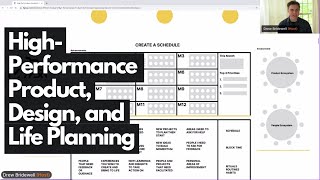
Live workshop by Drew Bridewell about intentional planning for product, design, and life. The session explains why planning matters, demonstrates the Growth Day app Plan tool (example: "Ramp Up June"), and gives tactical guidance for individuals and teams — including goal-setting, time management, rituals/routines, life scores, people ecosystems, and team practices (roles, communication, accountability). The talk includes a live Q&A and references to companion visuals (Figma) and upcoming sessions on challenges.
Chapters
Foreign. Welcome. We're about to get started here. Just gonna roll in. Today's gonna be all about plans. I'm also gonna share some planning tactics for teams. It's gonna be fun. So we'll just wait a second to let people in, and then we'll kick this thing off. Hi, Marleene. Hey. Welcome. Welcome, team. Hello. Welcome. Hey, what's up? What's up? Welcome. Hey, what's up, Kim? What's up, Don? Let's go. Welcome. I'm really excited about today's talk, and I just wanted to real first, first check in and make sure that you all can hear me. Okay. Sound good? Sweet. We just came up with some new updates today, so the product should be running super top notch. Super pumped about that, but let's just dive right into it because there's a lot of stuff that I want to cover today. Planning is something that is near and dear to my heart here. Let's let more people in here. We're here today to talk about planning inside the product, but also I want to give you another perspective about how I think about planning, especially being head of product and design here at Growth Day. Like, I'm constantly thinking about what's up coming next, but also how can I plan and set up the systems around me, like my habits, like my team's rhythms, and how can I build in these really incredible plans so that we can execute at that next level? So I was going to share some, like, some team work, some, like, advancements that you can do with your team, because I'm sure all of you have worked with the team in the past or you continually work on a team and just knowing, like, some of these tips and tricks that you can use to help plan or with your team, it's going to serve you in the long run. Everybody's doing great, and I'm just going to kind of dive into it. So first, things that I want to talk about, like, with why we plan. Well, we plan so that we actually can know where we're going and actually put in a lot of the intention behind the little ingredients of the things that we need to do. For example, there's so many things that are important to you, right? So if we don't start with that high level of intention about what it is that we really want, then our plans can not have as much impact. And the whole reason for having and creating plans is so that they can create some incredible, like, momentum for you and also so that you're not chasing the projects, the work that you have with your team, but you're actually, like, leading the charge, and that's where planning can come in. So how many of you struggle with planning? Would you say you struggle with planning or you struggle with the idea of planning? Or when you think about planning, you're like, I don't want to plan anything. I just want to go with the flow. How many of you feel like planning is your Achilles heel or just something that you just want to get better at today? Because it's what we're going to focus on today. But thanks for sharing that. Y' all, like, share inside the chat right now, if you can, what are some of your top challenges with planning? And then we'll make sure that we can capture this throughout this in full, like, hours, and it's going to be good. All right, all right. Cool, cool, cool. So the first thing that I was going to. I was going to drop about, like, why planning is so important. First one that I want to dive into is this first one here. I'll put it in the chat and I'm going to pin it for all you. For all you hosts out there. If you're very interested in getting into growth groups to do hosting, we now have this feature where you can actually pin your messages at the very top. So the first one that I want to talk about is this goal setting mastery. So learn how to set clear, achievable goals and align with your vision and values and discover proven techniques to break down large goals and actionable steps for tracking your progress effectively. That's essentially creating plans. Now, obviously, inside the growth day tool, you can go up to your profile and set goals inside of your profile. So if everybody goes and clicks on your profile, in the very top right of the app, you can see profile settings and logout. If you click, profile will take you there. And then you can see in this section, we have a big Y section, your focus areas, and then right underneath that, you have a goal section. These are your life goals and you can set milestones underneath of those. So we have an option for you to do that there. If you go over into the plan section, we have, we have customers and strivers all day that are using their plans to set. Put their goals inside their plans. So when we think about creating plans, we want to know, like, what the intent is. Talk about intention so much in a lot of my trainings and a lot of my coaching for product and design, because if we don't have intention or if we don't know why we want to create something or we don't know what the what success looks like then planning is really difficult and really challenging. So let's just think about when we kickstart a plan or when we have an idea to to kickstart something that we really want to do. Like, we have to create be able to create context. And context starts with thinking about and ideating around. Like, what is important to you? What is the intent of what you're trying to achieve? Before I even start a plan, my mind goes to what is the intention of what I'm trying to create, what is the need of what I'm trying to do, what is the activities that's going to help me get to the point where I can move this thing forward. The Growth Day app is going to help you put that intention into the platform and then go in and start creating an A to Z list. So let's start today and do that together and just start with a plan where we can still go through this. So let's all go to the plan section. I'll share my screen right now. All right, so I'm going to share this window. You should all be able to see it right now. And we're going to head over into the plan tool. So go ahead and head over to the plan. And Theresa, if you do have a question, just feel free to put in the chat so we can get your question answered. Okay. All right, so I just created a quick little plan. It's called Ramp Up June. So the first thing that if I'm thinking about how am I going to set up my. My month of June up for success, I want to have really incredible clarity about what's important to me this month. Well, I want to, like, finish the month or the finish the quarter strong. So we're in Q2 finish Q2 strong. So that might be like the intention. And even though this might change. Oh, sorry, Q2 not retention. Intention. So I want to finish Q2 with high intention. With high intention. And you can see like I'm in here and I'm just editing really fast. It's all wysiwake. So if you come in here and you can just select the text and you can change it anytime you want. But remember, starting with a plan and starting with intention. So you could also inside your plan, create it, describe the purpose of this plan and add notes. So I want to set up my June for success with my team, myself and my pursuits. Real simple intention, but can go a long way when you're getting reminded about this plan every single week. So to do that, you might want to set reminders. And that goes to the second message that I want to share with you right now. Do I need to be signed up in the Growth Day app? I guess I can't do anything. So a tool. If you want to use the tools inside of the Growth Day app, which is the the tools equal the journal, the life scores, the plan, the challenges, the learn experience, then you have to have at least a starter membership. But if you want to watch and just like consume these growth groups, you can do that for free. You don't have to have a membership to do that, but to use the plans and start saving your data and start like organizing your systems, you got to have a plan to do that. And starter is the beginning plan would encourage you to start there if you're just getting into it. All right, yeah, no problem, no problem. So the next one I'm going to pin here is effective time management. So hopefully you're all still over in your plan experience. So effective time management is it's like understanding and unlocking the secrets of being efficient with your time. So if I know that this is a really important plan for me, what I need to do is I need to set a due date for this or set reminders about how frequently I want to be updated for this. So I'm going to carry this intentional system or growth plan for the entire month of June. So I'm going to save it. I set it for the June 30th. I'm also going to get, I want to get daily reminders about this plan and I want to get reminded about this at 9am every single day. So already what we're doing is we're creating a system of growth, a system of planning. So I'm going to save that right now. Now I'm getting reminded about this every day at 9am for the entire month. Now, just like I was saying here, let me just come back to you. Effective time management and overcoming procrastination. Prioritize tasks, manage distractions, and make the most out of your valuable time. Like your time is so valuable. So just leading with intention is a great place to start. That way you're not leading and giving your energy to everybody else's priorities. Right? You set your priorities for the month, you're setting your intention for the month and then you're stepping into those, into that kind of energy. So I need to finish this with high intention. What does that even look like in for you? What does that look like for me? And I want you to think about this for yourself. But I'm just giving you examples so I can help you think through how you do planning and how you think about these things. So for me, coming in with high intention is like completely getting clarity on my identity, how I want, like how I want to feel like I was. I focus words for this, my identity, how I want to interact with other people and also what success looks like. So for all the things that I'm going to do this month, I'm going to make sure that I have incredible clarity that I'm focused on who I am, who I want to be. I want to be enthusiastic, I want to be passionate, I want to be supportive, I want to be encouraging on. I want to be like that, that drew, that I love being. I'm going to be that person this month. How am I going to interact with other people? I'm going to be super prepared. I'm going to be super dedicated. I'm going to be super committed with what it is that I'm going to be working on this month for the team, for my family, for anything. I'm going to touch highly, highly up level my interaction abilities. The third thing I'm going to do is I'm going to know what success looks like for all my projects. So I'm not going to write all of my projects here because that's conf. It's confidential for what I'm doing. But what I can tell you is that I could say I got project A to Z and inside those projects and I could just write this like the Q3, Q4. Like I'm preparing for all the things that are coming in Q3, Q4 and I'm gonna finish Q2 strong, right? So let's just say I have These Q&Q3, Q4. We have six months left in the year. How am I gonna break down all the projects and things that I wanna do? I'm gonna show you a vision, a visual of this. Usually share design visuals throughout these talks. I'm gonna share a figma file which I have it open right here. I'm going to show you that here in a short second. But I want to get through the fundamentals of this plan setup before I show you like really like kind of strategic thinking around this Q3, Q4. You might have a series of objectives that you want to do. And these can be big items. This can be really the scale of these, it does not matter. But you can come in here and write these plans that you have. So maybe it's like you want to advance or start, start a new project and you could obviously like put in the name of that project. You could just call it like if you're trying to create a documentary or a new social media handle or whatever it is, you could put that inside of this plan. And then you're thinking about these at a high level. Because what you're going to want to do is create new rhythms and new systems so that you can step in and execute these things. And that's going to also help you build a little bit more momentum in the things that you do. So again, you can just write the all these things out and then you can set specific due dates, specific reminders about each one of these line items. Okay, I hope that's making sense. I'm going to come back to the chat real quick just to make sure there's no questions. I'm going to keep rolling and then I'm going to come back. Okay, great. So thinking about that, thinking about what we're doing there. Good stuff. All right. The next thing that we have, so we have these like high level intentions, we have these high level focus areas and you got to think if you're a team lead or a manager or a lead, some of you are probably managing multiple people right now. And when you're managing multiple people or multiple projects, you've got to have that high intention of what success looks like for those things. So for each one of these projects, I could have like understand what that success looks like for each of those projects and I can write that out and I can also just leave that out and put that in my personal journal. I can keep it wherever I want. But the idea is we're trying to bring a lot of high level intention into the product, into your planning, into your systems because they're your growth systems, right. You're getting reminded about them and you're getting updated about them and you're putting actual content inside the system. So Q3, Q4, got it. The other things that I need to really think about or like my rhythms, my rituals and my habits. So inside the tool, if I'm just going to write rituals, routines, rituals, routines, habits, and I'm writing this out because what I'm doing is doing a ramp up plan for my June, right. I want to really build up my momentum. So I know that I need to finish this month with high intention. I know that I need to create some rituals, routines and habits and I know that I need to start thinking about what's next, the next half of the year, but to finish this month, this month strong. So when I'm thinking about my rituals, routines and habits, I have like what I would call like occurring meetings. So how many of you have recurring meetings which are things that you have to do that either for your work or for your private life, you have recurring things that you set up. What I want to challenge you to do is write out all of your recurring meetings, like today, put them in your notes. What are all my recurring meetings? Monday through Sunday. And I want you to think about during the blocks that you're not in those meetings. What are you doing, what are you moving forward? What, how are you connecting it back to the items that are all inside of Q3 Q4? So you have all these projects that you have in Q3, Q4, how is the work that you have in the recurring systems that you already are doing? How does it tie back to your rituals, your routines and your habits that you're doing? So we have recurring meetings. You got to know what those are and you got to know the impact of what those meetings are and how you're moving advancements through those meetings. You also need to know your connections to joy, excitement, fun. Because you know what, we're not cogs in the wheel and we're going to make sure that we're designing joy, designing in fun things and exciting things into our work streams. This is really important because again, we're building this growth system to build a lot of high level intention so that when we lead our teams and we lead our projects, we're feeling pretty good and we're not again, like what I was saying earlier, like chasing or feeling stressed about what it is that we're coming. So we have our recurring meetings, we have our connections to Joy. Another thing that's really important for kind of just building a high level of awareness and intention. I think another big thing is that we have to build in like our standard kind of fitness, wellness and health. So like how are we going to. I know some of you are parents, some of you are, you have to take care of a lot of things. So we have to think about when are we going to do our workouts, when are we going to make sure that we're eating, when are we going to make sure we're taking care of our health and putting good things in our body and getting sunlight and getting good. Just basic physiology, best practices. The things that you need, where do these fit into your schedule? When do you do these things? Can set reminders and due dates about when you would do these things. But this is a high level intentional plan, right? So I'm just getting a high level awareness of what it is I could be doing. So already. Oh, is there a way to make my screen bigger? I could command plus a couple times. Let me see. Is that bigger? And now it's here, let me do this even bigger. Okay. Is that better? Okay, so let me just move this over to down here. So again, what I was just showing you was Q3. We have a projects where all the projects and things you can start thinking about what it is you're doing. You have all the rituals, the routines and the habits and the other things that you're trying to think through. When it comes to habits, like when will I do Life scores? We have daily, weekly and monthly. So I'm gonna have one, I'm gonna have one life score for June and I'm gonna have four weekly checkpoints and I'm gonna have 30 daily checkpoints in my life scores to really focus on my habits and my high performance habits. If I can do that, then it's gonna also help me have a strong foundational month because those are the habits that correlate back to high performance. There's the. For long term, well being and sustaining that over the long term. So I know that those are gonna be supporting me and helping me move. So I wanna do is I wanna stop sharing, come back over to the growth group here and I wanna drop you. So we talked about like a little bit about effective time management. The other one is strategic planning and building like resilience. There's gonna be a lot of things that kind of throw you off your game. And you're. When you're starting a plan or when you're executing a plan and when you're working through these like plans in your growth system, right, you're going to get these little notifications and reminders to go back in and, and do these things. But what we're trying to do inside of the Growth day app with plans is raise your intention around what's most important and what it is that you're actually going to do with your time. Like how are you going to spend your time? And when you're putting that into the app, it's like raising your intention levels for what's most important to you. So but we're doing that. I think it's just about like writing it out is better than it just sitting in your head because you have a lot of things that you have going on. You have a lot of things to Manage. So when you're going through on a like daily, weekly, monthly basis and going through and doing these plans, you want to make sure that you're starting with yourself first about like, what's the context? What am I trying to do? What are my needs, what are my desires, what am I trying? Really want to focus on yourself first. And then if you support yourself, then you can better support your team, your family and other people around you. So those are just like, just really important things to do. Now what I want to show you is this. Look into this Figma file that I have and this Figma file. And if you don't know what Figma is a design tool. So how do we go about situations where we had plans to work intentionally and a new client calls and wants to talk about and once the contract done, literally just happening to me this morning. So new client calls and you already had a plan with the client. I think this comes back to like expectations. So from a product design perspective, this happens all the time. Like you have, you design something, you have the project plan, you start executing the plan and then all of a sudden like they're like we want to change it or we want something new. This one, you go back and you're. And you reset expectations around. This is what we agreed on, this is what we delivered. If you want to do this new X, Y and Z or this new plan, then we have to relook at the calendar and relook at the schedule because we're going to need some time to kind of send it. But let me know more details. Well and I can dive more deep into this or at the end of the call we could bring you up and we can have a one on one about this. All right, so what I want to do is just tap in and have you start thinking about creating a schedule or creating a plan. So there's a couple like big giant ingredients and I know that. Let me see the size of this. So I think you can see it. Yeah, you can see it. Make your screen a little bit bigger. All right, so whenever I think about planning and I'm very visual person, like I like, I really like to learn through visual. I'm coaching designers or I'm coaching product leaders, I'm coaching people. I'm thinking about like, what about your, like what are your passions, ambitions, the things that you're doing inside your role? What are your responsibilities? What is your role? What is your responsibilities? What are you trying to learn and grow in? I think these three things at the very top are really important to think about where you're spending your time and where these fit in to your overall, like, life cycle of what it is that you do every day, every week, every month after you know what these things are. And you're so crisp on what your role is. You're so crisp on what you're passionate about. You're so crisp. You're so on what things you need to learn and grow in that's going to help impact how strategic you can be when you're planning your days, when you're planning your weeks, and you're planning your months. Okay, so when you know what the things are that you're excited about, then you can make sure when you're creating projects that they're aligned to your passions and ambitions. When you're creating projects, you know that you have a specific swim lane of the things that you're responsible for. And then you can level it up. Once you've nailed your responsibilities in your current role, once you, then you can do a little bit more and elevate that as well. And when you know what you're trying to learn and grow in, then you know that you can add two to three stretch goals for each of your projects so that you're getting a little bit better and a little bit more impactful about the things that you're doing. And where do you document all this? You can document it inside of the Growth Day app, inside of your plan. So that's one way to look at it. But after you have all these things you just actually went through, literally went through Q1 and Q2, we're just about in the last bucket right here. So if I was to highlight this, we've already gone through M1, month 2, month 3, month 4, month 5, and now we're in month 6. So now we have this, like, last, like, Q3, Q4 section. And I tend to basically package these things up into, like, boxes and rocks and circles, because inside of each of these individual rocks, you have this ability to come in and super deep dive into how you're going to be spending your time inside of these elements. So does this mean, for example, like, you have family responsibilities, you maybe have teams of teams that you need to work with and do things, and then you have multiple projects that you work on. I think once you can understand how you can break these things down and go into this macro level, it allows you to start breaking down the types of things that you need to put in your plan. Now, if I'm going to zoom all the Way back out of here. And that's like. It's essentially like breaking down the big rocks and the small rocks. The other things that you want to be able to consider is you want to have like, big six awareness. The big six awareness is just understanding. And I'll copy this real quick and I'll paste it over to you in a chat. You want to have this big six awareness where you can understand the opportunities, the purpose, the priorities, how you identify how you interact with other people and what success looks like. You want to understand those things for all the projects that you work on. You also want to have a clear picture when you're doing your planning. You want to have an idea of what's most important to you across your goals, like your passion goals, your project goals, your career goals, and your personal goals. Right? When you're planning things out, you want to know what those are. Because when you're working through these things, how highly effective things that you're trying to achieve, you want to have a very clear picture of what these things are like from. Could be anything. Because if you're starting on a new project and you're starting a new team or a new plan, if it's not tied to any of these things, then you really want to think about, why am I spending like my days, weeks and months on this project? But it has no connection to the things that I really care about. It's not going to advance my career. It's not going to. You start to rationalize where you're spending your time. And that's another reason why we want to make sure we always understand our passions, ambitions, our roles and responsibilities and how we want to learn and grow. So we have all these elements right. These are just at the bottom here. These are more like intention blocks, like questions that you can be asking yourself when you're trying to level up. And of course, I'm a product and designer, design leader. So I'm thinking about systems, I'm thinking about improving those systems. I'm looking about new connections that need to be made. I'm looking about what priorities need action, need attention, what new projects do we need to plan or start. This is different for depending on the role and discipline that you are. But I think it's important to think about the other things that you want to really consider is just like your environment, the environment that you're in, whatever, whether it's your, your current company or if you're an entrepreneur and you're thinking about your current position, what are all the systems and all the nodes around you that need support, that need system systematizing, that need a little bit more planning. If they feel a little chaotic and a little bit of stress, stressful, that might mean that you need a little bit more system thinking, you need a little bit more mapping so that you can break down some of that complexity, organize it in a clean way, and then have a very strategic approach of how you're fixing, how you're improving, or how you're just making things better. Because if you are just looking at the whole entire system or you've never really taken the step to break down the system, you might be feeling a little bit overwhelmed. And that's not a good place to be. That's not a good place where we want to feel. So again, I want you all to feel free to chat in the comments too, if you're having questions about any of these things or if it's starting to spin up. A couple other additional thoughts for you. So we got to understand the product ecosystem, but we also need to understand the people ecosystem. So you're in the middle here. Who are all the people that you're engaging with on a daily, weekly and monthly basis to help move your plans, to help move your projects forward? Now, this is going to change as well, based on the level that you're at. But just knowing who the four or five people are that you're going to talk to every day, that's going to help you move the plan. Whether it's your peer group, whether it's your support network, whether it's the community inside of Growth day, whoever it is, you got to know who your people are and the people that are going to help you move things forward. So map those people out. Just draw a big circle, put your name in the middle, draw another bunch of circles around you. Fill in the names of the people that are going to help you move things forward. So we got that. After we start thinking about, like I was breaking down, like my rituals, routines and habits. When I think about planning, you also want to be able to know where your time slots and where your blocks of time are going to be leveraged or utilized. You have a lot of things that you need to achieve, a lot of things that you want to really work on and move. This is where we start thinking about based on my priorities, my projects. So I'm just going to draw a big circle here and I'm going to make it. I'm going to make it and let me just make it a little different color so you can see It. So I got this block and I'm going to make it 50% just so it's. You can. Okay, everybody see this? It's like my little highlighter. So come back to you. Okay. Okay. There was a quick question, so a couple questions, so let me get these answered really quick. So how would you fill out the product ecosystem, just different products of breaking down the environment? Absolutely, Lawrence. So if you work in a certain industry, just call out the industry and I could just rattle off some examples of it because I've mapped hundreds and hundreds of ecosystems before my previous roles. So that was just something that I've done. But it's really liking the product or the ecosystem and then breaking up into smaller chunks of what are the connections out of the industries that are connected to it. It could be a different, a lot of different ways there. Now, how would you scale this model down to someone who's trying to enter the product design career? So if you're trying to enter into a product design career, I would start with just building the big six, like starting understanding, like, you know what your priorities are in your role. Like now would I start entering the product design crew. I would want to make sure that we're getting you in the right discipline or the right industry that you want to work in. Or for example, if you wanted to be in tech or you wanted to be in like finance or you wanted to be in learning or you wanted to be in a rental space, whatever industry. I would go after finding out what industry you want to be working in. And then I would take you through the big six. I would take you through learning about your project goals and then I would go after finding the top five companies that align with your core values, principles, the four goals, types, and then your big priorities and like where you want to be. And then we would go to work on making sure that you're focused in on on going after companies that align with your ambitions, your values and then start building plans to start getting into, getting interviews with those people. And then I'm all different examples. So feel free to double click into your question or you can DM me in the community and we can talk more about it later. Are people in the ecosystem the people that you want to connect with for future projects, or current or both? I think I if it was like current or both, I would be probably focused on the current team that you have because you need to support the current team that you have. But if the current team that you have is not supporting where you want to go, then you Might want to add the either visuals or the other writings of the people that you do want to reach out to, the people that you do want to bring into your circle, into your peer group, into your network, and then start building it and mapping it out. Because LinkedIn is great for connecting with other people. But you got to think about like you still want to be strategic with how you're setting up your structure and your plans for your people ecosystem, because that people ecosystem again, those are the people that are going to help you move through your projects. Your plans help you execute the next level. The reason why we get so much prolific work done at Growth Day is because we have an incredible unit of people and team are working on these things every single day. And we have very detailed systems and rituals and routines that we're checkpointing every single week to make sure that we're moving things forward. And it comes back to really knowing your people, really knowing your ecosystem and really knowing what your priorities and where you're trying to grow in that unit. So super important stuff would highly encourage you to get those things answered. But if I was to jump back over into this map. When you start thinking about your Monday through Sunday, you've mapped out all the things that you have to do that are recurring, that are required of you. Then I want you to put another lens of strategic thinking around. When are you going to tap into your priorities, your rituals, your routines and when are you going to integrate doing the work and showing the work, getting feedback about the work and executing it, finishing the work. Like Mondays are big days for you. Call the Monday's Monday motivation. We also have the Monday Motivation Inside Growth Day app where you got Ed Mylett if you're an all access member and then you got Brendan going live every single day with the Daily Fire. So this is a way for you to get motivated, a way for you to get energized, a way for you to get like super intentional about what it is that you want to do for the day because it's getting your mind in a, in the right like place for creating, for making, for bringing in intention. Think about what you do during the day from a morning, midday to evening. When are you most energized? When are you most not energized? When are you tired? What's the flow look like? Right? Then take it over into your Tuesdays. Tuesday's Momentum Day. You got all your priorities and intake from what it is that you did. From maybe Friday you're taking them to the Monday, you're stepping in okay, Tuesday, I'm gonna start building momentum with my team. I'm gonna start moving these things that we need to do for our plans, and I'm gonna start being strategic about it. I'm gonna train a little bit, I'm gonna execute some work, then I'm gonna come in on Wednesdays. Wednesdays for me are great days for one on ones for checking with my team, making sure that they got what they need so I can push and move them forward as well with their priorities, Rituals, routines, ambitions, goals, priorities. You get the idea. And then that's more of like a coaching day. And then Thursday is like a lineup day where we have releases on Thursday. We had on that absolutely crushing release today, super excited about. Performance is a lot better across the app and we're going to continue making it better. But we also have updates to referral program. We also can pin and unpin chat now. This is really. There's a lot of really great performance updates. So when you think about your Thursdays too, like, what are you executing? What are you working through? What are you going to be knocking out? And I think that's an important part for you to know. And then same thing. What are you doing Fridays? What are you doing on Saturdays? Recharging, inspiring, playing, dancing. All of these are just intentional blocks. And what I want to challenge you to do is just think about how you can design and plan out your strategy, your growth systems inside of the plan tools so that you can have a little bit more attention for how you're flowing throughout the week. Then you can measure it with life scores, and then you can circle back and be like, how is this working for me? Because you want your plan to be working for you. You don't want to be working for your plan. You want to be pushing the intention forward. You don't want the intention of everybody else around you to impact what it is that you can actually accomplish in your weeks. I also do that with these sorts of systems too, when I think about planning. So plans are important, right? Plans are an aspect right here. The plans is a really important part. So when I think about the people side, like the people ecosystem that you're going to create from your plans and how you work with them. You need to understand what your partners, the people that you work with, whether it's this could even be just your family or this could be your friend network or your peer group or your people at work. You're thinking about the people, what their needs, desires, priorities, ambitions, what their goals are. You need to Understand those things for the people you work with. And then you tie it back into the processes that you work through every day. Like, what's the. Whatever it is you're building? What is necessary for you to move those things forward in a positive way. If you're aligned on your plans together, then you can have a way for you to elevate your craftsmanship. How you transfer knowledge back and forth, how you collaborate with each other, how you communicate, and then how you collaborate, because those are also going to be highly impactful when you are basically, like, working through complex things. And you know what? As humans, we have a lot of complexity that we have to work through. It's just. It's just a part of the thing. Then come back to you and make sure that there's no questions so far. Okay. Are people these? Yeah. Yeah. So we talked about that. So then back to planning. Right. So for that m. What is it? Month in month? Six. Right. Right now. So I want you to think about your June. Think about your June. Think about the rituals, routines, and habits that you have. And then. Here, let me get those outta the way. Clean this up a little bit. So think about your week. When are you tapping into your priorities? When are you tapping into your intentions? When are you tapping into that purpose, that joy? Hopefully every day, when are you feeling like, where's that dedication that you have in your plans? And where are you gonna place it? When are you gonna practice new things? Because, hey, we're just trying to get better. If you can get 1% better every week on the things that you're working on, those goals, those things that you're working, those things that you're trying to get better at, then you can start making this just completely fun journey that you're on where you can work towards those outcomes. You can benchmark success. Like last week we talked about benchmarking with life scores. And then you can get that play adventure and then back into planning. Like, it's just like planning is just always on. But when you can dial in the plans that you have into your existing routines, your. Your existing rituals, your existing habits, planning is just a part to organize that complexity. It's just a part for you to organize that intention, put it into an ordered list of intentional items, and then you can execute it. And it's not about being perfect, but it's just about having more intentionality in the things that you do, and you'll be. It'll just serve you in the long run. So then if you're working in complexity, like Major complexity. So, like, oftentimes we have about 10 projects going on at one given time. And to do that, we really need to really master each of those projects. So for example, like project 1 has A to J different things that I need to think about for this project. And this is things that are just critical. For example, I need to know about the purpose and why. I need to know the needs and the problems. Here, let me actually paste this into you so you don't have to cut, you don't have to write this here. I'm going to paste this in for you. So each of the projects that I work on have this sort of, have this window of questions that I have to answer. I have to know what these things are and I need to know how I'm going to do this inside the systems, right, the systems that I was showing you and the systems of like even building a growth loop. A growth loop is more for that personal thing of what's my personal plan for growing, for excelling, for getting after it can reflect, I can train, I can learn, and I can take action. I know what I'm going to probably fill up in each of my buckets. I'm going to be journaling, benchmarking, having one on ones weekly status updates. I have execution and outcomes that I'm working towards. I'm planning, I have priorities. So I'm working through all these things. And it's just like, it's a quick loop. It just constantly is happening. And the thing with Growth Day is all that intention is built and designed into the tool. So if you just follow the sidebar and you work through those things, you'll be in better shape because it's just doing that work. So then when you have all these elements right, you have your team A, you start to unveil like all the different things that are happening inside of each of the teams. So if you're a manager and you run multiple teams, you might be thinking about it as like, I got four teams to manage. What are the three rocks that each of my teams are working on? And then what are the advancements inside of each of those things? And then that's the way of just breaking things down into smaller chunks. The same thing goes like, I have to manage two teams now. I'm managing six projects across two teams and now I have to think about their advancements and the systems, the rituals and the routines that support each of these units. Right? It's the same method, same practice. Then let's say the team's even bigger than that. And I'm like, all right, well, gotta add team C now and team C. How do I maintain team C? Team C's gotta have systems, rituals, routines that follow. I gotta understand their goals, the priorities and what they're trying to do. And it's just a repeatable action. So if you're managing a lot of people and a lot of teams, the best thing to do is to form that level of intention that you have. And that can happen straight up in the plan. What are the big giant things? And then you just follow your systems, you follow your routines and then it falls into play. But if I was to have 30 different meetings or 30 different touch points for all these things, I would never get anything done. And it would be no fun for me to work ever. Oh man. Let's see here. So let me come back to you. I'm gonna stop sharing and I wanna come back to you and see if there's any questions about anything. I was just talking about. Cause I know I was. I'm treating you all like high performers. So like I'm coming at it pretty hot with things here. I'd love to answer any questions that you have so far. I'm gonna drop a couple other like tips just to give you it today, but hope this was valuable so far in thinking about plans, thinking about like, like this ecosystem of how, how to really impact your rhythms for what it is that you do every day. It's really important. Now I want to drop in some things that I think are just critical to working with high performing teams. So the first one that I want to share is this. I talked about this too because like multiple times today I talked about like people and there's people, ecosystems. And so the first one that I wanted to share was just like shared goals and vision. When you're working with, when you're working with high performing teams or your yourself inside of another part of the organization, you want to have a common, you want to have common objectives and common goals. They don't have to be exactly the same, but if they're congruent with each other, then when you're working together you have allies and you can move things forward faster. And that if you're aligning your plans with other people's plans, for example, if you wanted to share your plans with your family members or share your plans with a friend that's doing something similar, it's more likely that's going to happen. Like the success of that plan is going to get executed if you have multiple people working on the same plan or they know about it and you're actually having a little bit of social connection with what it is that you're doing. So working through those plans, super critical and highly effective. The second one that we need to do is for any high performing teams and plans, we got to have their roles and clear responsibilities. I also shared about that in my individuals because every team member, if they understand what the role and the responsibility is, what they need, what it is that they need to do, then they have clarity and their expectations, then they know how they're going to contribute to the overall project and the overall team success. I hope that makes sense because that is like another big giant part of how a plan is going to actually get executed for success. Their roles and responsibilities. Another one about planning is like just trust and psychological safety. So when we're thinking about even just executing plans, it's not all about like what I want, what just it's not about me. It's about creating A high performing team needs to have an environment where people feel safe sharing things that they don't agree with, things that they opinions, sharing their disagreements without judgment or like massive reactions about what it is you're doing and being constructive with the feedback. So I think that when you're going in and you're creating your own plans inside, inside the app, think about what would set up this plan for success. How do I share this with my team, how do I share this with the individuals that are doing it or even for myself, how do I give myself grace when I'm working through this plan and the structure? So let's keep going through. I got a couple more. So another one with that sets plans up for success is effective communication. So when you think about the communication that you are working through and how you communicate your plans, how you communicate what's important and set the context. So you know every week you don't want to share a big giant like lineup of 20 things that you're doing. How could you distill that and synthesize it in a very concise way to your team, to your projects. That way people can follow along and you can shepherd your project, but they can also follow along with you. So being effective with how you communicate is also critical in your planning processes. Right. Another one to think about there is being transparent with your communication, being respectful with how you communicate where you're currently at and just getting on the same page, another one with effective high performing teams. And I know there. Okay, here we go. Five just collaboration synergy. I Talked about that like understanding your people ecosystem is critical. But when you can collaborate around, your plans are going to move faster. If you're a leader and you're creating plans, you want to be able to share those plans early, get feedback about those plans, dial in. So everybody can be working off the same plan or if it's just you sharing. This is my plan for my growth plan plan for this month and I shared that to my manager. Then my manager could be prepared on how they could support me over the entire month. Simple formula. Sharing is care like sharing is super important and also creates that synergy. You can get alignment with other people. Another one is just like having plans and your team also help yourselves with continuous learning and growth. I know it's y', all, y' all are here for a reason. You're here for growth. That is, it's just a part of building a great culture of team and team advancement and helping team experience and helping them encourage them to have more experimentation, to take risk, to embrace that feedback and seek out new ways for skills and knowledge transfer. Like these sorts of things are just critical too. When you're working through your plans and your structure, we have accountability and results we have. So these are all things that will highly impact your planning thinking and your systems for growth for high performing teams. And I'm gonna just paste these others, you can copy em into your notes. So we'll quickly go through here. And if anybody also wants to come up on stage and ask a question, I'd be happy to have you up, just raise your hand and I'll bring you up and we can talk about it. You could ask me anything. So what was this number seven? I was talking about accountability and results orientation. So understanding that like plans also help you have accountability for yourself, but when you share them with other people, then there's accountability that's compounded. And when you can have that accountability, it helps execute the plans, but it also helps those checkpoints for knowing how we're progressing and how we're doing. Number nine, talking about or number eight, adaptability and resilience. Adaptability is like sometimes you the plans are gonna change, sometimes you need to iterate on those plans. And just knowing that a plan is kinda like a system, right? Sometimes it needs to iterate, sometimes it needs to improve. And if that needs to happen, right, Having a strong adaptability mindset and a resilience mindset can help reduce a lot of that stress if something does need to change in your plan. And then the number nine, mutual support and Recognition when you are doing things with your plan and your team, making sure that you're celebrating the team's aha's achievements. So like rituals of celebrating something could be like we do on Fridays is we celebrate our team's accomplishments and something exceptional we saw during the week. We would call it out on Friday and be like, yeah, like you did awesome in this new project or in this journal search, you crushed it. You did great. Thanks for the communication, the collaboration, execution. You did amazing. Call those things out. And that recognition can go a long way too as you're executing your plans and executing things. So that same thing, celebrating your wins inside your plans, marking them complete, getting a little holler excitement for that and then also getting another level of your awareness for how you want to lead with how you schedule out your plans for your teams or how you project out into the to the next quarters about the things that you want to achieve and the things you want to do. And you have a very clear list of priorities and you have a very clear way and a routine for how you share those priorities with your team during a weekly process or you're getting into the cycles, you do quarterly planning and then you can jump in there and do the work. So a lot of things to think about today. Another question is when, when we're thinking about our values and principles towards the career craft we want to master. Just you have any resources you can share that would be in the form of a journal. Questions that might help you get clarity on what to pursue or plan. So the very first things that I would ask is I would try to find out like what my what anybody in any discipline and what they're trying to do and they're trying to figure out like where they want to, what they want to pursue. I would want to learn more about like what they're excited about, like with their purpose. And I know you might not be able to find like a purpose statement right off the bat, but asking like five whys of like, what do you love to do? Why is that important to you? How would you, if you could do that every single day for the rest of your life, like that what you would do? Do you love doing those sorts of things? Do you like, what is your passion and love for contributing look like and figuring out what discipline or industry you want to like or gravitate to energetically that you want to support and empower? For me, like, I knew that when I wanted, when I was very passionate about online learning, when I was in art school, I got a subscription to Lynda.com and I was able to do online learning while I was in art school and it helped me learn that. I love to learn. I love to take in new tools and skills. I also learned that by learning that I could advance my career tenfold. So I really love that industry and every position that I jumped through in my career, I took positions that aligned with my principles, with my values because I knew so closely what I wanted to do and it's really helped me excel in my career and it led me to growth day. It led me to this position. So I think starting there and answering these questions like what's my purpose? What are my priorities right now in my life? Because a lot of those things can help tailor and guide you with where you need to go and where you need to operate in. So I hope that was helpful. It's the same thing like all of these principles ask the questions and also go into the journal and journal about what we talked about today. If you're trying to figure out like how you're going to start applying some of these things, like think about man, how could I be like 10x better planner this specific month? What are the things that I'm going to do this month? How could I like get a little bit more attention in the days so that I'm not feeling like I'm chasing but I feel I'm advanced and I'm prepared and I'm ready to take action? Because doing that is a lot more fun to get the work done than like feel like you're always running and chasing after somebody and you're just like, oh, I have to do this, I have to do that, I have to do that. And sometimes that happens in certain days. Like sometimes you, a lot of people need you, but just want to protect that time for you. Set those boundaries, set those daily, weekly monthly plans. The things that you're always gonna do that you wanna leave in your life. Turn em on, keep em there. And yeah, just. I hope you all have a beautiful rest of your day. Oh man. Lawrence, thank you so much. Please feel free to stay connected. We're gonna do this next week again. Next week's session. Let me just pull on my calendar. Next week's session we're gonna dive into challenges. And not just growth day challenges, but how to create challenges for yourself and how to create those challenges in a way that you essentially know that you can be in a constant repeat when you need to take on a new challenge. I'm going to show you how to do that. And I'm also going to show some of the challenges in the app. I think you're going to just, you're going to love that stuff, so feel free to comment also in the community, if you like this session and if you took some big ahas away, share it in the community so other people can see it and then join us in the upcoming weeks. And I'll also provide the replay in the community later this week. And please feel free to comment, ask any questions that you have. Can't wait to see you again. And go enjoy the product. Go enjoy the experience. And just let me know if you need anything. We're building the product every single day for you, and we're really grateful that you're in it. That's it. Have a great one and we'll see you in the next one. All right. Bye.










