Training Map 01 - Part 4: Practice
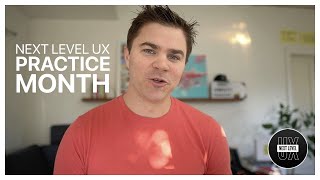
Drew Bridewell walks through how to practice what you're learning, focusing on integration, exploration, and intention. He covers planning and leadership strategies for putting new skills to work.
Chapters
Hey, what's up Drew Brible here. And this month on Next Level ux, we're going to be talking about practice. Now December is an amazing month to do a lot of self reflection, to get in there and have some fun with the family, to be able to plan awesome adventures and activities with them. But it's also a great time to kind of self course correct and get you back on track to reaching your goals, reaching your milestones and just really just crushing it for the rest of the year and then setting yourself up for success, success for the next year. Now 2022 is right around the corner, so why not start planning and start getting after it so you know what you're going to be doing in 2022 to really take your career, take your life, take that pursuit of abundance and happiness and joy to the next level. So let's talk about that today. What I wanted to do is share a little bit about what the topic is this next coming month, which is practice and what we're going to be discussing and what we've already discussed for the last couple months in case you miss, in case you want to go back in there and sign up and just get access and start watching some of this content. So without further ado, let's get started. Alright, cool. So the first thing that I want to talk about with practice, I'm going to lay down three really pretty essential foundational themes that we're going to need for practice. Now Practice is the fourth part of training map number one for next level UX. So we have three training maps. You know, it's 12 weeks and the first one is like we have clarity, goals, action planning and then practice. And that's the first training map. So the first one is thinking about integration. Integration. I say this word all the time because integration is not just how you integrate products, but how do you integrate your practices and integrate your learnings and integrate your course corrections into your daily rhythm. So your daily rhythm's like, you know, you wake up, go to sleep, you wake up, you do a bunch of things that are important to you. You go to work, you go practice, you cook, you clean, you do your things and then you go to bed and then you do do the cycle again. What is your rhythm? And figuring that out and being very intentional about that and understanding that that way you can, you can actually like course correct when you need to. So we're going to talk about integration, but layering in product disciplines, layering in design disciplines, layering how you work with engineers and product management and design, management and leadership and how you lead through all this as well. So we're talking about that. The second thing we're going to talk about is explore. Explore. What does explore have anything to do with practice? Well, explore is how you start to reflect and then go search for the things that you want to practice, things you want to learn. Like, why do you want to learn to be a better X? Why do you want to learn to be a better. Yeah, why do you want to do this? And how are you going to go search for those things? Where are you going to go? You're going to go to LinkedIn learning, you're going to go to next level UX, you can go to Netflix, you can go to Masterclass. Where are you going to go to learn the things that you need to learn? Now, I'm a huge fan for online learning. Huge fan. Love LinkedIn learning, love Netflix, love Masterclass. But when you can start to bring in a little bit more attention with how you go explore how you find content and how you look at that content as a learning opportunity for yourself and take notes, learning can go to a whole nother level with that. So we're going to talk about Explore. The third thing we're going to talk about is intention. Now, intentions wrapped around a little bit of purpose, a little bit of desired outcomes. But when you have your desired outcomes, you have your purpose. And then you can start bringing an intention into your practice schedules. You can. And into your practice dynamics. Some magical things can happen when you start to do that. And that's what we're going to talk about this month. And even I'm going to share a whole slew of different ways that I approach this. You know, from thinking about how you build in play into your daily. We're going to talk about backwards planning and thinking about. I mean, I talk a little bit about this in action planning, but backwards planning as far as, like, you know, once you have your goals, once you have clarity about what you're actually trying to achieve over the next couple months or quarter, however you like to do your planning and then working backwards, it's a very simple plan, but I wish I would have known it when I was first starting out as a designer. And it can be incredibly impactful for just how you show up and how you do it within, like harmony in that life, you know, that's really important. We'll also talk about, like, little things that you can do as far as, like, okay, I'm gonna set up some goals for the day. I'm gonna set up my intention for the day. I'm doing a little bit of journaling right when I up versus immediately going to your phone and doing something. So we'll talk about some of those practices that will really help with that so you can find them really meaningful, creative moments in your day. We're also going to talk about design leadership and how leadership is not only for managers. And no matter what level you are, if you're an executive or if you're down at, you know, just getting started in design, what are those, what are those leadership skills that you can start building now and start accelerating and improving on, on just through the whole year of 2022? Like, I really want to help you get to that next level. So when we're thinking about leadership, we're going to be talking about, you know, evaluating what the next step is, evaluating what the intention behind the thing that you're trying to achieve is how to bring business outcomes, design outcomes, and kind of merge all these beautiful things together in a really harmonious way. Then we're just going to talk about describing intention. Like, describing intention is so, so, so critical. So when you're thinking about how you're going to schedule the week, how you're going to be able to let your designers know what's going to be focused, what's going to be their focus for this week or for the next month or for the next year, how do you describe the intention and bring that in so your team is aligned with you and they're aware of what's going to happen and you're ready to actually take control over your learning and practice journey? So we're gonna talk about that this month, December 2nd, first Thursday of the month. It's gonna be a lot of fun. Hope to see you there. Definitely go to nextlevel UX me to go check it out and to subscribe for this month so you can get in there and get some of this training. And, you know, if you haven't, if you haven't been. We haven't been introduced yet before. My name is Drew Bridewell. I'm founder of next level UX. I post a practical UX weekly on LinkedIn learning. There's two seasons on there, about 70 episodes. And this is where I go into deep, practical tips about, you know, working with product managers, working with the design industry, building responsive websites, building design systems, all that stuff. So I host that and then I'm also head of design over at Growth Day, where we're building a personal development and coaching application all in one. You know, with your journal, your tools, your community in life coaching. It's really been a really exciting product. So if you haven't checked it out yet, go check it out and then that's it, y'. All. Hope to see you there in December, and if not, have an amazing blessed rest of your November. And I'll just see you. I'll see you in the live session. All right. See you, Sam.










