What Is Your Design Kryptonite?
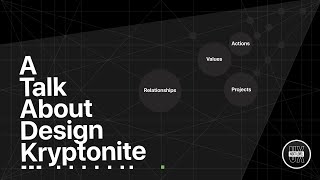
Drew Bridewell identifies four ways designers undermine themselves: weak relationships, misaligned values, unclear projects, and unfocused actions. Each pillar can become a liability that tanks effectiveness, from poor communication to strategy gaps to scattered execution.
Chapters
Sam, Hello. Hello and welcome back to a new episode of Finding what your design Kryptonite is. I mean, this is a new little series that's going to help bring awareness to the things inside of the design world that literally are people's kryptonite. And what we're going to do today is we're going to talk about that and, and it's going to be some fun and we're going to just jump right into it. My name is Drew Bridewell. I'm CEO and founder of Next Level ux. And Next Level UX is a design and development program that helps individuals get to their next level. But beyond that, we have three programs that we're working really, really hard on to helping cover the, COVID the ground as far as that you walk on, as far as what are some of the high impact tactics that we can hand over to you so you can start learning these tactics and these practices so you can get to your next level. And those three things are mapping to learn, action planning and career accelerator. And we'll talk about those at the end of the show. But the first things that I want to do is I just want to jump into these four topics that you just saw on the screen. We have relationships and value and projects and actions. So let's just jump over to those real quick just to give a little, just to get warmed up to these things. So what are, what are we talking about here? What is relationships? What are the values? What are projects? Why are these things potential anchors when it comes to, when it comes to being that kryptonite? And I just want to walk you through it right now. And I'm inside of Figma, so we're going to do a little bit of design work right here, but we're also gonna just have some fun hanging out. Okay, so let's do this. So the first thing with relationships, what I want to talk about this. So if you're a product designer and you're an engineer, you're whatever role you have, it is next to impossible to build a sustainable product in a ecosystem without building quality relationships. Alright, you could go in and you could be a drill sergeant and ask people to do everything that you want. But if you don't have the relationships, then it's basically like what's the point? What is it going to do? How are you going to interact with this person every day? And do you want to put yourself in situations where you're around really great positive relationships that help progress, things that help you learn and help you Grow and help you develop? Yeah, I think so. So relationships is a huge aspect of this. Then we have values. Like, how do you identify as a designer? Like, what do you value and what do you value as far as the company that you work for? Like, what do they value? What are the. Do you value being on time? Do you value honesty? Do you value constructive criticism? Right. It's like it brings you back to. It brings me back to roles and responsibilities and norms and how you decide to show up with your team. It's very, very important. So what do you value? What does your company value and what do you value on each individual project? Then there's the project work, right? There's so many different things that happen around a project. You have deadlines and you have priorities and you have workshops and you have the goals and the milestones, both daily, weekly, yearly. I mean, there's just so many things that go into a project. But really, what is a project's kryptonite? Well, projects Kryptonite is lack of clarity. And you'll start to see that real, consistent lack of transparency. And the lack of clarity really just breaks problems down. It breaks down projects. It makes things really, really challenging for every person on your team when there isn't project clarity or design clarity. And that's something we'll talk about as well today. And. And then actions, right? What are you doing about the work that needs to get done? How are you planning it? How are you structuring your work? How are you setting yourself up for success? How are you preparing for those moments before you jump into some work? Are you thinking about it intentionally before you jump in and just start designing or drawing or whatever it is you need to do? How we show up around our actions is very important, right? If we show up very negative, very angry before we do a task, it's going to be a little bit more challenging to execute it at the level that you want, especially if you're designing experiences and products for other people. So what we're going to do right now is we're going to do a little drawing. We're going to do a little drawing around these things just to start breaking out a little bit more. What we have to think about. So with relationships, what do we do? What do we think about when we have relationships? Right? Well, we have our team, we have family, we have our friends, we have our mentors. We might have coaches, managers. You get the idea, right? You have a lot of people that are surrounding you that. That end up affecting you some way, right? So if we're thinking about how do we connect these dots, how do we make sure. Here. I was going to put some circles around these, but if you start thinking about. Right, okay, well, we have some connections here that we need to consider. So I'm just going to draw some straight lines and get these connected. Okay, Just bear with me for a second. Boom, boom, boom, boom, boom. And we're going to come up. All right, There we go. And then we're going to draw one more for mentors, and we'll make these a little bit. There we go. All right. And we're gonna give them the same color. So. Right. We're just doing a little mind map, little. Little exercise, right, to see how are all these things connected? And then I want you to think, too, about what might be your kryptonite. When you're thinking about what do you struggle with? What. What are some things that get in your way? You know, managers, family, coaches. Like, these are all your supports. Right? So how are you investing and how are you investing these relationships, for one. How do you allocate time to be able to be able to connect with all these different. These different elements? Right. That's an important part. So then there's, like, the value. So we have team again. We have team, we have project values. How are we trying to move the needle? How are we trying to make this thing, this experience, better values around our individual. Like, what is our individual values for this experience or for any experience that we create or make? And then another one would be. So we have individual, we have team, we have project, and then we have company. Right. So we're not just thinking about just the project. We need to think about our art self. We need to think about. Because we need to. We need to take care of our bodies, take care of our minds, so we can show up and be better when we need to go to town, when we need to get to it. All right, so I'm just going to copy that style. Bring it over. Cool. So we have. We're starting to build a little bit more of an asset for how we're thinking just what's in our mind. Right. Let's brag that. Let's see. Why is my not showing up? Oh, it might not be on the same layer. All right, cool. So now we have our values, and then what about projects? What happens with projects? Well, with projects, we have timelines, we have goals, we have roles and responsibilities. We have key performance indicators. Right. How do we know if things are successful? And how do we have okrs tied to this. Okay. Okrs might also be towards your values, like the projects that you're moving. But we could just say these are tied to a project. So we have personal goals, we have timelines, we have roles and responsibilities, and then we have a series of strategies. How do we do this? How do we do this work? And we have the, the team and. Right. So you can see that this is one heck of a giant. One heck of a giant area that has a lot. And there's probably. There's probably more. Right. The petition is just to get you warmed up as far as the things that literally have a huge impact on your projects and on your work and on your. On what you. What you produce. And the reason why we're doing this is, right, because we're going to talk about each one of these things and like the things that can really drive us to really hurting our projects and to literally be the design kryptonite that we never wanted. All right? And then there's actions. So the action side of this is like, oh, man, I'm a total geek when it comes to actions. Like, I love having next steps. I love having what are my next five needle moving actions that I can take for each of the projects that I'm working on. So it'd be like clarity on what needs to be done. Priorities. Let me give this some more. So we have clarity, priorities. We have who's responsible for these actions. They just need clarity. Let's say design clarity, priority. We need to know which priority. What else do we need to know? Well, when we are creating actions, we need to know what the priority is. We need to know what the design. Design clarity of the, of what it is and why we need to do it. We also need to know what, okay, let's just say purpose. We need to know the purpose and responsibility. Who's responsible? And the last one that we can say is focus. All right, so obviously, right. We just created a quick little list of things and I want to. And I want to now break it down on why this is important. Okay. Why are we even talking about this? Well, we're talking about this because every single week. Let me move this to an area where you can see it. Command, period. And there we go. Let me move it up a little bit. There we go. All right, so the reason why we're showing. I'm showing this to you is because each one of these elements kind of covers relationships, values, projects, and actions. These are just four words. These are just four words that tie together a Typical project or typical experience that you need to create. So we have relationships, we have mentors, teams, managers, family, coaches, friends. All of these people are stimulating, giving us feedback, telling us what we need to do, telling us what they think we should do. We're working with these people. But it all circles around. It all comes back to relationships. What kind of relationships do you have with your friends, with your family, with your co workers, with people that help you drive and push these things forward? When you're pushing these dreams forward, how are you getting support? How are you getting help? A lot of kryptonite can come from, especially design kryptonite. When you're not investing in these relationships, you're not investing in the people around you to help push them forward, to help move them forward. And you don't always have to be all in for everybody else. You got to take care of yourself first. But, but you also need to be thinking about your team, your mentors, your manager, your family, your coaches, your friends. What do they need? How do you want to support them? You know what I'm saying? Like these things are so important. The next one is values. Think about values, right? What is value? Okay, well, these are things that I'm going to wake up and go to bed every day and having a self rule for myself that these are the important qualities that I want to live by, that I want to work by, that I want to perform by. So what are those for individuals? What are those for the team? What are those for the project? What are those for the company? Have you had those types of conversations with your team before? What do you value? Well, if you're in the healthcare startup or if you're in a learning and development startup, you're. Your values might be a little bit different, right? We're trying to help with the health industry, we're trying to help people learn and develop and grow so they can get a job. Like your values, you'll want to align those with the projects and the things that you're working on. You want to have those discussions so you have really crystal clear point of view and motivation and purpose behind the things that you do every single day. Okay, so that's a critical thing that I want to leave you with. The other thing is projects. The heck happens in a project? So many things. We have timelines, we have goals, we have roles and responsibilities, we have KPIs. OKRs. OKRs are more of like your monthly key performance indicators. So basically like, okay, I have a goal in the next three months or the Next two months or one month. Usually they're tied to quarterly goals, and those okrs are tied to your projects. So when you tie a goal to your project, at the end of the project, you're like, did you complete this project? Did you complete the metric that you're trying to do? Awesome. Great, grand. Right? You need these things so you can measure how you're doing. Then there's strategies, right? The team has a strategy. The company has a strategy. Do you know what it is? Typically a design Kryptonite is when you don't know what your strategy is and you're just showing up to design some pixels. That's not acceptable anymore, right? We have to understand the business so that we can be participants in the overall design experience, right? It's not just give me a design, tell me what I need to design. I'll go make it look pretty. That is not enough. That is just like 20% of the whole experience. We have functionality, we have strategy, we have learning loops, we have flywheels that we need to build. We need customer satisfaction, we need feedback. We need these things. So, right, how does your strategy unfold? And then there's the project team, right? The team that you have. You know, if I. All these. All these magical pins that I have in front of me, I have. I carry a lot of pins. I love pins, by the way. And markers. So, like, each one of these is a different stakeholder or different teammate. How am I supporting this person? How am I supporting this person? How am I supporting this person? They all engineer, product manager, content strategist, whoever they are, all of them have the same mission, vision, and goals. How am I helping each one of them? Am I checking in with these people to make sure that they're supported and that they have what they need? You might think that this is too much, but if we're all taking care of each other, if we're all supporting each other, then we can do so much more and we can be so much more together. So that's a really important thing. So looking at all these things, if you don't have any of these things understood before you start a project, that could be your design Kryptonite. And then the last one that I want to share for this video is actions. Actions are the things that we get to. They're the things that we get to create in order to accelerate our project, right? We have a month to do something. In a month, we have four weeks. In that four weeks, we might have time to do about 20 actions. Those 20 actions could be sketching something out, could be having a workshop with your team. It could be having feedback and usability testing and research sessions. It could be iterating on those and doing, setting up your presentation so that you can present the work to your stakeholders. Then it will be another round of those things, right? So you have five of these things. You're doing them every week. Do you understand all the actions it's going to take you to take this project and complete it? Those are the things that's so important and critical to be able to know when to do that. So there's also the design clarity, priority, purpose and response, like who's responsible and the focus. If you don't focus, that could be your kryptonite. If you're not, if you don't know who's responsible for what and you know what some of these things like, really, really. And it's so critical that when you're working through these things and you have, and you're trying to understand, like what is happening in the design, where are things going? If you know where this is going, then you probably have design clarity. If you don't know where it's going, then you probably need to ask more questions and get more intel about what you're doing and why you're doing it and the purpose behind it. Then there's the priority. Okay, not everything is the same priority in projects and actions, right? You have a. You say you have 20 actions that you have to do in that month. What is the priority of those? Can you do any of them in parallel? Can you actually grasp the impact that they can have? As you build on your, as you build on your projects and can you do it with focus? Can you do it and focus in, and kind of work, really work through these? So these are some for kind of like a crash course when talking about things that just can. These are things that you want to make sure that you have a grasp on, that you have control and you understand how you want to approach these four different things in your life as a designer, as a creator and as a maker. So I just wanted to leave you with that. Check these things out, check in with yourself, ask the questions like, how am I doing on my relationships? How am I doing on my values across the board for myself, for my team, my project and company? How am I doing on my projects? Do I understand the strategies? Do I understand my okrs? Do I understand the team's KPIs, the key performance indicators? Do I understand my team's roles and Responsibilities. Do I understand the goals of the project? Do I understand the timelines of the project? All these things can help you drive these things, drive this project. So that's important. And then the last thing was the actions, right? What are the actions? Do I have clarity on those? Do I know what the priority of them are? Do I have a purpose? Do I have responsibilities? And do I have focus? So I hope this was interesting, I hope this was fascinating. This was a quick crash course, like I was saying, into what is designer's kryptonite. And I'm excited to be able to bring you more of this type of content around, just helping you have another perspective about ux. And you know, if you're curious and if you're passionate about getting to your next level in user experience design, then check out NextLevelux Me and then check out the new company, Next Level UX which has three programs. The first one is Mapping to learn, the second one is action planning and the third one is is Career Accelerator which is a 12 week program to help you get to your next level around product design. And there's some other cool things here. And I want to leave you with a little video that just talks about mapping to learn. It talks about like, you know, you don't have to be, you don't have to be a designer, a principal designer to be able to do this. It's basically to help you simplify complexity, it's to help you build better products faster. And it's just something that I love to teach and I can't wait for you to check it out. So I'm gonna shoot the video here for you and then I'll see you in the next video. Alright, Later I just want you to start thinking about mapping. Doesn't have to be just like, okay, we're gonna go map products. You can map anything and if it's going to help you organize your thoughts, reduce the complexity in your head, then that could be a great milestone. Hello, my name is Drew Bridewell, I'm CEO and founder of Next Level ux. Next Level UX is a design and development program based experience that teaches complex strategies in simplified ways. And from sharing the things that I've done In the last 15 years of my career, I cannot wait to share the best practices that I've learned from working at some of these top companies. The really important thing to know is that you don't have to start at a specific place to get to the destination of where you're trying to get to. Like you can start wherever you long as you have a passion for what you want to learn and what you want to create. All right, I'm pumped. All right, see you there.










