Hormone Importance in Joint Health and Aging
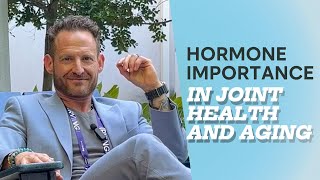
Dr. Joshua John-Ram Schacter explains how testosterone and estrogen support joint health through ligament repair and inflammation reduction. He claims over 35% of joint replacements happen too early, and that hip and knee replacements in people aged 45-64 have risen more than 220% since 2004. He also discusses ozone therapy as a regenerative injection that reduces pain with minimal downtime.
Questions this video answers
He stated the FDA removed the black box warning for testosterone, saying it does not cause heart disease.
Over 35%.
Over 220%.
About 62% of revisions are done within the first three months, commonly for infection.
Approximately 15 to 25 years.
Chapters
Okay, Josh, so here we are. We're in Dallas today down at a conference. You spoke this afternoon, and you gave a wonderful talk about the Pinnacle method and how bioidentical hormone replacement therapy and TRT therapy for men is so quintessential right in what we do at Pinnacle and how we treat joint pain. But, you know, what's the real reason so many people over 50 with all the options out there are still living with joint.
Well, I think the real reason why people over 50 are living with joint pain is that they're not given the option. There's a smokescreen over hormone replacement therapy in this country and in particular, providers. Your family practice doctor, your urologist, your general surgeon, you know, your internist, your cardiologist, have all been sold sort of bad information about hormone replacement therapy and the effects that it has. Look, the FDA just removed the black box warning for testosterone and said that it does not cause heart disease. So there are so many benefits that we can have with hormone replacement therapy, and unfortunately, it's just not offered widely enough in this country. We would rather feel bad than feel young again. It blows my mind.
Yeah, totally. I hear you talking about how important they are, but I don't really understand how testosterone, or TRT plays a role in healing joint pain. Like, where does testosterone come into play in this?
So testosterone has massive influences on a lot of the structure of the joint. Not only does testosterone help us heal ligaments by stimulating the actual building blocks of those ligaments, but it really supports muscle growth. So testosterone is super important for having muscles grow big and strong, which. The stronger your muscles are, the less strength you lose as you age, the more stable your joints are, and the better your joints are supported as you age, the less they'll hurt, the less they'll degrade, and the less they'll degenerate.
Okay, so that makes perfect sense. So if we're going to talk about testosterone, you know, I'm going to be interested. What about the feed female sex hormones? What about estrogen in particular? How does that play in joint pain?
Well, interestingly enough, estrogen is critical in maintaining joints, not just for women, but also for men.
Really?
So, yeah, it's fantastic. So estrogen is. There's actual receptors for the estrogen molecule in the lining of the joint. There are receptors for the estrogen molecule in the cells that help make and break down bone. So the cells that break down bone, estrogen naturally suppresses those. Estrogen also naturally helps to build bone by stimulating the cells called osteoblasts that Will help us build bone. Not only that, but estrogen is the best drug out there for osteoporosis treatment. Because unlike a lot of the medications that are out there on the market, like bisphosphonate, medications that most people are prescribed by their primary care doctor for osteoporosis, estrogen actually helps maintain the structure of bone in a healthy way. And not only that, it blunts the inflammation that we can get in the joint from our osteoarthritis. It cartilage healthier, and it helps our joints become better lubricated, and it helps them be more supple. It helps them have better range of motion.
Wow, that's crazy. Yeah, that's really crazy. So while we're talking about hormones in joint pain, we all know we hear a lot and talk a lot about our sex hormones, but what about the other hormones like cortisol? That's something you hear a lot about. Cortisol, fatigue. You hear about people not having enough cortisol or too much cortisol. Like, what's the deal?
So cortisol in the short term can be a really positive thing. Cortisol, very short bursts of cortisol, like after you work out, or maybe after you have a stressor, like a cold plunge or a sauna, you'll get a little burst of cortisol. Cortisol actually works on the inflammatory cascade and blunts that inflammatory cascade. That's why we use steroids in things like rheumatoid arthritis. That's why it's so popular to inject steroids into arthritic joints, because it helps with inflammation. Unfortunately, those steroids really destroy the joint when we inject them. And cortisol itself, if we have a long term release of cortisol, if there's a lot of cortisol over a long period, say you're stressed over a long period of time. Just like in America in general life, we have this level of stress, unfortunately, that raises our level of cortisol and that really creates a simmering inflammation in the body. It also suppresses our ability to deal with pain. So stress, being stressed out makes you more susceptible to pain. So cortisol over a long period of time can be a really, really bad thing.
Totally. So I guess what I was also wanting to talk about is can we really talk about long joint replacement therapy? About. You were talking about this today and you mentioned in your talk about how, what did you say? 35% of joint replacement surgeries are done prematurely. And you talked about how bad that was. And something I've heard you say in the past is that we're jeopardizing our golden decade. So why is a joint replacement not a great option when we're talking about long term joint health?
So I think it's important to recognize that joint replacement can be a really life changing procedure. Procedure when it's done appropriately. Right. So joint replacement can be a pretty magical procedure. It's one of the most successful procedures in human history. And the problem is over 35% of joint replacements done in the United States today are done what we would call prematurely, which means they're done on joints that aren't end stage. They're not completely worn out, but they're painful.
Right. Like people are suffering.
Yeah, people are suffering with this pain. They're just not offered the right tools to help get through this pain. The traditional system is built to get us into a joint replacement. You go and you see your doctor, you maybe get a steroid injection, and then we end up with a joint replacement. Right. We go to the orthopedic surgeon, we maybe do two physical therapy sessions and boom. Well, the result of that is we're really speeding people, particularly in younger ages, into joint replacements. The rate of joint replacement in patients between 45 and 64 has gone up by over 220% for hip and knee replacements since 2004. Wow. So that's incredible. And what does that result in? Well, younger patients have a higher risk of revision, meaning they'll have to have the joint redone. And they also have a higher risk of early Revision. And about 62% of those revisions are done within the first three months. And they're for infection, which is a life changing problem if you get a joint replacement that develops an infection. So not only does that impact our short term health, because we had this major surgery and having a major surgery really damages your metabolism. We talked about cortisol raises your cortisol level, it raises your chronic inflammatory response, it destroys your gut axis, it suppresses your natural hormones. So having a major surgery has consequences at least for the next year, if not years of your life. Well, add to that, then you have an increased risk of complications because you're younger when you have the joint replacement. And then there is no doubt that a joint replacement done when you're 45, if you live to be 80, it's going to wear out by the time you are 80. They don't last that long. Right. Joint replacements last 15 to 25 years, and that's quite a lot better than it used to be. But in a lot of cases, it can be even shorter, depending on how active you are.
So if you're active, it's going to wear out even quicker than 15 years?
That's right, yes. You can't run on a joint replacement. You probably shouldn't do weighted hiking on a joint replacement. And we're telling more and more patients, oh, it's okay for you to be active, but the result of that is your joint replacement wears out earlier. You need a revision and revision. Joint replacements are never as good as the original one. Right. Never as good as the original one. Not only that, but then you're having a major surgery later in life. And if you're having the first major surgery later in life, you're much healthier than if you're stacking surgery on surgery on surgery. And if we have our revision surgery when we're 75 instead of our primary joint replacement when we're 75, then that is going to be a major, major metabolic impact.
Wow. So it's not about never getting a joint replacement, it's about making sure that it's the last thing you try?
I think so.
Not the first thing you try.
Yeah. Joint replacement' can be safe in patients up to 85.
Yeah.
But why would we do them earlier if we can wait for as long as possible?
Right. Get somebody as healthy as possible for as long as possible.
We can optimize your metabolism, we can balance your hormones, we can detoxify your system and lessen your inflammation and treat your joint. So that we heal your joint pain, we regenerate those tissues. It's gonna be massively effective.
Wow, that's great. Thank you so much, Dr. Schachter.
Yeah.
So let's talk about one more thing. So talk to me about ozone. So we're at this conference and you're speaking. I know that it's not a modality that you offer right now, but you seemed really excited about it today.
I am so excited about ozone therapy. So I am learning so much from Dr. Shallenberger. He's the American godfather of ozone therapy. And ozone therapy is basically taking pure ozone O3 that's created in the office, and then we can inject this gas into joints. Now doing joint rejection generative care with ozone therapy, It's a massive healer. It helps to remove a lot of the toxins that are in the tissues that we're dealing with. Right. And it also helps heal, and it's a massive pain reliever. So the pain relief effect of ozone therapy injection occurs within about 20 minutes and it's not damaging to the joint.
So there's not a downside. This is not like a steroid treatment that's an anti inflammatory and kills pain.
Right.
So what would be like, so if you're gonna do this ozone therapy in the joint, is there downside? Like, is there downtime?
There's no downtime to ozone therapy. There's no downtime to an ozone injection. It is quite a lot safer than any other injection. Other than regenerative therapies, ozone therapy is almost as safe as doing PRP and bone marrow aspirate. If we look at the statistics, it is far safer than injections that are offered in traditional medicine, like steroid injections or the lubrication injection visco supplementation. It has an extremely low risk of infection. It doesn't damage the tissue, and it optimizes the joint for our later treatments with regenerative therapies like prp, bone maraspirate, adipose tissue, Wharton's jelly.
How does it do that in the joint?
So it reduces oxygen, free radicals. So it actually goes in and eats up inflammation. Once the actual inflammatory response that your joint's having to its damage and it allows that tissue to start the healing process.
That's great. Okay, so I've asked you a bunch of questions. What do you want to talk about? Is there anything that you feel like, you know, is something new and interesting that you feel like people don't know?
I think people don't really understand why we do what we do at Pinnacle. I think that telling our story is pretty important. And that's part of what I do when I speak at these conferences. And you know, basically I'm an orthopedic surgeon. I'm a board certified orthopedic surgeon. I've been doing this for about 20 years. I've done about 15,000 procedures. And when I came out of residency, I immediately became a very busy orthopedic surgeon. I was the chairman of orthopedics at my department up in Wichita falls for over 10 years. I led an orthopedic center of excellence for hip and knee replacement. And one of the things that I started to realize at about 10 years in was that we are doing a massive amount of surgery and it's really, really good for the hospital system. The hospital system's making a lot of money and the surgeons are working really hard. But what I started to look at is, are we doing a lot of these procedures because the patient needs them, because it's the best thing for the patient? And I started to really think there's a lot of things that we do in orthopedics that we're doing too many aggressive surgeries. When we scope an arthritic knee, when we do some of these shoulder surgeries that we do, when we do joint replacements aggressively on patients, there are consequences. And I started to see some of those consequences in complications in young patients getting joint replacements. And so that started me thinking about regenerative therapy. And my wife Amber was diagnosed with the BRCA gene, the breast cancer gene, when she was 32 years old. And it was this massive impact in our lives. You know, we were recommended that she should have all of these surgeries, she should have a mastectomy, she should have her ovaries out, she should have a hysterectomy. And so she went through about five surgeries in just a matter of five or six months. And talk about a major metabolic impact. How do I know that major surgeries impact you for a long time? Because I watched it from the bedside, holding my wife's hand. When we'd come through that super tough and traumatic patch that we had as human beings out the other side of that, we expected to be on the healing journey. Except my wife wasn't my wife anymore. She immediately went into menopause. She started having hot flashes, brain fog, chronic joint pain, serious difficulty sleeping, personality changes, dry skin. She didn't want to have sex, couldn't work out. There were so many just life changing problems that occurred from a lack of her own sex hormones. And we went to her oncologist and her oncologist forbade us from ever doing anything. And I remember my wife saying, please, is this my future? Am I just going to be this dried up husk of myself? I am 33 years old and she is a brilliant woman. My wife does a lot of research into hormone replacement therapies. And at that time, she had looked deeply into functional medicine and hormone replacement and really felt that it was an option. She asked her oncologist, so, you know, I know that this is shortening my lifespan. I know that not having hormones this early in my life is shortening my life. And I know that it also is going to cause osteoporosis. And I'm going to break a hip by the time I'm 50. And her oncologist looked at her and said, you just want those hormones to feel better. And then she said, do you want to live to 50 to break your hip? Well, my wife's 45 now. She's beautiful, she's Amazing. And she's living an amazing life. But that really drove us to see medicine, that traditional medicine seemed so close minded. We tried other doctors, we talked to our primary care doctor, we talked to her gynecologist. And her gynecologist was probably the most helpful of her traditional doctors. But he said, hey, I know that you want hormones to feel better, so let's try this. So he handed us a bag of birth control pills, samples, and said, try one of these birth control pills, a different one every three weeks. And the one that makes you feel better, that's the one we're going to do. No labs, no testing, just hair. Lady, go ahead and take this. Well, my wife said, well, I have heard that oral estrogen without progesterone to balance it actually does increase my risk of cancer. And he's like, ah, you just want hormones to feel better anyway, just try. So that didn't sound right either. So we found ourselves a functional medicine provider, somebody who specialized in bioidentical hormone replacement therapy. And I still remember sitting down with him and it was about an hour visit and he said, okay, we're gonna get these labs, we're gonna dig into this, we're gonna look at your gut, we're gonna balance this, we're gonna do all of these things. And it just, it first of all seemed like he really cared about her and her problems and saw deeply that her hormones were making a huge difference in her life and could really, really impact her well being and wellness. And then he had a plan. And within three months, my wife was back. Her life was completely changed.
More from Dr.







She Traveled from Colorado for a Different Approach to Knee Pain | Lois’ Story

