The Pinnacle Method™: A Smarter Approach to Joint Health & Regenerative Medicine
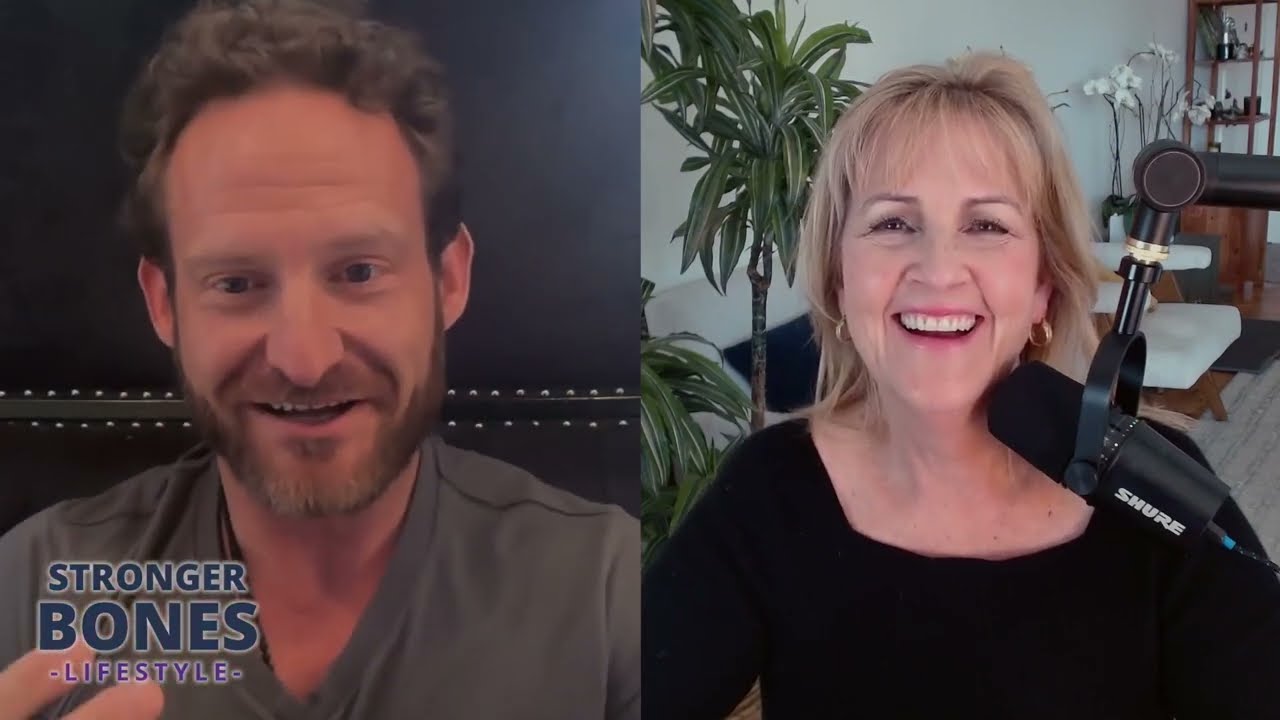
Dr. Joshua John-Ram Schacter, an orthopedic surgeon who performed over 15,000 joint replacements, now uses regenerative medicine and metabolic health instead. He estimates 35% of joint replacements are premature and treats patients with stem cells, platelet-rich plasma, and hormone therapy. His approach targets active adults 55-75 and has helped a 67-year-old stroke survivor regain speech and mobility.
Chapters
My next guest is Dr. Josh Schacter. He is an orthopedic surgeon, an orthopedic surgeon who no longer does surgery. He actually did 15,000 joint replacements and he wanted more time with his patients because fixing the joint was one component. And the other aspects is he wanted to help the person heal. So that's what he does now. He actually has the Pinnacle program. Where he focuses on metabolic and regenerative medicine around joint pain and longevity. So listen to this episode to learn about the broken bone health system and orthopedic surgeon, Dr. Joshua John-Ram Schacter, what he's doing now and how he is helping his patients without surgery. Today on Stronger Bones Lifestyle Podcast, I'm going to be speaking to Josh, Dr. Josh, an orthopedic surgeon who actually is not doing surgery anymore. Instead has shifted his focus to metabolic health and regenerative medicine for bone health. So very intriguing conversation about bone health. Josh, welcome. This is your time now. I want you to share with us what you want to share with us, right? You come on a podcast to share your wisdom and there is I want to hear about what it is that you want to talk the most about right now at this point, whether it's joints, arthritis, knee replacements, regenerative medicine, metabolic, like what really is it that is your passion now, why you're doing what you're doing and what you're doing and what you're seeing?
Well, I did so many joint replacements in my career and that whole market of joint replacements is accelerating. It's 200 times more joint replacements are done now than they were done in the young population, are done now than they were done just 10 years ago. So we're having a big resurgence in a big, huge surge in joint replacement. And we know the joint replacement literature itself tells us that up to 35% of joint replacements done in modern United States may be done prematurely, meaning the joint's not in stage that we didn't explore every option. And so just that statistic that I learned years ago in 2018 got me thinking about, well, what if we can do something to prevent unwanted or unnecessary surgery? And that sort of led me to research into regenerative therapies, into bone marrow aspirate concentrate and stem cell options and platelet-rich plasma and those types of treatments that we can do, ozone therapy, prolotherapy. And it also revealed to me that the steroid injections that I had been doing in my patients for years and years and years that made them feel good were actually really damaging their joints. We've known that since 1951 that steroids damage joints, and that's the most common injection in the United States. And understanding that we had a better option and that we were doing all of this stuff that's damaging patients really made me want to do it differently. And so that's where we began to think about the Pinnacle Method as it is today. As a full approach to the metabolism. Along the way, we learned a lot about functional medicine and hormone replacement therapies. And so what I do now is I combine those approaches, a regenerative medicine approach with a functional approach so that we get the best of both worlds. My side effects are amazing. My side effect of my injection therapies are that you lose weight and get healthier. And a side effect of my metabolic work is that your joint injection works better. So to me, that made a lot of sense. I don't know if anybody else feels that way, but it made, I was like, oh, well, that's a good idea. And that's what we see in people. It's really wonderful because when we help someone be healthier, what we do for them from a joint regenerative perspective makes it, makes it work so much better. And so our goal is really to prevent these unwanted, unnecessary surgeries, but, and so we get people with joint pain., but we get to change lives for a long period of time. We get to change lifespans. We get to change, you know, functional longevity for people. And that really lights me up. In my practice, we see a lot of patients in this age group, in 55 to 75, because these are very active people, people who are wanting to stay active and remain vital no matter what they're doing, whether they're in the gym or they're the yoga Debbie Robinson crowd. And it gives me the opportunity to work with a broad and varied population. And we see in everybody that the approach works. If you eat better, if you're balanced, if we apply regenerative therapies, it works great. So that's what we see right now. I'm kind of fired up about frozen shoulder and what is causing frozen shoulder in so many people in our populations. Frozen shoulder is progressive stiffening and pain of the shoulder. The most common person for that to occur in is a woman aged 45 to 65. Well, does that strike you as a, you know, an interesting— is there a stage that's happening in there? So we do know that joint pain is very closely linked with menopausal symptoms, right? Hormone deficiency. And so for me right now, I'm really digging in and seeing some pretty dramatic results when we balance hormones, and when we optimize nutrition and we do regenerative therapies for frozen shoulder, we've had some amazing successes with that. I'm also working on combining the mental side of healing into what we do because the metabolism isn't just about your gut, right? It's also about the mind and how the mind works. So we have some techniques that we're using now to optimize patients for neuroplasticity so that it helps them lose weight and become healthier. We work on mindset when we're doing stem cells. If I'm taking your material to put back into you, believe it or not, your brain affects the way that your stem cells behave. I mean, everybody who does any sort of physical activity can feel that, but meditators really do feel it and people who do yoga. So those are the things that are really lighting me up right now, and we're seeing some pretty dramatic results when we do this with folks. I have one gentleman that we've been working with. His name's Terry, and I'll just tell his story and we can be done. But Terry came, he's a 67-year-old man, and he was this vital firefighter. You said your husband's a firefighter, and so you know the type. He had a beautiful silver mustache as all great firefighters do. And he came in and he's this gruff guy when I first met him, and I did a hip replacement on him years ago. And about a year, this was about 10 years ago, and about a year ago, his wife brought him to my clinic and she said, Terry's had a series of strokes and he's declining. And I'm afraid that he's gonna, he's gonna pass soon, but is there anything that you can do to help him? He's really weak. His speech is garbled. He really sleeps all the time. And so I did an evaluation. We looked at him and we decided we were gonna work with him and we've done some pretty incredible therapies for him and Terry. I saw him today speaking in full sentences. We've been working together for about 4 months doing some different approaches to brain therapy, IV therapies, nutrition, our whole approach. I saw him yesterday. He's speaking in full sentences. We have to make him use his cane to walk. His wife sends me videos of him, you know, performing amazingly well in cognitive testing. It's just amazing to see an approach work that well and dramatically in folks. And so that's what I'm having a good time with.
You know, it's not just about longevity. It's about quality.
Yes.
And you're giving back quality. I mean, I have a hip replacement, so I know where I was before that and then after, and it is the quality. And I love that, you know, people really need to understand it was a hard decision for me to have a hip replacement, like to cut my bone off the top of my leg bone. And to commit to some fake parts at the age of 50 and what's going to happen and when will I have to another one or will I have to have another one? And then I learned about like, what then could there be a disease or bacterial growth or who gosh knows all that stuff. It's a big, big decision and knee replacements in my experience as a yoga therapist, that's a hard one to recover from, to regain flexion back in your knee joint. You kind of limit certain kind of, I don't know, you can't really run anymore or do things. It seems, I mean, I'm sure that there's people that can actually do a lot with their new joint, but a lot of the times not. And so to avoid what needs avoided and to, you know, that statistic you read in 2018, to not just do a joint replacement, it's a big, big thing to do. And to even think that we're doing more now, Josh, and you know what else we're doing that sickens me? We are actually, and they're probably doing more because of this. They actually shortened your length of time in the hospital. They are doing outpatient. You go home that day you had a knee replacement. You go home that day you had a hip replacement. I have like 3.
I did that for years. Yeah.
Okay. Well, I think it's terrible because as a 50-year-old having surgery, I remember that night and I did the kind of thing where I chose this physician for a reason. We did a posterior approach where he didn't cut. The muscles. He separated everything. We did the anesthesia where it was kind of like sleep. It wasn't the deep sedation. So I thought all these things are great. I remember that night as my nervous system processed him dislocating my hip, I remember having kind of almost a semi-dream of a rubber band snapping, which is probably when the dislocation happened and my body is processing that. The next day I remember bending my knees, putting my feet in the bed. I remember my hip replacement knee collapsing in because my body didn't communicate yet on how to keep my knee up. I didn't want to take the catheter out. I didn't want to get up to go pee. I had the nurse there to help me and I was 50 years old and super fit. What about a 70-year-old, a 75-year-old that goes home and now they have to urinate by themselves and feel the— and not only that, our pain management. Because of all of the opioid stuff around the 2010 timeframe. We don't even medicate pain as well as we should. I got—
it's tough—
in 2015, my labral tear repair, I was getting 2 Percocet every 4 hours. And then he even gave me a new prescription. When my hip replacement guy in 2017 said, studies show that if you're on it more than 4 days, like I think a huge number, 70% are addicted a year later. Or this huge number. And he only gave me one every 4 hours. So I think the way we manage pain, the joint replacement itself. So there's multiple facets to not only longevity you're giving people, Josh, but the lack— you're cutting down pain and suffering. You're improving people's quality of life. And then I love where you're going with this mental, emotional. We do not think about that in the West, but that we are energetic beings. And you see it in the stem cells that you're taking out to make that PRP for your injections. It's pretty profound. The mind, you know, yoga is for the mind. Everyone thinks it's a physical practice, meditation, pranayama, that is yoga. And the mind is really a big part of what we need to work on in health. And for an orthopedic surgeon to be at this point in his career, where you are looking at the whole human. Doing the approach that you're doing. Like, I just, I love you. I'm so grateful. And I think there's more and more physicians like you because yeah, it's amazing. So thank you for what you're doing.
Well, you're welcome. I think the impact of what I, what's really interesting is surgery doesn't just impact the person. You mentioned it was this huge dramatic event for you, right? It's everybody who needs to be a caretaker to that person. It's the stress of having somebody in surgery. I had this experience when my wife went through a, a pretty serious surgery and it really taught me that the person under the knife is oftentimes not even the one who's suffering the worst, right? So, and then you're gonna have this huge impact in a family. If everything goes right, you're still gonna have this period where you're sick and down and recovering. And if things go wrong, then oh my gosh, then you impact this wide network of people. And that's just another reason why I think that doing regenerative medicine, doing metabolic work. Combination so that we get the best outcomes that we can prevent these types of scenarios ever from happening. You come to my office and you leave feeling good from most of your appointments, right? You might be a little stiff after an injection, but it's very unlikely that anything that I'm gonna do to you is going to lay you up for days on end and, or months on end. And if we do it right and we do it responsibly, it's even less likely. And so it's pretty magical to help people not go through that. Because I did 15,000 surgeries in my career and I saw a lot of suffering. That's part of being a surgeon and you sort of grow these calluses on your heart about it. But now I get to watch people not suffer. And that's, I think, one of the most beautiful parts of regenerative medicine to me.
I wanted to pause for a second because I'm mentioning a lot here. About the broken bone healthcare system that exists, and you may be discouraged or frustrated listening to this message. I want to let you know that there is so much that you can do, that I have seen women reverse their bone loss, reverse osteoporosis, and that it is possible. The story is changing. I'm on a mission to change this around the world. Look below this podcast episode. And learn what you can do starting today. I just wanna ask you one thing. Did you do hip fracture work?
All the time.
Okay.
Yeah. Hip fractures.
Can you, can you just, the scary statistics out there that 50% or 25% of those that have a hip fracture die, another 25% become dependent on others for a year and then die. So we're talking about 50%. Can you actually, is there an image of that female that that happens to? Like, are there certain characteristics that you could see, or the people that would not fare so well with a hip replacement? Like, is it a petite woman? Is she fragile? Like, what are their characteristics? Or no, it just doesn't matter. It's the luck of the draw.
It's not the luck of the draw. It's the luck of the fall. Unfortunately, if you are thin and haven't done a whole lot of weight-bearing exercise or have osteoporosis, right? You're more likely to suffer a more serious fracture when you fall as you age. But the real unifying factor, the real thing that could change a person's life, because it is, it's about 30% of people who suffer a hip fracture will pass within that year. And another 30 to 60%, like a lot of people will never ambulate at the same level that they did before. And it shortens your lifespan by an average of 5 to 7 years. So anything that we can do to prevent hip fracture is going to be super critical. The biggest factor though, is actually how stable are you when you're walking? How strong? And we think how strong are our legs to hold us up when we're walking, but you know, as a yoga teacher that the core and the pelvic floor are some of the most critical structures for gait stability. And so that's what I always say to people that surprises them. We don't talk about bone quality or certain body, like you're big, you're small. We talk about how stable are you when you walk and move. So that's the real issue, because if you have poor balance and poor core stability, then you're much more likely to have a catastrophic fall.
Okay. Bones don't break because they're fragile. They break because we fall.
They do. They do. Well, they break because of gravity. They break because gravity exerts its intolerable force on us sometimes. And great bones can break just walking on them. That's from the more severe osteoporosis, but we can prevent that sort of thing. Yeah. If we think about it.
Yeah, well, that's a whole other podcast, but we actually have said that if you look at it from a regenerative preventative metabolic lens and you look at all the factors, all the things you're doing in your Pinnacle program. So where are you located? Where are you licensed? How can people work with you?
I am licensed in Oklahoma and Texas and soon to be California as well. I am located in the bustling metropolis of Wichita Falls, Texas. We're in North Texas, about 2 hours north of Dallas. And believe it or not, we are becoming a destination for people to come and have regenerative medicine procedures. It is a remarkable situation, but people will come to see us. We have folks that just flew in from San Francisco. We had a wonderful woman from San Francisco come and spend a week with us. We've had folks from the East Coast, all of the states in between. Now it's pretty easy to get to Dallas and then we get you up here. Average folks, if they wanna come and work with me, I like for people to stay. It depends on what we're working on, but 3 to 5 days you can plan on being here to do a full treatment for a joint. And we apply a metabolic approach before and after. So we wanna get in touch with people before so that we can really start making the system work for us before we do an intervention if we're gonna do one. But yeah, it's a welcoming little town and you get to come up and, you know, experience some Texas charm. We like to actually have our travel patients at our house sometimes.
You know what, Josh, if you create a retreat center, right? If we could build a retreat center, then I'll come and teach yoga, meditation. I'll teach how to be bendable, not breakable. Really work on balance.
I would think it would be really wonderful to get to have 20 or 30 people all together so that we can not just work on the body part of our health, but also our mind together. And I have this, my wife and I have this dream of synthesizing regenerative medicine in a functional approach with mindfulness and self-development and connection. So it's coming. We're working on it.
It's coming.
And you're going to be there. You're going to teach for us.
Yes, I will.
Awesome.
Thank you so much for sharing this. You're a part of what helps me share my mission to change the way that we are reviewing bone health, the way that we diagnose, manage, and treat it to really raise awareness in women, educate them that we have a broken bone health system. So thank you for helping me share that message around the world. And I love what you're doing. I love to share what you're doing and who you are. And I know people do come, they listen and they do come to you. So let me—
they do. I love it. I love seeing them. They do. Debbie, I just, I am so grateful for your mission. I think that what you do is so impactful and so beautiful in the story, the way that you tell it. And I just appreciate the good that you do for women and for anyone with osteoporosis or bone disease. So thank you for that.
Thank you.
Yeah.
Thanks for being here. Cheers. Cheers. Thanks for joining me on Stronger Bones Lifestyle. Are you ready to take charge of your future? For show notes, resources, and information on my programs, please visit debbirobinson.com. If today's episode empowered you, be sure to subscribe, leave a review, and share it with someone who needs it. Together we're building stronger bones and stronger lives. Take care, and I'll see you in the next episode.
More from Dr.







She Traveled from Colorado for a Different Approach to Knee Pain | Lois’ Story

