What I Actually Do When I Feel a Cold Coming On (It's Not Vitamin C)

Dr. Mark Hyman shares his protocol for fighting colds: high-dose vitamin A and D (50,000 IU each for 3-5 days), adaptogenic mushrooms, echinacea, and a garlic-ginger-hot-pepper drink, plus sauna. He emphasizes that sleep matters as much as any supplement, and keeps his vitamin D at 45-70 ng/mL year-round.
Chapters
So, if I want to get through this year's cold and flu season, and I don't want to feel sick every other day, where do you think I should start?
I can tell you that knowing what I know and what I'm going to do, I almost never get sick.
How does that happen? What's going on?
If you're eating a bad diet, if you're not exercising, if you don't sleep well, if you're stressed, if your nutrient levels aren't optimized, if your gut isn't healthy, you're going to be more likely to get sick. Hey everyone, welcome back to the Office Hours. I'm here again with Emma, one of the producers of the Dr. Hyman Show, and today, We're talking about something that comes up every single year as we head into cold and flu season. Emma, what are we getting into today?
So every fall I feel like I'm being bombarded with ways for me to boost my immune system. I'm being told to take vitamin C, to take zinc, take this shot, buy this supplement. And it really made me think, can I actually boost my immune system?
Actually, boost may not be the right word, but you definitely influence your immune system by everything that's happening. So If you're eating a crappy diet, your immune system doesn't work as well. If you're eating sugar, your immune system doesn't work as well. If you're nutrient depleted, your immune system for sure doesn't work as well. If you're low in zinc or vitamin D or omega-3 fats or selenium or many, many other nutrients that we need, your immune system may not work as well. If your gut microbiome is unhealthy, it's going to affect your overall health and it can drive more inflammation. If you are not getting enough sleep, that affects your immune system. If you're not exercising, that affects your immune system. If you're stressed, that certainly is affecting and suppressing your immune system. So absolutely, your immune system can be optimized by modulating the things that we know affect your immune function. So there's no doubt about that. The science on this is really clear.
This episode is brought to you by Function Health, empowering you to live 100 healthy years with over 160 lab tests for just $365 a year.
And use the code MARK2026 to get So if I want to get through this year's cold and flu season, and I don't want to feel sick every other day, where do you think I should start? So if I'm trying to build a resilient immune system, what does that actually mean for me?
For immune system and the rest of your health, the foundations are the same. So it's, it's eating whole foods. It's not eating ultra-processed food. It's optimizing your nutrient status, checking your nutrient levels. And this, this is what we do through Function Health. So you can check your vitamin D, you can check your omega-3s, you can check your zinc, you can check your iron level. You can check a whole bunch of things that affect your overall immune function. Optimize your sleep, because if you're not sleeping, your immune system is going to be affected. Optimize your stress, learning how to regulate your stress response. So meditation, yoga, breathwork, whatever, massage, whatever you can figure out how to do to really reset your nervous system, really important every day. All these things play a role. So start with those foundations of diet, exercise, sleep, stress management, and optimizing nutrient levels. Those are just foundational. Other things will affect you like alcohol, probably not a good idea. Circadian rhythm disrupted is a problem. A lot of people have not regular sleeping and waking times. I think people who are having a lot of gut issues affects their immune system. So fixing your gut can be very helpful. Sometimes people have underlying immune issues, like they have immune deficiency issues and those can be identified and searched for and actually optimized. And then there's ways to just really be taking things that can really help, like optimizing your nutrients. Like I said, vitamin D is probably the most important one, and most people are deficient or insufficient. The reference range for the lab is 30. It should probably be more like 45 to 60 or 70. And that probably, if I had to say one single most important intervention, that would be it. I mean, there was a great study in COVID where they looked at people who were low in vitamin D. They had a 75% higher risk of ending up in the hospital or dying. That's big. Okay. And those who had a vitamin D level over 50, this was a big Israeli study, there were zero deaths, zero, not one.
Wow.
So that got my attention. And so I think it's important to just build those foundational things. And then, you know, if you tend to be someone who gets sick, there's a lot of great herbal formulas out there that I use. There's adaptogenic mushrooms. You might want to make sure you're, you know, You're getting adequate zinc and vitamin C on a regular basis. You make sure you optimize your vitamin D, as I said. And then you basically have these foundational things. Sometimes there are other things you can take. There are gut-supportive things that are really helpful that are like colostrum-based products that I use. One's called Transfer Factor Multi-Immune, which I use. There's also herbal formulas like Chinese mushrooms that I'll use for people to sort of support their health during the winter season with Chinese mushrooms and electricity and zinc and selenium. So there's formulas that I use. And often when people are starting to feel sick, I'll recommend they do a couple of really key things, which sound kind of unusual, but they really seem to work, which is 50,000 of vitamin A and 50,000 of vitamin D for 3 to 5 days right at the onset of your symptoms. If you feel any kind of like, oh, I think I might be getting sick, start it right then because you wait too long, it won't work. And I usually combine that with the adaptogenic mushrooms and some of these other nutrients. So, those are really simple things you can do. Also, making sure you're you're smart about, you know, not trying to be around people who are sick or washing your hands and just basic hygiene is a good idea.
I want to take a step back as well too. We're talking about cold and flu season. I'm talking about my immune system and how I can really create and boost my healthy immune system. What is an immune system? Can you take me back and just kind of explain the foundations of what that does for me?
Yeah. Well, your immune system is basically a surveillance system. It's like radar and it's detecting what's going on in the world. And it's sensing through both what we call the adaptive immune system, which is like antibody related, which is a more evolved immune system and the innate immune system, or we call cell-mediated immune system, which is basically more of an ancient immune system. It's sensing what's happening in your microbiome. It's sensing what's happening with viruses and bacteria, with cancer cells. It's constantly on the lookout for trouble. And then when they see trouble, it turns on, it activates. So for example, your innate immune system is activated by saunas. It's a great thing you can do. I love to take saunas and that helps your innate old ancient immune system to work better and to be more resilient. If you look at how your body's producing reactions, it's often through antibodies against various viruses or bacteria or proteins or even foods. And so The immune system is essentially comprised of these 2 basically systems. And within that, there's a lot of different variations of how it works. But it basically is a surveillance system that's designed to see danger and then do something about it. And then activate these cells, T cells and B cells, which are actually producing various kinds of things that will either kill the bacteria viruses like hydrogen peroxide or even ozone that your cells produce, or it'll create an antibody that will basically go and attack it and target it. And then, it'll be eaten up like a Pac-Man, like macrophage will eat it up and get rid of it. So, that's if it's working well. If it's not working well, it becomes overwhelmed, then you can't handle the load, you'll get sick. But, I can tell you that knowing what I know and what I'm going to do, I almost never get sick. Like I'll, I'll literally feel something and I'll have my little stash with me that I travel with. And if I start to feel something, I'll immediately take it. And it happened recently. I was traveling a lot. I got back from Europe and I was on planes and I was around a lot of people and I started feeling a little off and I was like, immediately started my stack and I never, I never ended up getting sick. So I think, you know, the body has an amazing capacity to, to adapt if you provide the right support for it.
Okay. I want to lean into that more. So I feel like we all know someone in our life where if they're around anyone that's sick, they're prone to get sick. And I recognize there could be a variety of reasons for that, but there's also the individual in our lives, such as you, that never gets sick. How does that happen? What's going on?
It's all those things, Emma. It's, it's, you know, if you're eating a bad diet, if you're not exercising, if you don't sleep well, if you're stressed, if your nutrient levels aren't optimized, if your gut isn't healthy, you're going to be more likely to get sick. If you take care of all those things, your body's more resilient. So the whole, the whole purpose of functional medicine and the work that I do is not to create a restrictive life. It's actually the opposite. It's to make you more resilient and less fragile. And when we look at health, health is about resilience. How much can you handle and still go? And people who are fragile tend to have systems that aren't optimized. And functional medicine is really as simple as taking out the bad stuff, putting in the good stuff, and the body will kind of get to a new level of health that allows it to respond in a more appropriate way to whatever's happening in life. And that's not that hard. It's just people don't understand the operating manual. And this is really where I've kind of wrote this new book that's coming out next March, which is really about how does your body work? What's the map of the body? How does it work? How do you interact with it? How do you identify what's going on? How do you optimize the different systems in your body? It's not that hard. You know, sometimes it's complicated, but like if you're loaded with toxins, that'll affect your immune system. So sometimes getting rid of the toxins is harder. Or if you have a lot of gut issues, that a little harder. But usually working with a provider, you can get that last 20% sorted. But the 80% is really the things we're talking about that most people have access to.
What about my metabolic health? What does it have to do with whether I can fight off a respiratory infection, for example?
Well, I mean, we know that sugar is definitely an immune suppressant. And with a lot of sugar, one, it affects their immune cell function. Two, it affects their level of inflammation, it affects your vulnerability to infections, and the insulin resistance creates this sort of vicious cycle. So, I think if you're eating dessert, it's not going to kill you once in a while. But, if your overall metabolic system is not healthy, you're going to be in trouble. So, I, for example, I had ice cream last night. I maybe have it once a month or every couple months. I love ice cream, but I won't indulge too much. But, I was like, all right, I've had a nice dinner. I had protein, I had fat, I had fiber. I'm not going to have a little ice cream. If I ate a pint of ice cream every night, my immune system wouldn't work properly. So it's really about the metabolic resilience and I exercise and I eat well and I try to sleep well. I basically have 10% body fat. My insulin level is under 5. I have no glucose issues even at 66, which affects most people my age. And it's just because I know what to do. And I've been doing this for 30 years. You know, I ride my bike for an hour, I'll go work out for 45 minutes, I'm doing yoga. So I'm constantly doing things that help restore my system. It's really about understanding that if you eat a lot of sugar and processed food, it definitely is affecting your immune system. It's definitely causing insulin resistance. Insulin resistance depresses your immune system and you end up in this vicious cycle.
Here's what nobody tells women about menopause. Your hormones can start changing years before your period stops. And suddenly you're thinking, what's going on with my body? You're waking up in the middle of the night. Your energy feels different. Maybe you're dealing with brain or mood changes or changes in your weight. Well, your hormones may be part of it and they're not always the entire story. Sleep problems, And other health conditions, including thyroid and metabolic conditions, can overlap with menopause, or they can affect your health during the transition. And that's why I believe looking at the broader picture, not just relying on a single hormone result. It's one of the many reasons I help build function. You get access to over 160 lab tests each year, including key hormone, inflammation, metabolic, and nutrient markers, so you can see how your body is changing over time. Menopause isn't one moment. It's a transition, and you shouldn't have to guess your way through it. Check your health at functionhealth.com/mark. And if you're one of the first 1,000 people this week, use the code Mark 2026 for a $50 credit toward your $365 a year annual membership.
So say I am, the season's changing, right? We're getting colder. Everyone around me is starting to get the sniffles and I really want to set myself up for success. I'm going to the grocery store and I'm putting all these healthy nourishing foods into my cart. What are you telling me to put in my cart? If you were to design Mark's ideal cold and flu seasonal plate, what would that look like?
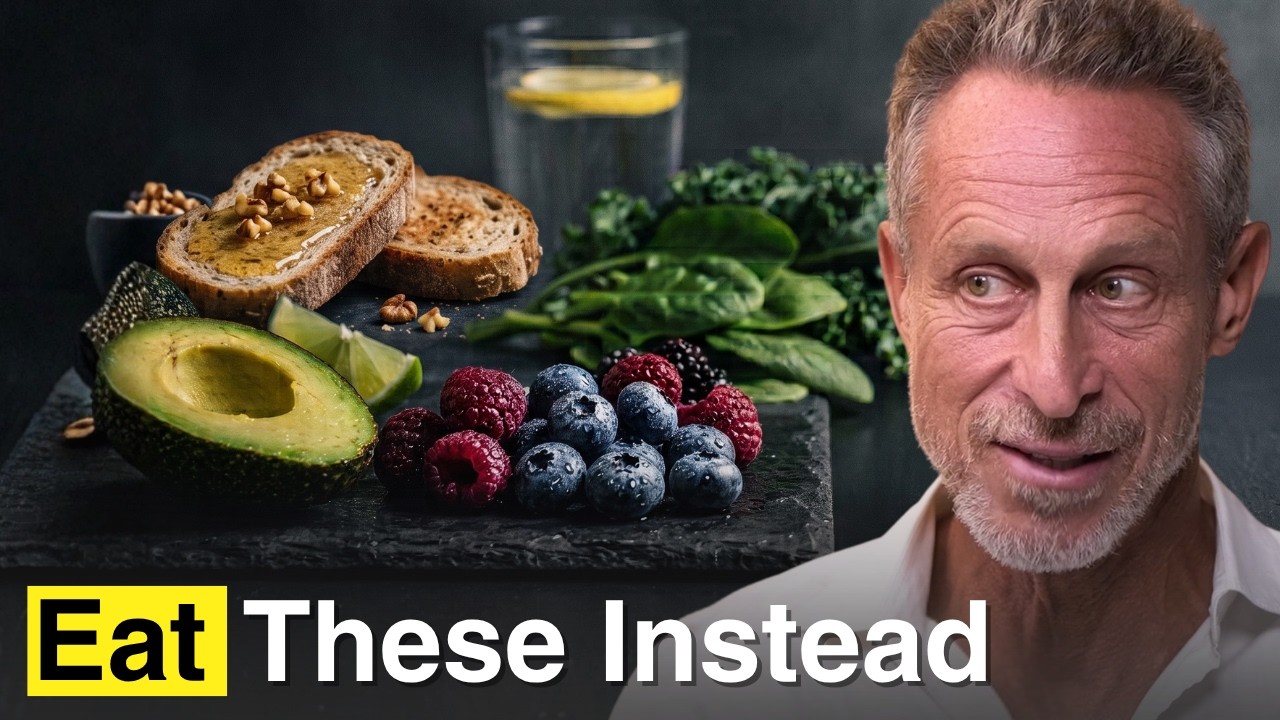
I often say when I go to the grocery stores, I go to my pharmacy. That's F-A-R-M-A-C-Y. And I think of literally as I go through the grocery store, and I can do this because this is what I've studied, is I literally look at all the food. I'm like, what does this do to my body? What does that do to my body? How's this affecting my immune system? How's this affecting my microbiome? What am I— so I literally can kind of go through and go, okay, I'm going to get some ginger because that's anti-inflammatory. I don't know, garlic is also antimicrobial, antiviral. I'm going to eat a lot of garlic. Or I'm going to have daikon radish, which helps detoxification. Or I'm going to eat more artichokes, which is a prebiotic fiber to help my microbiome. Or I'm going to buy some sauerkraut because that's also going to be great as a fermented food for my microbiome, or have some miso soup. But, you know, what typically I'll do is I'll make chicken soup with a whole chicken, but I'll put in a lot of ginger, a lot of garlic. I might even put astragalus in there, which is a kind of a Chinese herb. And you can buy these in the Chinese herbal store. They like to look like tongue depressors and they're big yellow things. And astragalus, we know, has a huge, huge effect on the immune system and improving immune response. I'll put in also like a lot of good root vegetables, a lot of minerals. So I'll put in like sweet potatoes, or I'll put in carrots, and I'll put in celery. And it just, it really helps to kind of create this incredibly nourishing, delicious soup. And I think, you know, the Chinese have thought about this for years. They thought about what are the ingredients that you need to eat. In order to be healthy. So I kind of go through the grocery store and I think about, you know, what do I need to do in phytochemicals? I want to eat a lot of phytochemicals from colorful plant foods. I want to have a lot of fiber. So I make sure they're fiber-rich vegetables. I make sure I have fermented foods, prebiotic foods, and a large diversity of foods to feed my microbiome. That I have foods that I know regulate, help immunity, whether it's astragalus or— that's more of an herb— or ginger or garlic. I'll do that. Curcumin is great also. You can make curries. That's another immune support and anti-inflammatory. So, there's a lot of things that I know that you can do, and I think it's not hard to make an immune shopping list.
This soup sounds amazing, so I'm going to have to get you to make it for me one day. So, we know when you're feeling sick, you're going to be working in the kitchen. That's what you're going to be cooking. Those are the foods you're going to be purchasing. What about supplements? I'm always told vitamin C, I need vitamin D, I need zinc. What specific supplements are you taking when you're starting to feel kind of these niggles, the sniffles, et cetera?
I mean, first of all, make sure your nutrient levels are optimized all the time so you won't get sick. Second is the most important is vitamin D. And I think you make sure you not just take vitamin D, but that you measure your vitamin D level because some people need 1,000 units to get their levels up. Some people need 10,000 units. So you can't know unless you test before and after. And vitamin D is probably the single most important immune-modulating nutrient that you can take. And probably 60 to 80% are insufficient or deficient in vitamin D. So it's an easy hack and it's cheap. It's pennies a day. You mentioned zinc, very important. Vitamin C, very important. There is some data on zinc lozenges helping in early cold. Vitamin C, you know, I think it doesn't— the data is kind of mixed on this, but it definitely is important for healthy immune function. And I think making sure that those nutrients are optimized is really key. Then there's obviously selenium. There's Also, the B vitamins that are very important in sort of methylation, which has a lot of effects on the immune function and health. So there's a lot of different pathways, but I think those vitamin D, zinc, and vitamin C are probably the most important.
And that's what's in your little travel pack that you mentioned before.
Yeah. My travel pack is vitamin D. And I put 50— I put basically I have 5 little packets of supplements and they're like my emergency pack. And I put in 50,000 of A, 50,000 of D. I put in something called Host Defense. I put it in an herbal formula that has a lot of different adaptogenic mushrooms. And I also put in some echinacea. I have that. And if I might even throw in vitamin C in there as well. And if I have those traveling with me and I start to feel something and I take it, I never, I never get sick.
I want to also talk about sleep because that's also something that is always mentioned when we are feeling kind of low and flat. So if I gave you a choice between the perfect supplement stack, like you just mentioned, and consistently getting enough sleep, what one would you pick?
Well, it depends. If you're very deficient in vitamin D, I'd probably say vitamin D.
Okay.
If you measured your vitamin D level and it was under 30, I'd be like, yeah, that's probably the most important thing you can do. Because if that's low, you could sleep all you want and it's not going to help.
Right.
With that said, I think sleep has a huge effect on immune function, And lack of sleep causes suppressed immunity, creates more inflammation in the body, dysregulates hormones, affects your appetite and sugar cravings, affects your ability to handle stress. And so it has many, many ways that it dysregulates your immune function. That's kind of how I think we need to think about sleep. It's really important. It's also free. But the vitamin D is also almost free. So it's pennies.
True. Okay. There's also been a theme in my life where I'll push through a really stressful experience or maybe chapter of my life and I get to the end, I can finally stop and chill out. And funny enough, I get sick. Why is this happening? Is it a real thing? Am I just thinking that or is this a real cycle that you've seen?
I mean, it's a common thing. I don't know if there's a randomized controlled trial on it, but I definitely have heard this phenomenon. I think it's real. And I think you sometimes maybe will just kind of push through something and feel quite activated, but then when you stop, your, your body just has a chance to kind of collapse. And I think, you know, you probably, you know, just have a weakened immune system at that point. And then when something shows up, you're more likely to get it.
So I'm like more vulnerable and susceptible, I guess, at those times. Yeah. What about exercise? We know exercise is so great for our overall health to support our immunity, but when we're not feeling well, Can too much exercise actually work against you?
Yeah, a little bit of exercise is actually good when you're sick. If you look at how it affects immune function, if you over-exercise in general, that'll cause more inflammation and more stress to the system. So, like doing ultramarathons or doing, you know, just crazy amounts of exercise, it's not more is better when it comes to exercise. It's just that sweet spot where you're activating your system, but you're not overdoing it. And if you do that, you will actually have an improved immunity, not a lower immunity. But if you overdo it, you're going to have a suppressed immune function.
So say specifically, I'm starting to feel like I'm getting a cold. Is there a specific type of exercise I should be doing or not doing in that time?
Take a walk. You know, if you're already biking or exercising or running, you can do that, but probably less, just a little bit less. But a little bit will help. And I typically exercise when I'm sick. Even, you know, even though your brain's like, I don't want to do anything, I try to do a little bit because I know it helps.
What about weight training?
Yeah, I don't know if there's a lot of data on weight training and the immune function, but I'm sure it helps. And, I think that if you want to strength train and you're feeling a little under the weather, it's okay. If you're really sick, obviously, you want to take it easy. Like, if you have the flu or if you're really, really sick. But, if you're a little sick, you can kind of get away with it.
I want to go back to kind of your protocol and your approach. So, we've talked about diet, we've talked about supplements. I want to know specifically what Dr. Mark Hyman is doing when he's waking up with a scratchy throat, maybe a bit of a headache in that first 24-hour period. Can you share with me your protocol? What are you eating? What exercise, et cetera?
Yeah. First, first thing I do is I take my little supplement stack and this is not something I'm recommending to people, but I will, I have access to peptides that are high quality and I will use thymosin alpha-1 and LL-37, which are immune and antimicrobial peptides. I don't think this is ready for prime time. I'm not suggesting people do it. I'm just sharing what I do because I'm willing to take a little bit more risk and I can tell you it really, it really helps. I also make sure I prioritize sleep. I make sure I do a sauna. I probably don't do cold plunges, but I'll do a sauna or a steam. I'll try to get a massage. I'll try to just rest a little more. Obviously eat really healthy. I'll make my special chicken soup if I'm in a place where I can cook, which is really amazing. I think the ginger and garlic really help. And some of these herbs I put in there are really great. And that really helps kind of me feel better. And there's also A trick that I use, which is a little bit intense, but I'll share it with you. It's not for everybody, but I take garlic and I crush it with a garlic crusher and maybe a clove or 2 and put it in the bottom of like a, maybe a 16-ounce cup. And then I'll put in sliced ginger into boiling water and I'll boil it. Like I really boil the ginger for quite a long time and get the ginger into the water. And then I'll put honey, lemon, and I'll put red pepper flakes, like hot pepper, into the glass or the cup. So it's basically garlic, it's ginger water, it's red peppers, honey, lemon. And then I let it sort of pour the boiling water on there. I let it steep for a couple of minutes and then I drink it. It makes your breath taste horrible, but it's really quite amazing. It'll help a lot with symptoms. It's quite a good little trick. Uh, it's, but it's intense to drink. It's like, it's hot, spicy. It's like, it's intense, but I like it.
You hope you have no in-person meetings that day as well.
I know, exactly.
Okay. What about, um, vaccines? We can't talk about cold and flu season without vaccines. Where do they fit into the equation?
Well, I mean, there's no cold vaccine. There's the flu vaccine and the flu vaccine, you know, when I was in medical school and when I was in training, It was quite interesting. And it was recommended only to people who were kids who had some kind of problem, whether it was asthma or lung disease or some developmental issue, or people with diabetes or heart failure or some chronic disease, or if you're over 65. So it wasn't recommended for everybody. Now they recommend it from 6 months to 106. You know, like it's just, it's quite incredible. I think it doesn't work that well. You know, it can work only about 50% of the time. It depends on the flu vaccine, the flu season, the virus. So, it can help reduce the severity and it can be helpful. But, if you do all these other things, knock wood, I don't think I've ever gotten the flu. Like, I don't ever remember having the flu.
Wow.
And, I personally don't take the flu vaccine because I do all these other things to regulate my immune system. And I think, you know, that's my personal choice. I do recommend the flu vaccine for some people who are more sick or have lung diseases or heart failure or diabetes or, you know, who just are more at risk if they get sick. But I don't think it's necessary for everybody. And I know this is going against the grain, but this is my personal opinion. And, you know, when you look at the literature, it's kind of Iffy on the vaccines. I also, if you're getting a vaccine, a flu vaccine, make sure you ask for a single-dose vial because the multi-dose vial, which means they just basically have a big bottle and they keep drawing out for multiple people, they won't, obviously sterilize the best they can, but it's not that it's a risk of infection, but they use mercury in the form of ethylmercury or thimerosal as a preservative. So, you're getting mercury injected. And if you're doing this every year, you're getting mercury every year. And there's been some signals around this, around particularly like Alzheimer's in some studies. So, I don't— it's not proven yet, but there's— it's just, I wouldn't take the mercury if you don't need it.
To close out, I have 2 rapid-fire questions for you. The first one is, should I starve a fever?
No, I don't think so. You want to get hydrated. You want to have chicken soup. You need nutrients. Like, obviously, stuff that's highly digestible, but I would say you, you probably wanna eat.
The last question I have for you is, what is the single most underrated thing people can do during cold and flu season?
Make sure you get enough sleep. Just make sure you get enough sleep and take your vitamin D.
Amazing. Well, thank you, Mark. I feel like I'm a lot more equipped as I enter cold and flu season. I appreciate it.
My pleasure. If you love that last video, you're gonna love the next one.
Check it out here.
More from AI




This Is Why 99% of Skin Conditions Don't Heal — And What Dermatologists Won't Tell You





Why you need to start strength training today #strengthtraining #healthyaging #fitness