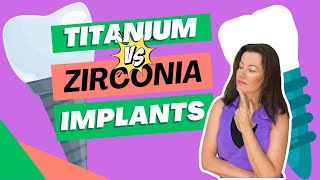
A short YouTube presentation by Dr. Sanda Moldovan explaining and comparing titanium and zirconia dental implants. Covers titanium's long clinical history and osseointegration, common uses (teeth, hips, knees, spinal hardware), and zirconia (zirconium oxide) as a metal-oxide ceramic alternative for patients wanting metal-free options. Notes that titanium implants have been used since the 1960s; zirconia implants have existed for roughly 20+ years with a specific zirconia implant available in the U.S. since 2007. Discusses differences in placement technique, cost (zirconia more expensive), one-piece design of many zirconia implants, and higher fracture risk for zirconia in heavy clenchers/bruxers.
Questions this video answers
Since the 1960s.
About 20+ years (speaker: "probably for a little over 20 years").
2007.
Zirconium oxide (commonly called zirconia).
Many zirconia implants are one-piece designs with the abutment integrated and the crown cemented over the top.
Chapters
Hi, everyone. I'm Dr. Sandha. I wanted to talk to you about dental implants. Today, dental implants are the best way to replace missing teeth. And let's face it, we do need all our teeth in order to process our foods properly. The chewing capacity really contributes to our nutritional value. So what kind of dental implants do we have? We have titanium dental implants, which have been around since the 1960s. So here's an example on this side of a titanium dental implant, and you can see it's gray in color. And titanium is one of the most abundant metals on earth, and it has a low grade of electrical conductivity. This is probably one of the reasons why the cells of the bone love the titanium and attach onto it very, very tightly. We call this osseointegration. Other metals have been tried for dental implants, but none of them worked because the cells did not like any other metals. So titanium is being used today not only in replacing missing teeth, but also replacing hips, replacing knees for spinal fusion, for pins and screws, all kinds of things in order to make our life easier and live longer, essentially. On the right side, I have an example of a zirconia dental implant. So zirconia dental implants are made out of a ceramic. Some people will say, no, they're actually metal. But zirconium is a metal. Zirconium oxide is a ceramic. So zirconium oxide, which is actually called zirconia, is what a ceramic dental implant is made out of. Some people can be allergic to titanium, although very rare, and they do prefer to have no metals in their body. So for them, we actually have the zirconia dental implants. Zirconia dental implants have been around probably for a little over 20 years, and we do have quite a bit of studies on them. This particular dental implant has been in United States since 2007, and it is very comparable to a titanium dental implant. However, it does take typically more care when placing a zirconia dental implant. And they are more expensive than a titanium dental implant because of the manufacturing and the different surgical techniques that we use in placing them. So a zirconia dental implant actually comes as one piece. So one piece dental implant gets placed in with the abutment or the top part attached to it, and then a crown gets cemented right over the top. One of the biggest risks with zirconia dental implant is the risk of fracture. Although the newer dental implants made out of zirconia have less of a chance of fracture than in the past. However, if somebody has very strong muscles of mastication or very strong like Bruxers clenchers, zirconia dental implants have more fracture rates than the titanium ones, so it might not be a good option for everyone. There's more and more advancements in zirconia dental implants, so I will bring those to you as soon as they become available, but until then, discuss it with your doctor which one is best for you and make sure you choose the right one for your lifestyle. Have a great day and see you next time.