Dr. Singh, MD explains how to identify which stress stage you're in—alarm, adaptation, or exhaustion—to choose the right recovery strategy. Over 70% of teens use alcohol or drugs to cope with stress. One person spent a decade dealing with constant car noise, which triggered chronic overwhelm and made social media's negative feedback hit harder.
If you are suffering from stress, you need to know what stage of stress you are in to help you the best. Do you know what adaptations are? Do you know how these adaptations help different stages of stress? Let's dive into this power-packed, short and sweet video about this.
Well, there was a solid decade where there were 5 or 6 cars minimum and easily up to 15 or 20 on the weekends outside of my house at all times. And looking back on that, I really feel the stress of it.
Social media caused you to get depressed?
I think it definitely was a bit of a catalyst. You see 10 great comments and you ignore them, but one negative comment and it just like throws you off. The reality star says she's always struggled with anxiety and hypochondria. Jenner says the past year has been especially hard.
More than 70% of teens say they turn to drinks or drugs to feel more relaxed. Other reasons given include coping with stress and dealing with depression.
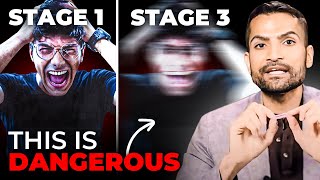
Imagine a tiger chasing a deer in the wild. The deer, in its flight mode, has its stress hormones skyrocketing, but the moment the chase is over, it goes back to grazing grazing grass as if nothing happened, with no lingering stress. Now consider this rubber band. Now, like the deer, the rubber band stretches under pressure but returns to its original state once the tension is released, unaffected by stress it just experienced. However, humans are different. Many of us continue to perceive threats in the form of daily challenges like financial concerns, family demands, deadlines, assignments, social media negativity, and so on, keeping us in an endless state of stress. So unlike the rubber band, our stress doesn't go away, and we risk breaking it. Okay, so what are the stages of stress? So stage 1 is the alarm stage. Now this stage represents people who are always on the go, the go-getters. You know, they are hot-blooded, revved-up individuals. Now interestingly, many of them don't even show any health symptoms even though they are under stress. But if you check their blood, you will find that stress hormones are high. Now, if we don't do anything at this stage, we are bound to go into stage 2. Now, this is where the body tries to adapt to raised stress hormones. Okay, so cortisol is high. DHEA— okay, you know, very important hormone, DHEA. This is a precursor hormone to our sex hormones. So when DHEA is low, it also leads to decrease of our sex hormones. It's like our hormone factory is increasingly working towards meeting the needs for higher cortisol manufacturing and sort of puts this DHEA manufacturing on the back burner because the body is in survival mode. It's in fight or flight mode. So these are the people who start feeling symptoms of burnout. They are stressed. They are having mood swings, anxiety attacks, you know, and they start seeing whole bunch of health effects of this stress. If you don't get help at this stage, the second stage, okay, you are bound to enter into stage 3. Now this is the stage of exhaustion. Now here the body starts giving up. It's like, you know, this rubber band analogy again, you know, uh You know, stage 2 was when it was stretched for a long period of time that it started to break. But stage 3 is when it actually breaks. Okay, so in stage 3, cortisol levels are running low, DHEA is low. These are the people who manifest, you know, signs of adrenal insufficiency— depression, exhaustion, fatigued, tired all the time, no energy. Now if you were to draw this on a graph, this is how it will look. So on the left side you have stress resistance, which represents our resistance towards stress, or the ability of the rubber band to stretch. Okay, that is how strong this rubber band is. Now the bottom axis represents time. As the time passes, in stage 1 the rubber band is pretty elastic, pretty flexible. But as the resistance persists, we enter Stage 2, where the rubber band is consistently stretched, and eventually it gives up and breaks. This is Stage 3, the stage of exhaustion. Now, it is important to identify what stage of stress you are in if you are experiencing stress symptoms, which in the present world is not such a hard thing to find. Unfortunately, there is increasing amount of evidence and research literature towards the role of adaptogens. Adaptogens in terms of helping people fight against stress. So what are adaptogens? Adaptogens are medicinal plants that help you fight against stress. They don't magically make stress disappear, okay? They just enable you or make your body systems strong to fight against stress. But here's my disclaimer: before starting any supplements, talk to your doctor. As these supplements could have potential interactions with the medicines you are already taking. And if you have certain health conditions, you need to be careful, there could be some contraindications and so on. So my idea of talking about the adaptogens is purely educational here. Now, based on plenty of research, there are different adaptogens identified for different stages of stress. Like for stage 1, adaptogens like ashwagandha, Holy basil, L-theanine, 5-hydroxytryptophan, shishandra, valerian root— they have a good literature support. For stage 2, adaptogens such as ashwagandha, rhodiola, cordyceps, Siberian ginseng, and St. John's wort, and phosphatidylserine— they are, they are very well supported by research. And for stage 3, adaptogens like ashwagandha, cordyceps, rhodiola, Asian Ginseng and Licorice have good literature support. I want you to notice a common pattern here. Look at Ashwagandha, for example. It has studies showing benefits in all these stages of stress. It's an amazing adaptogen. So similarly, Cordyceps, it's effective in stage 2 and stage 3. I mean, Ashwagandha is my favorite. I mean, I have taken it. It's amazing, amazing adaptogen. So in a nutshell, if you or someone you love is experiencing stress symptoms, do something about it. Don't just sit idle. See a good integrative medicine doctor who can run blood tests, saliva tests, and check what stage of stress someone is in and get help. And that's it for now. Signing off. Stay healthy, stay informed with the right information, not misinformation. Information. Because remember, the peak of your health is your true wealth.