What is Functional Medicine? Best Explanation
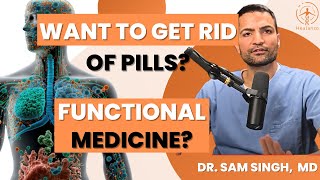
Dr. Sam Singh explains functional medicine's four core principles: root-cause analysis, epigenetics, personalized treatment, and upstream signal modulation. It treats the body as an integrated system, examining the proteome, metabolome, and microbiome rather than chasing isolated symptoms with multiple pills.
Chapters
So functional medicine is based on 4 core principles: root cause analysis, epigenetics, personalized treatment plans, and it acts very upstream. Your DNA sequence doesn't change. Genes are set to music, and epigenetics can adjust the tune without changing the lyrics. These epigenetic changes are often reversible. It dives deep into the layers of your physiology, examining your proteome, your metabolome, and your microbiome. It's about understanding your body at a molecular level. Proteins, the metabolites, the, the tiny microbes that play such a huge role in your health. Again, upstream signal modulation, a real game changer. It really sets functional medicine apart from conventional medicine. So I am Dr. Sam Singh, a medical doctor, American Board certified in internal medicine and obesity medicine. You know, uh, the 21st century is a time of transformation, and we are witnessing the transformation in healthcare unfold right before our eyes. The challenge we face with the current healthcare model is the unprecedented increase in chronic diseases, and it seems like the conventional approach of addressing this challenge is increasingly appearing limited. That's why there's a massive increase in people seeking answers beyond conventional medicine. There's a growing interest in holistic health, integrative medicine, and functional medicine is part of this wave. So traditional healthcare has struggled to move beyond symptom management, and it's here that other healthcare concepts like functional medicine step in to bridge the gap. But what exactly is functional medicine, and how does it differ from the traditional approach? So functional medicine is based on 4 core principles: root cause analysis, epigenetics, personalized treatment plans, and it acts very upstream. Let's take a deeper dive at each one of them. First up, let's talk about root cause analysis. This is where functional medicine really stands out. It's like, uh, being a health detective, going beyond just treating symptoms. It goes deep into layer after layer to find out what's really causing the health issues. It's not just, um, about what you are experiencing, but why you are experiencing it. So next is epigenetics. A truly fascinating aspect of functional medicine. So epigenetics is all about how our behaviors and environments can alter how our genes operate. Imagine this: your DNA sequence doesn't change, but the way your body interprets the sequence can. That's the power of epigenetics. It's like your genes are set to music, and epigenetics can adjust the tune without changing the lyrics. And what's really exciting is that these epigenetic These changes are often reversible. This means that the choices we make, the environments we are in, really do matter. In functional medicine, basically we use this knowledge and basically tells us that our lifestyle, diet, stress levels, they don't just affect us superficially, but they can actually change the way our body works on a genetic level. Pretty amazing, right? Thirdly, let's talk about the personalized approach in functional medicine. It's a core principle because, well, every one of us is unique, right? How about our path to health? It's just as unique as you are. This is where functional medicine really shines. It's not about a one-size-fits-all solution. Nope, it's much more tailored than that. It dives deep into the layers of your physiology, examining your proteome, your metabolome, and your microbiome. It's about understanding your body at a molecular level. You know, the, the proteins, the metabolites, the, the tiny microbes that play such a huge role in your health. By looking at all these aspects, we create treatment plans that are as unique as your DNA. This personalized approach ensures that the treatment plan is very specific and your health journey is as unique as your DNA is. Lastly, let's talk about upstream signal modulation. Again, upstream signal modulation, a real game changer. It really sets functional medicine apart from conventional medicine. You see, in conventional medicine, we often focus on downstream approach. Let me give you an example. Imagine an iceberg. What we see above the water is just a small part. This is like treating the symptoms of a disease. We are only seeing and addressing what's visible. But there's so much, there's so much beneath the surface. Our bodies are incredibly complex, guys. Every second, just think about it. There are 37 billion trillion biochemical reactions are happening. And these reactions are like an intricate dance, you know. And when something goes wrong, it manifests as diseases. Maybe it's high blood pressure, arthritis, gut issues, autoimmune disorders, or something like cancer. In conventional treatment, we often stop at treating these symptoms. It's like we are just addressing the tip of the iceberg. But here's where functional medicine takes a different path. It goes upstream. Instead of just treating symptoms, we ask, why did these symptoms occur? What triggered them? It's like diving below the surface of the iceberg to understand the real root causes of these health issues. You know, by looking upstream, we can do so much more. We can find, address the triggers, and we can correct those imbalances. This could be inflammation, this could be hormonal imbalances, food triggers, food sensitivities. List goes on and on. I really want to talk about what's happening in the healthcare presently. Many folks are feeling kind of frustrated with how things are done. It's like when you have a bunch of chronic issues, the usual answer seems to be more and more pills. Okay, each pill for a different problem, one for your blood pressure, another for cholesterol, and so on. But this way of doing things, just tackling each symptom separately, doesn't really get to the bottom of what's making us sick. Okay, in my opinion. Well, imagine someone in their 50s dealing with all sorts of health issues, high blood pressure, high cholesterol, diabetes, asthma, heartburn, you name it. They're likely taking a whole bunch of different meds. And when things don't get better, they're sent from one specialist to another, each looking at just one part of the problem. But here's a thought: what if the real answer isn't in breaking down our health into pieces, but in seeing everything as connected? What if we started treating our bodies as one whole system instead of just focusing on individual parts? Okay. So this is what we mean by functional medicine. And just to be clear, I'm very much rooted in conventional medicine, and I'm not against conventional medicine, and that's where I understand its limitations. So I am Dr. Sam Singh, a medical doctor, American Board certified in internal medicine and obesity medicine. My experience spans over a decade. I'm also trained in functional medicine, which is not just my profession but my life's mission and passion. Okay, my approach to healthcare is deeply rooted in my belief that functional medicine should be an essential companion to conventional medicine. I am dedicated to bring forward this purest form of functional medicine, one that is evidence-based, research-oriented, and integrates seamlessly with conventional treatments. This isn't about replacing traditional methods, okay, but rather enhancing them. Providing a comprehensive and synergistic approach to healthcare. Thank you for joining me today. Signing off, I am your host and health advocate, Dr. Sam Singh. See you soon with more videos. Please don't forget to like, share, and comment. Your feedback is invaluable. I would love to hear about the topics you want me to cover next. Until next time, goodbye, and remember to take care of your health. The peak of your health is your true wealth. Stay well and stay informed.