Dylan Andersen discusses why Fujifilm's GFX medium-format system is attracting hobbyists, not just pros. Eighty percent of GFX owners are now amateurs, driven by price drops like the $500 GF 35-70mm lens. He argues no other system matches GFX's image quality and color, and recommends starting with a discounted GFX50R body and that affordable lens.
Chapters
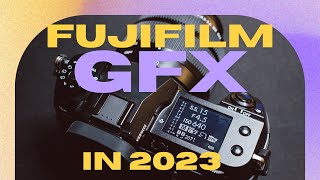
All right, back at CP 2023 DP review and may they rest in peace. They got together with Fujifilm and the managers, especially Jun Watanabe, and talked about Fujifilm X series gfx, all things Fujifilm. One of the most interesting parts of that conversation in my opinion was the GFX part. I am by no means a professional GFX photographer. I have used it on paid shoots, but I certainly don't use it in the way that a lot of professional landscape photographers use it. But if you've watched this channel before, I love my channel GFX camera. I think it's the best image quality you can get on any camera in the market today. But I think one of the most interesting things that came out of that conversation was DP review, referring back to 2020, about three years ago when Fujifilm and the manager said that 80% of the people who have purchased into and are using the GFX system are considered amateurs. Those are people who may not be getting paid for their work or folks like me that aren't doing it every day professionally. I have a day job, right? This is all kind of a hobby, pro level hobby for me if you will. And 20% of people are working professionals. So how that number breaks down I'm not quite sure. But it was really fascinating the response they gave. They said basically yes, their numbers are showing that. It's showing that hobbyists are entering the system quicker than ever. Hobbyists are enjoying the system more than ever and GFX is seemingly becoming a really, really important part of modern day photography. I think that's fascinating, right? I think Fujifilm now with the GFX50R kind of being discontinued and hitting really low price points. The 35 to 70 right being 500 bucks, an incredible lens on a medium format digital camera. You can buy into this system really cheap considering. But I think people that are looking for ultimate image quality are coming to GFX and I think that's a really interesting thing. And I wanted to talk about that in today's video. Alright, so I'm hanging out with these branches just to interrupt real quick and say I would really appreciate if you could subscribe like to the video. Trying to grow this channel and hit 1000 subscribers. I'm still about 250 away but it's been a fun journey doing this as a hobby and I have a lot of fun interacting with you guys. So let's have a conversation, let's talk in the comments. But for now back to the video. So when I go back and look at my own Fujifilm experience, especially on the GFX. I entered the system with the 50s II. I've now purchased several lenses. I've got the 35 70, the 50mm 3.5 pancake. I recently picked up the 63mm F2.8, which I'll be making a video about on this channel shortly. I also have the 80 millimeter F1.7 and there was a time that I had the 45, 100 F4. I loved that lens. The only reason I returned it was because it was just too big for my kit. I think the GFX system, while it has limitations, I think it's also the most exciting system on the market, right? You look at Canon, you look at Nikon, you even look at what I'm filming on the XH2s. It's not that exciting, right? It's not the most incredible system in the world. These systems are great. The lens selection is awesome. Look at the Sony line, look at the A7R V, look at the A7IV. There are incredible pieces of camera out there in glass, but nothing hits quite like a gfx. If you look at any of the GFX stuff out there from any person, whether they're a photographer, videographer, they're a professional, they're an amateur, a hobbyist, everybody seemingly 100% agrees. The image quality just can't be beat. There's something special about these medium format cameras, the lenses and the images that they produce. But I think at the end of the day, one of the most exciting things about the GFX that we should be interested about is that Fujifilm knows that it's not just landscape photographers or studio photographers purchasing the equipment. They're starting to make lenses like the 35, 70 and other upcoming lenses like the 51.7 that are really for folks that are looking for a bigger jump in image quality. Some things aside with price and some things with availability, I think what's coming this year and next year from Fujifilm in the GFX line is certainly exciting. I want to end this video with just some of my most recent shots that I've taken with my GF63 millimeter, which again I'll be making a video on shortly. But I love this lens. I'm so excited for the future of gfx. I think Fujifilm just can't do any wrong right now. And I know that makes me sound like a fanboy, but I think at the end of the day, if you're a user of Fujifilm, you've experienced the colors, you've experienced the cameras, the lenses, the. The overall software experience. Yeah, it's not perfect, but it hits harder than any other brand out there. I think that's why there's folks on YouTube that continually switch to Fujifilm. The X100V has gone viral for other reasons, but I think ultimately this system is really exciting. Where does that leave us? Well, if you're interested in medium format, my suggestion is go get a 50R. They're discontinued, they're super cheap. They're incredible. And incredible cameras get a 35 to 70 to start, then maybe jump into a 45 millimeter 2.8. And then if you're really feeling crazy, the 100 to 200 is also exciting. So do that, don't do that. It doesn't matter. But if you're looking for the ultimate image quality in a camera, in a lens in 2023, there's nothing quite like the GFX. So here's some photos. Thanks for watching. Appreciate it. Just wanted to kind of throw this out there because again, I think Fujifilm's comments are really, really interesting and it can tell us a little bit about what's to come. See you next.