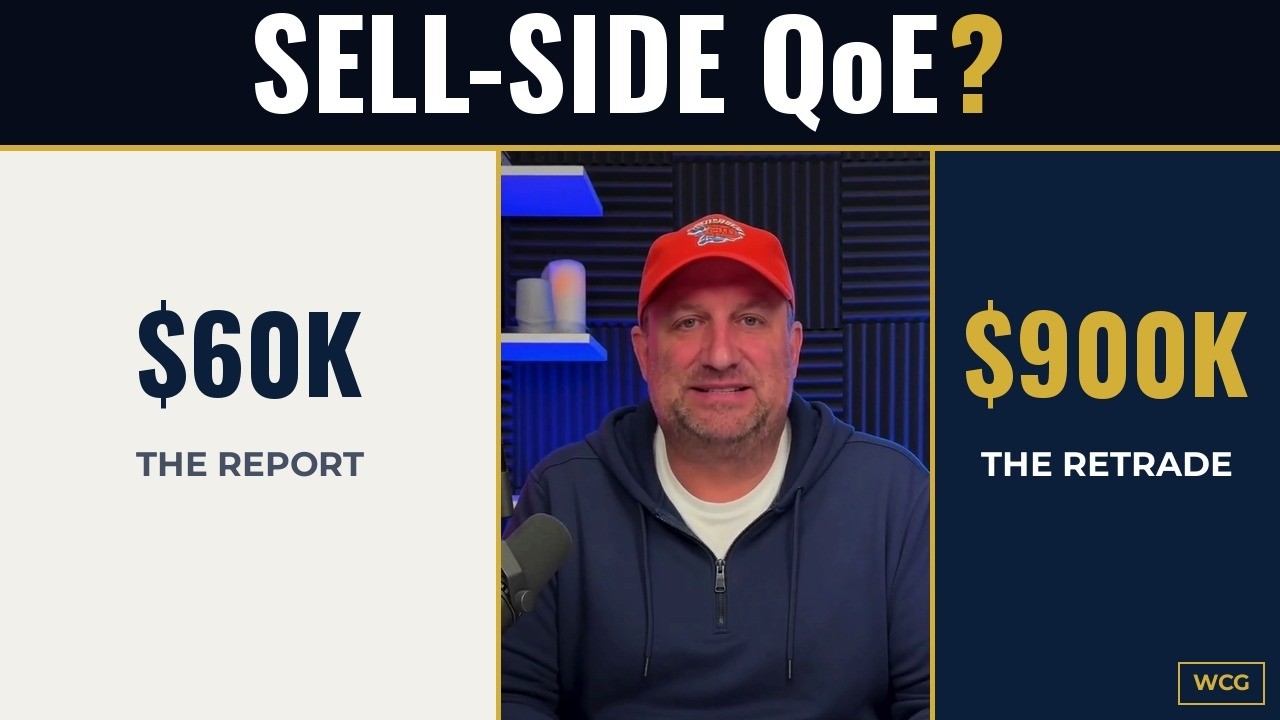
Ed Weeks explains how founders unknowingly signal they've checked out by taking a vacation after selling, which tanks earnout payments and rollover equity. A dentist earning 97 cents per dollar of production drops to 60 cents after a DSO acquisition. The real deal price is cash at close, not the headline number.
Chapters
A guy I work with bought 10 companies. He let every owner stay, and every single one of them gave himself away the exact same way. A vacation, not a fight, not a bad quarter, a vacation. And the second I understood why, I started seeing it everywhere. Let me set the table. This buyer is not the villain you are picturing. He is not the spreadsheet ghoul who flies in, fires half the staff, and renames everything. He bought 10 companies in the same space and rolled them up into one platform. And here is the part nobody believes. He kept the owners. Every one of them stayed on to run their own shop. Same desk, same team, same customers. He told them more or less, you built this, you know it better than I ever will, keep driving. And he meant it. For about a year, it worked. Then the pattern started. Here is what he noticed. Every founder sooner or later took the vacation. Not a long weekend, a real one. 2 weeks off the grid. No calls, no quick questions, no logging in just to check. And the business ran fine without them. Now to the founder, that vacation feels like a reward. I finally built something that doesn't need me. To the buyer, it was a signal flare. Because the day a founder can disappear for 2 weeks and nothing breaks is the day that founder is done emotionally. They already left. The body shows up, the fire doesn't. He had a word for it. He'd see the calendar request come through and just say, yeah, he's cooked. And he was right every single time. So why does this matter to him in dollars? Because of how the deals were structured. He didn't pay all cash up front. Almost nobody smart does. He paid some cash at close and then tied the rest to 2 things: an earnout and a rollover. Earnout means part of the price gets paid later only if the business hits its numbers. Rollover means the The seller takes a chunk of their proceeds and rolls it back into equity in the bigger platform. On paper, the owner still owns a slice of the thing they built. Often, that rollover is something like 21% of the deal value left on the table, riding on future performance. So picture this: the founder's on a beach, cooked, coasting, and his own earnout and his own rollover are quietly bleeding out behind him. The structure that was supposed to reward him for staying hungry is now punishing him for checking out. He doesn't feel it yet. The buyer already does. Now let me show you the version of this that goes sideways because the structure cuts both ways. There is a whole world of dental roll-ups. DSOs, dental service organizations. Same playbook, buy the practice, keep the dentist. Here is the trap I have watched play out. A dentist owns his practice. He's the owner. When he produces the work, he effectively keeps something close to 97 cents on every dollar of his own production after the practice covers its costs. He is the house. Then he sells to the DSO. Big check, feels great, and now he is an employee in his own building. His new comp on production? Closer to 60%. The DSO keeps the rest because the DSO now owns the practice. Same chair, same hands, same patients. He went from 97 to 60 on the work he was already doing, and he signed a multi-year contract to do it. That gap, that 97 down to 60, is the cost of not understanding the structure before you sign. Nobody hid it from him. He just didn't read the trap. So, let's draw the actual trap, because once you see it, you can't unsee it. Step 1, you sell. Step 2, you agree to stay on, which feels generous and safe. Step 3, you slowly lose real control, because it is not your company anymore, it is theirs, you just work there. Step 4, with control gone, the motivation goes. That's the vacation. Step 5, motivation gone means the numbers slip, which means you miss the earnout. And step 6, you walk away with a fraction of what the headline number said. The headline price was never the real price. The structure was the real price, and the structure assumes you stay cooked, hungry, and in the chair for years. The buyer is not betting on your business. He is betting on your stamina. The vacation tells him he's about to win that bet. Here's the human part nobody puts in the pitch deck. I talk to these founders all the time, and when a deal falls apart, it is almost never about the money. It's about this. I had an owner tell me flat out, Ed, I am not reporting to some 28-year-old kid with a spreadsheet who has never made a payroll in his life. That's the real deal killer. These are people who built something with their name on the door. The thing they cannot stomach is becoming an employee in their own house, taking notes from a young associate whose only job is to ask why margins dipped in Q3. So if you are buying, understand that. And if you are selling, understand it about yourself. The vacation is not laziness. It's grief. It's a founder mourning the company that stopped being his the day he signed. The smart move is to see that coming before the ink dries, not after. So here's your homework, and it's the same whether you're buying or selling. 1. Separate the headline price from the real price. Cash at close is the only number that is actually yours. Everything past that is a maybe. Treat the earnout and the rollover as a bonus you might never see, and ask if the cash alone is a deal you'd take. Two, read the control terms harder than you read the price. Who approves spending? Who can you hire and fire? Who do you answer to? Find that out before you fall in love with the number. Three, be honest about your own stamina. If you are selling to get out, do not sign a four-year earnout that needs you at full throttle. And if you're buying, don't pay for a a founder's energy you can already tell is running out. That's it. Price, control, stamina. Get those 3 right and you avoid almost every bad outcome I've watched. If you want the longer breakdown of this one, I wrote it up in this week's newsletter, The Vacation Was the Tell. It's free. Links in the description and pinned in the first comment. And if you're actually sitting on one of these decisions, buying or selling, I put together a paid playbook that walks the whole structure. Earnouts, rollovers, control terms, the exact questions to ask before you sign. Links down there too. I'll leave you with the line I keep coming back to. The headline price is the story they tell you. The structure is the story you live in. Read the structure. Fuck it, press on. I'll see you in the next one.