3 Steps To Strong Mobile Hips. Avoid Hip Surgery!
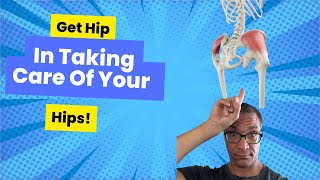
Akim Aseau, owner of Soul Core Fitness, explains why hip replacement isn't inevitable. Hips fail from three things: excessive load, poor balance, and time wearing down cartilage layers. He maps the key stabilizer muscles and proposes a whole-body program with targeted glute medius work to rebuild strength and avoid surgery.
Chapters
It seems to me that people just expect to end up getting hip surgery, to have hip replacement. They usually go through the process of like not feeling anything, to feeling a little bit, to getting some sort of 10 pack of pet and taking some pain meds and anti inflammatories to eventually cortisone shots, to eventually hip replacement. And I think that's a fix. But hip replacements aren't a fix. They're not real. Right. They don't have an exponential life. They have a finite life, 15, maybe 20 years. And if you're young enough, you have to do it again. But it doesn't have to be that way. Your hips can be strong and mobile for your whole life if you're proactive and take care of them and if you have the right program. So just stay tuned while I talk about that. Greetings. I'm Akim Aseau. I own Soul Core Fitness. I've been in this hillfit fitness field for like 30 years. So I started as a personal trainer, but then over time through my studies, I became a summer therapist and soma trainer, which is kind of like a physical therapist, but more. It's all under the osteopathic model where we say structure dictates function. And once my eyes were open up to this osteopathic, holistic way of viewing the body, I realize the potential that we could do for ourselves to be our own best therapist and trainer. We can take care of ourselves to not only dramatically negate instances of injuries or dysfunction or pain or mobility, but but to also take the same framework and propel our bodies into more strength, more mobility to the level that whatever you want, but still keeping your body in a functional way. So I like to talk about things like this on this channel in an integrated, holistic, specific way. And so if you want to hear more about that, then subscribe to the channel and hit that bell. If you liked the video, please give it a thumbs up and share with your friends. It will tell the YouTube gods that this is a good video. This is a good channel. Please share with more people who would be interested. I usually do a video about once a week and stay tuned. Your hips get a lot of load, a lot of forces in it, just in regular life, just standing, walking around, sitting down, standing up, just basic stuff. You get a lot of load in your body, you get a lot of wear and tear and those hips take a lot of it because they have to move you around right the end part of your legs. But very few people proactively take care of their body. They'll usually wait till they feel a lot of pain. And now it's probably too late. And now they have to get surgery. Hip Replacement Surgery. 544,000 people per year get hip replacement surgery. That's crazy. That's definitely a choice, but that's not the only choice. You can avoid the hip replacement surgery and also keep your hips really strong and mobile if you're proactive and if you use the right program. So you got three factors to lead that leads to having weak, immobile hips that can eventually lead to the surgery I just talked about. You have total load on your body is one factor. How balanced your body is is a second factor. And then just time is a third factor. So we'll start with load. Load just means the forces going through your body. Like you're always having forces through your body, but your body should be able to handle it in terms of your hip. I want to talk about an equation called Powell's balance. I'm going to put the image up here so you can see there's an image, there's an equation that says how strong my hip muscle needs to be relative to the force of my legs and my body weight. If you use this equation with walking, and I'm an average sized person, whenever I walk, I step, I'm unipaudal, which means I end up being one leg, right? I have those forces going through that leg. Those forces equal, If I do 10,000 steps, tons of force. So now if I'm walking average sized, I give several tons of force through my body. So that's a load. You always have that load going through your body. Now in terms of the hip, you want to be aware of the cartilage. So I've got that force going through my body and I have cartilage. So all cartilage of your body has four levels. To keep it easy for you, you can say the outer layer is the adult layer, right? Below that is the teenage layer. Below that is the kid layer. Below that is the baby layer. Then you have a natural process in your body of using that cartilage. So normally, just naturally as the adult cartilage works, and then the ones below mature, they push off the adult cartilage to where it switches. Now, the teenager became the adult, the kid became the teenager, the baby became the kid, and new baby cartilage was born. Aww. That's the natural process, right? That's what happens. But now if I don't have a good hip because of being out balanced or because of different factors. Then that cartilage starts to rub, right? So now my hip becomes compacted because I haven't proactively done anything to keep it decoacted and balance. And it starts to rub. Now it screws up that process I just talked about. Now those loads that are going through your body is starting to have the hip rub, okay? That's your thigh bone, that's your hip bone. That's a capsule here. That should be some space. There's no space. Now it's rubbing. Now that adult cartilage, which should go off naturally, is being scraped off. And now the teenage cartilage that comes up has to do the adult's job. But there's two problems there. One, a teenager can't do the job of an adult, right? So now it's not as functional cartilage. Two, that teenage cartilage, which should have been the nice teenager down the street, is now the teenager across the tracks, because now it's all anarchic production. Right? Now it's not smooth anymore. Now it's bumpy. And now when it moves with no space, now it's not smooth, it's bumping and grinding. Then over time, you extrapolate that and you get lower and lower. Now the teenager gets rubbed off by rubbing, and now the kid cartilage needs to do the job, and then eventually the baby cartilage needs to do the job. And truthfully, by then, you need surgery. That process of being rubbed and being anarchic production is basically like forming a callus. It's arthritis, right? So arthritis is just extra production of bone cartilage because it's rubbing. But unlike the cartilage in your hand, that extra bone production, or in this case, cartilage production, screws up the movement, so the movement becomes even worse. So now it speeds up the process of that degeneration process that I just talked about of the adult teenager, kid, and baby. This system is simply called class and blast. And all your tissue in your body goes through it, right? So in this case, it's chondroclast and chondroblast. But you have osteoclasts, osteoblast, fibroblasts, fibroclasts. It's in your body. It happens naturally if you allow your body to do it. And this whole example was based on being of normal weight. If you're overweight, then those forces are exponentially multiplied, and then the damage I just talked about is exponentially expediated. Are you looking for ways to keep your hips strong? And mobile. Let me know in the comments and then stay tuned for the other two factors that lead to weak and immobile hips and some opportunities for you. Second factor is being balanced. Now when I say balanced, I don't mean that you can stand in one leg and rub your, rub your stomach and pat your head. Although I'm pretty impressed with myself for doing that. What I mean by is, do you have a good plumb line? Ear, shoulder, hip, ankle lined up? Do you have a good gravity line? Can you stay within your inverse 4 degree cone? If you can do that in basic, you're going to have, you're going to be balanced. It's going to allow those forces to go through your body to go through nicely. At your hip you want some specific areas to be balanced. So we're talking basic here. You want your glute lead, your pelvic trochanter muscles, which would be your obturator internus externus, your piriformis, your gemini, I can never say a word muscles, your quadratus femoris, those four main ones, and then your adductor muscles, specifically your adductor longus, right? So if those muscles are imbalanced and working together, then the forces in your hip will be nice. So we go back to the trend, sorry, the pals balance. If I have those good muscles balanced and I'm not too overweight, then my hip is okay. Now being balanced can also be structural and I won't go too much into this, but you can have a coxa valga or coxa vera. That's just the angle at your hip. If you have that, okay, you can't do too much with that without surgery. But you can also understand that I have that and I can do these things, maybe surgery, maybe not for the rest of my life to keep my hand hip balance. But too many people don't proactively keep their body balanced. And again, they wait too long. When they wait too long, their body starts to tell them things like, I'm imbalanced by being tight, being weak, having some pain and mobility. And then unfortunately, people take that as a curse to them. Ah, look what's happening to me, right? Instead of being objective about it. If it's tight, it just needs stretching. If it's weak, it needs some strengthening. If you have trouble coordinating and connecting to your body, you need some proprioceptive type exercises that increases your body mind awareness and these things that your body is telling you that you want to do the opposite, to go away from it, to get stronger More mobile should be done in a holistic fashion with your fashion mind. If you don't objectively go through it like this, then you're going to lead to victimhood. Now the actions or inactions you take are going to be totally off balance. You'll be inactive because you think, I can't do anything, I'm a victim. Or you have a knee jerk reaction to do something totally doesn't work for your body because you just want it gone. So take a little more proactive approach to balance. Your body is huge. To keeping not only your hip, but the rest of your body in a place where it can be there for your life. Your body can keep up with the life you want to live. That's longevity. The third way that you can avoid losing strength and mobility in your hip and potentially getting a hip replacement is to think about time. So through the days, weeks, months, years, you're getting wear and tear in your body and it accumulates over time. But because you don't feel anything, you don't do anything. And I can't tell you how many times I've had people come to me, said, man, I was doing something. All of a sudden, all of a sudden, quotation alert. All of a sudden my hips started to hurt. I'm like, okay, well, I asked him questions, say, what did you do? All this stuff. If I don't hear anything traumatic, anything acute, something that's obviously the cause of hip pain, I go, it's wear and tear. For some reason, the movements you're making, the balance from your body, you've worn and torn that muscle, right? So again, I'll give the example of the walking. So if I'm a walker and I walk a lot and I slowly wear and tear my hip down, right? So now the pelvic trochanter muscles get tighter, which means I pull my hip closer. I don't have a space, so it rubs more. Now those layers of cartilage start to go down until the kid cartilage is now starting to do the work. But now you need surgery, right? That happened over decades. Not just something you did the other day. So you want to holistically work with your body to keep it balanced. So what does that mean? To work with it holistically? So it means two things. You want to first treat your body in total, right? So you want to work your body actively think about the whole body. Because I want the whole body to be in place. Because your body is connected via fascia and it's all interconnected and interdependent it simply means everything has a place and a job and they work together. So when you go to your routines to be proactive in your body, okay, what can I do in my routine to keep myself balanced holistically with my whole body? That's the first step. Second step is to have a little. So you can call it the macro program. So the total body is a macro. The second step is a micro program, right? So we all do activities that produce more wear and tear in our bodies. So those areas need to get a little more love because they're getting a little more wear and tear. So again, still with the walking example. As you walk, use your legs a lot, use your deep hips, your pelvic trochanter muscles a lot, use your glutes a lot, your hip flexors a lot, and you get a lot of tension in your mid back by the alternate arm, alternate leg movement of walking. So if I want to keep my body as balanced as possible to normalize it, I want to do some sort of stretching and strengthening program of those muscles, right? I want to keep those muscles strong and loose. I want to keep my spine nice and open, because if I don't, I slowly, over time, wear and tear my body from walking. And then all of a sudden, one day you have hip pain or back pain or whatever. So that's how you want to think about moving through. Now, there's a lot of muscles involved. There's like 600 muscles. There's a bunch of different ways that these muscles go. So you have to be specific, integrated and holistic when you work with your body. So example I give is to work the glute med. Again, that's your hip muscle. Your hip muscle has three different direction it goes. Anterior front, middle, middle, posterior, back. So if I want to train my glute med in a proper holistic way, I want all three of those fibers to be strengthened. But I also want to do it with my body mind because again, I want to be specific and I want to be integrated in a holistic manner. So instead of doing the clam like a lot of people are given in pt, or doing the squat with a mini band and going back and forth, I want to be specific with that hip by lying down, getting my posture, and then going through the three different angles of my leg to lift up and down, that way I'm telling my body, hey, I want all of the muscle to be strong. At the same time, I want the rest of my body to also understand what I'm doing in this good posture, that's how you have to go through your different parts of your body to work them out. Now, I know that's a lot, but I'm here for you if you need to. And I've got three different sources of support that you can, you can use. So I've got a private Facebook group where it's more interactive. So in the description below, you can just click on the link, answer a few questions, agree to the terms and you're in to where you can do challenges. You can look at some of the free video sources I have there. You can interact with me as much as you need to because I want you to start to understand this more from a interactive standpoint. If you're not into that, you're not into Facebook, that's fine. You can get a download of my free ebook. So again, in the description below, you click on it, simply put in your information email, you'll get instant access and the third way is to have a talk with me. So in the description below, click on it, choose a time for you and we can go through and have about a 20 to 45 minute conversation about where you are now, where you want to go and what your sticking points are. And I'm going to give you valuable information no matter what. Can I tell you what I see and what I see, the direction you should go? Only if I feel you're a good fit. While I offer my services, only if I feel you're a good fit. So I hope this is helpful. Again, please like this video. If you liked it, please share with your friends. Don't forget to subscribe and click the bell and I'll see you next week.
More from Ekemba


From Pain and Fractures to Strength and Freedom — Maria’s Story | SolCore Fitness & Therapy




Regaining Independence: Mary’s Journey with Holistic Healing for Scoliosis and SI Joint Pain




