Avoid these common mistakes when doing lunges
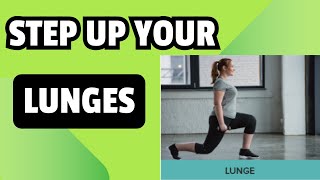
Akibasso, a 30-year veteran trainer, breaks down why most people lunge wrong and how it causes knee pain. He shows how to prepare your gluteus medius and adductor longus with micro-movements first, then progress through static holds, stepping lunges, and multi-directional variations that mimic real activities like hiking.
Chapters
The lunge. The lunge is one of seven primal movements, which are essential movements that you need to have down so that you can perform the activities in your life. The lunge is used by itself or in conjunction with the other seven primal movements. But I see so many people doing this wrong, and obviously they can't do lunge right, but it leads to dysfunctions like knee pain. So stay tuned while I go over the lunge. I am Akibasso. I'm the owner of Soul Core Fitness, and I've been in this health and fitness field for, like, 30 years. So I started as a trainer back in the day. So 30 years ago, I got certified by, you know, traditional forms of certification. I think I did Issa at the beginning. Ace Nasm, they're all basically the same. And so when they teach you, they teach you the form of these patterns like the lunge. And so I would train people and they couldn't do a lunge, I, of course, teach them the form, but that's where my knowledge stopped. And when I saw somebody who couldn't do a lunge and just teaching them form didn't work, I didn't really know what to do because that's not what I was taught. As I delved into osteopathy and become a therapist and a trainer, I saw the body open up and all these little tiny places and chains in your body that need to be addressed to do these big movements. Like the lunge, it's holistic. And so when you treat the body holistically, because that's the way it's designed, it really opens up and does the things that you want to do. And so on this channel, that's what I want to do. I want to talk about things holistically, not one or two exercises that will correct whatever you're looking for. And so if you're interested in seeing this holistic view, then subscribe to the channel and then please share this video and like it so the YouTube algorithm guides will show it to more people. I'll put up videos about once a week. And stay tuned for balance. As I mentioned, the lunge is one of the seven probable movements. So that's squatting, bending, pushing, pulling, twisting, lunge, and gait, which is walking, running. The lunge can be used on itself, like just a walk or doing a lunge in the gym, or it's used in combination with things like the bend pattern, too. Pick things off the ground or in sports, like with baseball or tennis, to lunge and do a twist. So it's a big movement, but like all of the primal movements, it's a global movement. And by global means, globally, it uses all your body. So there's a lot of different parts in your body that need to be used. 600 muscles, different ways they go, bunch of tens of ligaments and bones. So it's not just a couple ways they move. There's a lot of ways. So the lunge, if you skip the steps of training the body to be able to do the lunge, you're going to have an imbalancement. So I'm going to talk more about that later. But if I don't do these little tiny movements or small areas before I do the lunge, now I'll do a lunge because I've told my body to do a lunge, but my body is going to do it how it thinks it should. It's going to tweak, tweak it a little bit. Well, that's going to lead to eventually a bad movement pattern. And a bad movement pattern eventually leads to some sort of dysfunction, which is losing strength or mobility. And the dysfunction now leads to some sort of injury and potentially medical intervention. So while it's important to learn how to do a lunge, and we'll talk about that, it's more important to make sure your body's prepped and ready to do a lunge. The lunge is a movement where basically once you perform it, that front leg, or I shouldn't say front leg, but the working leg is mainly working by itself or almost by itself, right? It's doing the main job. That means when I do a lunge, if I do a lunge, when I step out, I want my leg to stay in line. I basically want my kneecap to stay in line with my second toe as I push my knee forward and bring myself down to keep my leg in position. Involves some smaller muscles like the glute med and adductor longus. Now, there's more to that, but those are two main ones. Those two muscles work together, right, as antagonists. So I got my hip on one side, adductor longus on the other side. They work on either side to help keep this in place. Now, the glute medium needs to be exercised, like all muscles, segmentally. Segmentally means I want to train it in the form that it mainly does its job, right? So I do its pure movement. Now, the glute med, it's two big main movements are to abduct the leg, which is to bring it out to the side and to Stabilize the pelvis, right? So it needs to take the leg out to the side and also hold the pelvis in place. The pelvis in place is the big one I want to talk about today. Because if my pelvis is the floor of my body and it is, because it connects the upper and lower half of my body, it needs to be balanced, the glute med is a big part of that. Because if I go do a lunge and my pelvis is all wonky, my motion is going to be wonky. I can correct the form of the glute med all I want, but until I train that and eventually that, it's going to be much more difficult, almost impossible to get the form down because the muscles involved with the lunge aren't working properly. Now, the glute med is generally exercised by doing the clam. Now, the clam is when you're lying on your side and you either have a band or not, and you're kind of opening your legs up like a clam. I don't like this exercise. I don't like this exercise because of three main reasons. One, I don't like it because it's only working one, potentially, of the three fibers. Three fibers, excuse me, involved in the glute med. Two, it's not. It's not. It's done to allow the hip to go into external rotation, which means now you're also using your piriformis. Now, if you want to use both at the same time, I guess you can do it. But if you want to be specific to strengthen your glute mead, you want to take the piriformis out of it and as much as possible. So you need to eliminate that external rotation of the clam needs to stay internally rotated. The third part is that there's no fascia training involved. Why it's important because the fascia surrounds the muscle fibers, the muscle, they all go out and form the tendon of the muscle that connects to the bone. But it's actually the periosteum, the skin around the bone, and goes all the way through the chain of the glute meadow. So I want to strengthen my glue bead specifically with each three fibers and with the chain involved. So as much as you're working your glue mead, you want to work that adductor longus, because if they work together, that means they need to be of equal strength mobility so they can work together evenly. So for the adductor longus, you want some sort of flexion, internal rotation and adduction of Your leg to work that adductor longus. Now a quick word, a little, couple more words about the segmental training. So I've already told you that segmental training means I'm taking an action and doing it where this one muscle is mainly responsible, right? So that glute med is mainly responsible for that stabilization of pelvis and abduction, right? I want to take those motions and do that action. So. So I mainly work that muscle. You always work your whole body, but you're mainly working that muscle. Segmental training can be thought of as you're only as strong as your weakest link, and the micro movements manage the macro movements, right? So you're only as strong as the weakest part of your body, right? So if your glute med is super weak, right, and you're doing lunges and squats and deadlifts and hiking and skiing and. And the rest of your body is great, but that glute med is weak. Well, you're only as strong as that glute med and eventually that weak link is going to cause everything else that's good to get thrown off balance as well. So you want to make sure you train your body to train the weakest link. You also want to think about the micro movements, manage the macro movements for the lunge. That means we're trying to stabilize the leg. It's that micro movement to be able to manage that micro movement as my leg goes down to perform that lunge better. An even better example with the lunge is that my knee, when I move this way, I can do. It happens in rotation. So I don't know if you can see me over there, but when I walk, I bend my knee, my foot goes a little outside. I'm not trying to intentionally do that. It just naturally does it. There's a little bit of rotation. So you don't want to think about just working the main actions. You don't want to just practice flexing the knee and the hip and extending the knee and hip. You want to manage their rotation first to allow it to work better. The last part, to be able to prep your body, do a lunge, is to take care of the fascia. And by take care of the fascia, I mean, don't kill it by doing foam rolling and blasters and all that stuff. You want to train it. The fascia is a living organism. It's very responsive for the glute med. You can think about your IT band and your fasciae lata, which is the fascia, your thigh, that work Together to form your tractus iliotibial band. Right. So I have the vertical fibers more outside and I have the deeper, more horizontal, but they intertwine like stitching. Right. So they go together. So when I take a step, that tractus iliotubial fiber fascia, its main job is to manage my thigh, so it manages how much My quads, my hamstrings, my adductors, and my abductors are all working together. So I can move them. I can move into a good lunge. If I don't train the fascia, if I don't re educate it well, it's going to guess on what it should be doing and not doing what it should be doing. So you may think I'm doing this lunge, great, but you actually have some compensations, you have some cheats, and those cheats will end up leading to bad movement patterns, injury, and potentially medical intervention. Are you working on your lunging? It is a little mini deep dive into anatomy, and biomechanics help you understand a little bit more about the parts of your body you need to be working on to do a better lunge. Let me know in the comments, but don't go anywhere because we're not done. We're going to go into lunge. And there's different variations. So lunge can be done in a lot of different ways, a lot of different planes of motion. But like all things, like, once your body's prepared, you want to start with the basics. The basics is you're able to do a lunge with one leg out. So you can do a lunge with one leg out, but then you can also have support. Okay, so I'm out here. My weight is in my front left leg, and I have a little in my back leg, as little as possible. Right. I like to tell people 90% of your force, your weight about 10%, this front leg does all the work. So you want to practice allowing this front leg to bend first and the back one bends second to bring yourself down over top this leg, and then back up. That's kind of where you want to practice. What you want to watch out for is not bending that back knee, because if I don't bend the back knee, whee, it's going to push me forward. And you want to watch out for. Bend the back knee first, because now I'm doing this in my back knee, and my back knee doesn't like that too much. Once you've got that down and you will do a bunch of reps up to 50, you want to work on stepping? Now, stepping ends up in the same position. So I step, I step out with that leg in front of me. Same position I just did. But now it's more dynamic. So once you step, the motion is going to be the same as what you just did. But when you step, there's one big thing I want you to watch out for. I see people do all the time wrong, all the time is they step like a ballerina. So when they step, they step with their toe out. That takes their body weight forward. And when they hit, they're hitting on the ball of their foot, not great for the knee. And also you're propelling yourself forward. If you step like you normally would, heel, toe, you'll be in more balance. And when you take that step, you want that step to be just a little bigger than your normal, your normal pace. So my normal pace would be about here. I would have my heel hit where my toe is to have a little bigger step. Now, once you got that down, you want to take that lunge into different planes of motion because you're not always operating straight up in front of you move into different sides. So you always want to train your body to be able to react to those things. And lunge is a big part of that. So you want to be able to lunge forward, diagonal, lateral, and then diagonal behind you, and then straight behind you. Look at real brake right there, straight behind you. Because now you're teaching your body. I can react to those things. So the biggest example I can give you with that is when you're hiking, right? So you're hiking up a trail, right? You're not always walking nicely, one foot in front of the other. You're stepping different rocks and down here. And so if you train your body to do that, then it's going to be much easier. Now, lunge can also be transferred into walking upstairs, doing a step up, or it can be switched to do a Bulgarian split squat, which is essentially a lunge with a foot in front, up and down. But the basics are the same that I showed you when you held on. So I encourage you to first train your body so it's ready to do a lunge and then start to practice a lunge. And it's different variations. So when you go out inside, in life, your activities, it happens nicely. Now, if you're looking for support on that, I can help you out. I got a free report and I got a consultation with me, whichever one you think is best for you. You want to read more and digest it more. Do the free report. You want to talk to somebody, use the consultation. But I hope this is helpful. And I'll see you next week. Take care.
More from Ekemba


From Pain and Fractures to Strength and Freedom — Maria’s Story | SolCore Fitness & Therapy




Regaining Independence: Mary’s Journey with Holistic Healing for Scoliosis and SI Joint Pain




