Do You Know the Truth About The Bend Pattern?
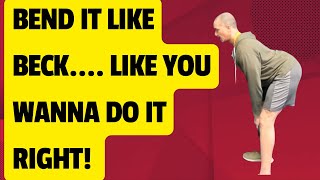
Akima, a 30-year fitness veteran, breaks down the bend pattern, the hip-dominant movement behind deadlifts and everyday bending. He walks through a progression from kneeling to full deadlifts, stressing neutral spine and heel weight, and explains why dysfunction in your myofascial chain from toes to head causes chronic pain.
Chapters
The bend pattern, or as we call it in training, the RDL or the deadlift, is a very functional and applicable movement in life. Use it all the time. You pick your kids or get grandkids off the ground. You're playing golf, you're moving boxes around. It shows up by itself or in conjunction with other movements all the time. But if you're not doing this movement properly, or if the chain of those muscles that are involved in that movement are dysfunctional somehow, and you're continuing to do it over and over again, then eventually that's going to lead to some sort of dysfunction, pain, or injury. So understanding not only how to do a proper bend pattern, but the muscles and chain involved with it is very important. So that's what we're going to go over with today. Greetings. I'm Akima. So I'm the owner of soulcore Fitness. I've been in this health and fitness field for 30 years. So I started as a personal trainer, but even before that I was into athletics. And I got lucky because in athletics you want to get big and strong and so you work out. And I got involved and learned from some pretty knowledgeable people about strength training and learned to do things like the bend pattern pretty well. Now, after I got out of that and became a trainer, I went even further to become an osteopathic manual therapist and an osteopathic trainer, because I want to understand how the whole body works and how to train it and treat it holistically, because that's the way it's designed. So when people come into my studio, they've gone away from only wanting to work out for aesthetics, right, or to do something more egotistical. They want to live a good life, they want to feel good, they want to move. They want to maintain their level of lifestyle up until the day that it's time for them to die. And so that means the end goal is that they can do things like the bend pattern proficiently. Now, the bend pattern is part of the seven primal or basic movements. So you have squatting, you have the bending, pushing, pulling, twisting, lunging, and gait, right? You want to be able to do these things proficiently and well. Because when you're in life, I'm putting it outside right now. You'll do these activities to perform your life. So that means I want to get them good at these seven primal movements. But unlike most exercise programs or studios or gyms, I don't start there. Because the bend pattern and all the primal movements are what's called global Movements that simply means globally. My body, I have to use it as one to perform one of these movements. So I don't want to just start by teaching only how to do a bend pattern. I want to teach you, okay, this muscle chain, tendons, ligaments, these are involved in a bend pattern. Okay? What's strong, what's weak, what do we need to work on once we're in a better place for that? Sure. Now we can start to learn the bend pattern. So if you're interested in hearing things, information in this holistic manner like I just talked about, then subscribe to this channel, like this video, and share with your friends. It tells the YouTube algorithm it's a good video and it'll also show it to more people. Don't forget to hit that bell. And then stay tuned each week where I come out with new videos. So real quick, your body is a holistic living thing. That means it's interconnected and interdependent, and it's all linked together. That means your big toe affects your head, your head affects your fingers, right? So when you first start wanting to work on things like the bend pattern, this might sound obvious, but you want an assessment. But you don't want just like the basic assessments you get from a personal trainer, you need an assessment for somebody who understands the different mild muscle, fascia, fascial chains of your body. Because that's what it is. It's not just a collection of muscles, it's how they're connected and the jobs they have to do along that chain. It's not just muscles in that chain, it's tendons and ligaments and different fascial chains that go different areas. So we get an assessment. You want somebody to understand that and look at your pattern. But in basic, the bend pattern, the main using chain is your posterior chain. That, that's all posterior means the back of your body, right? So from your heel, back of your leg, to your glutes, to your back, up to your head, that's the main chain that works. Now, obviously you need the other chain, the anterior chain, to help stabilize it. And those lateral chains also help stabilize it. But we'll talk about the main chains. So when you look at what muscles are tight or what muscles are weak or what needs to work, we'll then start to think about the soleus, the two gastrocs, the three main hamstrings, your glute, your four layers of back muscles, your trapezius, your rhomboids, levator, scapula, and your shoulders. All those muscles as you'll see here in a little bit, as I do, the movement are involved in that bend pattern. Now, I'm obviously not going to go over what to do for every single these chains for two reasons. One, I don't know you and I don't know what I should be giving you because I can't. I haven't assessed you or talked to you. And two, I. That would take way too long. Again, all those muscles I talked about are just the base. The base level. But you have different ways to train different things, different ranges of motion, different. A lot of different things. But it's a combination of strengthening and stretching in these myofascial chains. What I can tell you is that in this pattern, it's going to put more load on your lower back than say like a squat. That's just by the way it moves, right? It's not because I said so, it's because of math, right? So it's called a lever arm. So if I'm doing a bend pattern and my torso is leaning more forward than my shins are moving, then it's going to put more load down to my back because it's trying to support my torso. And if I'm reaching my arms out like that, it's even heavier. So if you're thinking about that, then okay, I need to train my abs and my back to stabilize my spine as I do the bend pattern. Now, these forces that go in your lower back aren't inherently bad. Again, like I said, it's just part of the movement. It's only bad if three things, right? You haven't trained segmentally. That chain I talked about before, all those different muscles, you're doing too much weight or too much force in the movement, or you've got something acute in your back. But if you train yourself properly, those forces should move for your body, like all movements nicely. So when you see these reports on this position causes this much in your lower back and this position this much in your lower back. That's true. But that's true for cadaver or for that static just looking because we move around. So as I do a bend pattern, that force goes into my back, goes away from my back, into my back, away from my back, so it doesn't stay there because I've got a good chain and I know how to do the movement. Are you working on your bend pattern? Are you trying to go through different progressions to make sure that you're doing it right? Let me know in the comments. So in learning any new skill and the bend pattern, if you haven't practiced it properly, is learning a skill. You always want to start with the most pure movement. And that pure movement is a butt back bow forward. What that means is it's a hip dominant activity. That's what they say in training, a hip dominant as opposed to a squat, which is a knee dominant. Right. So squat, I initiate and do the main movement with my knees in a bend pattern. I do the main movement with my hips. Right. It's just what they call it, not a big deal. So if I want to practice that, I want to start with practicing that butt back bow forward in the most easy way possible, right? So as I do the butt back bow forward, it's best to start kneeling. Because now when I kneel, I take away a lot more information from my body so I can focus more on what I'm doing. If I'm standing, my body also has to think about standing. So when I do a butt back bow forward, that posture, I want to push my butt back and bow forward, but I want to bow forward with a neutral spine. I don't want to overly tuck my pelvis. I don't want to stick my butt out too much. I want to keep it neutral because as it goes back, I want to keep it as neutral as possible without overly rounding or overly arching, which pushes bad forces on the back. Which means you want those four curves in your body. Again, we go back to the segmental, the chains of the body. That's something you would do prior to this if you had like a flat back. You don't want to do this if you have a flat, tight back. Now once I do it again, I can start with my hands here, here, here, or here. Gets from easiest to hardest. But I do my butt back bow forward because now I'm teaching my brain and my body. Hey, this is doing a leading, this is doing a following. And that produces the motion. So you can work with that posture first. Then you work onto a bodyweight rdl. RDL just stands for Romanian deadlift. I'm sure they invented over there, but that's just what it's called. So an RDL is same idea that a butt back and bow forward. So I do a body weight first and then once I get that motion down, then I would choose like a light weight. This is light for me. So again, I would do a butt back. That's what you don't want, a butt back bow forward. So that's a good point to make. As I'm doing my butt back and bowing forward. Yes, my weight's going back into my heels, but like my first one, which is terrible, you don't want the toes coming off the ground. Yes. You'll feel some more force going back into your heels because that's where you're putting force. But if your toes come off the ground, that's bad. That movement, that RDL or bend pattern will encompass a lot of what you do in life. Right. But there's going to be times when you pick things off the ground that require more force. That means you need to get good at a deadlift. So deadlift is the same as a bend pattern or rdl, but you just add your knees. So for the deadlift, I'm doing the same thing because I've practiced that butt back bow forward. Okay, I've got that down now to make it into a deadlift at the end of my butt back bow forward, like, I can't do it anymore without cheating. I now bend my knees and then when I push up, I use just as much force to keep my posture. That's what you want to look like. Now. A couple of things you want to watch out for is that people tend to. The worst thing I see, it gives me a cringe face, is rounding the back. People post on wherever they post on, on their workouts. And look at this deadlift I'm doing. And it's great workout and this circuit I'm doing in CrossFit. And their back is totally rounded. If you want to kill your back, if you want to have a terrible life round your back, you need to keep this posture just as much as you need to do the movement. So when you go up, you need to move as one. Not that's a good way to come see somebody like me for a long time to correct all your injuries. Now take your time when going through these progressions. Like I said, like any new skill, it takes a lot of volume and time to do this because you're not only trying to work your body, what you're trying to do. Excuse me, is develop a new motor engram in your brain. That simply means telling your brain and your body, this is how I want to do things. Once that motor engram is set, you don't have to think about how to do a deadlift or whatever you practice. Your body just does it. So take your time. It's not a race. It's about longevity. So the slower, the slower you go, the faster you end up in the end and the more proficient you end up at the end. If you're looking for support on training, I'd be glad to help. I've got a couple free resources. I've got a private Facebook group where we're talking about how to be strong, mobile and flexible, mainly for people in their 40s and above. I also have a free report and I also have a consultation that we can do if you're ready to talk about what this means for you. All three links are in the description below and all you gotta do is click on them, finish what you need to do and you'll get instant access or the download or time with me. But I hope you enjoy this. I hope you learned a lot. I'll see you next week.
More from Ekemba


From Pain and Fractures to Strength and Freedom — Maria’s Story | SolCore Fitness & Therapy




Regaining Independence: Mary’s Journey with Holistic Healing for Scoliosis and SI Joint Pain




