Facia Stretching The what, why and how
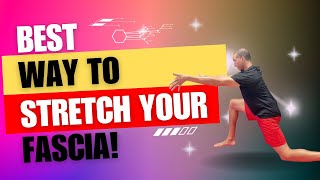
Ekemba Sooh, an osteopathic therapist with 30 years of experience, explains fascia as living connective tissue and why aggressive stretching damages it. He teaches two effective approaches: myofascial stretching for specific chains and global postural stretching, with a 3 × 30-second hold protocol. A case study shows how gentle work resolved Achilles and plantar fascia problems that aggressive treatment had worsened.
Chapters
So fascia has become a very big buzzword in the health industry lately and it's a great thing because it's a very important piece of tissue that's got a lot of jobs, that needs some love and care like the rest of your body. But unfortunately, the information out there is completely not so great. I just did quick searches on YouTube about different fascial techniques and the stuff they show you is either incomplete or completely wrong. And articles that go out there all aren't totally on board too. So I read an article on how to exercise your fascia. I don't remember where I read it and it's some great information about what fascia is and all that stuff, which is really good. But then the protocols they gave you to take care of your fascia were the same protocols for general exercise that I've been seeing since when I first started 80s and 90s. There was no difference of information. And that's crazy because it's a different tissue so it needs different love these different exercises. Now fascia can be exercises and can be stretched. We're going to focus on fascia stretching today, so I'll give you a little information about fascia and the best way to fascial stretch properly. Hey, if you haven't met me, my name is Akimba. So I'm the owner of Soul Core Fitness and I'm a summer therapist and some of trainer and it's under the osteopathic program which I've been involved with now for Jesus almost 20 years and I've been in the field for almost 30 years. So I'm very into fitness. I view fitness, health and fitness as a vehicle for a better life, not just to get stronger, more mobile or whatever stuff you want to accomplish. It's a way to challenge yourself to better yourself and to have your body keep up with the way you want to do. Fast is a big part of how I approach fitness because I view it from a holistic sense, not just a macro sense. So if you're interested in hearing more about that, subscribe to the channel, click the bell, be notified and I'll get out videos about once a week where I'll talk all about different aspects I think are important. So what is fascia? So fascia is a living tissue. I know prior to all the fascia fame for most traditional folks forms of information they talked about fascia is just like the white stuff over the meat that you pull away to investigate the muscles and all that stuff. But fascia has been around for a long Time, especially in the osteopathic paradigm, which I'm a part of. And I've talked about fascia for a long time in terms of treating and training it. Fascia is a combination of cells, fibers and matrix. And it has a system within it called gel and soul. Gel and soul is your prm. PRM stands for primary respiratory method. Before you're born inside your mama, your cells breathe. Okay, by gel and soul. It's a breaking up of cells and bringing back together. I'm not going to go too in depth with this, but it's basically a breathing pattern that happens kind of in a figure 8 or lemon scat fashion. It's very important because if you don't have it, you're dead. The most important word you want to understand with fascia is connective tissue. Fascia is called connective tissue. It's called connective tissue because it connects everything. Everything in your body is connected by fascia. You can say that from in utero to now. You have one fascia that's split in 2000s of different ways, different chains in different ways. Fascia is tendons, fascias, ligaments. Fascia is your periosteum, the skin around your bone, adventitia, epinephrine, around your arteries and veins and around your nerves at your pericardium. It's connected to all. And most importantly for this video is surround your muscles through different layers. Eponyms, Eponymium, epinephrium, paramecium. Oh, my God, I can't get that. It surrounds your muscle tissue from the smallest to the biggest. Right? So you can say that the muscle is a stupid piece of meat, okay? It does what the fascia tells it to do. It tells it because the bag around the muscle needs to be in a good place. If the bag is nice, well, the muscle's nice. The bag is all jacked up. The muscle's jacked up. Fascia has a lot of different roles. Again, it's not inert. It's not just the white stuff that covers your muscles. It has a structure, job, circulation, neurobiology, communication, energy, defense, protection and scarring. That's a lot of jobs. Again, it's not inert. It has stuff to do in your body, and so it needs to be respected. Because if you just go about it in a bad way, you're going to stop it from doing its job, which means it stops your body from working properly and it's going to make you worse. If you'd like to read more on this subject of fascia, you can go to a strolling underneath the skin. Skin is by Jean Claude Gimbarteau. It's a great video to kind of shows how the fascia is organized and how it lives in the body. He also has a great book that I recommend you reading if you really want to dig into things. But I gave you the basics. But it's a great resource to dig in a little bit more. Let's take a quick little break because I want to hear from you. Have you ventured into the fascia world? Have you tried different fascial techniques, hoping to help your body? Has it helped? Has it made it worse? I want to know. Just use the comments below to let me know. Let's talk a little bit about how not to work with your fascia. So let's go back to the information I gave you. How your fascia is connected and connects everything, it connects through two different systems. I'll do it again. It connects through continuity and continuity. Okay? Big fancy words. Continuity means it's continuous in your fascia. Those how it's made with the cells, fibers and matrix. There's collagen tubes within the fascia, little tubes. And it connects all through the tubes. It looks like a little spiderweb at times. Those tubes carry liquid. That liquid carries nutrition and carries away waste. It does good things for the body. So it's like you have a spider web through your body that's connecting. If I have a continuity to the body, that means that line of fascia, irregardless of what different areas of your body or muscles it touches, continues all the way to the end. So that liquid I talked about can continue all the way to the end. Continuity means it's just kind of like it runs into it, but the tubes don't line up. But it helps hold it in place. So it's an important job too. If I approach fascial stretching or any type of things to do with the fascia and it's aggressive and it crushes those tubes, that's not a good thing. So if you try to stretch or treat it by foam rolling or aggressive techniques like the grassing technique, things like that, that damage those tubes, you're not treating your fascia, you're damaging your fascia. So if you want to stretch the fascia properly, you need to make sure you stretch it in line with those tubes so you can loosen up the tube. I'm going to give you an example. Let's see if you guys can see.
Me from the back of my heel to my outer calf to one of my biceps, my bicep femoris, which is the lateral part, up to my ischiotuberosity, through my glute and pelvis and into my back. I can go up my spine to my head or out into my arm.
For two big chains of that continuity. I'm never going to get that right. Continuity all the way through. It goes all the way through up to the spine, to the head, out to the arm.
So there's a lot of different muscles involved with that. Let's just take the, from the, from the calcaneus, your heel all the way up to your arm.
Okay?
I've got my. One of my calf muscles, my gastroc, my lateral one of them. I've got one bicep femoris, I've got my glutes, I've got my thoracolumbar fascia, which is basically into my latter all the way out. So I got a bunch of different.
Names there, but that's one chain. So if you want to start stretching the fascia properly, you have to respect the chain. You have to know which muscle you want to work. A lot of muscles, 600 of them. Okay? So you have to understand which one you want to work, and you have to know which chain is involved with that muscle. Then on top of that, you have to know how to one, stretch the muscle in the opposite direction. So.
If my bicep femoris helps me to bend my knee and extend my hip, I want to extend my knee.
And flex my hip. That's opposite actions of the bicep. There's a bunch of more. But what happens is when I contract.
The muscle, it gets shorter.
When I stretch it or extend it, it gets longer. So I want to make it longer because I'm trying to stretch it and try and strengthen it. So I want to do the opposite action of that muscle, whichever one you choose to start with, in that chain. And then I'm going to line up the fascia from, as I tell people all the time, from the tip of your toes to the tip of your fingers, from the tip of your head to the tip of your tailbone, your butt. You want tension throughout your body because fascia wants to work globally. That's what it likes. So if I don't work it globally in that chain, specifically, it's not going to listen. The two best techniques I've come across in my almost 30 years now for fascial exercise in terms of stretching are myofascial stretching and global postural stretching. Myofascial stretching will Stretch the way I just told you in this specific chain, global postural stretching, which you do different time, is more globally through the body, through different chains, you can stretch different areas of your body. So it's not just one area of the knee.
You can stretch the lateral knee, the medial knee.
I don't want to get too in depth there, but they all respect the fascia change and the globality. Have no idea if that's a word, but it sounds good to me. The globality of the body that you put into tension. Here's a quick example of how not to train your fascia. So I had a client come in over the summer, and she had really bad Achilles tendonitis tension her calf, plantar fasciitis. And up in Toronto, she went to go see a physiotherapist. And what they did was the grassland technique, where you take like a big piece of metal and you kind of just dig into your body to try and release the fascia. It made her issues 20 times worse. And when I got. When she came here, I said, that's actually an easy fix. It's not a big deal.
I gave her some gentle fascial treatment.
For her for her plantar fascia, for her cavern, for soleus, and gave her a couple stretches for her soleus and calves. 90% better the first day, 100% better within a couple weeks.
Because we work with the fascial chains.
We work with the way the fascia is designed, not aggressively try to force it to do something different. Once you decide which technique you use, mild fascia stretching or gps and you find the areas you want to work, basic parameters are 3 times 30 seconds each side. If you have to switch a bunch of studies on how most effective to stretch the muscles. Some muscles work better on like 45 seconds, some work better on, like 15 seconds. To go through and know which each one in the body is maddening. So they said, oh, look, here's a good average 3 times 30 seconds. That's what you want to do. Then you want to build out your program. So if you started with, let's say.
The biceps femoris as your main stretch because your hamstrings were tight. Okay, great. Now I need to incorporate the lateral.
Gastroc, and I incorporate a glute stretch, either inferior or superior, and incorporate my lat stretch, I incorporate spinal stretches. Whatever the chain you want, you have to incorporate those stretches. But then you also have to build out the rest of your body. Because if we're balanced biogensegrity, which we are. If biogensegrity is dictated by proper tension and compression, which it is, and if biogensegrity is also based off interdependent, interconnected areas doing their job, which it is, then you need to work with the rest of your body. Because if you have an imbalancement on.
Let'S say that biceps femoris on one.
Side was going to unbalance the rest of your body, maybe it's not as acute, but it still needs love. So you can say you have like an A program and a B program.
Okay.
My A program is to work with these three areas.
Bicep, femoris, lateral gastroc, glute, maybe lat.
Okay. Four part. Okay. 15 minute program. Okay. On other days. Okay, well, let me balance the other side of my body with a global thing for my transverse spinalis or my other lat or my other glute.
I don't know.
It depends on your body. But you need to build out that program so your body stays balanced. Now you'll never stay totally balanced because we always make ourselves being out of balance just from life, from work, from the activities we do, from just what we do. So we always need to keep up with our stretching. Myofascial stretching GPs are a great way to respect the fascia, balance the whole body stretch. So you live a great life. Okay, I'm done talking for today, so I hope that's very beneficial for you. I hope you got a lot of information about it. Generally when this happens, you have more questions than answers, so I want to be able to help you out. So I got a couple different options for you to further your information so you can help to develop a program that works for your body. So I got a free Facebook group. I'm going to put the link in the comments where you can be more interactive with your educational process. You can talk to me, you can watch my mini trainings, you can participate in our master classes, participate in our free challenges, all within this group. Specifically, all you have to do is click that link, answer a few questions, agree to the terms, poof, you're in happy times. If that doesn't work for you, if you want to just read a little more material, then I have a free ebook. It's how to get out of pain and get mobile and have your body keep up with the life you want to live. I'll put that link again in the comment, not the comments in the description. You click on that link, put your information in and you get instant access. If you're ready to go though. If you liked what I've said here and you've watched some of my videos and you like my approach, this holistic approach, then reach out for a consult. You'll speak with me personally. Just click on a link. You find a time that works for you, schedule it and we talk. If you don't find a time, you can email supportecorefitness.com but it's a way for me to get information about you so I can give you helpful information. I can tell you, hey, I think this is the best way for you or be careful this or whatever, whatever comes up. And then only if I see you're a good fit for a program, I'll offer you a place in our, in our program. If you're not, then I'm going to give that information. No obligation. You're good to go. So I hope you enjoyed this training. Check out this video here on how to stretch properly from mobility. Stay tuned for more information on this channel and have a great day.
More from Ekemba


From Pain and Fractures to Strength and Freedom — Maria’s Story | SolCore Fitness & Therapy




Regaining Independence: Mary’s Journey with Holistic Healing for Scoliosis and SI Joint Pain




