How to work with your fascia
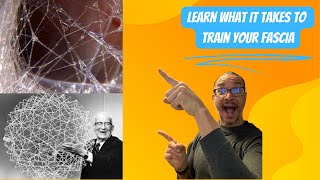
In this 30‑minute YouTube presentation, Ike Boucelle (owner of Soulcore Fitness) explains what fascia is, how it forms a continuous connective‑tissue network throughout the body, and why many popular “fascia” trends (foam rolling, tools, aggressive manual techniques) often miss the mark. He describes fascia’s anatomy (epimysium, perimysium, endomysium, tendons, ligaments, visceral fascia) and its functional roles—fluid transport, immune support, structural tension, and movement coordination—framed within the concept of biotensegrity. Boucelle identifies three primary influences on fascia health: nutrition/hydration, stress, and training quality. He critiques symptomatic approaches that crush collagen tubes and cause trauma, then outlines a proper fascia‑training methodology that uses tension along fascial chains, differentiates between stretching and strengthening, and respects the body’s holistic connective‑tissue architecture. The talk concludes with practical resources (a free Facebook group, ebook, live calls, and paid consultations) and a call to action for viewers to assess whether they truly “work with” their fascia.
Chapters
Fascia is a big buzzword now in the health and fitness field. But the study of fascia has been around for a long, long, long time. But unfortunately, all this great study material about fascia is not showing up in the exercise and treatment of the fascia. Just saying the word fascia or listing it in your marketing doesn't mean you're working with the fascia. So I want you to stay tuned while I go over some specific things about the fascia so know whether you're working with the fascia or not. Greetings. I'm Ike Boucelle. I'm the owner of soulcore Fitness. I'm a summer therapist and summer trainer, and I've been in this field for about 30 years. I started as a regular personal trainer and when the buzz of fascia came out and the techniques associated with it, like foam rolling came out, I was a little bit clueless like most people and believed what the marketing of these techniques like foam rolling told me because the information wasn't incorrect. It just wasn't all the information. And so once I did a deep dive into the fashion world and all the different jobs it has and how you can work with it specifically, then it opened my eyes and it made more sense because now it's in a holistic fashion. And that's how I like to view things. And that's what I want to talk about on this channel is a holistic view, not just a couple exercises for certain maladies that generally don't work anyway make things worse. I want you to understand the cause and what you can do with it. So if you're interested in finding out more detailed information in this holistic fashion, then subscribe and hit that bell. If you like this video, please give it a thumbs up. It lets the YouTube algorithm know it's good and it shows it to other people. Share with your friends and then, well, that's it. Thanks. You can say that you have one fascia that from in utero till now has, has split up and differentiated into hundreds or thousands of different directions that encompasses your entire body. An example is in your muscles. You have an epinesium, a paramecium and endomysium that are fascial layers that surround the muscle and muscle fibers. Those fascias meet at the end of the muscle to form a muscle tendon, which is also fascia. That tendon attaches to the bone, but more specifically the periosteum, the skin that surrounds that fascia. At some point, a ligament, which is also fascia, will connect to the bone, you have visceral fascia that surrounds your organs in a periteal, in a serous membrane like the pericardium or the pleura, lungs or heart, respectively. So that's your entire body. You have it all around your body. But a good word for fascia is connective tissue, because it doesn't just encompass your whole body, it's connected like a big spider web, right? Your whole body is like one big spider web with fascia in different areas and different soft tissues. Here's an example of how it connects. The back outside part of my heel is connected to the outside calf, my lateral calf, that is connected to my bicep femoris, which is one of my hamstrings. That bicep femoris connects to my sit bone, my ischial tuberosity, that connects up into my gluteal and thoracolumbar fascia. And then it can go two different ways. For this chain. It can go through my lat, into my arm, or it can go through my paraspinal muscles, all the way to my head and even connecting to my eye. That's the most important part, is the connections that the fascia make, because you want to. If you're going to work with the fascia, you have to first understand that it encompasses everything, that whenever you move, you're using your fascia, but you have to understand how it's connected in the directions that they go. Fascia is connected in two different ways, in continuity and continuity. So with continuity, you have to understand that fascia, within its structure, has collagen tubes. And these tubes, their job is to transport liquid. This liquid is basically a fascial liquid that's based on water that helps with your immunity to transport waste away, to bring in nutrients. Very important. You want those tubes to be open. It's like the piping of your fascial system. And so in continuity, these fascial tubes are connected all the way through. So that connection I just talked about, from my heel, my calf, my hamstring, my issue, my glutes, my lat, up to my head, arm, those tubes run the length of that connection. They go all the way up. So we're taught that if you put a diliquid in one of these tubes, you can see it move all the way up and all the way, or all the way down, whichever, of these tubes, different parts of your body, but one chain in continuity. So continuity means the act of being against something or bordering it or connected to it. You don't have the fascial tubes lined up, but they're connected, so they help support the entire fascial structure. And that structure is your body. Now, the structure of body is called biotensegrity. In these terms. Tensegrity is a term coined by Buckmeister Fuller, very famous architect and some really smart anatomists who knew about tensegrity. When they took a step away from their studies and were coming back from lunch, they saw the body from afar as opposed to up close. When they saw it from afar, they go, hey, look at that. It's tensegrity. And they're right. But now it's biotensegrity because bio biology, us tensegrity. So if we want to work with a fascia and we're a tensegrity structure, then we need to know what a tensegrity structure can do to effectively work with the fascia. Let's check out this little slide on all the different things a tensegrity structure and us. Those are tensegrity can do. Are you wanting to work or are you working with your fascia and your health and fitness routine in the comments, let me know what you're doing, but then stay tuned for some more information to understand if you're really working with your fascia. Now, fascia is not an inert piece of tissue that connects things, right? It has a lot of different jobs. It's alive and works with your body. See this little insert to see all the different jobs that fascia does. On top of that, your fascia is made up of cells, fibers and matrix. And it's a differentiation or different combination of these cells, fibers and matrix that tell the body different parts of fascia. So a tendon, ligament and aparnosis, which is like a sheet of fascia, are all fascia. But I mix it up differently to form a tendon. Then I mix it up a little bit differently to form a ligament, and I mix it up differently to form the apinosis. Same fascia, just different jobs because they're in different places of the body. If I want to work with the fascia, I have to understand the jobs and the fact that fascia is the same, just a little bit different in different parts. To work with the fascia, you also have to understand that the fascia is affected by three main components. First, nutrition, hydration. Second, stress. Third, the training, whether bad or good. Nutrition, hydration. Pretty easy to understand. If you eat a bunch of crappy food, then your body includes your fascia is made up of crap. If you're dehydrated, then your Fascia, like all soft tissue, is going to be more like beef jerky and less like a fresh cut piece of lean meat, right? So if I try and move that beef jerky, it doesn't function well. Water is also important because all soft tissue, including fascia, slide on this material of water substance to move, because we're mobile and motile, so we don't have to move, be able to move. But if you don't have that water substance, we get inflammation because now I get rubbing. You also want water because that fascial liquid that goes through the tubes is based on water. So if I want to have all that fascial liquid with the immune response and take away waste and bring healing, then I need that liquid to have in my body. The third is a little more complicated because it gets stuck in a lot of dogma and false information. That's the training of the fascia. To train the fascia, you want to first think about, what do you want, like any exercise program, what are you trying to do? The fascia? Am I trying to be symptomatic and just get rid of something? In this case, let's take a trigger point. That's a big thing with fascia, or am I trying to restore and improve function with the fascia? Now, I know, excuse me, everybody's gonna say both, but that's not what everybody's doing. They're mainly only doing the symptom one through different forms of techniques, with tools or with manual therapy. Now, one way people work with their fascia and the symptomatic care through trigger points is by foam rolling. So we're going to talk real quick about that. Now, foam rolling has been around for a long time, and at some point, I don't know when it got associated with the fascia. And there's some great studies about foam rolling and benefits. I'll post them in the description below. But your life is not in a controlled study like these are done before. When they do a study, they're saying, does A plus B equals C? And they test it a bunch of times and they say, yes or no, either one's fine. Right? But life is not A plus B equals C. Life is the whole Alphabet, all the numbers, the Roman numerals, It's everything, right? So when you go to foam roll, because you want to get rid of that trigger point wherever in your body, you may or may not be getting what the study says and the benefits, but you're also getting everything else that goes with it. And in terms of fascia When I foam roll, I crush those collagen tubes like a rolling pin, and I'll smash it. Right. I'm not against doing things for trigger point. I do it myself. I do it with my hand, though. So I do it in a controlled environment as the therapy. And I know that I'm going to crush the collagen tubes, but I need to get rid of that trigger point. But then, because I know I crushed the collagen tubes to get rid of the trigger point, I also know how to do treatment stretches and exercises to reform those changed collagen tubes after I crushed it. It's like getting rid of a piece of a street that doesn't work and repaving it and bringing it back. It's the same idea. But people will feel a difference when they foam roll now. They'll feel something for a couple different reasons. They'll feel something because you're putting pressure on a part of your body. So you bring. That immediately brings blood, right? So you bring blood and warmth. That makes you feel a little bit better. Then you also feel better because now when you stop foam rolling, which is inherently kind of painful, you'll feel better because you get a bunch of hormones. They go, oh, we're done. Thank you so much. Right? But people take this basic feeling, which is very subjective, and the partial information from studies or marketing, they go, oh, success. And then they attach it to things like, oh, look, I'm so bruised and it's sore afterwards. And they say, oh, I must be doing something, because I guess here in America, I'm not quite sure anywhere else. The more pain, the more gain, right? That's not true in this case, because when you see the bruises or soreness afterwards, in that case, you've now caused trauma to your body. And then again, in true American fashion, well, foam rolling is not enough. Let's foam roll on pvc. Let's add spikes. Let's add something else we can do to torture our body in the name of working with my fascia. But it's not working your fascia at all. And then you have other techniques like Guns that blast your fascia or the Graston technique, which scrapes the fascia to get rid of it. I'm not a fan of these at all because the cost benefit does not equal what the benefit may be. Right? It's way traumatic to the body than what I could get out of it. But it's not just these inanimate objects that are causing damage to your fascia. It's also therapists who don't know how to work with a fascia but say they do. I was just talking to a lady at a consult and she had a massage therapist that was working with her fascia. She took her finger and started digging into her psoas and inguinal area. That's basically this area right here, right? So she's digging into it. I don't know why, to release it or whatever. But she pushed so hard she, she traumatized the tissue. So it's like somebody was just hitting you constantly. It's not helping you. It's starting to hurt and it's gonna piss you off. Well, the tissue got pissed off. When it gets pissed off, it inflames, it turns off, it's non functional. And so when this lady did this to this other consul lady I was talking to afterwards, she tried to take a step off the bed and her hip totally didn't work and caused another issue. Now, you can work with the fascia. You can work with pumping the fascia if it's in a joint to help bring this fascial liquid and synovial liquid into the joint to normalize it. You can work the fascia gently through like a fascial normalization technique to increase the flow through these different collagen tubes I talked about. You can also do, in my case, techniques like double tls to either turn off and confuse a ligament or, or turn on a, sorry, reverse to turn on a ligament or turn off and confuse a tendon to do different things with the body. Right. But you have to understand all the different functions, the tensegrity structure and how it works best, along with treating your fascia properly. You want to train it properly. So if you want to train your fascia, you would understand all these different things I've talked about. Understand that we're built as a biotensegrity structure, and there's different aspects as to what that structure can do. Understand the roles that the fascia play in the body and how it basically helps control almost an entire body. And so if I want to train the fascia, I need to decide do I want to stretch it or do I want to strengthen it. But in either case, it needs to be put in tension. So take that example from before where I said that line of force from the back of my heel, my calf, my hamstring, my glutes, my back, my glute, my lats onto my arm or my spine to my head, I can take that chain and I can put it in tension. That automatically tells the body hey, this person wants to work that more. Because I produce tension in that chain. I produce a little bit force, which tells the brain, hey, this is ready to work a little bit more. Then I want to decide do I want to strengthen in that position or do I want to stretch in that position. Still using the fascial chains, but different parameters and different things you do to strengthen or stretch. But it's the lining up of that chain and knowing which way you want to go that's the most important part. Because anywhere along that chain I keep talking about, you can produce tension to work that specifically while still respecting that chain. So there's a posture I can take to stretch. In this case my lateral gastroc. Myofascially. There's also a posture I can take to stretch my bicep femoris in a posture, but also respecting this chain. Same thing for my glute, for my thoracolumbar fascia, for my transverse spinalis. I could even put myself into a posture to strengthen my spine while still respecting this chain. It all depends on what you want to accomplish while respecting the change. The chain. Excuse me, the chain. And where specifically you want to work on that chain. Because we're basically a bunch of links put together, and if one of our links is weak, we're only as strong as that weakest link. So you want to work holistically, but you also want to work specifically to make sure each one of your links is strong, which means that's a different exercise or stretch or whatever for each link. Because again, the fascia connects all the body. If I train it with a fascia in mind, that makes my training more effective. Right now, I'm not just working on just the muscle. I understand that the muscle and the chain involved, which makes the totality of my movement better, which will lead to getting stronger, more mobile, less pain, better posture. All those benefits are multiplied because I'm using my body holistically as one. Okay, that was a lot of information on fascia. I try to keep it brief, but it's difficult. And I personally view working with fascia as one of the best ways to work with the body for sustainability, for balance, for strength, mobility. If you want some assistance, I'd be glad to help. I've been doing this type of training for a long time now. I've been in the field for 30 years, but I've been doing fascia type training, therapy and exercise for 7, 17, 18 years. And I've got a free Facebook group where I talk about the training aspects about it. You can do live calls, masterclasses, challenges, all within his Facebook group in description below. You can sign up. You can sign up for the free ebook, which talks about the different training aspects, but it has fascia in mind. There's four steps to this proper training program that leads to a good life. Or you can reach out to me for a consultation where we can talk about what you're doing. Now, I can give you some information where I see the holes of your training and then if I see it's a good fit, I'll recommend my services. But I'm always going to give you some good information. But I hope you start thinking about this, all this information to see are you working with your fascia, because it's very important not to say fascia and do the opposite. So have a great week and I'll see you next time.
More from Ekemba


From Pain and Fractures to Strength and Freedom — Maria’s Story | SolCore Fitness & Therapy




Regaining Independence: Mary’s Journey with Holistic Healing for Scoliosis and SI Joint Pain




