Joint and muscle pain in active people. How to identify the root cause
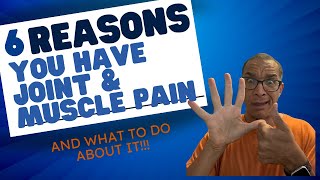
In this 30‑minute instructional video, Ekimba Sooh – owner of Soul Core Fitness Therapy and a veteran therapist/trainer – explains why active individuals often develop joint and muscle pain despite trying many conventional remedies. He first challenges viewers’ conditioned thinking and emotional reactions, then outlines six primary contributors to pain: overuse, untreated injuries, poor mechanics/form, exceeding the body’s capacity, dehydration & stress, and faulty posture/SI‑joint alignment. For each factor he provides concrete examples (e.g., chronic 10,000‑step walking, ankle sprain left untreated, squat form errors, sudden transition to toe‑shoes, dehydration effects on fascia). He introduces simple self‑assessment tools such as plumb‑line and gravity‑line checks, video‑based posture photos, and movement observation to locate a root cause. The video then describes a holistic osteopathic model that combines intake, movement testing, manual therapy, and targeted exercises to “normalize” the identified issue, emphasizing the importance of addressing the primary lesion before treating secondary symptoms. Practical tips include daily hydration targets, mindfulness for stress reduction, and posture awareness. The presentation ends with calls to action: a free Facebook group, a free ebook, masterclasses, and a free consult, plus a link to a related workout video.
Chapters
So you're active and you want to continue being active. You want to live your life, you want to really express yourself physically through different activities and travel and be with your family. But joint and muscle pain is getting in the way. You've tried everything. You've tried chiropractic, acupuncture, foam rolling, grassing technique, art, myofascial release, etcetera, etc, etcetera. And you're getting ready to throw in a towel and chalk it up to the universe hates me or I'm just too old, right? So let's not go there. Let's talk about the reasons why this may be happening. So stay tuned. Before we get into it, I don't want to be rude, I want to introduce myself. If you don't know me yet, my name is Akimba. So I own Soul Core Fitness Therapy and Fitness and I've been in this field for almost 30 years. And. And I've been a summer therapist and summer trainer for almost 20 years or close to it. Right? So that means I'm proficient in therapy and exercise and holistic method, which is in my personal opinion, the best way to approach things. If you like this content, you want to see more things about holistic fitness and therapy and best way to live your best life, then subscribe to this channel about weekly or to bring you new content to help you with different topics that I think are most important. If you like this video, don't forget at the end, give it a thumbs up and share with your friends. So before we begin, I want to take away your conditioned thinking, what you think you know, and your emotional responses around the subject. It's not that your emotions aren't valid, you're free to have them. But when you react from emotion, you think from emotion, you flinch and you just want to appease that emotion to make yourself feel better. And generally, 10 times out of 10, that's a wrong response, right? It's not logical. You need to think outside of what you know now. So I know there's a lot of different ways of thinking that's been perpetuated to you for a long time, which leads to confusion. You see these things that tell you, hey, if you do these things, you'll feel better and you've probably done them. Like I mentioned at the beginning, all these things you've tried to do before, it hasn't worked. We need to think outside that. So joint muscle pain. Excuse me, I'll use my phone because I have a list can come from a lot of different sources and come from overuse. An injury that wasn't dealt with properly, an incorrect movement, doing more than your body can handle, dehydration and stress, or bad body position. If you had an acute injury, something happened acutely, you got hit by something, you fell down, you're going to know where it comes from. But injuries that happen over time are an accumulation of different things that I just talked about. That's when you detect which one is it coming from, mainly from you. And what's it causing other things to happen for you. Overuse injury. Overuse is just like it sounds. You're using something too much, you're using it too much and you're not giving the love or corrective exercise or treatment or, or self care, however you want to describe it that you need. An example is let's say running and walking. Okay? A big thing they say to do is to go walk for 10,000 steps per day. Now that's healthy. So you go out and walk 10,000 steps per day and you think, okay, I'm being healthy. But after about five years you go, my knee kind of hurts a little bit, but you keep going. And after a while, like my knee and my mid back hurts a little bit, but you keep going. You keep going because they told you to walk 10,000 steps. Not knowing that you're using these areas too much and not giving it love to balance it out. Your body, you could say, wants to stay in homeostasis. It wants to be balanced, but that balance can be adjusted by the way your body moves. So if I'm walking a ton, I'm putting a lot of force on my quads, my, let's say my legs. Right, my legs, my thoracic and my shoulders. To be general, if I don't do things to correct those areas, I keep using them without bringing them back to balance. Now my homeostasis starts to feel a little off. That's why you may not know exactly how you're imbalanced because your body's adapted to feeling unbalanced. But you'll know because you'll feel little pains. You want to address these things before you feel pain. Unfortunately, people don't. But overuse injury is a big reason why people feel joint and muscle pain. An injury that wasn't dealt with properly is a big way that joint muscle pain can happen. Now when I say injury again, I don't mean acute. You're going to know when that happens. You fall down, you hit your knee, Whatever the case may be, you know, okay, I hurt myself. An injury can happen with you lightly rolling your ankle and you kind of going, oh, that kind of hurts. And then continue to walk and not getting treatment. A slight injury could be like you tweak something in your back or si joint and you go, okay, you let it go away. That's the basic premise, is that people will feel something and then not treat or train it. Right away they think, oh, it's little, it's not big deal. But that little thing turns into a big deal over time. So if I roll my ankle real quickly and I get a little slight pain and I keep walking, well, that ligament, whichever one in my ankle that got irritated by rolling, it never got retrained. So it stayed injured. You didn't feel it because it was asymptomatic, but it still needed to be re educated, trained, brought back to normal so it functioned properly. But because you didn't assumingly in this example, now when you're walking, running, using your legs, basically that ligament isn't doing its job, which compromises the movement. In this example of the ankle, which compromises the rest of the body. Moving badly. Bad mechanics, bad form is another way that joint and body pain can happen. If I don't move the way my body is designed, or move incorrectly, or put myself in a position that causes strain, undue strain on a certain area that's going to cause a joint or muscle pain, the most obvious way that you have bad form is bad form. So an example is. I'll take the squat. Okay, I'll take two examples. First is a squat. Squat's global. Global means I use my whole body. So unless I'm taking myself down into a squat where my shins and my torso are parallel to where I have a nice good position between my head and my butt, nice straight line, and I start doing funny things like everybody else does, like stick my butt out or shift my weight or look up like that, that's going to start to cause me pain and cause me pain. Because that's not the position my body likes to do a squat at. It likes to do it the way it began with, not the way I ended. And if I have bad mechanics, I end up with pain in, let's say my back and my neck, potentially my knee and all that stuff. I can also have bad mechanics through segmental. Segmental means to do individual exercises. So I'm down on the ground and I want to do an ab roll. If I roll down properly and I use my abs and my spine together with breathing, now I'm using my abs properly, but If I do a sit up like everybody does, and just lean back and sling forward, lean back and sling forward, or worse, hook my feet, well, that's bad mechanics. Now I start to have pain from moving improperly. Bad movement can also come from the way your body sends signals to your body, is the best way to put it. It's a system called pit and Dam. Prepare, Imagine, think, do, act and move. The deep muscles in my body, say the transverse spinalis, my deep shoulders, my deep hips, prepare my body to move and keep it in place. If those muscles are asleep or non existent or in bad positions now, it can't prepare my body to move. That's prepare, imagine, think. So by the time I get to do, act and move dam, those movements are bad. So you can take that squat or ab position as an example. I could practice the form all I want with those two activities. If my prepare, imagine, think muscles aren't trained properly, I'm going to move incorrectly. These are muscles people generally don't train right. They don't train them because it's not exciting, it doesn't show in the mirror. They don't feel like they're circuit strict and doing a lot of stuff. They're like these little tiny movements. Those are really important. So if you haven't trained them at all, then they're never going to work properly, which means you're never going to move properly. Doing more than your body can handle is a big way that you can get joint muscle pain. It sounds obvious, but people don't take into consideration. If I go from not moving much to doing something crazy like CrossFit or extreme yoga or some sort of high intensity training or, or some sort of these, you know, the Trojan racing, stuff like that, then that's going to be too much for my body. I'll give you an example of a guy trained back in LA and he was overweight at the time. We're trying to lose weight, trying to balance his body and the big fashion of the toe shoes came out. I have nothing against the toe shoes, I use it myself. Big proponent of using your feet properly. But he went from never using his feet and using clunky, big clunky shoes, being overweight, deconditioned, to all of a sudden running with toe shoes outside, surprise, surprise. About a month later he had plantar fasciitis, complete lower leg pain and had to stop working out because he did too much for his body. And this is big now because the way people view fitness is that the crazier things that I can do and show off, the better. That's why CrossFit is so popular. These extreme yoga inversion positions are so popular. It's an ego gratification. It's totally fine if you want to do that, but you need to prepare your body to do these extreme movements. And then when you're doing the extreme movements, you need to know they're extreme. Okay, if they're extreme, I can't do them all the time. And when I do them, I need to make sure I also correct my body after doing them. But your body being prepared for what you can do is a big part of not having joint and muscle pain, dehydration and stress. If your body's dehydrated and you're stressed out, your body's gonna hurt. It could hurt from not even moving. So dehydration allows the soft tissue of your body to stay soft, not hard. So I give the example of, if you're hydrated, the muscles and tissue, soft tissue in your body, specifically your fascia as well, are like supple pieces of meat. If they're dehydrated, it's like beef jerky. Dehydration also allows your muscles and your viscera, your internal organs, to slide upon each other without friction. If I'm dehydrated, they still slide, or they try and slide, but they rub now. And now rubbing causes inflammation. Inflammation causes pain. If you're stressed out, your body's always contracted. It's not relaxed. It never relaxes because it thinks a tiger is going to eat your head off, so it's ready to do something. So if I'm overly stressed, then my body is going to hurt because I'm constantly in a sympathetic state, never allow myself to become relaxed. So this one's an easy fix. I can tell you what to do right now is that you need to drink enough water. Ideally, you're working up two, at minimum. I a liter to two liters per day. And if you can, up to half your body weight in ounces of water. But you have to account for activity level where you live. Like here in New Mexico, where I live in Santa Fe, I'm 7,200ft up. I need to drink more water. And then for mindfulness, sorry for your stress. Do some sort of mindfulness. Practice some sort of meditation. That can be something as easy as walking in nature, sitting down and breathing for five minutes, watching a candle. Whatever you want to do, it doesn't matter to me. But you find some way to reduce that stress and to separate yourself from all those crazy thoughts and feelings that we all have. Bad body position, bad posture is a big way why you have joint muscle pain. So your body should function on a couple of different ways in terms of posture. One is your plumb line. Plumb line just means this line. You want a straight line up and down. Do you line up with that straight line? Do you line up with your ear, your shoulder, your hip, your knee and your ankle in one straight line in different points, you can tell a lot of people will look like that or back forward. So you look yourself in a plumb line. Then the second is your gravity line. You can't really look in the mirror this one, and you might need some help. You probably need help, but you can also just tell. So your gravity line is an inverse 4 degree cone that starts right below my pubic symphysis on the ground, comes up around me in a 4 degree cone. You want to be able to stay in that cone. If I stay in that cone, my body is relaxed. If it's relaxed, which means I'm not having any undue pressure. But if I'm in that cone and I have bad posture, then my body goes outside the cone, which like that, which means that my body is constantly trying to be active to keep myself in the cone, which will cause you pain. So if you stand there, if you're just aware you can feel yourself moving too far forward, too far back, left or right. This will kind of tell you which way your body's leaning. And if you feel yourself leaning, chances are you're going towards or maybe outside that 4 degree cone. The third is one that you need assistance in. The third is your si joint. That's your SI joint. That's your SI joint. That's your back. I want to say that because everybody says I got back pain and they point to here. That's your SI joint. Now, that SI joint comes into a big position here with your body position, because you can think of your pelvis is the basement of your body. Basement, meaning it connects the upper part of the house, your upper body, and the lower part of your house, your legs and one balanced area. If that basement is off, namely through the SI joint is my pelvis is off, then my upper body and my lower body are also off. If those upper body and lower body are off because the SI joint, I have bad body position and posture. And if you have bad body position posture, there is nothing you can do besides correct it because it's always going to lead to joint and muscle pain. Because whenever you Move, you're going to move badly. Whenever you try and do things, you're not going to do it properly. It's never going to go away until you correct that. So let's slow down just a little bit. I just gave you a lot of information, gave you a lot of information on why you might be having joint and muscle pain. Bunch of different reasons and explanations of reasons why. Just take a piece of paper or in your head, your phone, doesn't matter. Just think about for a second where your joint muscle pain may be coming from. Write it down, put in the comments too. Right. This is going to help you as we go further into the video to try to assess a little bit more on where your joint muscle pain might be coming from. So the most effective way to get at these joint and muscle pains is, is to find the root cause, to find that initial area that started all the cascade of issues that you're now having. Now, if you were aware, you could address a root cause right away. So like the example I gave with the rolling the ankle or the bad movement patterns, if you knew about that stuff before, you could address it right away. Specifically with, for the ankle, getting specific treatment for whatever ligament with the movement patterns, change your movement patterns, understand that your pit muscles need to be stronger. Wherever the case may be, you can address it right away. But people don't do that unfortunately. One, just because lack of information, hopefully this helps. Two, because people like to power through and if it's not really extreme, they don't want to think about it. So now you have to sort through the trash, your primary lesion, your root cause at the bottom of trash can. And you know it's at the bottom inside of a trash bag that's covered in trash. So it's down there. You have to sort through all that to get it down. So how do you as a layman start to do that? Well, here's easy ways use a layman can go through. First you take that, you give yourself an assessment. So you take that easy postural stretch and you go, oh, postural assessment, sorry, not stretch. You take that postural assessment, go, okay, get somebody to take a picture of you. Then look, are you lined up? It's best if you take a picture with a, with a straight line like a door hinge or something, something that's straight that you know it's straight that you stand in front of so you can see am I lined up or are you in front or behind. Then you can take to have somebody watch you move. It's Better if you have somebody watch you move in these different activities you do than you. Because again, you've been doing this movement so long that even if you're unbalanced, your body thinks it's balanced. Because it's not only your body that's unbalanced, it's your brain. Because your brain has gone, oh, I thought this was balanced. But because you move badly now, it thinks that this is balance, but it feels normal to you. I see it all the time in my studio. I'll go to correct somebody's head. It's all the way off to the right. I move it to the left, they go, oh, my God, I'm leaning left. Is it because their brain thought that was straight? And then start to think about the different activities you do. Do you run a lot? Do you ski a lot? Do you swim a lot? What are these activities that you do a lot that begin causing these areas of pain? So there's a really easy way for you, as a layman, to go through and start to check what's my primary root cause. Once you have an idea where that might start, well, then you want to be specific with training and treating that area so that it goes back to normal. We call it normalize. Normalize means it's back in place, it's mobile, it's strong, it's aware, it's doing its job. If you pick right, then everything starts to make. Everything's gonna be much easier. Then all the accessory areas that are caused by the root cause will be much easier to correct because that root cause is back in place. If it wasn't the root cause, well, that's okay, because now you can go, okay, well, I did want a kid for that. Now I'm gonna move to the next area that I think might be causing the issue. That's the only way to go about it. Me as a therapist, it's a little more detailed, but that's essentially kind of what I go through now. Speaking of which, the most most effective way to treat this, to see somebody like myself, a therapist and trainer, who use a holistic model. This is the most effective way for you to address your body and find your root cause. So let me explain how this works, how to be more holistic with your training to find this root cause so you can get rid of those joint pains, muscle pains, so you can continue to be active and live your life. So prior to this, I'm going to make some assumptions. Prior to this, you took a linear view, okay? Stuff happened to your body. All of A sudden you have all these joint pains, muscle pains all through your body because you didn't address it when it first happened because you didn't know it's not your fault. Hopefully you know better going on. And you went to a PT for a 10 pack, or you went to a chiropractor for some sessions, or you went to some roll for a massage therapist for some sessions, for body work. None of these are wrong. It's just not the complete picture. You do need to work with your muscles to retrain your body. You do need to realign your body. You do need to have some sort of manual therapy, soft tissue realignment, fascial therapy type thing. All these things are true, but they need to be true in one model. When you work with one model, in my case, osteopathic holistic model, you look at the whole person. So when I go through, when I look at you, I go, okay, first I do an intake. I say what's going on, Your history, your health history. And I start to dig into, okay, this is how this person was moving, this is what they did prior, this is what they're looking for. But then I do some movement test, I do some movement tests, your SI joint, I check that gravity line like I talked about. I check your plumb line and I check how you move because the assessment doesn't stop at the assessment. The assessment continues into what I think might be happening. So then I go through and I go, okay, I think you have this and either I give you some exercises here or I tell you what to do on my online program and we start to go down that road from there. It's going to tell me and you what's going on, what's tight, what's weak. That's going to give both of us more information. This is a holistic model. Then you start to piece together more of what's going on because then we didn't address it right away. We did not. Which means we need to address the whole body because now it's all contributing to, to joint muscle pain. So I hope this information was good for you. I hope it wasn't too confusing. Generally you have more questions than answers after these type of videos, which is good because I'm not here to give you a linear prescriptive. Do these three things and everything is solved. So to help you learn more, I got some options for you. You can join my free Facebook group for active people, how to get strong, mobile and live life. You want, here's a more interactive way to get more information interactive means you can interact with me with questions, you can attend my mini trainings, you can attend my free challenges where you can go through information and different techniques related to it or you can join my master classes. If you're not interactive and you just want to read more then I've got a free ebook which I can send you or all you have to do is put your information in or you can reach out for a free consult to talk to me. All three options are down in the description below. Choose which one fix for you or multiple and then you'll be on your way. In the meantime check out this video on how to work out for a better life. So again thanks for joining me. I really appreciate it. If you like this please give me a thumbs up and lets the algorithm know that this is a good video. Share with your friends who might need this information and I'll see you next time on a new video.
More from Ekemba


From Pain and Fractures to Strength and Freedom — Maria’s Story | SolCore Fitness & Therapy




Regaining Independence: Mary’s Journey with Holistic Healing for Scoliosis and SI Joint Pain




