Unlocking the Power of the Squat Exercise
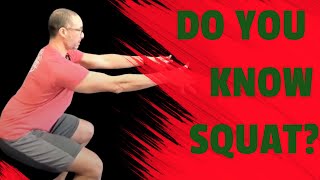
In this instructional video, Ekemba Sooh (also known as Akimbisso), a seasoned therapist and trainer with 30 years of experience, explains why the squat is a foundational movement among the seven primal motions that shape daily life. He critiques common, unscientific squat teachings and introduces a holistic, science‑backed framework that integrates posture, biomechanics, and body systems. Key concepts include the plumb line and gravity line of postural alignment, the "beam phenomenon" that keeps the torso stable, and the myriad anatomical components (pelvic floor, diaphragm, core, fascia, feet) that must be trained individually for an optimal squat. He discusses the pros and cons of barefoot versus shod squatting, demonstrates proper squat mechanics (pelvis and chin tuck, knee‑dominant movement, torso‑shin angle alignment), and highlights typical form faults and their corrective strategies. Throughout, he emphasizes the long‑term health implications of poor technique, shares a personal injury story, and encourages viewers to engage with his free resources—a Facebook community, ebook, and personal consultations—to develop a deeper, injury‑free relationship with their bodies.
Chapters
The squat. The squat is a very important movement to get down. Not only is it part of the seven probable movements which take us through life, but it's also really important for your postural system. Now, I'm not going to just regurgitate information on how to do a squat. I'm going to dive a little bit deeper on all the components necessary for a good squat to do in the gym, but also in life. Hello, I'm Akimbisso. I'm a summer therapist and some a trainer. I own Soul Core Fitness and I've been in this field for, professionally for 30 years. And I started off as a personal trainer, but I've been working out since I was been about 16 years old. So tack on another five or six years of experience of being in the gym. At the beginning I got a lot of hearsay information on how to work out and I'm sorry to say it was 90% bad because most of the information you get in the gym is not based on science. They may have some information, but it's kind of convoluted in this is what I felt and stuff like that. You need to use experience. This is what I felt with science. Okay? If not, you're kind of guessing and listening to Joe in the corner who's been working out for a while but doesn't know the science of exercise. Again, that's why in school, in class or degree, they call it exercise science. Now I go a step further and, and I make it holistic because guess what, that's how the body is designed. So it's about combining how everything's connected with the science and experience so that you can live your best life. That's what I'm going to talk about here on this channel. It's more of a holistic way of doing things that is steeped in science. So if you want to hear more, then subscribe and hit that bell to be notified. If you like this video, please give it a thumbs up because it tells the YouTube overlords that this is good and I show it to more people. Then share with your friends. So the squat is part of the seven primal or basic movements that we do in life. Squatting, bending, pushing, pulling, twisting, lunging and gait. Which is your walk or your run, those movements are done by themselves together all the time in life. There's no getting away from that. You can also talk about global movements, right? So global movements is more of a broad topic saying I use my whole body to produce a movement. That global movement can be one of the seven primal movements. A combination of the seven primal movements or something just more abstract like dancing, which does use them, but globally, I'm using my whole body to produce a movement. Now back to squatting. Now, when you go to squat, you're going to be learning to squat consciously or unconsciously, meaning you're either consciously teaching yourself to squat or you just go into a class or a trainer and learning it kind of unconsciously, kind of just doing it. I can't tell you how many people I've seen show me a squat that does this. Right. I assume that because the teacher in class was doing that for tighten your booty class or burn body fat. And some of the techniques I'm seeing in some of these functional training classes aren't functional at all because the function of body will go down. I know because back when I was like 16 or 17, whenever it was I was taught to squat like that, head up, butt out. I'm not quite sure what the thinking was back then, why to teach it that way, but that is totally stupid as a terrible way to do a squat. Yet it's still being taught today. There's a lot more details I'm going to talk about later on, what could also be part of a good squat. But just from this standpoint, if I'm sticking my butt out and looking up, that's a lot of force in my lower back and my neck for through gravity. And if I have weight on my back, through weight. So now the forces aren't going through my body nicely, they're stopping my lower back and my neck. And so when I ended up getting an L4, L5 pinch of my vertebrae and sciatic pain, part of that, a big part of that was a squat that started when I was 16. And so I got the injury at like 35. So like it's a big time in between, right? So learning how to squat and in particulars of the squat, like all global movements, is very important. So now the big difference between the squat and the other six primal movements that the squat you can use to directly influence how good your posture is to the other ones use your posture, but they don't help it get better. So your postural system is made up of two main components. You have your plumb line, which is your ear, shoulder, hip, knee and ankle lined up approximately, right? And so the squat doesn't. It doesn't help that get better. But having a good plumb line helps the squat. So it's better if I, if I have a posture like that. Before I put a bar or do a body weight squat, if I have a posture like most people like that, right? Because if I squat in this position, it's going to make my plumb line posture worse. The other component is a gravity line as part of the postural system. So you have a plumb line and I have the gravity line. The gravity line is an inverse 4 degree cone. So right below my pubic bone as it comes up, it envelops me in 4 degrees. I want to keep myself in that 4 degree cone. There's some basic areas of your body that communicate to your brain to tell you where you're in a plumb line. Your feet, your spine, your eyes, ears and tmj, they all tell the brain I'm here in space. If one of those is off, your body thinks it's somewhere else. The squat can help with that gravity line position as a global movement to help keep you in that 4 degree cone. Now, the squat, like most global movements, is made up of a bunch of different little parts working together to make one big movement, right? You want to work with your body in all these little individual ones before you try to master big ones. So the easiest way I can tell you about this is your body is interconnected together and interdependent. That means they all work together. It's like a links of a chain, right? So you're a bunch of links in a chain, and you're only strong is your weakest link. So if one of my links is a piece of bubble gum, then when I could do a squat, my squat's only as good as that bubble gum link, right? And it's a little silly to think about, but I want an extreme example for you to think about. So in all these aspects I'm about to talk about, you need to train them separately. So with a squat, there's a thing called the beam phenomenon. Means when I squat, when I do my movement, I want my torso to be like a beam, like a, like a 2x4. I want that because as I move up and down, I want to stay in my beam area and not wobble around because it wobbles around as I'm going up and down. With force, I can even body weight. But even worse, with weight on your back, that force goes in weird places, places you don't want it to go. So you want to have a strong pelvic floor, abs, diaphragm, pec lats, serratus, interior and buco mouth, pharyngeal down your throat, fascia. These components keep me in that beam phenomenon. And each one needs to be trained separately. But again, you're squatting, so don't forget your feet. Your feet are on the ground and need to push you up and down, so they need to function properly. Which is going to lead me to a quick side note about squatting without shoes. I'm all for being barefoot and letting your feet do their job. I tell people to walk around without shoes at home all the time to do different things, to train your feet. But when you do weighted squats, heavy squats, and you go up and down, your foot's being supported by your arch, namely your navicular, okay, bone on the inside of your foot, the arch part. And so if that navicular arch can't support the squat up and down, it collapses. So I'm not saying don't squat without shoes, but there's a certain limit to the weight that you should be doing. So if you're going three, five, even eight reps and that really heavy weight, I probably wouldn't not wear shoes. I'm gonna wear shoes with some arch support. How's your squat? Are you working on it? Did you know about all those different parts of your body that are involved in a squat? Well, stay tuned, because I'm go over some more details on how the form of the squat. Okay, so let's talk a little bit about the form of a squat. So I'm dealing with my hand, and then I got my bench here, so I can kind of show you a couple. A couple reps. But first and foremost, I want my body to be even. And this is from math. It's not from. Because Akimba said so. That's my upper body. That's my. My tibia and my shins. Okay? I want my upper body, my shins to be the same angle as the up and down, because that means my center of gravity stays below me right here like that. If I don't do that and I end up bending forward, my center of gravity goes back and I get more tension in my lower back. Or if I put. If I don't do. If I go too far forward, my center of gravity goes forward and I tip back and I get too much tension in my knees. So you want to be even. I always tell people kind of like an accordion, because to me, that made sense. I don't know why, because you're folding yourself kind of in thirds as you move yourself down and up. But the whole goal is to move straight down, straight up. So the two areas I see People have issues with are keeping their pelvis tucked and pushing their knees forward. So a term that was used at some point, I don't know if they still use it now, is that a squat is a knee dominant movement. What that means is the knees dominate the movement of going up and down. It's the main area that you want to focus on to produce that movement. Now, it's not the only area, as I'm going to show you here in a second, but think about the knees moving up and down. So when I go to squat. Ouch. When I go to squat, the first thing I want to do is I want to stand like I'm standing on a clock. Right. 12 o' clock is my pubic bone. My feet are 10 o' clock and 2 o'. Clock. That's normal physiological position of your feet. People tell you to turn your toes straight ahead. That's internal rotation. Standing like that in some varying degrees is normal. That's your feet. That's normal. Okay, so as I stand there in 10 o' clock and 2 o', clock, I want to first think about tucking my pelvis and tucking my chin. This is part of that beam phenomenon, the pelvis tuck, the chin tuck again. Those other aspects I talked about before, that need to happen. Let's start with just those. After I tuck, tuck again, knee dominant movement. So my knees start moving forward first. And because I want my torso and my shins to be the same angle, then I start to bow forward. I like to reach forward because I want to have a little counterbalance. Then I move myself down and up, knee dominant movement, keeping my torso and my tibia, my shins, the same angle. Now, if you're having trouble tucking your pelvis when you do that, couple reasons. One, your abs, and specifically your lower abs are not strong enough to keep your pelvis tucked. So you need to train not just your lower abs. Please don't think that train all of your abs. But understand the lower abs are for that tuck, but it can also be through tight chain, tight myofascial chain. So when I go to. When I go to tuck, I could have the strongest abs in the world. But if all this is tight and is stopping the tucking, then I'm going to lose my tuck. So it's not just the abs you want to think about. Am I tight through my lats and serratus and all those thoracolumar fascia, all that fashion and back for the knees going forward, the big thing I see is tight soleus and calves because as they go down that area, the heels start to come up and then they stop moving forward, which stops it moving forward. So at basic, you need to stretch the soleus in the calves, but you also probably need to strengthen, because I can only stretch a muscle that's there. So if I don't have muscles in my soleus and calves, I also need to strengthen because muscle tissue works much better than tendinous type tissue. Now, when you practice that, if you see you have issues with the squat in one of these different areas, you need to stop and deconstruct that and then to reconstruct. Now, that's difficult. If you're in a class or in a training program where the focus is more on body fat loss, which the majority of classes are, or a class that uses quote unquote, functional movement to produce a certain effect for a competition, they're going to do later on with the same type of movements. The coaches or trainers might teach you some basics about form, but taking time to learn something takes time, right? So you can't just. I can't just show you a couple of movements and you do four or five reps, 10 reps maybe, and you got it down and take some time, because if you don't take time to do it, when you go do that class or that training session and the goal is to perform or to burn fat, you're going to lose your form, right? It's like if I was teaching myself to type and I didn't teach myself where the keys were because the goal was to type as many buttons as possible to fill the page. I don't care about typing it properly, proper words. I care about filling the page with letters, because that's what my coach told me. So if you don't learn to squat and go through, you're going to be damaging your body. Now you may think, oh, Kemba, I don't feel any pain. I'm not damaging my body. You are. You're beginning to damage your body. You don't feel, you don't feel pain at the beginning, damage your body, you feel it later on. Like the example I gave myself of being taught a bad squat at 16, but then at about 35 or so, getting the injury. It's like a leaky faucet, right? So if I have a leaky faucet and the drip starts at the beginning, maybe I notice it, maybe I don't. It doesn't, doesn't mess up the basin of the sink. But after 10 years, 15 years, 20 years, there's going to be A hole, there's going to be rust, right? Because I didn't fix the link. The link, the leak at the beginning. Okay, now that you got this great information to squat, what you need to go do is go practice. One of the greatest gifts exercises can give us is to develop a relationship with our body because it'll tell us where we're tight, where we're weak, where we're disconnected with so we can do something about it. So it's not a curse of your body if you feel tight or weak or disconnected. It's just your body telling you, hey, brother or sister, I need a little assistance, right? Because when we find those things out now, we can do something about it to have it work better. Because if we can take care of our bodies, our bodies will take care of us. We've been given this wonderful gift of a body, right, that we can keep for 70, 80, 90, maybe 100 years. So as soon as possible, get to know it and take care of it so you can live a great life. If you want some assistance on this, which most people, most people need, then I'd be happy to help. So I've got a free Facebook group where you can be more interactive to learn about this holistic way of taking care of yourself. In the description below, there's a link for it or all you gotta do is answer some questions, let us know a little bit about yourself and you're in. You can now participate in challenges and master classes and interactions within the group. Or if you want, don't want to do that, there's a book, I've got a free ebook. It's on how to live your best life. There's four steps to it, to become mobile and to get out of pain. And like I said, to live your best life. Again, in the description there's a link. All you need is your name and email. We'll give you an instant access. Or if you want to talk about your situation and what you can do, I've got a link in the description to set up a time to talk to me via calendly. So I hope to speak to you soon. Good luck to you and I'll see you next week.
More from Ekemba


From Pain and Fractures to Strength and Freedom — Maria’s Story | SolCore Fitness & Therapy




Regaining Independence: Mary’s Journey with Holistic Healing for Scoliosis and SI Joint Pain




