What to do in the gym? For longevity
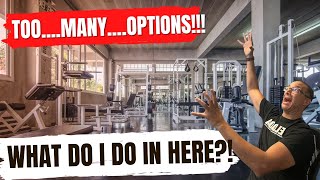
In this video, Ekemba Sooh, owner of Soulcore Fitness and a soma therapist/trainer with nearly 30 years of experience, explains why typical big‑box gym memberships and their generic class‑and‑machine offerings are insufficient for a true longevity‑focused fitness program. He argues that longevity requires a structured, progressive, and holistic approach that integrates posture, foundational strength, mobility, fascia health, and proper cardio and strength progression. Randomly mixing classes, machines, and trendy workouts leads to overuse injuries and fails to provide the systematic development needed for sustainable health into the 80s and 90s. Sooh outlines how to assess one’s baseline (posture, primal movement patterns, small‑muscle deficits) and then design a personalized program, ideally guided by a knowledgeable professional rather than a sales‑driven gym trainer. He also promotes his free resources—a Facebook community, a “How to Get Mobile” ebook, and a complimentary diagnostic call—through which he offers tailored coaching, online programs, or in‑studio work in Santa Fe. The video blends instructional content with promotional calls‑to‑action, urging viewers to avoid the pitfalls of generic gym routines and to seek a comprehensive, individualized plan for lasting health.
Chapters
When searching for a program that's going to give you strength, mobility, flexibility, well being, you know. A program for longevity. These big box gyms may look tantalizing. They seem to have everything that you want. You can go to one place, pay one fee and cover all your bases. Well, that's not really the case. So I'm going to go through how you might be deceived in these places and what you really need for a program for longevity. Hi, I'm Akima Soh. I'm the owner of Soulcore Fitness. I've been in this health and fitness field for almost 30 years. I'm a Soma therapist and I'm a soma trainer to help you understand what that is. It's like a physical therapist but much more within the osteopathic medical discipline. Stretches and exercises in therapy to help people live their best life. I started as a regular personal trainer and like most personal trainers I started in big box gyms. And so I've seen how they market to people and what they offer people and I've seen how they let them down. I believe in more of a holistic philosophy and so that's why I talk about here on this channel. If you want to hear more about the holistic philosophy and how it can benefit you, then subscribe to the channel. Hit that bell and you'll be notified once a week. If you like this video, don't forget to give it a thumbs up and and share it with your friends. Taking a tour through a big box gym can be a tantalizing dopamine filled experience. As that sales professional walks you through, they're pointing out an area that hey, here's where you can get your strength training. In here you can go do different types of cardio. Over here you can take a bunch of classes from everything from mindfulness and yoga to HIIT training to other strength training and body fat loss. You can go over here for stretching. You can get everything you need for this one monthly fee. And you think to yourself, oh my goodness, that's what I've read. I've read I need all these different things to do my body. So if I just pay this one fee and I come here X amount of times per week, I'm going to get my program. But what is it that you really need for your program in this case, your goal is longevity. Longevity means sustainability. Sustainability means I can keep moving and doing what I want to do well into my 80s and 90s until I decide I want to die and I function properly. So by Going to this gym, is that going to lead me to where I want to go? In short answer, no. Exercise is not a collection of random acts of movement. Your body doesn't care that you want all these different aspects. It wants you to follow a path to get there. If I just go to class one day for yoga, and the next day I sit in machines and I work out, the next day I come in, I sit around and do some basic stretching that they've showed me a while ago. That's not a collection, that's not a program. That's a collection of exercises that gets you moving. Maybe get some dopamine. Maybe you have an accomplishment because you felt good. But. But that's not a program. A program is one that takes you someplace. Like when you had your. When you got your degree or you succeeded in your. In your endeavor for your career, you had a path to get there. You didn't just go to school and take a bunch of classes that sounded fun and expect to get a lawyer degree or become a doctor. There's a specific path you need to take there. It's the same with your exercise program. And so when these big box gyms tell you that you're going to get all these different aspects by just paying one monthly fee, that's incorrect. You need to know how to put these together. You need to know the progression to lead to these different things. A lot of progression factors that leads to all the things they have in gyms aren't in gyms. They aren't out there. In a popular type of education, there's stuff that you need to find, professionals like myself who know how to work you up to that level. We all have a body that foundationally works its best in a certain place, right? My bones are here, my muscles here, they're this strong, they're flexible. My brain's here, my heart's here. They all need to work together properly. Okay, well, if I have a body that's design like that, then the most advantageous thing I can do is to train my body foundationally, leading up to whatever I want to do. But if I ignore that and just do the gym way of working out, it's gonna lead to a bunch of different issues. First and foremost, outside of not getting to your goals, it's gonna lead to overuse injuries. Every activity we do, everything, even me standing here, has a detrimental effect on the body. Doesn't mean that standing is bad. I just understand because I know the biomechanics in the body, what I need to do. If I stand too long where I need to stretch, where I need to strengthen, how I need to move differently. That's not incorporated in a gym workout. You have a class that you like, that you go to three to five times per week, that moves you in a certain way, that feels good to your ego, right? Just feels good like I'm moving. It's not respecting you, which we'll get into a little bit. And it's just moving you through a random sets of activities. All these activities you do, all these movements, exercises, whatever, have a damaging effect to your body. Not bad if you know how it's damaging your body. So you can do something about it. Bad if you don't know how it's damaging your body and you keep doing it right. So you're going to feel good, you're going to feel accomplished, but then the silent killer is that you're damaging your body. And then after X amount of time it shows up later on. That's the first step in these gym workouts. Second is how to combine them. If I go do a cardio session on the vast amount of cardio, whatever it is, doesn't matter. And then I go to sitting on gym workouts and using machines, that's not comprehensive, that's attempting to get two aspects via cardio and via lifting. But like I said before, it doesn't allow for the progression. How is it your body needs cardio? What level do you need? Do you need to work on base cardio, aerobic? Do you need to work on anaerobic cardio? Do you need to work on what type of strengthening do you work on? What parts of your bodies are weak when you sit in those machines in a gym, or you just grab a kettlebell or a dumbbell and just perform some movements that you've seen in gym or, or on a YouTube on a thing that's not progressing your body to lift those weights? But you're not going to find that in gym. So I've heard the argument, oh, I get two free personal training sessions when I first go there and they set me up on what I need to do and I'm covered, eh? No, they're not. No, you're not. Again, I've been in that situation. When you work for, as a personal trainer in these big places, you're basically a glorified salesman, right? They want to use those first two sessions to entice you to do more because their thinking is, oh, they don't know what to do. If I can lay out an ABC program for them. And they feel comfortable and have me stand next to them as they do abc, tell a couple jokes and have a good rapport. Then they'll continue training, they're going to feel good, and we're going to be making money. But generally, these trainers that start off in these programs are base trainers. You go there when you first start. When you first start is after you've taken your certification. So you don't have a lot of experience. I'm using myself an example. When I first started training at Gold's Gym a billion years ago, I had my base training and I went out and trained and I did what I knew I could. Thinking back now and what I was doing, I cared. But it wasn't the best. Right. There was a lot of stuff that I didn't know that was not being applied into the thing. So you're going to get that level of training when you go through. So when they give you a program from one of those trainers, it's not because it's the most advantageous for your body. It's because it's the easiest to sell. And too often, what's easiest, what sells is what's popular. Think about it. When kettlebells became popular, everybody does and wants to do kettlebells. When hiit workouts became popular, everybody wants to do these. They see these things in the medium. They read a couple of facts that sound like stuff they want to do. They think, oh, this is for me. And you walk into the gym and the trainer says, we're going to do these things, and you feel great. Oh, my God, I understand what he's talking about. I feel safe now. I can do these things. You feel safe because you understand what's going on, but you're not the expert in this situation, right? You don't know all the things you need for your health and fitness. So if you go with what's safe, then it's going to be a problem for you. And if the trainer is giving you what's safe now, you and the trainer on equal levels, that's not what you want. You want the trainer to be the professional, to have a broader view of what's necessary. You can incorporate these things eventually, but that person should be able to tell you how wide they got incorporated and. And if you need it. A quick example of the type of information we'll get from a traditional gym trainer is this story. So I had a friend of mine just recently talked to me about. She's had piriformis syndrome for, like three or four years now. And she wanted to come in and help me help her out. And she asked, said, hey, one of these trainers in the gym I go to told me I should sit on a ball and I should foam roll my piriformis. So for those of you who don't know, you get on your forearms, you cross your knee over, you're sitting down, you have a roller, right? You have a ball right there. It's supposed to roll and release your piriformis. That doesn't work. When you sit on that ball, you're sitting right here. If you have the right positioning, that piriformis is below your glute. It's also around your sciatic nerve and your gluteal artery. So when you sit in that ball, do you know that you're not sitting on your piriformis? Can you tell? Are you pinching your gluteal artery? All these are cause a feeling of doing something because it's painful. It doesn't feel good. On top of that, when you treat your entranal fascia, you want to keep it healthy. Keep it healthy means I want to keep the collagen tubes within the F fascia lined up and flowing because it brings healing, takes away waste, helps me move. Everything's connected. It's proprioceptive, which means it's alive. It communicates my body. So if I take a ball and I put it here and I put my weight on there and I crunch it, I damage my fascia. It feels good afterwards because you stopped, you're done. So, yeah, body's like, oh, that feels fantastic. Thank you. Don't do that again. But you think, oh, I'm doing something because it's painful. I don't quite know where this came from. But more pain does not equal better. If you have to have pain, that's okay. But that's not the only indicator of getting better. So in this instance, they've crushed the fascia tubes. They don't know what they're sitting on. They're trying to release their piriformis because they think that's what they need to do. Let's take a quick break here. I just want to check in. Have you done this? Have you gone to a big box gym and thought you were going to be able to work out in this comprehensive fashion with that one monthly fee? Did it work out for you? Did you enjoy it? Let me know in the comments. So we've come to a little bit of a headway here. Right. We don't quite know where to go because when I go to the gym, I can't rely on the machines knowing how I need to move my body and the progression I need. Can't really rely on the trainers there because of, you know, their lack of holistic knowledge. And you obviously can't rely on yourself because you're not in the industry. You can't just take the headlines of what you need for health and fitness and thinks it covers all. Well, first you need to know what you need for longevity. To have longevity in your life means my body needs to work efficiently. That means the structure in my body needs to be arranged. Like I said at the beginning, if I have. If my body is designed a certain way, and it is, and my body and my bones need to operate a certain way, then I need to train my body to stay in that way. I need to train my muscles specifically to stay strong. I need to train my muscles and fascia to stay mobile and flexible. But I need to combine it as one. So you want to start by, okay, what's my posture? Where am I starting with? Do I have a good plumb line? Is my ear, my shoulder, my hip, my knee, my ankle lined up when I stand straight up? Do I have a good gravity line? Can I stand within my inverse 4 degree cone and manage myself in my seven basic primal patterns? Am I moving well? Do I squat well? Do I push, pull, lunge, twist, gait? I think I forgot this one. Do I do these things well, if I don't. Okay, what are the small muscles that contribute to those movements and that I need to work on from there? Then you have what you need to do. Now, do you need to do this in the gym? No. You can do all this in a. I don't know, I can't do measurements. You can do this in a little area as big as I'm standing right here. You don't need it. The one thing a gym would be good for is that you have the mindset that I'm going there to work out. So some people can work out at home and be fine. Some people try and work out, are of a sudden realize, oh, I gotta do dishes, my dog needs to be pet. That TV show looks pretty good. In that case, go to the gym, right? Pay a monthly membership fee and go there. But don't go there and do gym workouts. Find somebody like myself to give you a routine to do, to go at the gym to do, and then come back and get updates to your routine. For me, that's what a gym is good for, is a Mindset piece. I pay a fee and I have a space to go to that equals me doing something that's valuable, that's very valuable because now you can set that in your schedule. And every time you go to a gym, you have a different mindset. Oh, I'm here for working out, hopefully. And then I take the proper workout from somebody like myself and I apply that. I just brush over some of the stuff that you need to have a strong, mobile, flexible feeling, good body for longevity. I just brushed over it. There's a lot of different factors. There's a reason why people like myself study for decades on the body or why doctors go to school and for residency for, I don't know, eight years. About the body. The body is complex. There's a lot going on with the body. It's not as simple as pick up a couple weights and move them a certain way and then move on to the next one. It's much more EAS intricate to that and it's intricate for you. So if you want to find out more on how to take care of your body, I got some options for you. First and foremost, I've got a free Facebook group. It's so core fitness, strength, mobility and flexibility for active people. The link is in the description. You click on it, you answer some questions so we find out more about you, agree to the terms and then we let you in. From here you can have an interactive way to find out more and what your body needs in this holistic fashion. I do mini trainings, 2, 3 minutes on topics I find interesting. We do discussions in the group. I do master classes where I take a topic and I really expound upon it. But it's interactive. You ask questions while I give a presentation. And also there's challenges. So we'll take a time, three to five days. I do a topic or area body that I want to work on. I present about that. But then we also do stretches and exercises, what we're going to do for that area so you have a better idea of what you need. If you're not into that, you're not into Facebook, that's fine. I also have a free ebook. It's how to get mobile and it's four steps to living your best life. So again, in the description, you can click on it. All you have to do is put in for your information and you'll get instant access. If you're ready to go, though, if you're feeling that hunger like you want to start now, which is always the best time to start, then in the description, there's a link for a complimentary diagnostic call. You'll speak with me and we'll find out what you're going for, what you're going through, sticking points you have and where you want to. Where you want to end up. This way, I can give you valuable information. I can let you know, hey, I think you need to go this way. If I see you're a good fit for a program, only if you're a good fit, I'll offer you an opportunity to join us either through our personalized online program or in our studio here in Santa Fe. Otherwise, don't just settle for a gym workout. Don't treat your body that way. Your body loves you and just wants some love back. And just randomly going to a gym and doing what you think you need to do for a holistic program is not going to get you where you want. In fact, it's going to take you backwards. It's going to potentially injure you. So best of luck to you. Stay tuned next week. Take care.
More from Ekemba


From Pain and Fractures to Strength and Freedom — Maria’s Story | SolCore Fitness & Therapy




Regaining Independence: Mary’s Journey with Holistic Healing for Scoliosis and SI Joint Pain




