FULL Shooting Workout with NBA Champion / Euroleague Champion Elijah Bryant
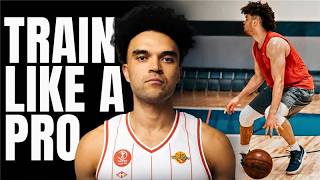
NBA and Euroleague champion Elijah Bryant works through shooting drills focused on footwork, deceleration, and mechanics. The coach emphasizes parallel feet, loading the ball on your toes for higher arc, and keeping your right foot behind your left to prevent drifting. They reference Damian Lillard, Steph Curry, and Klay Thompson as shooting models.
Chapters
Hey, what's up guys?
Welcome back. Today for me, it's not necessarily about intensity, it's about the consistency, you know, how I'm stacking those days daily. So we'll have my basketball, you know, and we'll have the weights. So let's get to it.
So really lock in, even going left, it's easier going left, but really lock into that left foot. So every time you stop Right, do not let this left foot do this. Get it parallel with this foot and then just fade from there. Yeah, like that. See how it's more balanced, more fluidity, but it also makes it harder to block. Yeah, it's easier to make too because you're not fading, drifting, you're going this way. Yeah, see that, that's much harder to block, easier to make. More balance. This is why when all dad coaches are yelling, square up, it's like, no, don't do that. Even on a free throw, you don't want to be square. Yeah, but on these types of shots, you're like literally at a 45 to the rim. Yeah, so see how on that one, after the shot fake, that was like a nudge. Yeah, yeah, like big body, you like that. Sometimes you don't need it, but sometimes like, yeah, get away. Yeah, yeah, especially if they leave their feet because there's gonna be a foul on them.
Only problem where I get hurt, who I think this is gonna help, is they're bigger than me. So I get here, they don't bite on anything, I nudge. I think that's where this comes in.
Bam!
Yeah, and you can add the, the rocker. Yeah, yeah, right. So you don't have to just pivot, right? You can—
yeah, and then come back, because on the third move they'll bite for sure, right?
Last one is a speed stop inside outside. So if you want to get your shot off as quickly as possible, you need to be able to go inside outside right into your shot, and you're not drifting, which has been your issue.
In order to do that, if you're going full speed, how do you— how do you—
you challenge elite decel, like landing.
So you're trying to slow down as fast as possible.
You're not like—
because when I go that way, what makes me stay straight is that left foot behind me. But going this way—
yeah, this way you don't need to worry about that. Over there we do, because we're moving which way?
Left. Left.
So you don't need to worry about the— the right foot's going to be in front on all of these, right? Whether it's inside foot stop, foot replacement, outside foot stop, foot replacement, or speed stop inside outside, all of them, the right side's just going to stay in front. Over there, you don't want to force it in front, but that last one, that speed stop's going to look like this. See that?
Yeah.
And when you do that previously, because of the ankle mobility, you would end up— yeah, drifting. You got to jump straight up. That's where the split stance is really helpful over here too. Even though you're moving left, if you force yourself to jump straight up and land in a split stance, the decel is going to be more balanced. Yeah.
All right, let's do 3 each way.
So, so see how you ended up jumping forward?
Yeah.
There we go. Yes. So that's the quickest way. Inside, outside, speed stop.
Go.
Yeah, nice.
Heavy on back foot.
Shoulders went backwards. Yeah, there we go. Cut. So on this side, doesn't matter which one of the 3 you're doing— inside foot replacement, outside foot replacement, or speed stop— on none of them do you want to get that right foot in front of the left before you leave the ground. Slower, less balanced, less woody, and more likely to fade and land heavy on the back foot. So no matter which one you're doing, You are leaving the ground parallel with the 3 or right foot slightly behind the left. So at the very most, you're going to be here. You're not going to end up tilted with the right side in front. Jump straight up, land heavy on the back foot if anything. Yeah, nice. That's it. Right foot was behind on that one. Yeah, the ankle mobility is getting better.
Yep, tough. Yeah, curve it.
Take it off to see if you can load it a little bit more. Yeah, and then make sure— yep, a little bit so it's flat. Don't, don't do that. Flat, then high lift point, lots of arc.
So loading it is—
yep, right there. Yeah, perfect. That'll help you get the ball back to you quicker. Yeah, and then get it up. Yep. I went crazy with the cheese grater tool in my shower this morning. Really? There was, there was a little bit of blood. It's the only way to get the scar tissue off. Yep, nice. Check in with your shoulders, make sure they're level before you start.
Yep.
Sometimes when you're focused on loading your wrist, your right shoulder like comes down. You don't want that. Yep, there you go. I always get the right shoulder a little bit more in front. Yeah, so this helps, right? Like, when you're like this, it exacerbates that issue. Yeah, when the seams are tilted with your hand, it's easier to fix that. Use your toes from here, right? No knees and hips, just toes.
About to go low.
Go, go inside the high school 3.
Lower setup point.
Yeah, lower, lower lift point.
Yeah, lift point.
You can lower your setup point too for more power.
Nice.
That one you had more power because you bounced up on your toes more. That's the make we don't want. Yeah, where it rattles in because it was flat.
Shoot higher.
Yep. And if you feel like you need to scoot up a little bit more to get it up, then scoot up. Yeah, more toes.
Toes.
As fluid as you can be, get the ball back to you quicker.
Yeah, still has to be higher though, cuz yeah, it bounced back to you.
Nice.
I'm gonna try a few of the— so yeah, get wider for these when you add the hips. Yep, you have to drop a little bit more on the dip. Yep.
Yeah, right there.
Yep, because I suffered with the plantar fascia too last summer.
Last season?
No, 2 summers ago. So don't play with my feet. Trying to get them stronger though. So these are the Anta 1s. I like them, they're, they're solid. Kyries was what I wore winds before we switch. Not with KDs, but thought I would test these out during the summer. I don't ever test the shoe out during the season, rarely, because I don't want to have any funny business happen, you know what I mean, chat?
So you said we should do the same moves as last time? That's a drift. Oh, so that's what you like to do. You got to get rid of that habit where you're kind of like struggling on the decel. Sometimes you'll jump forward. Yeah, so you'll, you'll jump forward into it and then you lose your balance and end up drifting. Get a clean decel and fade parallel with the baseline and get that right foot all the way off the ground. Yeah, nice. Show me your start. So just get a little bit wider, right? That allows you to get more weight to this ball of your foot and activate this hip. Leave that knee out like that. Get a little wider with your front foot.
There you go.
Like that.
Like that.
Yeah, and then just don't, don't be that lengthy. Just a little bit less length. Yep, nice. You're going to be able to challenge your exhale and decel better like this.
Go on the inside of the—
you're always too narrow. Yeah. And then you just get on the toe. Yeah, yeah, yeah. You got to get a little bit wider, not longer, just a little wider, and then load the ball of your foot.
Yeah.
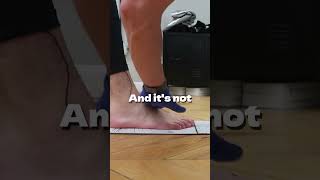
If you get that isometric hold where you're really on the ball of your foot and there's like a line going through, like just like, uh, I was showing I show my players the lane line right here. This is part of a mobility routine where there's a nice little gap next to the lane line on both feet. That's what's going to allow you to activate your hips. Like, if you're almost touching the line underneath you, you can't really activate your hips and the balls of your feet. So get a little bit wider, activate the ball of your foot, and then don't go backwards, right? As soon as you get, get that dribble— like, as soon as you get that second dribble in your hand, push off the ball of your foot without going backwards. You're just going forwards.
Yep.
So pass is coming from what side? That's right, right, right. So on this side, don't force that right side in front before you leave the ground. Yes, like that. See, right there, if we— if you looked at it, you'd see your feet were perfectly parallel with the 3 when you left the ground.
Yup.
What's the difference between that one and the one before? The landing. Like that. Good.
Clean. Good.
More arc.
Nice.
So as you get into this, if you push backwards into it, Or if you try to get that right side in front before you leave the ground, it's going to feel awkward, less balanced, less fluid, right? So what you want to do is just get this foot on the ground at a 45. See this? Yeah. So same way you're leaving the ground on the other side, but your right side's behind. So as soon as you get here, you got to immediately fade and get that right side in front in the air into your lift point. Yeah. You just need reps in this, dude. I don't think it's— it's not hard though. Right foot in front. Yep, that's nice. I would take a little bit more of an aggressive downhill angle into it. Yeah, nice. Nice.
Good.
But you still want to, like, on the aggressive angle, you still want to leave the ground more at a 45. So when you take the more aggressive angle your right foot is like this. Yeah, see that, right? You still want to leave at a 45. So I'm downhill, but I still stop like this. Okay, not— I'm not trying to turn until I leave the ground. So I get here, I fade, leave the ground. Now, sir, now get the shoulder in front. Yes, like that. That doesn't just produce more balance and power, it's a better fade. It's harder to block. Yes, like that. That's tough. Yep. Yeah, that's it. See, the previous one was pretty good with the fade angle, but the right foot was still trying to turn. That one, it was— it's the, the right foot should be parallel with the left when you leave the ground, right? So you're downhill, left, left, right. When you leave the ground, this foot should be parallel with this foot. It's this— this should not happen. Right foot forward.
Yep.
Yeah, that's it right there.
Tough.
Yeah, nice. Yeah, yep, good arc.
Tough.
See if you can get that right foot parallel with your left at a 45 when you leave the ground.
Oh, okay.
But when that happens, it's because your left foot is jumping forward instead of decelling. So if you want to shoot close range, you can start closer. Makes you go downhill. Don't go towards the chairs, go downhill. But you got to stop and drop. There, that's a bound. Yeah, but if we filmed it, you'd see that your right foot's leaving the ground like this. You've got to stop, drop here, leave the ground, now turn. That's it, like that. So the pass is coming from the left, but on those shots, which way are you moving? Right, right. So that's one where you would want to leave the ground with the feet parallel with the 3, not right foot in front.
Nice.
Yeah, like that. So that routine is exact same timing as before. You're just starting with a slight bend in your knees to make it easier to balance on the dip.
Yep.
So that's the exact same time.
I feel like Dame Lillard does that. He's like—
all Steph, they all do. Klay, like, Klay's like bouncing, and when you start, he right? When you start your old free throw, you would get to your setup point and you'd be straight in the knees, and then you drop into it, and that just makes it harder on your hips and ankles to balance. Yeah, that's cleaner. Yeah, more, more arc.
Better.
Check your left foot. I think that's perfect. Like, when you get a little wider, it's easier to keep your left foot parallel, and then it's easier to be fluid with your hips and ankles. Nice.
Did you bring tennis balls, or— yeah, what do we have?
I was tired.
I think we all do. That's right, Dylan College.