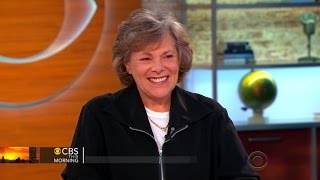
Harvard psychologist Ellen Langer presents decades of research on how mental attitude shapes physical health. In a retreat where men in their late 70s lived as if it were 20 years earlier, vision, hearing, and strength improved measurably. Hotel maids told their work was exercise lost weight and lowered blood pressure; diabetics shown a fast clock had different blood-sugar levels than those shown a slow one.
Chapters
I say over 50 and just getting started. The Golden Girls thought age could be a state of mind. In our morning rounds, can you think yourself to being younger? In studies over 4 decades, Harvard psychology professor Ellen Langer showed that mental attitude can reverse the effects of aging and improve physical health. Now she wants to test the theory on cancer. An article on her research is one of the most shared stories from the New York Times Magazine. Everybody's talking about it. Talking about this, Professor Langer. Welcome to the table.
Thank you.
Because you say it's the power of your mind. So what is your theory? How does it work?
It's a mind-body unity theory. Right now, the mind-body problem that's existed forever is how do you get from this fuzzy thing called a thought to the body? Although everybody knows there's an effect, right? You're walking down the street, a leaf blows in your face, you get startled, your blood pressure increases and pulse and so on until you see it's only a leaf. And so I said, well, let's forget about how you get from one to the other and in fact see those as just words, mind and body. But give us some examples. Let's put the mind and body back together. Then wherever you're putting the mind, you're necessarily putting the body. So we've done lots of studies where we put the mind in unusual places, take the measurements from our bodies, and it also explains things like placebos and spontaneous remissions.
Let's take one example, the counterclockwise studies.
Okay, that was the original of this. I took men to a retreat that had been retrofitted to 20 years earlier and had them live there for the week as if it was 20 years ago.
How old were the men?
They were in their late 70s, early 80s, and that was when 80 was 80, not the new 60. They were old, right? And they lived as if it had been the past, so they spoke about the past in the present tense. And after a week's time, we found that they looked noticeably younger. They didn't look 20 years younger, but they still looked younger. Their vision improved, their hearing improved, some of their cognitive processes improved, and their strength improved.
Tell us about the hotel maid study.
I love this one. Yeah, I love this one. So interesting, when you— when we first spoke to chambermaids who exercise all day long and we asked them, how much exercise do you get? They said they don't exercise. Okay, now what we did was we took half of the people we were talking to and we taught them that their work is exercise. Making a bed is like working on this machine at the gym and so on. All we did was change their view of what they did every day. Their perception. Right. We came back 3 months later, we found weight loss, a change in waist-to-hip ratio, body mass index, and their blood pressure came down. Well, tell me—
Simply because you had told them that they were getting exercise.
Yes, they started thinking differently. Talk about the power of the mind over your health when you talk about cancer and diabetes, what you found.
Well, okay, the diabetes study is This is hot off the press, so we still have to replicate this. But we had people who had type 2 diabetes show up for the study. They're doing a task on the computer. In the lower right-hand corner of the computer is a clock. The clock is going twice as fast as real, half as fast as real, or it's real time. And the question we're asking was their blood sugar level going to follow real or perceived time? And the answer seems to be perceived time. With respect to the work on cancer, we haven't begun that yet, but the idea again is we want to see how far we can push this.
You're going to do a study with women who have stage 4 breast cancer.
Right, exactly. And so we're going to take them to a retreat, and for them it's going to be, let's say, 10 years— I'm not sure if it's 8 or 10 years earlier— the time before they had the cancer, and to see if by taking their minds back in time And then we teach them to be mindful, as I study it, going forward. If we can reduce the size of a tumor or perhaps even eliminate it, it's—
What was the study with the houseplants? Did you put the houseplants in the—
The houseplants—
In the nursing home.
I love it. That was the very beginning of all of this. What we did was give people simple decisions to make that later became the basis of mindfulness work that I've been doing for all these years. So they're encouraged to make decisions. They're given a plant to take care of.
This is in a nursing home.
In a nursing home. But you have to put it in time time perspective. This is, you know, many years ago. This is back in the early '70s.
But the results are interesting.
We came back 18 months later, and those who had been given these mindful choices to make lived longer.
You told the people that if they don't take care of this plant, it would die. And those you told that to—
No, we didn't. We didn't threaten them with death of plants.
Yeah, but they were responsible for its well-being.
Yeah, right. And the comparison group was treated with tender loving care.
We can tell you—
You're going to be tough in nursing home.
Does this mean, say, for example, If older people have a dog or have something to care for?
Yes, I think that if you have something to care for, especially if what you're caring for leads you to expect it's going to change, so you're looking for new things, and that's the essence of mindfulness as I study it. Actively noticing new things, and it brings about incredible changes.
They say there could be a movie about your work and Jennifer Aniston could be playing you. How do we feel about that, Professor?
Any movie will be very nice. It's been taking so long to be made. I'm now reassured that it will happen. As to who will be playing me, we'll still have to wait and see.
Good.
Wow.
I hope everything you say is right.
So do I.
Well, Ellen Langer, you're the longest-serving professor of psychology at Harvard.
But not the oldest. No, not the oldest.
Well, fabulous research. Really enjoyed learning about it.