Ellen Langer: Mindfulness over matter
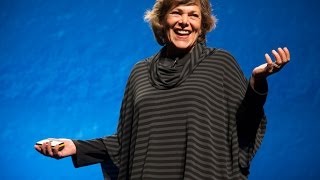
Psychologist Ellen Langer argues that mindfulness produces measurable changes in health, creativity, and behavior. She shows how chambermaids who reframed their work as exercise lost weight, how elderly people in a retreat designed to feel timeless showed physical improvements, and how subtle shifts in attention and context alter perception and performance.
Chapters
Hello? Hello? All right, what I want you to do is play along with me because then you'll get a better sense of what I'm going to try to show you. So the first thing is, what is this? A cow. Now, those of you who don't see the cow, don't worry. The others only see it because somebody previously told it to them. All right, this is the way the world starts off for us. We have no idea what it is. Then somebody labels it. Now, the problem is that once it's labeled, we're no longer able to see it in any other way. And that's the way we learn about most things: who we are, what we can do, what the world consists of. We can meet back here in 10 years— it'll cost you more bagels, Andrew— and I'll show you the slide again, and you'll see it's impossible not to see the cow. Let's play some more. Add these numbers with me. 1,000. 1,040. 2,040. 2,070. 3,070. 3,090. 4,090. 5,000. OK, now I want to do this one more time. I want you to add 4,090. And to that, add 10. Okay. The argument that I'm going to be making and have for the last 40 years is that most of us are mindless virtually all the time. So I don't understand the intern who spoke about soon we may be living with robots. I think that most of us already are. Okay, I'll give you a simpler one. Tell me, how much is 1 and 1? 2. Now if I start with this, people usually go, oh no, we're going to have to listen to this for a long time, that it's so ridiculous. But it turns out 1 and 1 is 2 only some of the time. 1 and 1 is 2 if you're using the base 10 number system. If you're using the base 2 number system, 1 and 1 is depicted as 10. Easier to understand. You take 1 wad of chewing gum, you add it to 1 wad of chewing gum. 1 1 is 1. So I want to argue that almost all that we think we know is wrong in at least some context. But we'll go further. Do you know David Copperfield, the famous magician? Okay, what he wants is for you to pick one of these 6 cards. Everybody picked a card? Now for this to work, you have to look right in his eyes. Okay. And He makes sure he doesn't know you. But he's going to tell you which card you selected. Look, your card is gone. Now, for how many of you is your card gone? Yes, you see, I'll have to talk later to the rest of you who wouldn't raise your hands. And the reason for that is every card is different. OK, so what happens is we don't see what's right in front of us. We don't see what's to the right, to the left. And all the while, we're oblivious to the fact that we're basically not there. So for those of you— for those of you over, let's say, 45, tell me yourselves, the person sitting next to you, what you do. You're driving along on ice and the car starts to skid. What do you do? Okay, and what you're being told by everybody in the audience is that you gently pump your brakes. Now that made sense years ago when we learned how to drive. However, now that we have anti-lock brakes, that very thing we learned for safety's sake is now dangerous. What you do with anti-lock brakes is you firmly step on the brake. And the point of that is that this mindlessness is not stupidity. It's behavior that made sense at time one. We took it in without questioning it. We're using it over and over again. Things are slowly changing. And we're oblivious to it, and at some point, the behavior that made sense now doesn't. I'm in this store, and I make a purchase, and I give the cashier my credit card. And she saw it wasn't signed, she asked me to sign it. Okay, I signed it. She then ran it through the credit card machine, asked me to sign the credit card form. I signed it. She then compared the two signatures. It would have been very bizarre if they didn't match. All right. And the point of this is that we're unaware of when we're mindless. Again, when we're not there, we're not there to know we're not there. And I'm suggesting we're not there too much of the time, and that is taking away from us years of our lives and vitality and a way of being that I want to discuss in a few moments. I'm at this horse event. And this man asked me if I'd watch his horse because he wanted to go buy his— get his horse a hot dog. Now, I'm Harvard-Yale all the way through. I mean, I was the kind of student you hated, the one who would memorize what was under the pictures. I knew everything. Horses don't eat meat. Horses are herbivorous. So I try to be polite, not to tell him I think he's crazy. He goes and he gets the hot dog, and the horse eats it. And then I thought, what does it mean horses don't eat meat? How many horses were tested? How much meat was mixed with how much grain? How hungry were the horses? How big were the horses? And so on. These are the hidden decisions similar to this in research, that if you change any one of the parameters, the results very well may be very different. At best, research gives us probabilities. That means if we do the exact same thing, which we can't do, that much of the time will get these same results. This is translated in talks, in textbooks, by the media as absolute fact. When it's absolute fact, you lock yourself in. This is a cow. Right? And what that leads to is us being frequently in error but rarely in doubt. The way to understand mindlessness, it's an inactive state that's characterized by reliance of distinctions and categories we drew in the past. So the past is guiding. We're not there in the present. We're oblivious to it. We're trapped in a single perspective. We're insensitive to context. And rules and routines that might have made sense at time 1 but no longer make sense are still governing our behavior. Okay? Now, in contrast to this, mindfulness as I study it— this is mindfulness without meditation— is so simple. It's an active state of mind where you're drawing novel distinctions. You're intentionally noticing things. When you're noticing things, you're in the present. Everybody says, "Be in the present." And again, the problem is when you're not there, you don't know that you're not there. This is the way to be there. You notice new things, you can use rules and routines, those rules and routines guide what you're doing. And the experience of this mindfulness, of this active noticing, is the feeling of engagement. Okay? It feels good. It's what we do when we're having fun. Humor relies on mindfulness. Later, you tell Andrew to give me an extra 2 minutes, and I'll tell you a joke to prove that to you. All right, the point of this is, as we notice new things, we become aware of the inherent uncertainty. Everything is always changing. Everything looks different from different perspectives. So it's a great mistake to hold it still. Now, the time and money we spend trying to increase health, creativity, and vitality, I suggest, would not be necessary if we didn't teach people to be mindless in the first place. But there are ways for us now to learn to be mindful even though we've gone through a system of education and have been trained in families and so on. Not to be there. No matter what we're doing— giving a talk, listening to a talk, playing golf, eating a sandwich— no matter what, you're doing it in one of these two ways: mindlessly or mindfully. Now, I'm an academic, right? So I can't say what I really think because it's in print. I say most of our suffering. I really mean all. All of our suffering. Psychological and physical is the direct or indirect effect of mindlessness. So for over 35 years— I started when I was 10 years old— in study after study, we teach people one way or the other to be mindful in the fashion that I explained before. And what we'd find are measurable benefits to our creativity, our competence, our psychological well-being, and our physical health. Here are just some of the results. There's obviously not enough time to go through all of it. But you see, we go from an increase in innovation to an increase in neonatal health. People live longer. All right? And I've got hard data on each of these. Okay, people know if we're mindful or mindless. So John Saveloka and I did this little study a while ago. We had people that were going to sell magazines door-to-door. We had one group learn the script and then go give it. We had the other people learn the script, but then when you give it, we said, just make it new in very subtle ways that only you would know. Okay, they go, somebody else follows to find out what the client thought. Well, what happens is that when they were there, they're evaluated as more charismatic. Those of you in business probably also should know they sold many more magazines. Right. Now we have lots of studies like this. We make people mindful, people are aware of it, people find it attractive. It's the essence, in fact, of charisma. Interestingly, it's even visible in the products of our labor. Okay, so what we did— I think I'm going to take that off so you pay attention to me instead of read it. So we have these orchestras, and I don't know if you're aware, but for many symphony musicians, They're bored to death. They're playing the same pieces over and over and over again because for them it's a high-status job. They're loath to give it up. So we take these musicians of different orchestras, and we tell one group, the control group, we say, we want you to think about the last time you performed this particular piece and the last time you were satisfied with that performance and try your best to replicate it. The mindful group is told, "What we want you to do is make it new in very subtle ways that only you would know." And it was certainly subtle. They were playing classical music, not jazz. We taped the performance, played it to people who were unaware of the experiment to see which they preferred, and we also questioned the musicians about how much fun it was for them to play. And what we find is that the mindful performance is overwhelmingly preferred. So you can even hear people's consciousness. It leaves its footprints in what we do. And the musicians themselves much enjoyed it. Now, one of the reasons that we cling to these routines and we're afraid to try new things is because of our fear of making mistakes. But it turns out that a mistake in one context very often can be a success in another context. So you know the glue CEO gets his company to make a glue, puts a lot of effort and money into it, and what happens at the end of this is that the glue fails to adhere. So that would seem a terrible failure. However, rather than just discarding the whole thing, he then thought, "What can I do with a glue that fails to adhere?" And what he comes up with is a Post-it note. So as a glue, it's a failure. As a Post-it note, it's a tremendous success. Well, we did a study— well, before I tell you about the study, Defogger, the same thing. There are hundreds of these examples where this person comes up with a defogger, sprays the crops of Florida in order to save them. Instead, it produces this icy, snowy substance that ends up killing them. OK, a terrible failure. Somebody else takes the very same machine to spray the slopes in New England when skiers want snow, but Mother Nature hasn't enabled that. OK. Now, in some of the work we've done on innovation, we take all of these products that have failed, and we ask one group, we say the product failed, what would you do? And most of them would just discard it and start again or just leave. Another group, we say, "What could you do with this product that failed?" And for them, many more are able to come up with creative uses. But the most interesting, or the most successful way, is not to prime failure, but rather to go down to a level of property. So for example, with the glue, it would be, "What could you do with a glue that adheres for a short amount of time?" And that leads you on an information search where for the subjects in this study, almost everybody was able to come up with creative uses. I want to switch gears. I've got so much— I've got 40 years of research I want to tell you. I asked Andrew, he said no. I said we should extend this another few days, but he wouldn't let it happen. So I want to switch to an appreciation of some of this work in the context of health. And I want to ask, why are we so sure that we can't improve vision beyond 20/20, think ourselves thin, reverse virtually all brain damage, or whatever you can come up with that you think we can't do? And I want to suggest that possibility opens up for us when we understand the very real difference between uncontrollable and indeterminate. There is no science— not physics, biology, psychology— that can prove uncontrollability. All we can say is that we don't yet know how to do it. And that makes it a little easier to go forward in the face of very little motivation to try something brand new. Um, for virtually all chronic illnesses, there are moments of no symptoms. You still have the disease, If you don't have the tumor anymore? All right? What causes the symptoms to go into spontaneous remission? How do placebos work? Placebos— a doctor gives you a pill, which happens far more frequently than most people realize. That inert drug cures you. Well, clearly it's not the pill. You're doing it yourself. And part of my life's work is to find the ways to return this control directly to us. Rather than have to go through that sham. All right. Biological theories, the medical world can't explain these things. And I want to suggest a simple explanation, a psychological explanation that can. Before I do, though, I have to appeal to gay white men. So you don't find it— don't dismiss it out of hand. All research passes through 3 phases. First, it's ridiculed. Second, it's violently opposed. And third, it's accepted as self-evident. Schopenhauer. Einstein said, "If at first an idea isn't absurd, then there's no hope for it." So this idea is so simple. There's the mind-body problem, which I'm sure you've heard about one way or the other. And the question is, how do you get from this fuzzy thing called a thought to something material called a body? And this has held up progress, I think, for quite some time. I want to argue that mind and body are just words, and if we put them back together, then wherever we're putting the mind, we're necessarily putting the body. Now I want to tell you about a few studies that will seem extreme to you that test this idea. And the first one we did quite some time ago. We were going to take old men— was the first study— to a timeless retreat and have them live as if they were younger. We're going to put their mind in a younger place. All right, now these were 80-year-old men, but this was when 80 was 80, not the new 60. I mean, no, really, they were old. I'm sitting in my office. I'm sitting in my office and they're coming down the hall and I keep saying to myself, why am I doing this? I didn't know if they were going to live through the day, no less the week. OK, it's important to put it in context. OK, so they're going to spend— they're going to spend to spend the time surrounded by props from the past, speaking of the past in the present tense, watching movies from the past, but again, as if now— then was now. Okay, so let's take you back to 1959. Okay, now, the comparison group was going to spend the same amount of time in the same retreat, surrounded by the same props, discussing the same things. For them, they were going to be reminiscing for the week. But something happened on the way to the retreat. This happened a long time ago. This wasn't part of the experiment. It was part of my laziness, part of my being a chauvinist at the time, I don't know. All I know is that I'm on the bus with these guys and 8 large suitcases, and my male graduate students aren't there. When we get to the retreat, I say to them, "You're in charge of your own suitcase. I don't care if you unpack it a shirt at a time or move it an inch at a time." Now, this was so drastically different from the way these men had been treated—coddled, overloved—that even this control group showed incredible change, but just not as much as the experimental group. When is the last time you heard Hearing improved for anybody, less people in their 80s. Memory— it's supposed to be only one way downhill. Well, that's not what we keep finding. In addition to that, for the experimental group, their vision improved. Their arthritic symptoms were all released— reduced. And we took photographs of everybody at the beginning and then at the end, and they were evaluated by people again who knew nothing of the study. As looking younger. Now bring it fast forward. We have these chambermaids. We ask the chambermaids, "How much exercise do you get?" They say, "We don't get any exercise." Well, that's bizarre. That's all they do. If exercise is good for you, they should be healthier than socioeconomic equivalent others. Put that aside. Now we take half of these chambermaids and we teach them that their work is exercise. Remember, we're just trying to change their mindset. So, for example, making a bed is like working on this machine at the gym, and so on. Okay? The only difference is a change in mindset. We take all sorts of measures. We come back a month later. Are you working any harder? Is she working any harder? Are you eating any differently? And so on. On none of those is there any difference. Now, to make sure you understand what I'm saying, this woman over here in the pink shirt, because she believed she was at the gym all day, even though she wasn't exercising, should lose weight. What do we find? A significant change in weight, a decrease in body mass index, waist-to-hip ratio, and their blood pressure came down from this change in mindset. Okay, you've all been to the doctor. And why do we accept this is amazing to me. You're going to go to a doctor, he's going to show you letters. How often do you look at letters that make no sense? Usually in black and white, and then in this stressful situation, he's going to tell you how good your vision is, and we buy it. I don't know about you, but if I'm hungry, I can see the restaurant sign quite a distance away. Now, something built into this eye chart, if you look at it, I realize, my goodness, the letters get progressively smaller. What that is telling us is simple. Soon we're not going to be able to see. So what we did was reverse the eye chart. Now it's telling us soon we will be able to see. And you know what happened? We could see what we couldn't see before. Most of us have the mindset that, you know, about two-thirds of the way down the chart we're not going to be able to see. So what we did was start the eye chart a third of the way down, making two-thirds of the way down letters that were much smaller. And again, people could see what they couldn't see before. We have many, many studies that suggest that the limits we assume are real are artificial and that we don't have to accept them. All right, the magic lies in being aware of the ways we mindlessly react to social and cultural cues. We need to challenge the idea that the limits we assume are real must exist at all. With only subtle shifts in our thinking, our language, and our expectations, we can begin to change the ingrained behaviors that zap creativity, health, optimism, and vitality from our lives. Improved vision, younger appearance, weight loss, increased longevity, and of course, increased creativity are just 5 of the many experimental results that are a consequence of these subtle changes. Okay? Very simple. You increase your mindfulness, you're going to increase all aspects, I believe, of your life. You're going to be free to be as creative as all of the speakers before me are hoping you'll become. Thank you.
More from Dr.

The Mindful Life: How Our Thoughts Shape our Health and Happiness with Ellen Langer & Tal Ben-Shahar




No.1 Harvard Psychologist (Mother of Mindfulness): "Anxiety Doesn't Really Exist" | Dr. Ellen Langer

Your Thoughts Shape Your Body! These 2 Things Cause All Your Stress! Dr. Ellen Langer

Legendary Harvard Scientist On The Study That Reversed Aging | Dr. Ellen Langer

"Don't Learn It Too Late!" - How To Get Back On Track & Design Your Dream Life | Dr. Ellen Langer

