Incredible Studies Show Your MIND Can Heal Your Body FASTER | Dr. Ellen Langer & Shawn Stevenson
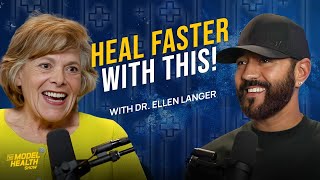
This content was created by Ellen Langer. This content was uploaded by Ellen Langer. This is a YouTube interview titled "Incredible Studies Show Your MIND Can Heal Your BODY FASTER | Dr. Ellen Langer & Shawn Stevenson" (created 2024-01-29). It is an English conversational interview in which host Shawn Stevenson speaks with Dr. Ellen Langer (Harvard psychologist and author) about her research on mindfulness and the mind–body unity. The discussion covers multiple studies and examples — e.g., nursing‑home choice experiments, an elderly men ‘time‑retrofit’ study, perceived sleep and wound‑healing experiments, priming colds, and broader points about stress, perception, aging, health outcomes, and how beliefs shape physiology and behavior. Metadata (YouTube content type, title, and timestamps) are reflected in the summary.
Chapters
Meditation is a practice. Mindfulness, as we study it, is a way of being. Once you recognize that you don't know, you naturally just tune in. Stress is psychological. Events don't cause stress. What causes stress are the views you take of the event. And when people are mindless, they don't have a choice of how to see things.
Dr. Ellen Langer was the first woman to be tenured in psychology at Harvard University. Where she is still a professor of psychology. Dr. Langer is the author of 11 books, including the international bestseller Mindfulness. Her trailblazing experiments in social psychology have earned her inclusion in the New York Times Magazine's Year in Ideas issue. She is known worldwide as the mother of mindfulness and the mother of positive psychology. I was trying to hold back my excitement. Because your work is really not just an affirmation, but it's really helping me to understand the inner workings of so many different things that I've experienced personally. I've worked with thousands of people myself in a one-on-one context, and obviously the show reaching so many people. You are somebody who's asked these really powerful questions and did the studies to find out, is this replicatable or does this have relevance for other people? And even the title of your book itself is remarkable, The Mindful Body. What does that mean?
I don't know. You know, I've written several books on mindfulness. The first one was called Mindfulness. Then the next one I couldn't call Mindfulness because I had already used that title. So I called it Mindful Learning. All mindful learning is is mindfulness. And so on. But The Mindful Body is supposed to bring to mind that there's something about the body that we're not paying attention to. And I think the subtitle really says it all, which is Thinking Our Way to Chronic Health. And even the chronic, you know, that in the English edition, they wanted— they changed the title to Thinking Our Way to Lasting Health. And that's fine with me. I don't care as long as people get a chance to read it. Call it whatever you want. But chronic is always associated with negative, which is why they wanted to call it lasting. And I wanted to change that because people have the idea that as you get older, you fall apart. That's the end of the game. And it doesn't have to be that way. And when the medical world gives you a diagnosis with some chronic illness, they also get a lot of it wrong. We have far more control over our health than people imagine.
What's so funny, I just went through a study on an earlier episode I just did And they use the term chronic exercisers and having better health outcomes. And I just thought that that was so interesting because our belief about a word even can change how we associate with it and also our biochemistry. Our thoughts change our bodies.
Yes, exactly.
All right, so let's dig into that specifically.
Let's go.
Because this is something that I've mentioned several times, which is, and it's so powerful, every thought that we think changes our biochemistry instantly. This is something more tangible that we can kind of track hormones change, heart rate variability, all these different things. But you've done a bunch of different studies and just again, thinking about these things that our thoughts really do influence our health outcomes, maybe even more so than the outer activities we might do.
Yeah, I believe so. I did some very early work back in the '70s where what we did was to give nursing home residents choices to make. And they lived longer. And, you know, how could that be? Why would making a choice— and that choice-making evolved into mindfulness. And probably up front we should make clear that mindfulness, as I study it, has nothing to do with meditation. Meditation is fine, this is just different. It's the simple process of noticing. And when you're noticing, the neurons are firing. And 45 years of research shows that it's literally and figuratively enlivening. And, you know, it's easy and it's fun. The reason to differentiate it from a meditation in part is because meditation is a practice. Mindfulness, as we study it, is a way of being. Once you recognize that you don't know, you naturally just tune in. And everything in the culture teaches us that, you know, absolutes. And since everything is changing and looks different from different perspectives, The uncertainty is the rule, not the exception. So when you don't know, what do you do? Things become interesting. And it's also the case that meditation for some people is hard to do. Mindfulness, as again we study it, is the essence of enjoyment. It's the way to become excited about things, engaged. It's the essence of engagement. You notice, and as you're noticing, you notice more, and you become— you know, people wait too often to get excited, and you don't have to wait. All you need to do is notice new things about the person, the event, and all of that is good for your health. So having fun, which people often think of as, you know, I'm going to do the hard work and then I'll have fun as a reward, have it all wrong, that the fun is the, the way the body regenerates itself and makes us not only healthy but happy.
We're going to get into all this. It's so good. I was looking at one of your interviews a little bit earlier, and you stated that everything we do is dictated by the rigid beliefs we have. You said we shouldn't have learned them in this absolute way in the first place.
Yeah, well, you know, what you're taught in schools and by your parents are facts, and facts are context-dependent. They're not true all the time, but people don't realize that. So, an example: how much is 1 1?
Obviously, people would say 2.
Right, and I just gave another podcast where I don't want to keep saying this because soon everyone will know the answer, which is good, but they need to understand what's behind the answer. What's behind the answer is that Sometimes, okay, whatever we're taking as absolutely true is sometimes true, not all the time. So 1 1 1 if you're adding 1 pile of laundry plus 1 pile of laundry. If you add 1 cloud plus 1 cloud, 1 1 1, and so on. In the real world, it probably doesn't equal 2 as or more often as it does. And the reason it's a good example is because this is the one fact everybody knows, but it's wrong. All right, and you know, so if we didn't learn things in this absolute way, everything would be more interesting, you know, period.
Context is so important.
Yeah, you know, it's, it's important in ways that go well beyond knowing facts conditionally or not. So for example, we've done a lot of work on fatigue. And most people think the body is such that after a certain amount you're just going to get tired, that's all there is to it. But fatigue turns out to be mostly a psychological construct. Fatigue is context-dependent. So the first test we did of this was so simple. We asked people first to do 100 jumping jacks and tell me when you're tired. They get tired at around 70. Then we asked another group of people Do 200 jumping jacks, tell me when you get tired. They get tired at 140. All right? And so on. Now there was a study that Frank Beach did forever ago, not I, with mice. So you take a little boy rat, rats or mice, rats, okay? Who knows? I mean, take a little boy rat, you introduce a little girl rat, they'll copulate. Then the little boy rat can't take anymore, right? He's tired. He needs a refractory period. Unless immediately you introduce a new little girl rat. So as soon as you change the context, our energy comes back. All right. And, you know, so imagine— and a picture that comes to my mind frequently is somebody who's word processing all day, back starts to hurt, and, you know, and then they go home and they play the piano. All right. It's the same thing, but it's completely different. Because of it. Yeah. And so if we change the context often enough, fatigue will be a thing of the past. We did another study and then I'll give you the larger category of these where we have people in a sleep lab and we take lots and lots of measures and they wake up and we've moved the clock unbeknownst to them. So for a third of the people, they think they got an hour more sleep than they got. For a third, they think they got an hour less. And a third of the people, the amount of sleep they got. Biological and cognitive functioning follows perceived sleep. All right. You know, our perceptions drive the whole ballgame. And we have very rigid ideas because we all grew up, like many years before you, in a world where we had mind and body and they were separate things. And so then the assumption was we have to keep the body healthy, not realizing that how important it was to keep the mind healthy. And all of the work that we've done, on much of, well, many experiments described in The Mindful Body, which goes beyond this idea. But the idea is to put the mind and body back together. These are just words. We put them back together, it's one thing. Anything that's happening on any level, your thoughts, your body, is happening basically all at the same time. So if you imagine that your mind and body are one thing, then wherever you put your mind, you're putting your body. And that explains that sleep study. It also explains the fatigue. But we have so many more. But I'm going to give you a chance to ask me a question.
I love this so much because This is, it's so silly that we've separated the two, you know, and the reality is very, very different. And just even in context of that sleep study, our belief about how much sleep we got is gonna affect our, like for example, if maybe we got 7 hours of sleep, which we usually do, but we think we only got 6 and we feel like I'm actually tired today and kind of dragging. You got the same amount of sleep, but it's based on your perception of what it means to get an hour less sleep.
You know, there's a study I want to tell you about that I haven't talked about on the feels like 10 million podcasts that I've been doing lately. It's about colds, a common cold. So we take people— I'm going to give you a rough outline of it, the details are in the book— and people are in the lab and they see a big video of people coughing and sneezing. The room is set up with things like tissues and chicken soup, everything to prime a cold. Okay, without introducing an antigen, people get sick. Okay, how it happens? Well, one possibility is that when you have a cold, it never fully goes away, so it becomes dormant and these primes awaken it, or something even more mysterious. But, you know, you can think yourself into it, and I assume we can think ourselves out of it. It's very hard to do a study showing that we can talk ourselves out of the cold because when people have colds, the scientific community is not eager to have them all come together and spread the, spread the cold to other people. And also that, you know, you just want to stay in bed and watch TV and eat what you're not supposed to eat as you baby yourself to get over the cold.
There's even studies where they're exposing people to what they believe to be, whether it's like from somebody else's mucus that has a pathogen in it, and folks aren't getting sick when exposed to the thing. What's going on behind the scenes? I would imagine there's context involved, and also probably it has to do with our level of health, our level of stress, and things like that.
Yeah, I had just mentioned this recently, but I think it's important. From my perspective, the major killer is stress. Now, the medical model way back when, decades ago, thought that psychology and things like stress were irrelevant. All that mattered was whether you introduced bacteria, pathogen, whatever, to get sick. And now they've come closer to appreciating the importance of psychology, but I'm still trying to get people to come the whole way. We don't have to wait so long until we realize that our psychology is probably the driving force for all of it.
[Speaker] Yeah, at least acknowledging that it matters. There was a really fascinating study that came out July 1st, 2021 in the midst of all the craziness. And it included data from over 800 US hospitals, over 500,000 COVID-19 patients. And they found that the number one risk factor for death was obesity. But what was most surprising for me, and I was trying to share this with my colleagues and also get people informed about it, the second leading risk factor for poor outcomes, including death from COVID-19—
Pessimism.
As they labeled it was anxiety and fear-related disorders was the second leading risk factor.
Yes, and people don't understand that stress is psychological. You know, that events don't cause stress. You know that because you take any event and you see some people are stressed and some people aren't. So how can that be? What causes stress are the views you take of the event. And when people are mindless, they don't have a choice of how to see things. When you're mindful, you see this can be explained in many different ways. And if this way makes you crazy and this way makes you feel good, Clearly you're going to choose the latter. But we have a very clear sense, you know, people believe, for instance, that work is necessarily stressful. Why? You know, nothing is necessarily anything. And so if we learn we have more of these choices when we're younger, I think it will serve us well as we get older. And what we need to do when something happens is to look back at past things that have happened. And to say, no, it wasn't the end of the world. And in fact, there were some ways it was actually an advantage for it to happen. So I recommend two things with respect to stress. The first is that stress requires a belief that something is going to happen, and second, that when it happens, it's going to be awful. So the first, we can't predict, we have no idea What's going to happen? And what am I going to say next? You don't know. Are people going to be watching this or not? We don't know. Well, anyway, we don't know. That's the rule, not the exception. So ask yourself, what are 3, 4 reasons that it won't happen? So you went from thinking it's definitely gonna happen to maybe it won't, and you'll start to feel better. But I like the next part: assume that it is going to happen. Let's let it happen. How is that a good thing? And it's, you know, if you can get past that by looking over your past stresses, because things again in themselves are not good or bad, it all depends on how we view them. So that's number one. Number two is a one-liner that my friends seem to put on their refrigerators. Let me share it with your audience, which is ask yourself, is it a tragedy or an inconvenience? Most of the things that we're stressed about, the anxieties you mentioned, are silly. You know, I'm not gonna get the project done in time. Oh my god, I forgot to pay you back the money I owed you. I didn't call the plumber. None of these things matter. And when you ask yourself that simple question, you can breathe a sigh of relief and, you know, come back to yourself and just start enjoying things again.
Yeah, it's not the event itself. It's always our perception.
Exactly. And so the more mindful you are, the more choices you have as to how to understand it.
You know what's so wonderful about your work is that it doesn't negate the stuff in life. You know, those things exist. Different things happen, whether it's an exposure to a pathogen, whether it's an exposure to, you know, or suffering an injury of some sort. There are certain laws of the body and whatnot. But in reality, even our thoughts are going to influence how we interact with those things, those things, and also how quickly we heal. Can you share that study?
Yeah, so this is one of the most recent— is the most recent mind-body unity studies that we ran. I did this with Peter Ungel, my graduate student. So we take people and we inflict a wound. Now, I'm not sadistic, and even if I wanted to really hurt you, The review committee isn't going to let me, so it's a minor wound, but it's a wound. And people are in front of a clock, and for a third of the people, again unbeknownst to them, the clock is going twice as fast as real time. For a third of the people, it's real time. For a third of the people, it's half as fast as real time. Most people would assume the wound's gonna heal when the wound's gonna heal, right? Based on quote real time. But that's not what happens. What happens is the wound heals based on perceived time, the time the clock tells you. So clearly people are healing themselves faster. And I think that the medical world, you know, when you— if you were to break your leg or something and you ask the doctor, you don't have to ask, they'll volunteer the information, how long it's going to take you to heal. They give you the outer end, you know, and I think that people should be told the fastest healing that we know of so far has been, so that you organize yourself differently. You know, when, when you're expecting it to take forever, you don't pay any attention to it really, and there are things you can attend to, to increase the healing process.
It's interesting that I have a close proximity situation. Last year I tore my calf muscle and the prognosis was 4 to 6 weeks to return to normal activity. And I did it in 3 weeks. I was doing squats and lunges and all the things. And what I share with my audience, and also funny enough, I was doing a talk in Mexico shortly thereafter and talking about some of the benefits of being fit and whatnot. And there is some data affirming if you are fit you do have more resilience against injuries and recover faster. But the most important thing was my thought process because I immediately, as soon as I heard the prognosis, I was like, I'll do it faster than that.
Yeah, no, that's beautiful. And that's the way we should all be. So I have so many things and I'm gonna forget them. Let me just start. I smashed my ankle years ago. Didn't break it, smash. And the doctors told me that I'd never walk without a limp. I don't really listen, so I didn't remember that they told me that. And, you know, that hasn't affected my tennis or anything else. You know, I don't have a limp. What people need to understand is that medical science, like all science, depends on experiments that can only give us probabilities. If you run an experiment and you do the exact same thing again, which you can never do exactly the same thing, you're likely to get the same findings. Those probabilities are translated as absolutes. Alright, so if most people take 4 weeks to heal, doesn't mean all people take 4 weeks to heal. And this came home to me years ago in the oddest situation. I'm at a horse event and this man asked me if I'd watch his horse for him because he's gonna get his horse a hot dog. I'm a straight-A student, I'm the one you hated. You know, I mean, I memorized everything. I know horses don't eat meat. And I had to keep myself from laughing at this man. He comes back with the hot dog and the horse ate it. And I loved it. Most people would— I knew that everything I thought I knew could be wrong, but the reason I loved it is that opened up a world of possibility. That means everything that we know can be otherwise.
—So this is really bringing to bear, and I want to encourage this in everybody, and it's something I try to do frequently and also myself, because you can catch yourself being the expert, you know, but really bringing a mind of curiosity, a childlike mind to things, and resisting being the expert who knows this is what it is, this is how things are, and start to notice that in yourself. And because when you do that, you start to miss out on this vast spectrum of possibilities, because as you just said, no two studies even are ever the same. Yeah, it's impossible.
Exactly the same, right? Right. Now that, um, essentially the medical world gives us best guesses, and those best guesses are, um, accepted as absolute fact. And there are some things that some doctors say not the best doctors, but that I can't— in today's world, it's just mind-boggling to me that they would tell you, you have 6 months to live. There's no way they can know that, you know. And there are lots of things that are done that I think are implicitly following the hanging crepe philosophy. Do you know what that is? Many years ago, when somebody was dying, they'd hang black crepe. And so the hanging crepe philosophy is, I could tell you you're going to die, I could tell you you're going to live. If I tell you you're going to live and you die, I'm going to get sued. If I tell you you're going to die and you live, you thank me, right, basically. And so they were, by nature, taking the more limited view, the more negative view. Now that we know that these things become self-fulfilling prophecies, you know, you don't have the right to lead somebody down a path that's actually going to cause them harm.
Yeah, we can dramatically change again our biochemistry based on our thinking of it.
Yes, exactly.
I shared this with you earlier that, you know, before we got started, I received this diagnosis and I was told that the condition was incurable. And my physician, as well-meaning as he might be—
But you have to understand, incurable only means that the medical world hasn't figured out a way to cure it. Now, there is always something that you yourself can do. But when we turn ourselves over to the medical world, we give up that opportunity to control our health.
It's as if I was quoting you before I met you, you know, with that. And always sharing that because, you know, I was told that I'd never walk normally again. I'd be in pain for the rest of my life. I'd be on medication. I was fitted with a back brace and all these things. And, you know, but since that moment, you know, being able to deadlift over 400 pounds, 50-inch vertical jump, box jump, uh, you know, sub-11.
I'll stop showing you.
Just all the things that I've been able to accomplish that were supposed to be impossible, impossible that I would do all these things, let alone— I just mentioned some of the kind of extreme pieces, but just being able to live a life without pain and to interact with my family and to do the things that I wanted to do. I was told that that was not possible. Yeah, and that's right, right.
And that's the message for people to know that we cannot know whether something is possible or impossible, but if you don't try, clearly then, um, you're not—
exactly. You're welcome. You know, and also, this is— I'm just— again, I'm holding back my excitement.
Don't hold back.
All right, okay, here we go. So this is especially today, putting this in the context of how we perceive aging. Yeah, you know, there's a big change that's taking place right now with certain guilds of people who are aware of this, but you have one of the coolest studies on elderly men.
Let's talk about that. Okay, so this was the first test of the mind-body unity. Remember, we take the mind and body, we put them back together in our minds. Then wherever you're putting the mind, you're necessarily putting the body. So we took old men— this is back in, I think we ran this in 1979, so quite a while ago— and what we were going to do was to have them live as if they were their 20-year-old younger selves. Okay, and they lived in a retreat that was retrofitted to 20 years. It wasn't quite Hollywood, I didn't have the budget for that, but Anything that was a marker of it being today was removed and replaced with books, magazines, and posters, everything from the past, and to talk about past events as if they were just unfolding. So as well as we could, we went back in time for them. As a result of this, it was remarkable, as a result Their hearing improved. When have you ever heard an 80-year-old's hearing improve without medical intervention or even with medical intervention? Their vision improved, their memory, their strength, and they looked noticeably younger by the end. And so that was the first— it was exciting and reason to continue with all of this. You know, but I had a personal experience that was driving much of the research. So my mother had breast cancer and it had metastasized to her pancreas. That's the endgame, right? So because it was the endgame, her muscles weren't exercised while she was in the hospital and people wrote her off. Then it just disappeared. It magically disappeared. And I think that spontaneous remissions are not nearly as infrequent as the medical world might have us believe. I'm not sure. I haven't, you know, questioned enough medical people to know what they believe. But the common view is we're not going to study it. It's hard to study and it rarely happens. But you can imagine all of the people who don't have access or desire to come to the medical world. That, you know, a tumor is there, they don't even know it's there, and the tumor is gone. We don't know how often that happens with or without them taking any action to make themselves better. But I think that if you believe that there's nothing you can do to help yourself, then you're not going to do anything. And if you believe that you're dying, the system starts to turn itself off, and that we can exert Enough control just by assuming that we're going to be better. You organize yourself differently. You know, you're more mindful. And I've got 4 or 5 investigations showing that when people are more mindful, they live longer. There's no advantage, I think, in the negativity that seems almost rampant. It's not the case, although people believe it is, that seeing the glass as half full is the same as seeing it as half empty. Because once you are looking, once you assume it's negative, then you're just looking for negative things. And when you think it's positive, you're looking for positive things. The positive leads you to take in much more information more critically and just engage yourself. And when you're engaged, the more engaged you are, the neurons are firing. And that's good for your health. And it's always the case, despite the medical world, for whom I have a great deal of respect. I mean, you know, these are smart people who mean well. It's just, you know, the edge that I'm arguing against. Believe that there's a chronic illness for them is uncontrollable. You can never prove uncontrollability. All you can prove is that we don't know. Which is very different. You say, if I tell you you can't, there's no— it's humanly impossible, then you won't try. If I tell you, who knows, if you want to try, you might try, and if you try, you might succeed. It's a different way of organizing ourselves. And my belief, without any data, but it feels to me like a thought experiment, is that if you make the rest of yourself strong, that has to help.
So seems kind of logical, um, you know, and I'm a big fan of results. So just looking at the current state of affairs with all of our apparent innovation, we've got all these wonderful drugs and different sophisticated, you know, imaging and all this different stuff. And yet, in particular in the United States, we're kind of the king of this. We're the most chronically ill, sedentary, our mental health multiple mental health epidemics, we're not doing well. Something is not really adding up here. And so you're amongst friends and talking about this because I think we're really missing the point on what's moving all of this, what's determining our choices and what we're eating, who we're interacting with. It really starts with our beliefs, our perceptions.
And it goes back to notions of good and bad. So we have a sense, that exercise doesn't sound like fun. You know, I mean, it had to be made fun by people. That food that's good for you isn't as tasty as food that's not good for you. So you always feel like you're giving something up in the service of your own health. And, you know, that food— I have a food story just so you see how much we can control. Everything about our lives. This was— I was married when I was very young, embarrassingly young, and we went to Paris on our honeymoon, and I ordered a mixed grill. Now you have to appreciate that I was 19, 18 or 19 going on 30. Very sophisticated, right? Because I was a married woman. All right, I ordered the mixed grill. On the mixed grill was pancreas. I don't know, can I? I thought I had to eat it because that's what a married— I don't know why I believe this, but, you know, being sophisticated in Paris, you have to eat whatever you're served. So I eat every— I'm a big eater. I eat everything on the plate with gusto. Now comes the moment of truth. Can I eat the pancreas? I start eating it, and I'm literally getting sick. Literally. And my then-husband starts laughing. I say, why are you laughing? He said, because that's chicken. You ate the pancreas a while ago. Okay, so even how good and tasty something is is a function of our thoughts. We— I did the study with an undergraduate years ago, a simple little study. We took Godiva chocolate and an inexpensive chocolate, and we had half of the Godiva chocolate wrapped in the inexpensive wrapper and And the inexpensive chocolate wrapped in the Godiva. So you're eating, you're either eating what is Godiva and you know it's Godiva chocolate, or you're eating inexpensive chocolate, you know it's inexpensive, or the off conditions. And what happened was when people thought they were eating Godiva chocolate, they liked it more, okay. But what was interesting was that they spent more time eating it. You say, you know, when you're savoring it. And any taste can be enhanced by the attention you give to it. So we can affect the food that we eat, and it seems we should see food as something we're going to enjoy or not, not whether it's good or bad for us. What is good and bad for you? I mean, I hope you're not of the belief, you know, right, 'cause coffee was bad for you, I think now coffee is good for you. Wine was bad for you, now wine is good for you. Chocolate was bad for you, as long as it's what, 75%? You know, these things are all changing. And I think that if you eat something and you enjoy yourself while you're eating it, it's going to have more positive effects on you than not anyway, regardless of what the nutritionists say, which may be heresy right now for me to say this to you.
Again, you're amongst friends here because it's just silly, the labels that we give food, giving food morality. Yeah, exactly. Is this a good one or a bad one?
Or are you cheating on these different things? I could give you that, yeah.
We have to understand our psychology. What do we attach to those things? And our body's association with those things is going to change based on our beliefs right about that, right?
Exactly.
So being mindful of that. And also, and just to circle back to that study with the elderly men. Yeah. So you had the control group as well, but I want you to also talk about bringing their suitcases in.
Yeah. Okay. Well, so we had two groups. They said we had the group that we were going to have go back in time. We had another group that was going to reminisce. So they were living in the same place for the same amount of time, But every conversation about the past was in the past tense for the reminiscing group or in the present tense for the experimental group. Now, this was a major endeavor. And if I had realized— I was young when I did it— if I had realized what it was going to take, I probably wouldn't have done it. Here I'm putting myself in a position to be in charge of the lives of these 7 old men. What they ate, what they did for a week's time. You know, it's big, right? Okay, so I take the, um, the first group to the retreat, and we're in a van. Now, people also need to understand this was very long ago. This was pre-Google. So just to have music playing from the past was difficult, right? We had to do research to find out what was the music of 20 years ago. And you gotta get it. It's not right there on your phone. Exactly. Now you just say Google. What was, you know, in 3 seconds you have the answer. All right, so we had taken the comparison group, the reminiscing group, to the retreat first. We're almost there, and all of a sudden I realized, wait a second, my postdocs— I guess I was sexist at the time— my male postdocs, graduate students weren't with me. Here I was alone with these 7 men. That meant 7 suitcases. There was no way I was gonna carry those suitcases. It would have been good exercise had we done it today, but— So we get out of the van and I make an announcement. You're in charge of your own suitcases. I don't care if you move it an inch at a time or you unpack a shirt at a time. It's up to you. Now you have to appreciate how different this was from the way these men had been treated, you know, the evening before, right? By people who love them but didn't see them as able to do anything on their own or overcaring for them. Now they're, you know, take care of yourself. You add to that that they're in a novel environment. Remember, novelty is going to provoke mindfulness. So this group also improved, but not as much as the experimental group.
That's so fascinating. And thank you for mentioning that, because that's another part of this study that can get overlooked, is that just changing into a novel experience, they're going to see some improvements in some of their biometrics.
Well, it's also that when you get older, people often think they can't do it, whatever the— coming into it with that belief. Yeah. And there's— you can't— just as there's no evidence that an experiment, you know, that disease is incurable, there can be no evidence that you can't do whatever it is. You know, that I could ski the black diamond on one leg. Well, you know, I can't, but maybe I can. You can't prove that I can't. Now, what happens when people get older is as soon as they see themselves not able to do something, they assume in a broad way that they can't do it. Not that I can't do it today because I didn't have a cup of coffee this morning, I didn't sleep well, you know, maybe tomorrow. And they just eliminate one activity after another needlessly. I'm at that point in my life. I play tennis and, you know, it, I have too many other things happening, so I haven't been playing as frequently as I would like. And I have to stop myself from believing that, well, maybe, you know, it's a sport from the past for me, because I still enjoy it. You know, that what people need to understand is you can do everything that you've ever done. You may just do them differently. And not necessarily— the difference is not necessarily and diminish performance in any way. You know, when I was younger and I was playing tennis with my stepson when he was young and his friends, so they're 16-year-old kids, they didn't know how to play tennis, they're running all over the place, it was easy for me to play against them even though they were faster, had more energy, because I knew that if you're facing this way, the ball is likely to go here and And they hadn't yet learned that. You know, so as you get older, you learn alternative ways of doing things. And the mistake is for people to say that each of those changes is somehow behaving less than. You know, another thing that is, everybody worries about losing their memory. And I think that For me, when I was, I don't know, a young up-and-coming, let's say 35 years old, and I knew that I had to learn people's names. I don't know why, but I think that was my belief. Okay, then I get older, and at this point now, this might not sound kind, but I don't really care what anybody's name is. You know, you introduce yourself to me, if I'm gonna need your name, I'm gonna have another opportunity. And if I need it and I don't have it, I'll ask you. You know, what is the big deal? And so much of the time now, this is important I think, because people think that they've forgotten things when they're older. When if it's like what I'm saying with these names, I don't learn it in the first place. So then if I don't know it in the second place, it's not that I've forgotten it. All right? So we change much of what we're doing. We have different motivation, different values, And we often see ourselves being different but not recognizing why. You know, so when you're a young academic, you might be publishing like crazy. All right. And then you get older and you may be publishing less. And then if you're in the first environment surrounded by all these young, you feel inadequate. Oh my God, they're publishing so much more than you are. Not remembering that you changed what you were doing for some good reason. Which takes me to what is probably, with all the things that I've done over 45 years, feels to me the most important, although it doesn't sound the most important. You know, saving, you know, making people live longer and all of that is, is very important to me, seeing how much control we have over our health. But this one is just recognizing that behavior makes sense from the actor's perspective, or else the actor wouldn't do it. Which means in the context of aging, that when I do something differently, I'm doing it differently because I care less about it, I care differently about it. It doesn't always mean a decrement. And, you know, so in an interpersonal context, which is crucial for our health, you know, it would be hard for me to imagine somebody who's a miserable, you know, who likes nobody, nobody cares about them, being a healthy individual. That relationships, social support, are very important for our health because it's important for our happiness. And remember, those are essentially one thing. And that when you see that other people's behavior makes sense, you no longer judge them. And when you use that rule for yourself, your behavior makes sense or else you wouldn't have done it. You don't judge yourself. And so, you know, if I see you as somebody impulsive, I don't want to have anything to do with you. When I see you as somebody spontaneous, I want to embrace you. Well, it's the same thing, you know. For every negative, there's an equally strong positive. And so then your relationships improve, and as they're improving, you're freer to explore things together. You're happier. So when you're happy, you're going to end up more mindful. The neurons are firing and it all feels good.
Yeah, you get to pick what you notice and how you perceive the things.
Well, that's so important, you see, because people think that when something is novel, they will notice it, and they don't recognize that everything is novel. Everything. Who they are today is novel. Every minute, every moment, everything changes. I had an experience. I actually wrote, you know, The Mindful Body started off as a memoir and then became what it is, which is similar to mindfulness. So there are a lot of personal stories in there. And there's one story, I don't remember why I told it, but it's fun here, where a friend of mine who had an afro would take a shower and we were supposed to go out to dinner. So I'm waiting, I'm waiting, and then she'd be fixing her hair. Now, I saw her before she went in the shower. I saw her when she got out of the shower. There's not— to my mind, it's exactly the same. But to her, she's noticing the tiniest ways it's different. And, you know, and that's what we can do with ourselves. You know, it drove me crazy that I couldn't be fed instantly. But it's always changing. It's always different. And when we're Being mindless, we hold things still and give up all the control we otherwise would have.
Yeah. With that, we also get to choose how much enjoyment or lack thereof we have in life. Thinking about a certain character trait for me, for example, like my wife chronically will not replace the tissue in the bathroom, right? And I used to get an attitude about it. Like, why don't you just— I don't want you to be in an emergency situation. Why don't you just change it out? But then I start, I change the perception of it to, this is the way that I get to take care of her and make sure that she doesn't have a moment where, you know.
So I live with somebody who leaves the cabinets open and she used to drive me crazy. I would always just show, you know, and then what, you know, what is the difference? And if you leave the cabinets open when you're cooking, You don't have to keep opening them because you can see the spices here, you need that jar over there, and what have you. Yeah, no, I think that we're brought up to think there's a right way and we know it because if what we were doing we didn't think was right, we would change it, right? So necessarily everybody thinks they're right. You add to that the belief there's one way, that makes anybody different from us wrong, which causes a lot of interpersonal strife.
Speaking of keeping things open, she would also not fully close lids on containers after putting food away. And it's just like, you did all this work to make the food, put it away and put it into a container, but not fully put the lid on it. And I'm just like, but then when her mom would come by, my amazing mom-in-law, make food, same thing, the open corner of the lid. And so, but here's the thing.
Is she gonna open the next time? That part.
And also, they're cooking food for me. Yeah. The same thing with your partner leaving the cabinets open, you know, in the midst of cooking. They're making food. That's something to celebrate and to focus on that rather than being pissed.
But you see, my view is more extreme than that, because what you're saying is that, well, these things are bad, but these other things are good, so we'll ignore the bad. And what I'm saying is the bad and the good are exactly the same thing. It's all depending on the way you're going to address it. You know, so it is, it's a very different view. People think, you know, so let me say that in a different way. Everybody thinks there are some good things and bad things about people, or about anything, food, doesn't matter what you're speaking to. So let's say there are 10 things. Most people would probably think, okay, so there are 4 bad things, 6 good things, so on the whole it's good. And that's the argument you're raising. What I'm saying, each and every one of those things is good, bad, or indifferent depending on how you look at it. It is nothing. It doesn't have an evaluation. It's an event. It's an item until we impose that frame on it.
Yeah. And again, we get to pick, right? I want to ask you about this because I just went through a study And it was called the Milkshake Study. Yeah. You know about this one.
That's my student, Ellen Langer. Of course.
Oh, see, I love this so much. Again, you are so amazing. But just how our perception of the calories in the food influenced the hormones we were producing. In that case, it was ghrelin. But you also showed that our perception of time can also influence blood sugar levels. Talk about that.
Yeah. It's funny because I don't realize until I'm doing these sorts of shows how many times I've used clocks, you know, in these studies. This is another clock study. All right, so people with type 2 diabetes come into a lab, we give them all sorts of tests, and then we're going to have them play video games. And all of this will make sense in a moment. They play video games and they're told, change the game you're playing every 15 minutes or so. That's to ensure that they'll look at the clock. For a third of the people, again unbeknownst to them, for a third of the people, the clock is going twice as fast as real time. For a third of the people, half as fast as real time. For a third of the people, real time. And the question is, does their blood sugar level follow real time, which is what everybody would assume, or clock time, perceived time? And it follows perceived time. Now it's interesting because Placebos, I think, are our strongest medicine. They've been around for a very long time, and people accept placebos and yet don't understand the full importance of all the work on placebos. If you're taking this pill that's a sugar pill, then anything that changes is a result of you, not of the pill. And I think it's 27, I may be wrong, but for virtually all diseases, a fair number of people are cured with a placebo.
Yeah, this study I just talked about, about 33% of folks in this meta-analysis had a therapeutic response to placebo. You know, it's so remarkable. It's the power of the mind.
Yeah, well, we would know about all of this decades ago if not for the pharmaceutical companies. Oh, that part. See, the pharmaceutical companies have a very strong motivation to have a drug outperform the placebo. So since Beech, you know, way back when, in any drug study you have to test the efficacy of a drug against a non-drug, against this placebo. When the two of them do well, which both can be because of the placebo effect, the drug can't be brought to market. So the drug company doesn't want the placebo to work. So most people think of placebos as bad. Oh, it's only a placebo. Oh, it's only psychological. You know, you don't have a real disease. It's only psychological. Things that have made all this work all the more important to conduct to change that idea.
Just to circle back with that, with the blood sugar again, their blood sugar changed based on their perception of time. That's right.
When you saw it going faster, their blood sugar rose more.
This makes me think about, again, our perception of time overall in our lives. And right, we have these very strong mind viruses that we've taken on culturally about aging, for example. At certain increments is like when certain things are supposed to happen, you know, we start slowing down, aches and pains and all these things.
And with another perspective, like for example, with aches and pains, you know, it's like, well, you have, you have an ache or pain, um, what, how are you going to understand it? If you understand it as, um, a natural part of aging, uh, you're going to expect more, look for more, and then experience, see more aches and pains. You know, in a simple way, if a 20-year-old and I at 76 hurt our wrists, the 20-year-old knows that their wrist shouldn't hurt, so they're going to do things to make their wrist better. 76, there are a lot of people who believe, you know, look, when you get older you fall apart. And so if you believe you're going to fall apart, then you don't take the simple step to, uh, to make it better. So then a month later, when you're still in pain and that 20-year-old isn't, is it because of your age or because you didn't attend to it in the same way? When you, um, have, let's say, arthritis, uh, what you do is overlook all of the ordinary things you do that are giving you the pain. You just assume it's because of the arthritis, not that you were gardening 2 hours, or you slept a little cockeyed. Yeah, no, I think that a major problem with illness is for many people, for whatever reason, are looking for validation that they have it. And what they should be looking for are indications of how they don't have it, or how it's changing. And how it's changing is a treatment plan that I describe in The Mindful Body that has turned out to be very successful with across lots of chronic illnesses.
I just want everybody to really understand that thanks to our social conditioning, we too frequently and flippantly attribute certain things to aging that probably shouldn't, or we can change that association. And in particular, I just thought, like you just mentioned, sleeping in an awkward position, for example. You know, my 12-year-old, not too long ago, he woke up feeling a little bit of, creek neck, you know, but if that happened to, you know, say my uncle, same thing, they both slept, you know, maybe on their stomach with their head turned for hours at a time, we're gonna say, oh, you're just getting older, Uncle Leroy. You know, it's just being able to stand guard to the door of our minds from the environment, but also understand that it's coming from the inside out first in our beliefs and what we're attributing to things. Not to say, that things aren't going to change. But I'm so grateful one of the coolest things you've said today is that it's an opportunity to do things differently.
Well, it's not just different, you know, that we have— I have many, many examples with language and also from culture and what have you in the book of here things are bad. I'll give you an example or two. The culture, the experts show you how to make it better. However, there's an even better way of making it, and that's the piece that I don't understand why it takes so long for us to get to. And that's what lots of my work is designed to do. So, you know, you— well, an example that I used earlier is about trying. You know, people, it's better to try than to give up. So you give up, you try, but trying has built into it an expectation for failure. You wouldn't try to eat an ice cream cone, you would just eat it. So trying is not nearly as good as doing. Hope. It's much better— this is an odd one because people think, isn't it good to have hope? When I go down in the morning to get a cup of coffee, I don't hope that the coffee will be there. I expect the coffee to be there. So hope has built into it also an expectation for failure. And so it's much better if you're hopeless to have hope. It's even better to assume it will all be fine and to create the reality that you want. Forgiveness sounds good. It's certainly better than blame. But there's an even better way of being, which is to understand why the person did what they did. I had been asked many years ago to give a sermon at one of the Harvard churches. I said yes. What am I going to talk about? I know nothing about religion. So then I thought, well, I could probably get by with something about forgiveness. It sounds sort of religious-y in a naive sense. And so I started thinking about it, and I came up with something that shocked them, and it was almost sacrilegious. Here's in a nutshell. If you ask 10 people, is forgiveness good or bad, what are they gonna tell you? It's good. If you ask 10 people, is blame good or bad, what are they gonna tell you? It's bad. But you know, you can't forgive unless you first blame. That's interesting. Our forgivers are our blamers. Now, do you blame people for good things or bad things? Bad things. But things in and of themselves are neither good nor bad. So what do we have here? We have people who see the world negatively, who blame and then forgive. Hardly divine. Okay, so the alternative is not to blame in the first place, but to understand the sense that that person's behavior made, or else they wouldn't have done it. So to understand replaces forgiveness and blame. So it's the better way. Okay, so again, it's always bad people blame, the world teaches them, the Good people say, don't blame, forgive, and then it ends there. No, there's a better than better way. There's always a better way that I teach people about 3 levels, and it goes through lots of my work. Let me talk, tell you the way I was first introduced to this, about The New Yorker. I don't care about The New Yorker. It's a wonderful magazine. It's just a way of making the point. Level 1 are people who don't read The New Yorker. Level 2 are people who read The New Yorker. Level 3 are people who don't read The New Yorker anymore. You can have a Level 4 who read The New Yorker. The point is Level 1 and 3 are both the same. They're not reading The New Yorker, but they're very different people. Right now, the world I don't know if you want to add this. The world is ruled by level 2. They think they know. They see the more sophisticated, enlightened person, and they think that it's a level 1 rather than a level 3. So what is the bottom line there is rather than assume you know why somebody did what they did, you might assume that there's some extraordinary reason that hadn't occurred to you and learn something. Regardless of why they did what they did. And I think that all of this judging is mindless in the first place. And, you know, Leon Festinger, who talked about— who was a great social psychologist way back when— talked about social comparisons as you, you know, sort of, you're driven to make social comparisons. I don't think that you're driven to it. I never ask myself, is your toothbrushing better or worse than the way I brush my teeth? You know, you don't have to make comparisons. They're mindless. We don't know why the person's doing what they're doing. If you and I are in some athletic competition and you win, you don't know that that's the best of my performance. It could have been the weakest of my performance. You don't even know if tomorrow I'm going to learn some new way of doing this thing. What we need is only to make comparisons that teach us new ways of doing things without the evaluative component. But the world is set up with a sense of scarcity. And here's how the powerful have deluded the rest of us— money powerful— into thinking that some have it, whatever the it is, some have a lot, Some have a, you know, a medium amount, some very little, and all of that is fixed. And wherever you land on this normal distribution is the way it should be. Rather than asking the question, who decided the criteria in the first place? Who chose the rules that we're playing? And you change the rules, you're going to have different winners. And when we recognize that whatever we're experiencing on any level were just decisions. Now, for something to be a decision, it means there had to be uncertainty. If there's no uncertainty, there's no decision to make. So we have people making a decision to meet their needs, and the rest of us are living out those decisions as if it were handed down from the heavens. I guess what I'm trying to say, people need, I think, to recognize that Everything, and I mean everything, is mutable. Everything. If it doesn't work for you, change it so that it can work for you. So, I want you to sort of think about sports. You know, it's— I don't know who it was who decided on the game of golf, but this seems to me outrageous that hitting the ball 2 inches and hitting the ball 200 yards count the same. Right, but that's the way somebody invented it. That's the way the game is played and accepted. And if you have a very good drive but you're very bad at putting, you don't have to feel bad if your overall game is not as good as somebody else's, because had you designed it in the first place, you would have been better. I— tennis— if I designed the game of tennis, you'd have 3 serves. Two didn't come down from the heavens. There's no moral reason for two. If I had three, I could kill it, it wouldn't go in, learn from it, kill it again, and still have my backup wasp serve. Everything was put there to meet somebody's needs, and everything can be changed. And people just accept everything. Social acceptance. Yeah, everybody accepts everything. And I think it's fine if it's working for you, you know, but just to recognize the difference in people's body builds, height, you know, that you take somebody who is 6'5" and in their family, let's say they're married to somebody who's 5'2", they're using the same toilet seat, probably. Well, one of them, be much taller or shorter, are not getting their biological needs met. For everything, what is can be other.
This reminds me of the movie Big Daddy, Adam Sandler, and he haphazardly adopts a kid, and it was the strangest circumstances that he did this under. And the kid, one day, he's like, he left the kid to hang out with his friends, basically, his, the older guys, adult friends, and they're playing cards with this kid. And the kid puts down, you know, this kind of like, you know, they're kind of holding them like they're playing poker. And then the kid puts them down, like, I got a 6, a 10, and a jack. I win. And then the other guys are like, wait a minute, I've got this and this. Like, what is this game? And the kid said, I win. No, what is this game called? No, I win. It didn't matter what my hand is. I win. I get to choose the rules. I don't care what's going on with you guys, but this is what I'm doing. And the same thing again, we have these social acceptance.
No, so what you have to realize is the more different you are from the person who wrote these rules, the more important it is for you to mindfully adjust them to meet your needs. That's the key.
That's the key. And so I want to close by asking you a little bit more about how we do this. You know, how do we placebo ourselves? And one quick thing just to reiterate what you shared earlier, part of doing mindfulness is active noticing. So we've already got that.
That's not part of, that's it. That is it. It is the thing. Yeah, but if you adopt the mindset of uncertainty, if you recognize that you can't know, all right? Not that, it's just everybody knows they don't know. The mistake they make is thinking other people know. And I'm here to tell them nobody knows. So when you make this universal attribution for not knowing, then you naturally pay attention to things. It's when you mistakenly think things are staying still. You know, your spouse, the fact that you've lived with this person, let's say, for 10 years, it's a mistake to think now you know them, and so you stop paying attention. People change. Anyway, so our control over our lives comes about recognizing these changes. And when you're mindless, again, you're holding things still.
I want to ask you about the level 1, 2, and 3, because, you know, nutrition is a good example. You know, coming into it, not knowing what I didn't know. And then I find out some stuff and I attach my perception beliefs to that thing. These are the rules, this is how it's supposed to be, and then eventually evolving to a place of none of this matters. Like, there's different rules for different people at different times, right? And being at that level 3.
Yeah, no, there are so many examples, many I give in the book, but it's just a fun way of taking in information, you know, that people think when they see somebody do something, they know why they did it. You know, they usually say, well, if I implicitly— they're saying, if I did it, it would be because of this. That doesn't mean that's why the other person is doing it. And so we can belittle them, which we do when we're mindless. If we think we're right, that makes everybody who behaves differently wrong, rather than just that it's a difference. So you can do that with your friends, your spouse, teachers, patients, doesn't matter, with everybody. Just ask yourself for several reasons explaining why they might be doing what they're doing. And then you know you don't know. You know, we teach this in the funniest ways. I mean, we have— what was it— The Prince and the Pauper. You know, so here we have the pauper is going to put on the clothes— I mean, the prince is going to put on clothes of the pauper, go out in the community to see what it's like being a pauper. But there's something ridiculous about that, because the worst part of being a pauper is you don't know if you're gonna ever have enough money to eat. All the prince has to do is say, "All right, I've had enough of this game. I'm going back to the castle." You know, you can't really put on anybody else's shoes. And what you need to recognize, if you try somebody else's moccasins, as it's called, all you need to do is recognize that you don't know, and then you'll sit up and pay attention to what people are saying. About their own experience, but not that, oh, I didn't realize, now I know how you felt.
Um, at any rate, I want to ask you about this as a tool because this has been very helpful for me, which is utilizing instinctive elaboration. So just the questions that we're asking ourselves, and you mentioned this earlier about, you know, how we're perceiving a certain event, and even something if it's a problem or something that is causing stress in our lives, but reframing it. And for me, when I have that coming up, I ask, how can I make this fun?
Yes, I think everything should be fun. Everything. And I think that the world teaches us otherwise, you know, that you have work and play. I think those of us who succeed at our work is because we're doing it in a playful way. I think that people need to take what they do seriously, but not take yourself so seriously. And when you have that easier attitude, it all just sort of comes together.
Amazing. Well, you've shared so many incredible insights. And again, I think that— and even as I say, I think, it's like, it's different right now. You've changed the temperature in my own mind. And actually, I changed it based on my perception of you. I feel like Inception right now. Leonardo DiCaprio, shout out. But if folks really understand this, and you already know this is where things are going, it's already happening. It's never changed really, but somebody like yourself stood up. And literally, I want people to understand this. You said that study on those with those elderly men was 1979. This is like around—
Not a long time ago.
Yeah, like this around like when I'm born, you know, and you've been paving the way for us and laying down this groundwork and you even shared, you know, I've shared the milkshake study several— it's actually in one of my previous books, USA Today national bestseller. That's your student. Yeah. You're such a remarkable human being. And most importantly, for us to take away and really value what you've shared thus far, we have to apply it in our lives. And so the practicality piece. So we've already understood that noticing is mindfulness, the power of questions and reframing things. Is there anything else for us to be mindful of, for us to utilize as power, for us to make ourselves healthier?
Um, I think just recognizing that you can't know, and that makes everything essentially an adventure, that If you've learned to do things mindlessly, which most of us have, I mean sadly, all of my data over all these many years says that most of us are mindless most of the time. Now, so that, the first thing is that when you're learning something new, don't learn it the way we learned all those things that were mindless. Learn it with an openness, learn it conditionally. Could be this, could be that. Here's one explanation, here are 5 others, and so on. And then you'll be able to be more creative, innovative with that information. For those things that we've been living mindlessly with for forever is not quite as easy to change. And so maybe the first thing for people to do— excuse me— is to, as soon as something is negative, no matter how large or small, for them to then question it, and then reframe it. You know, so the toothpaste, you know, for example, it used to be this perennial marital difficulty. Never in my household, we would just buy two tubes of toothpaste. But you have someone who squeezed from the bottom, somebody who squeezed from the top, they argue. Again, the mindful solution: get another tube, or recognize the advantages of both. You know, not, "How could you be so stupid? Look at all the toothpaste you're wasting." "How could you be so patient to take forever to brush your teeth? We have more important things to do. You want the toothpaste to come out?" You know, whatever people are doing has some sensible reason behind it. When you know the sensible reason, you stop getting aggravated. When you say to yourself that events aren't causing me to be unhappy, If you ask yourself, do I know anybody who in this situation wouldn't be reacting this way? And you can always come up with something. What are they doing? How are they understanding it? And to see the difficulties as opportunities. So if we didn't have those little things that squeeze the toothpaste out, that could be an example where rather than be frustrated, develop something to make it work. If I kept dropping a glass, you know, my hand just couldn't seem to hold it right, the first thing I'd do is design another glass that's better to hold. And I could make a lot of money with it because my hand, while different from the norm— it's not, but if it were— surely there are others that have this deformity or whatever it is. You know, just to recognize that everything can be different. And the difference should be celebrated. And we don't do that in schools. We tend not to do it in families. And so my little song that I did, that I wrote for my grandkids when they were 5, was, "Everybody doesn't know something. Everybody knows something else. Everybody can't do something. Everyone can do something else." And so you never have to feel bad if you can't do what somebody else can do, because there's something you can do that other people can't do. And when you're strong enough and realize that, then you try to do. And, you know, so I sang this with my Harvard students. It's to the tune of the— I can't sing— to the tune of the old Sara Lee commercial. It's on YouTube. And I started by saying, look, I can't sing. I can't carry a tune, but there are other things I can do, and I like singing, so why shouldn't I sing? And then I and all the undergraduates start singing, everybody doesn't know something, but, you know, I'm not going to sing it for you now, it's embarrassing. Excuse me. But the point is that if we stop lining ourselves up, you know, on this figure out who's better or who's worse, much of life just unfolds in a very different way. And the proof of that was with my grandkids. I end the book this way. We're riding in the backseat, buckled in, and one of them starts whistling. And I say, Theo, you're such a good whistler. And his brother Emmett says, Grandma Ellen, when Theo was learning to whistle, I was learning something else. And that's the way it should be. And then we would all be more mindful.
Yeah. Oh, so good. Dr. Ellen Langer, can you share where people can pick up your book and get more information?
Um, at bookstores, um, online, or just go to Random House. Um, I think that's on my website, which is just EllenLanger.me. But if you put EllenLanger.com, it'll also come up. Oh, you got both? Yeah, you know, I know. I think it just sends it to you. I don't think I have the other. I don't really know, you know. I think it's wherever books are gotten. And I hope people read it, basically because I've been on this quest for the last 40 years. I have been very fortunate to have had very supportive parents. And so I've been happy and trying to show people that it really doesn't require as much effort to go from feeling bad about yourself, feeling bad about things, being sick and what have you, as people assume. So it's part of my quest. So I hope people will share the information.
Awesome, we absolutely will. The Mindful Body is available at bookstores everywhere and of course your favorite online retailers. And you're the best. This was amazing. Thank you so much. Thank you. Hey, if you like this video, make sure to check out this video right here.
That means our children are not allowed to be in that pure essence. They're not allowed to say what they feel if it's going to hurt mom or dad. And that's really dysfunctional. That's why we grow up to not know who we truly are.
More from Dr.

The Mindful Life: How Our Thoughts Shape our Health and Happiness with Ellen Langer & Tal Ben-Shahar




No.1 Harvard Psychologist (Mother of Mindfulness): "Anxiety Doesn't Really Exist" | Dr. Ellen Langer

Your Thoughts Shape Your Body! These 2 Things Cause All Your Stress! Dr. Ellen Langer

Legendary Harvard Scientist On The Study That Reversed Aging | Dr. Ellen Langer

"Don't Learn It Too Late!" - How To Get Back On Track & Design Your Dream Life | Dr. Ellen Langer

