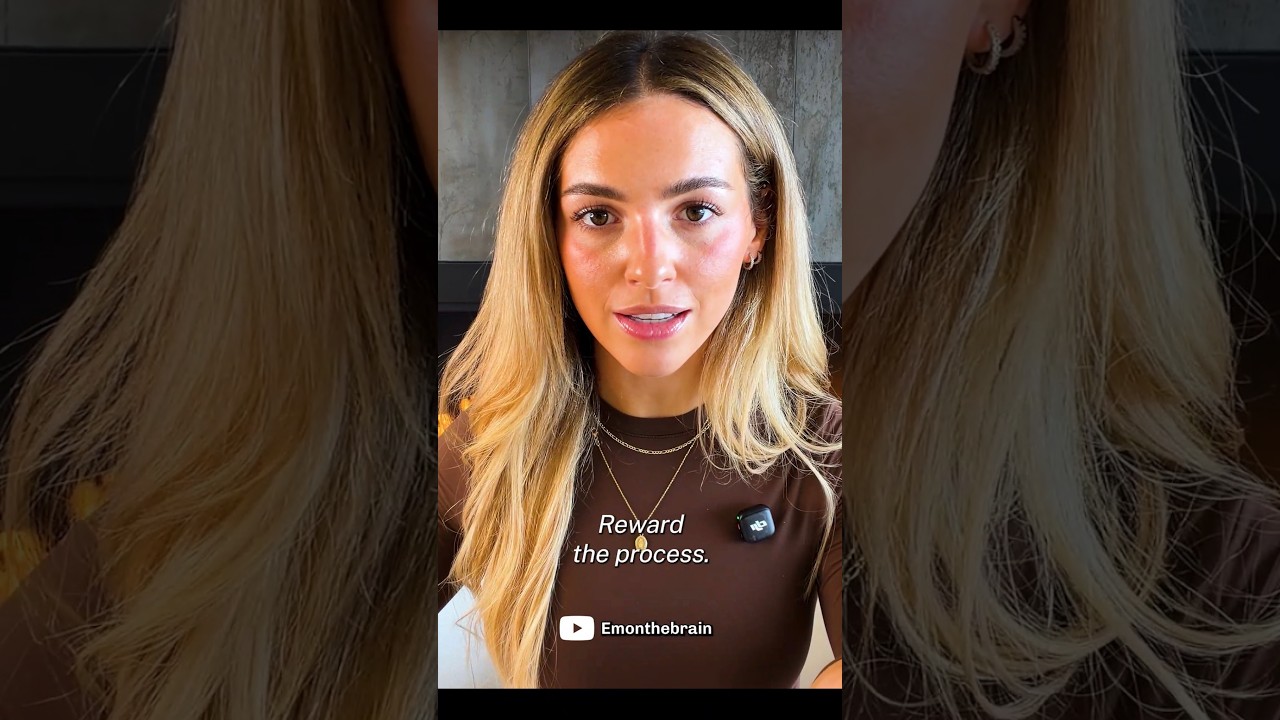
11 things I wish I knew at 17 | Emonthebrain
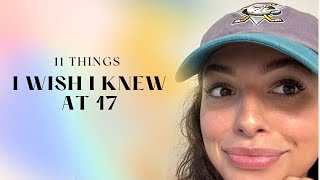
Emily shares 11 things she wishes she'd known at 17, from practical advice like not playing the victim to neuroscience-backed ideas about how environment shapes memory. She covers letting go of what doesn't serve you, trusting yourself, and understanding your own worth.
Hola, amigos. Just kidding. We're not starting in Spanish, but I decided to record this video in cinematic mode today because I'm claiming to be a YouTube G and that's what a YouTube G would do. Just kidding. I'm not there yet. She's on her second YouTube video and thinks she's a master. Anyway, today is a new day. Welcome to my second video. Thank you for being here. So today is a really cool topic. Actually, it's based off of a comment that somebody else left on the last video and they said, can you do the lessons that you wish you knew at 17? And yeah, I can do that. I'm actually gonna do 11 things I wish I knew at 17 because my angel numbers are 11, 17. And it's a magical combination. So we're gonna do that, like trying to get the last drop of this brain dust out of this cup. Brain Dust by Moon Juice. For real. All the, all the ingredients for focus, like all of the adaptogens for your brain. I feel I'm obsessed and I have a discount code. So go to the link in my bio or go to m on the brain.com and get you some brain dust so you can be tapped in like I am right now. Okay, anyway, anyway, let's get into it with number one. Number one is a big one and I love it. I really need some water. Hold on. I know this looks like some dirty ass water, but really there's just like remnants of cinnamon and brain dust. Anyway, okay, so number one, the first thing that I would tell myself at 17, which is honestly like the ideal age to tell myself this, it would be, you are never going to know what you want to do for the rest of your life. And this is so crucial because actually I was sitting at the pool with my friend and this undergrad that I'd never met. But of course we were talking and he. And he's like, I might want to go to med school. I might want to go do research. I'm really not sure. And he goes, I just don't know what I want to do for the rest of my life. And when I heard that, like, it just something in me clicked because I probably have said that as well, but it just sounded so ridiculous and I. I don't know, it might be a hot take, but you are never going to know what you want to do for the rest of your life. Like, what you want to do is always going to grow and change and evolve, because we are always growing and changing and evolving. If you're not growing. You're dying. So, like, you can only expect respect to what we. For what we want to do to grow and change and evolve. And that doesn't mean, like, we need to switch up our job every 24, seven, every two seconds. But, like, you know, I went into my. Into college thinking I wanted to be a biology major and wanted to be like a PA or like a. I don't know, something along those lines. And then I realized I love neuroscience. Then I realized I wanted to do research, and I thought I wanted to be in a lab the rest of my life. And then I realized I didn't want to do that, and now I'm doing this, so. And I never could have planned for this, but. And I never could be where I'm doing. I could never be doing this right now with the knowledge that I have if I didn't chase the dream of being in a lab the rest of my life, you know, so just, I would just tell myself, like, do what you want to do right now and see what happens. And see what happens. Okay. So also, though, one more thing that, you know, flow with the changes in life. Like, life is all about change and flow with those currents, because resisting the currents is when you start to feel suffering. Yeah. So, you know, don't resist. Just go with it. Go with it. Anyway, number two. Number two is. Was really helpful to me. When I first started up social media, my friend Kelsey told me this. Shout out, Kelsey, I love you. She said when I was dealing with the haters, she said, don't take criticism from someone that you wouldn't also take advice from. Would I take advice on neuroscience and content creation from user 9423569 or no? No, I wouldn't. I wouldn't take that advice. So why would I take their criticism, you know? Yeah. Okay. Number three. Number three is the comparison that com. I think I almost ate that fruit fly number. We're on number three. Yeah. So comparison is the thief of joy. Comparisons of thief of joy. Actually, I call it comparisonitis. It's an illness. You know, if I put on an outfit or I do my hair, I don't ever do my hair, but, you know, and I go out and I'm liking it, I'm feeling myself. But then I see somebody else and I compare myself to them and I'm like, oh, like, if only I had. I was blonde. Like, that's gonna just completely take away my joy of, like, how I was feeling myself, you know, and it's the same way, like, say, I got an 85 on an exam or I mean when I was in school and somebody else got a 90 and I was happy with that 85 because I never even passed an exam that did say exam before and Now I got 85 and I'm like, hell yeah. But somebody, my, the person next to me got a 90. Like if I compared myself, that would steal my joy because they did better. And I'm like, why am I not on that level? No, only compare yourself to yourself and your past self and like how you're better than your past self. This is especially true with social media. People only show you the highlight reel. They don't show you everything and all the flaws and all their insecurities and what's going on in their mind. Like they don't show you all that even though like realistic day in the life videos, like, they're still showing you what they want to show you. So there's that number four. Number four actually like is super deep in my heart and even I like have to remind myself this sometimes. So 17 year old Emily know this, but also like 24 year old Emily know this now too. Trust and surrender. I, when I first integrated trust and surrender into my being, I wrote it everywhere. It was on sticky notes all over my room, all over my place, like everywhere. And it's really so important because first of all, it can be whatever you want it to be. Like, you can trust in yourself, you can trust in God, you can trust in the universe, you can trust in your angels, whatever that you're trusting and surrendering to. You got to pick something. Because otherwise you can have just so much anxiety about things like, oh, this will happen or that'll happen. I have to be worried about whether or not this person, person is going to make this decision, right? Because we have control over our minds, but we don't have control over all situations, people and things. And so you have to surrender. Like you just actually have to. And you have to trust that everything is working out in your highest good all the time. And that doesn't mean that it's going your way. There's a difference, right? Trusting that things are going to work out in your highest good does not mean that you get what you want. Maybe you need to learn that lesson. Whenever anything goes wrong now. Wrong, nothing really ever goes wrong. But whenever things don't go my way now I just ask myself like, okay, well what do I need to learn from this? Like, I know that this happened for my highest good, so what is it that I need to Integrate, you know, what is it that I need to learn? What is the lesson that I need to take away from this? There's always something. There's always something because everything truly is always working out and for your highest good. And so remember that. Just always know that. And when you always know that, I think it just relieves a lot of pressure and anxiety. So trust and surrender. Always like, trust, just trust, trust, trust, trust, trust, trust in yourself too. Don't forget that number five. And it ties into that one. The power of the mind. I wish, I wish, I wish I would have known about the power of the mind. I. This kind of ties into something that I'm super passionate about, which is like, health class. Like, what was health class when we were kids? Like, what was that? What was health class? You know, like, what did we really learn? The food pyramid. Come on. The food pyramid. Come on. But what's the food pyramid? No, we should be learning neuroscience. The power of the mind. How to rewire your brain for, like, peak mental health. How to do certain types of breathing, how to regulate your emotions. Like, why the. Like what the brain is and like, what. Why not? It's not always, like, your fault. You are not your thoughts. Like, that is the. That we should be teaching kids in health class. So I wish that I would have known that, but now I know that, and so I'm here telling you that. But it was a huge turning point for me. I remember when I first learned about the power of the mind. I, like, made it my mission to rewire my brain in the way that I wanted it. I would go on morning walks every single day to get my morning sunlight. And I would walk as well. And. And, you know, neuroplasticity and like new environments from walking to, like, neuroplasticity just on go, right? And I was listening to my affirmations while I would do that. And I wired that shit. And I would be walking, like, just ear to ear, smiling so hard for my. Listening to my affirmations on my walk. I'd be so happy and people would really drive by me. I'd be smiling at cars and shit. And they would be like, thinking I'm on drugs. That people would really be asking me, like, I want what you're having. Like, people say that to me all the time. Like, I want what you're having. Because people think, like, I'm literally on drugs because I'm so happy and smiling all the time. But really what I'm on is rewiring my brain. So know that. Know that you are so powerful. You are so powerful. For real. For real. Like, you are. Know that. Okay. And then that kind of goes into number six as well, which is, you will never get ahead playing the victim. You will never get ahead playing the victim. Like, you can sit and you can pity party yourself, but excuses don't make you successful. I had a friend that would always say, I'm not really friends with her anymore. And I'll go into that at a later point, but she would say, oh, like, I'm never going to be in a good relationship. Like, none of my siblings are in a good relationship. Because, like, our parents, like, how we were raised, like, our parents didn't show us what a good relationship was, so we're incapable. And that's just how it is. Like, no, ma', am. Absolutely not. Like, yes, we all came up. Like, we all came up dealing with different struggles, and those things definitely impacted us, but it is our job and no one else's to fix it. And is it going to make you happy to sit around and just be sad that this is the way you are, or is it going to make you happy to, like, work on healing that so that you can be better and feel better? You know, like, playing the victim is not going to get you anywhere. I was super depressed in high school, and I really. I looking back, like, I totally would play victim. And if I would have just taken ownership is really what it is. Like, take ownership of my life. It kind of just makes you realize, like, no, like, you're responsible. Like, it's on you, you know, like, no one's coming to save you. You are the captain of your life, and so you got to take charge. Moving on to number seven. Number seven is a great number. Gotta drink my dirty water real quick. Number seven's a great number. And so I made it a great point. And this is that. And this is like, energy, environment, neuroscience. So cool that your environment and the people you surround yourself with shape your brain and your life. This is, like, so crucial. And this is, like, energy. But it also goes way beyond energy. But I'll tell you the energy part first. Like, think of your friends and places and environments as a stove. Like, Tony Robbins talks about this. Like, if you go into a room and the stove is on and you put your hand over the stove, like, it's gonna feel warm. I don't care if you're like, oh, like my friends. Because I used to do this. Like, oh, no. Like, my friends are making bad decisions. Like, that's okay. Like, I Won't like. No, no, no. If you go in a room, you go in the kitchen, you put your hand over the stove, it's gonna feel the warmth. You can pretend you don't feel it, but it's there. You feel it. Like, you could pretend your hand's not warm, but it's. It's there, right? You're feeling it. So there's that. That's the energy part of it. Like, energy doesn't lie, but also there's a neuroscience aspect of it, right? Like, actually really super cool example. Super duper cool example. Tap into this one. Tap into this one. Listen to this. Okay, so in undergrad, I actually studied learning and memory, and I. One of the projects that I worked on, it was studying learning and memory and how we remember things in time, depending on the context, right? So listen to the story. If you're walking down the street and you're in front of a blue house and you see a dog, and then you keep walking for two minutes, and then you see a red house and you see a cat, and you're like, oh, cute. And then you go home, you're going to remember the. Seeing the dog and the cat, like maybe two minutes apart, because that's how long it was. But you might also remember seeing them like 10 minutes apart because it was different context. It was a different. Like that you saw them at two different places. But. But if you walk down the street and you see a dog in front of this blue house, and then you get a text, and you text it on your phone for two minutes, and then you see a cat in front of the same blue house, when you get home later, you're going to remember seeing the cat and dog closer together in time because you saw them at the same place. We actually integrate memories and we combine them and pull them together in time when they happen in the same context, separate them, and it's called event segmentation when there are different contexts. So just knowing that, right, like, okay, why does that matter? Right? All right, well, now I'm telling you, like, this is how our environment plays such a huge role in how we remember things. And we know this because, like, different places can trigger memories, right? Well, let's also think about the fact that our memories shape the way that we view the world. Like, our memories create our beliefs, and our beliefs are what create, like, our. And our memories and our beliefs create our thought patterns which then completely dictate how we view the world and how we perceive the world and our reality. And so that's one way that the environment can play a role. There are many other ways, actually. The area of the brain, hippocampus. The hippocampus. The. It's super important for learning and memory, but also it's super important for spatial navigation. So the same brain area that's responsible for learning and remembering things is also responsible for spatial navigation and environment. But then also, just like, the people you surround yourself with, like, it's the same way. Like, we have associations. There are. I personally, me, I'm way better at studying in a library around other people that are studying environment and people. You can't say that those two things don't affect you. So I would tell myself, like, get your environment right and get your people right. I am the queen of. Well, we're gonna go into that in, like, two points. But anyway, so let's move on to number eight. Number eight is so crucial. And I would tell myself, do not label yourself. Do not label yourself. Don't put a label on yourself. You know, I was a scientist. I called myself a scientist. I was adhd. I was depressed. I was a college student. I was all these things. Like, I was a golf coach. I was a neuroscientist. I was. No, no, no. I am me. And the reason why I say this is so important, because it can just put you in a box and it really can restrict you, and it can really take away your joy. Because what happens if you lose that label? Then what are you then? You know, I was sitting at a dinner with all the people in my neuroscience PhD program last year, and what my. What A friend asked me. He. He said, if you're a vegan and you eat honey, can you still consider yourself a vegan? And I was like, well, why. Why does that even matter? Like, why are we worried about what we call ourselves? Like, why are we worried about the label? Imma just do me. And I think that's so important because a lot of people, like, might put labels on themselves, and then they do certain things to fit the label. But really, we should label ourselves as being me. Like, I am me, and I'm gonna do me. So be you and do you and don't put yourself in a box. What a number 9 hits so close to home. These all are close to home. But number nine is that you will be successful at anything you do if you do it with love and in service to others. Anything. You can be a salesperson. Imagine selling a car with the sole intention of, like, really wanting these people to be so happy. And if you have this intention. And you're giving them so much love and like, you really want to serve them. Like, imagine how good they're gonna feel, they're gonna want to buy from you. And like, then you get excited because, like, you see that they're happy with this car and then you're getting so excited for them and they're getting so excited and they're gonna really gonna want to buy it then. And that's kind of how I do my content as well. Like, I've start. Not kind of. That is like the reason I why I started making my content was to help people and raise the vibration of the planet and spread love and joy and improve people's mental health. But as soon as my parents. Cause they're both in finance, as soon as my parents were like, oh, how are you gonna monetize? How are you gonna create this into a business? It kind of ruined it for me. And I actually had to take a break for a bit because I wasn't like feeling completely aligned in what I was doing anymore. And you can't be successful if you're not feeling completely aligned. If you're not feeling passionate about what you're doing, or you can, but you can be super successful if you're super passionate about what you're doing. And so I choose to post every single video with the mindset that, like, I just hope if this helps one person, then it's successful. And that's kind of the meaning of success to me is just like impact. And I think if that's your meaning of success is to truly spread love and serve others, then you can be successful at whatever you do. And it's also like, just makes you feel super happy to make other people happy. I don't know if you feel that way, but I feel that way. Number 10, there's only two more. Number 10 is so do this and like, just do it. Just, just listen to this one. If it's not serving you, let it go. I'm the queen of this one. The queen. I cut people off so quick and it's not disrespectful. I cut them off and I say, you know, what's best for my mental health is to move on and not be a part of this relationship anymore. And I just say this because I know so many people that will keep friends in their lives or keep like, boyfriends or whatever people in their lives. Things, foods, so many things that don't serve them. Like, if it's not serving you, if it's not adding to Your life, like, let it go, because you're blocking your blessings. I'll give you an example. I was dating a guy, right? Or talking to a guy, and I realized, like, oh, it's like taking. It's like, stressing me out more than it's really making me happy. And it's not necessarily beneficial. It's taking my peace. It's, like, not good for me anymore. You know what I mean? And obviously, there are plenty of positive aspects about that relationship as well, but when it becomes to the point where, like, the negative outweighs the positive, it's really not serving me anymore. And so I immediately am just like, nope, I'm not gonna talk to you anymore. And I. And that wasn't disrespectful. I didn't go, like, I told him, you know, it's best for my mental health, and it's best for me. But the reason why I give this example is because I could have dragged it out, right? But that would have blocked me from actually finding the person that I really want to be with that I'm really meant to be with, and my person, you know, that would have blocked me from actually being super happy with someone. So stop blocking your blessings. If it's not serving you, let it go. So that way you can, like, the what's meant for you can come last, but certainly not least, number 11. And number 11 is also a magical number. So. And I ended on this, like, most beautiful note ever. I would tell myself, emily, baby Emily, you are worthy and deserving of love exactly as you are. You are pure, not perfect. And I would tell myself this because, I mean, I feel like a lot of people can probably relate to this. We are just so in a culture of constant growth and being better. Like, even the whole, like, mental health and growth mindset thing is about always wanting to be better and being more. There's always more. Like, we are in consumerism world constantly more and more and more, right? And, like, I grew up that way, too. My parents, like, if I were, I, of course, I was always, like, a straight A student, but I would get, say, a 95 or 97 on an exam. My dad would be like, why is not a 100? And so I was just constantly, always in my head, like, I could be better. I could be better. Oh, I'm not gonna find, like, the person that I'm meant to be with right now because I am not healed enough yet, or I haven't done enough inner work, or I haven't, you know, like, my business isn't where it's meant to be or I'm not making enough money. But truth of the matter is that we are always learning, growing, evolving, and we are never going to be in that, like, prime. You know what I mean? So just know, like, I would just really, like, tell myself and tell you, like, just know that you are worthy and deserving of love exactly as you are, like, right now. So worthy, so deserving. Like, you are pure, not perfect. You're not meant to be perfect. And with that, I think that's just a beautiful, super beautiful way to end this video. I am sending so much love out. Feel the vibrations. But seriously, thank you so much for watching this video. If you made it all the way through and leave some comments and tell me what you want me to make more videos about because this was so fun and I never would have thought of making this video if I didn't see that comment. So comment some ideas and I might just make it into a video I really love. Like, also just seeing what everyone's interested in because even if I don't make it a YouTube video, I'll make it a tick tock or an Instagram reel. So. So do that and have just an absolutely wonderful week. Happy Tuesday. This is what I'm dropping it on a Tuesday. If you're not watching on a Tuesday, happy whatever day you're watching. I love you so much and I'm so, so, so grateful. I'm going to go have a dance party because I've been sitting and talking for so long and, you know, go have a dance party yourself. Increase your dopamine. It's really good. Get the endorphins, get the endocannabinoids, that natural high, you know, feel the vibes. I'm sending you so much love, so much gratitude. Seriously, I appreciate you and I love you and, like, you are amazing and you belong here. You belong in this world. Peace.